
The absolute best picture books for kindergarten aren't just stories. They're launchpads for building literacy, emotional smarts, and a genuine love for reading that can last a lifetime. They work their magic by blending engaging words with rich pictures, helping five and six-year-olds make sense of the big, exciting world opening up around them.
Why Picture Books Are So Important for Kindergarteners
Try to think of a picture book less like simple entertainment and more like a carefully crafted learning experience. For a kindergartener who is just starting to put together the idea that spoken words connect to symbols on a page, these books are the perfect bridge.
The illustrations are more than just pretty pictures; they’re vital context clues. They help a child figure out new words and feel the emotional heart of the story. This way of learning—seeing the story while hearing it read aloud—is one of the most powerful ways to build a foundation for reading.
It turns what could be a frustrating task into a fun adventure. It makes kids curious about letters and sounds without any pressure. It’s no wonder these books are such a big deal in early education.
Picture books are a cornerstone of early childhood learning around the globe. The worldwide market for English picture books for kids was valued at roughly USD 6.5 billion in 2023 and is expected to hit USD 11.2 billion by 2032. You can find more data reports with insights on the children's book market.
It's About More Than Just Learning to Read
Beyond just the ABCs, the right picture book does so much more for a child's development:
- Building Empathy: When kids read stories about making friends, sharing, or seeing things from someone else's point of view, they’re building crucial social-emotional skills. They start to recognize feelings in the characters, and that helps them understand their own feelings and those of their friends.
- Sparking Critical Thinking: Just asking a simple question like, "What do you think will happen next?" gets their gears turning. They learn to follow a plot, understand cause and effect, and see how a story might connect to their own life.
- Fostering a Love for Reading: Above all else, the goal is to make reading a joyful, positive experience. This journey often starts long before kindergarten; exploring the best baby books for new parents can lay an incredible foundation for years to come.
Ultimately, these books are the first, most important step in helping create kids who are confident, curious, and compassionate readers.
Decoding What Makes a Great Kindergarten Picture Book
Picking out the right picture book for a kindergartener can feel like trying to find the perfect key for a very specific, very important lock. You need just the right combination of elements to really capture a child's attention and open up their world to new ideas. The secret isn't a secret at all—it's about understanding what truly connects with kids at this magical age.
Think of it like a recipe for a fantastic story. The very best books blend cognitive hooks, an emotional core, and beautiful visual storytelling into one unforgettable experience. Each ingredient is crucial for helping five and six-year-olds grow not just as readers, but as people.
This visual shows just how powerful these books are for building a child's literacy, emotional intelligence, and critical thinking skills, all at once.
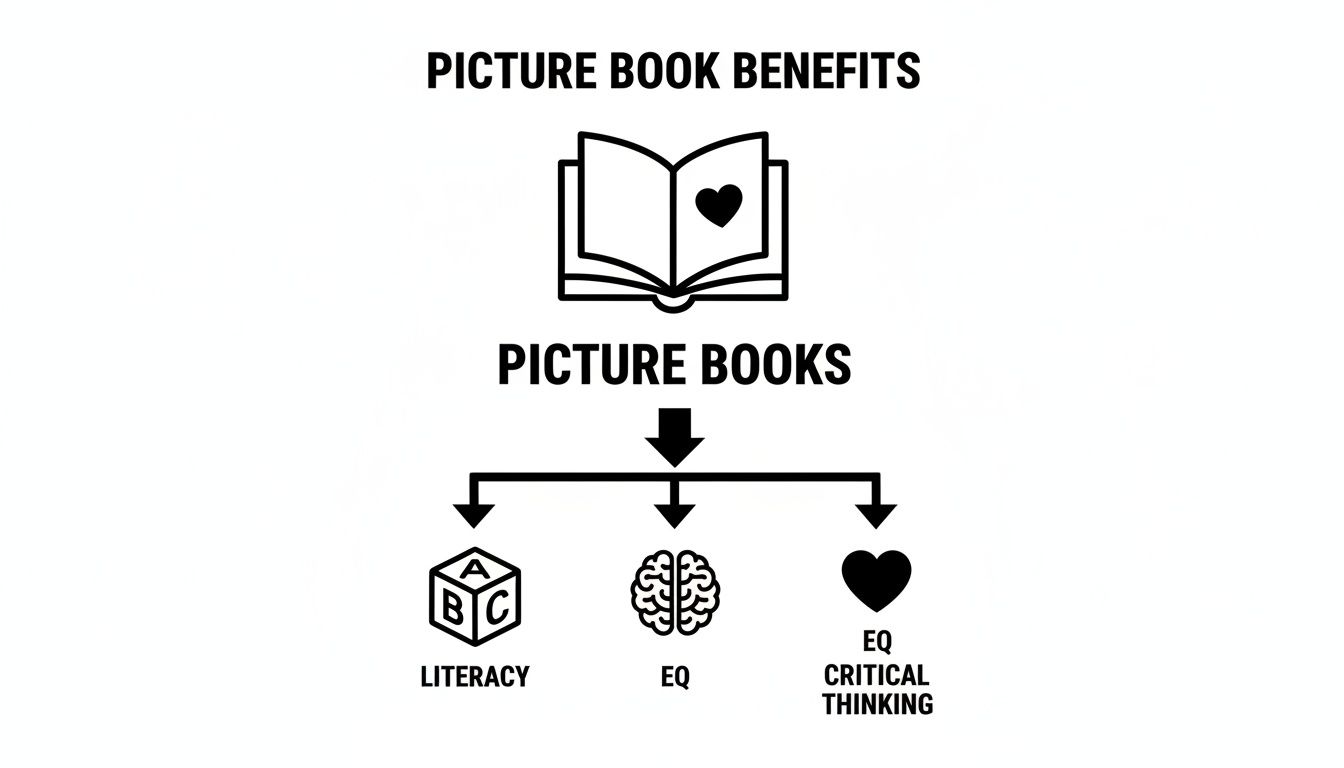
A single story can support so many different parts of a child's development, from learning the ABCs to understanding big feelings.
The Cognitive Appeal
At this age, a child's brain is a pattern-seeking machine. Books that lean into rhyme, rhythm, and repetition are incredibly satisfying. They make the story predictable and fun, empowering kids to chime in and "read" along even before they can sound out every word.
A simple, clear plot is also a must. Stories that present a straightforward problem and a satisfying solution help kindergarteners get the hang of narrative structure—a beginning, a middle, and an end. This is a bedrock skill for all future reading comprehension.
The Emotional Connection
Beyond the mechanics of learning to read, a truly great picture book has to connect with a child's heart. It needs to explore themes that are real and relevant to a five-year-old’s world.
Look for stories that touch on:
- Friendship and Sharing: These books are little guides to social interaction, helping kids figure out their own budding friendships on the playground.
- Managing Big Feelings: When characters get angry, sad, or jealous and find a way through it, it gives kids a safe space to understand their own emotional rollercoasters.
- Empathy and Kindness: Seeing the world from someone else’s perspective is a powerful exercise in building empathy, a skill that will serve them for the rest of their lives.
These emotional lessons are every bit as important as the academic ones. In fact, research shows that kindergarteners who are read to daily can advance 20-25% faster in their reading readiness skills. It’s why we’re so passionate about connecting kids with stories that inspire joy and growth.
The Power of Visual Storytelling
In a picture book, the illustrations aren’t just there to look pretty; they're equal partners in telling the story. The art should do more than just mirror the text—it should add new layers of meaning, humor, and feeling that words alone can’t always capture.
When you're looking at a book, ask yourself if the pictures are doing some of the heavy lifting. Do they show you how a character is feeling? Do they add little details and side-stories that aren't even mentioned in the text? When words and art dance together perfectly, the book becomes a completely immersive world. You can find some fantastic examples in our curated guide to the best picture books for kindergarten.
To make it even easier, here's a quick checklist you can use to see if a book hits the right developmental notes for your kindergartener.
Developmental Checklist for Kindergarten Picture Books
| Developmental Area | What to Look For in a Book | Why It Matters for Kindergarteners |
|---|---|---|
| Cognitive & Literacy | - Repetitive phrases, rhymes, or predictable patterns. - A clear and simple plot (problem/solution). - Clear connection between text and illustrations. |
- Builds phonological awareness. - Teaches basic story structure. - Develops print awareness and early decoding skills. |
| Social-Emotional | - Characters who show a range of emotions. - Themes of friendship, sharing, or kindness. - Stories that model problem-solving in social situations. |
- Helps them label and understand their own big feelings. - Provides a "script" for positive social interactions. - Builds empathy and perspective-taking. |
| Language & Vocabulary | - A mix of familiar and new "stretch" words. - Rich, descriptive language that's fun to hear. - Opportunities for kids to talk about the story. |
- Expands their vocabulary in a natural context. - Fosters a love for the sounds and power of words. - Encourages expressive and receptive language skills. |
This table is a great starting point, but always remember the most important rule: choose books that you and your child will genuinely enjoy reading together. That shared joy is the real magic.
Building a Well-Rounded Kindergarten Library
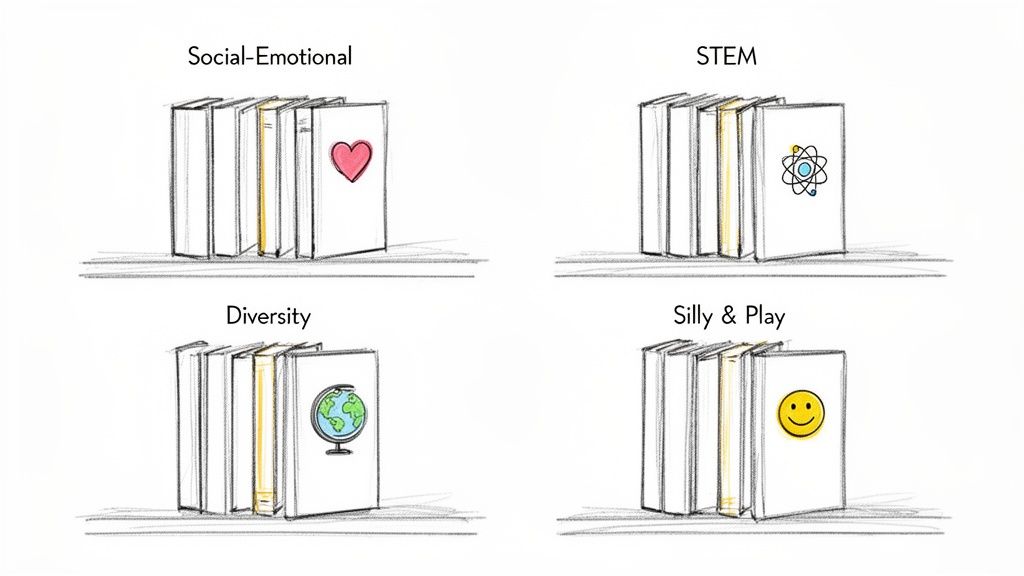
Putting together a home or classroom library is a bit like planting a garden. You wouldn’t just toss a handful of random seeds and hope for the best, would you? Of course not. You’d pick specific plants for color, variety, and the ability to thrive. A collection of picture books for kindergarten is no different—it flourishes when you intentionally choose stories that nourish a child’s whole being.
A great library does so much more than just teach the ABCs. It should offer a balanced diet of stories that build empathy, spark curiosity, reflect the beautiful diversity of our world, and celebrate pure, simple joy. This way, kids will always have the right book for the right moment, whether they’re navigating new feelings, big ideas, or blossoming friendships.
Books for Social-Emotional Learning
Kindergarten is a huge social leap. Suddenly, kids are learning to share, take turns, understand someone else’s point of view, and manage their own tidal waves of emotion. Picture books are incredible tools for this journey, acting as gentle, relatable guides for all sorts of social situations.
These stories create a safe space to talk about tricky feelings like jealousy or frustration. When a child sees a favorite character work through a problem, it gives them a sort of script they can use to handle similar moments in their own lives.
- The Rabbit Listened by Cori Doerrfeld: A truly beautiful story about empathy and the simple power of being present for someone who is hurting. It shows that sometimes, the best help you can offer is just your quiet companionship.
- Grumpy Monkey by Suzanne Lang: This one hilariously gets to the heart of a bad day, reassuring kids that it’s completely okay to feel grumpy. They don’t have to fake a smile, and their friends will still be there for them.
Books That Spark STEM Curiosity
At this age, every child is a natural scientist. They are constantly asking "Why?" and poking at the world to see how it works. Picture books can be the perfect fuel for this innate curiosity, introducing foundational concepts in science, technology, engineering, and math in a way that feels like pure fun.
These books don't need to be dry textbooks. They can be about a kid building a magnificent tower, a tiny seed growing into a giant plant, or a group of friends counting their way through an adventure. The real goal is to make learning feel like play.
A well-balanced library acts as both a mirror and a window. It allows children to see themselves reflected in the stories they read while also opening their eyes to the diverse experiences of others, fostering empathy and a broader worldview.
Books That Celebrate Our Diverse World
It’s absolutely essential for a kindergarten library to include stories that reflect the rich tapestry of our communities. These books serve as "windows" into other cultures and, just as importantly, as "mirrors" where children can see their own families and experiences represented authentically.
This kind of exposure builds a more inclusive and empathetic view of the world right from the start. Look for books that feature characters from different cultural backgrounds, family structures, and abilities. It’s a powerful way to show that while our personal stories might be different, our core feelings are often very much the same.
- Alma and How She Got Her Name by Juana Martinez-Neal: This heartwarming tale dives into family history and the meaning behind a name. It’s a wonderful celebration of heritage and what makes each of us unique.
- The Day You Begin by Jacqueline Woodson: A touching story about feeling like an outsider and finding the courage to connect with others simply by sharing your own personal story.
Books That Are Joyful and Silly
Finally, every library needs a big dose of fun! Not every book has to come with a deep, moral lesson. Silly, playful, and laugh-out-loud stories are critical for one very important reason: they teach kids that reading is an absolute joy.
These are the perfect books for a reluctant reader or for a lighthearted storytime at the end of a long day. They often have interactive parts, funny rhymes, or delightfully absurd plots that get kids giggling and begging to hear it "just one more time"—and that’s how a lifelong love of reading begins.
Bringing Stories to Life with Reading Activities
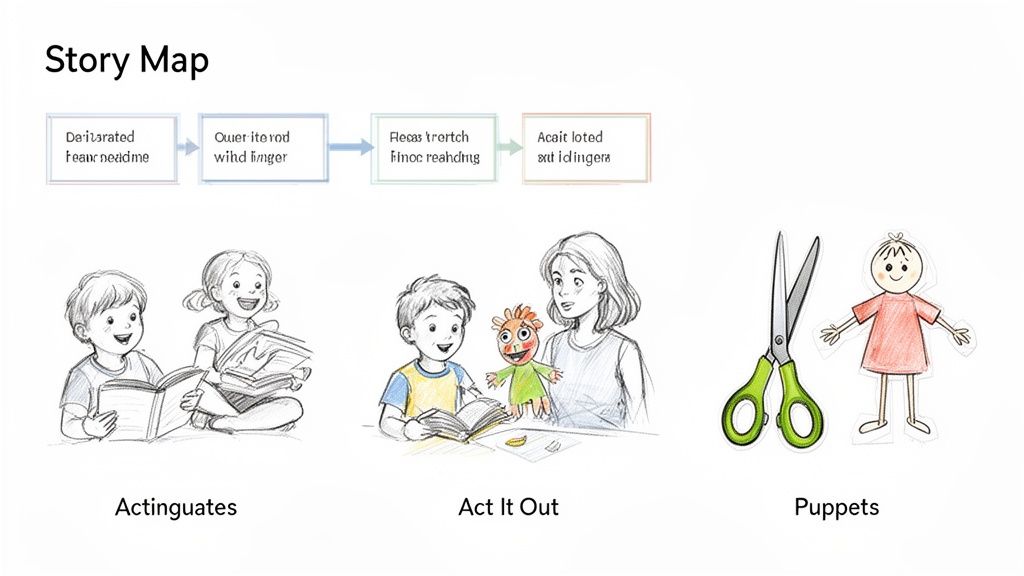
The magic of a great story doesn't have to end when you turn the final page. In fact, for a kindergartener, that’s often just where the real fun begins.
When we turn passive reading into an active, hands-on experience, we help kids deepen their connection to a story, lock in key literacy skills, and just plain have a good time.
These simple, low-prep activities are perfect for both home and the classroom. They work because they meet kids where they are, using play and creativity to build comprehension in a way that feels totally natural. The goal is to move beyond just hearing a story to truly living it.
This shift from listening to participating is where the deep learning happens. It helps cement ideas like plot, character motivation, and new words far better than just talking about them ever could.
Activities for Exploring Characters and Emotions
Understanding how a character feels and why they act a certain way is a huge leap in a child's social-emotional development. These activities help them step right into a character's shoes.
- Puppet Theater: Create simple puppets with paper cutouts and craft sticks. As you read the story again, have your child use the puppets to act out their character's part. It’s a fantastic way to practice dialogue and explore different emotions.
- Character Café: Set up a pretend snack with a character from the book. You can ask them questions like, "What are you afraid of?" or "What's your biggest dream?" This kind of imaginative play builds empathy and gets kids thinking more deeply.
By combining reading with hands-on activities, we engage multiple parts of a child's brain. This multi-sensory approach can significantly boost retention of new vocabulary and complex story ideas, making learning both more effective and more enjoyable.
Activities for Understanding Plot and Sequence
Figuring out the "beginning, middle, and end" of a story is a foundational literacy skill. Activities that focus on sequencing help kindergarteners organize their thoughts and understand cause and effect.
- Create a Story Map: On a large piece of paper, draw a simple path from start to finish. After reading a book, work together to draw or write the most important events in the right order along the path.
- Act It Out: Pick a few key scenes from the story and act them out together. This physical engagement with the plot helps cement the sequence of events in a child's memory in a really joyful, energetic way.
- Plot Twist Spinner: Make a simple spinner with prompts like "a storm hits," "a secret is revealed," or "someone disappears." Spin it after reading and ask, "What if this happened instead?" This sparks creative thinking and helps kids see how a single event can change an entire story.
For books with strong, rhythmic plots, these activities are especially powerful. You can find some great examples of how to connect activities to a specific book in our exploration of the classic, Chicka Chicka Boom Boom. Simple extensions like these are what make picture books for kindergarten truly memorable.
Creating an Inclusive and Diverse Bookshelf
Every bookshelf tells a story. Not just with the individual books it holds, but with the collection as a whole. When we’re putting together a library of picture books for kindergarten, we're aiming to build something that acts as both a mirror and a window for our little ones.
Think of it this way: a mirror book is one where a child sees their own life, family, or culture reflected right there on the page. It's incredibly powerful and affirming, helping to build a solid sense of identity. On the other hand, a window book gives them a peek into the lives and experiences of others, which is the very foundation of empathy. A good bookshelf needs a healthy mix of both.
Windows and Mirrors: The Foundation of Empathy
Kids are naturally curious about the world, and books are really their first passports. When they read stories about characters who look, speak, or live differently than they do, it makes diversity feel normal and wonderful. It teaches them that our world is a vibrant mosaic of cultures, families, and traditions.
This kind of exposure helps dismantle stereotypes before they even have a chance to take root. It grows a genuine appreciation for what makes every person unique and prepares children to be kind, inclusive people. And finding these books is more possible than ever. In 2023 alone, over 40,000 new children's titles hit the shelves globally, and picture books made up a huge 40% of all children's book sales.
How to Audit Your Bookshelf
Take a moment to look at your current book collection with fresh eyes. This isn't about feeling bad about what you have; it's about seeing where you can grow.
- Who is the main character? Make a quick mental note of the races, cultures, and abilities you see. Are most of the main characters similar?
- What families are shown? Are there different family structures represented? Think single-parent households, multigenerational families, or families with two moms or two dads.
- What settings are featured? Do all the stories take place in similar-looking neighborhoods, towns, or countries?
This simple check-in will probably reveal a few gaps. From there, you can start intentionally looking for authentic stories that will broaden your library’s horizons. A great next step is learning how to select culturally responsive children's books. By filling these gaps, you're not just buying more books—you're making sure every child feels seen and valued while preparing them to thrive in our beautifully diverse world.
A Few Common Questions About Kindergarten Picture Books
As you dive into the world of reading with your kindergartener, a lot of questions pop up. It’s a time of massive growth, and it's only natural to wonder if you're getting it "right." Here, we'll tackle some of the most common things parents and teachers ask, offering some straightforward thoughts to help you guide your new reader.
These aren't just small worries; they're the real-life puzzles you encounter during storytime. Figuring them out can turn a tricky moment into a great one.
What if My Child Only Wants to Read the Same Book Over and Over?
First off, this is totally normal—and it's actually a great sign! When a child wants the same story on repeat, they're on their way to mastering it. With every read-through, they go from simply listening to being a part of the story. They learn the rhymes by heart, know when to turn the page, and start linking the words you say to the text they see.
This kind of repetition builds a ton of confidence and fluency. It’s like their first favorite song; they just have to hear it until they know every single word. So instead of trying to steer them away, lean into it. Celebrate that they’re an "expert" on that book and use it as a chance to ask new questions. You could point out something new in an illustration or wonder aloud about what a character is thinking.
What's the Difference Between a Picture Book and an Early Reader?
This is a fantastic question because these books often sit on the same shelf but do very different jobs. It all comes down to how the words and pictures work together.
- Picture Books: The illustrations are a huge part of the story. In fact, they often show you things the words don't say, adding layers of feeling, humor, or important details. These books are made to be read to a child.
- Early Readers: The pictures are there to support the text, but the words tell the whole story on their own. These books use a carefully chosen vocabulary and simple sentences, designed for a child to start reading by themselves.
Think of a picture book as a shared experience, a conversation between you and your child. An early reader is more like a first solo flight, giving them a chance to practice their new decoding skills. Both are absolutely essential, but they meet different needs as a child learns to read.
How Can I Find Great Books on a Budget?
Building a wonderful library of picture books for kindergarten doesn't need to cost a fortune. There are so many ways to find amazing stories without emptying your wallet. Your local public library is your absolute best friend here. Librarians are goldmines of information and can point you toward fantastic, age-appropriate books you might have otherwise missed.
Remember, the goal isn't just owning books; it's about having access to a wide variety of them. A library card is the most powerful tool for sparking a love of reading, offering an endless, rotating collection of stories to explore together.
Beyond the library, you can also check out:
- Used Bookstores: You can find some real treasures here for just a few dollars.
- Book Swaps: Why not organize a book exchange with other families from school or your neighborhood?
- Online Marketplaces: People often sell bundles of gently used children's books for a great price.
If you get a little creative, you can offer your kindergartener a rich and exciting variety of stories that keeps them curious and ready for the next adventure.
At Number 6 Publishing, we believe every child deserves stories that spark curiosity and joy. Explore our curated book collections and discover your next family favorite. https://www.number6publishing.com