
You've probably heard the term culturally responsive when talking about children's books. What does it really mean? At its core, it’s about giving young readers stories that serve as both mirrors and windows. These books reflect a child's own life and culture, which helps validate their identity. Just as importantly, they offer a clear view into the diverse experiences of others, building a foundation of empathy and understanding.
What Are Culturally Responsive Children's Books?
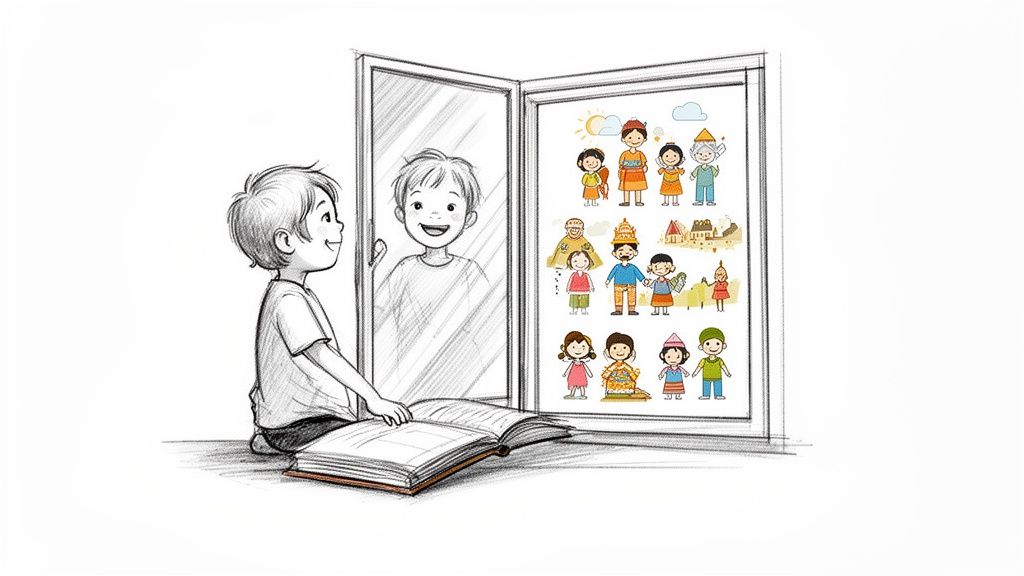
Think about a child picking up a book and, for the very first time, seeing a character who eats the same foods they do, celebrates the same holidays, or lives in a family that looks just like their own. That powerful, "aha!" moment of connection is the heart of culturally responsive literature.
These books go so much deeper than just putting diverse faces on the cover. They are stories that genuinely and respectfully portray the traditions, languages, family structures, and real-life experiences of different communities. The goal isn't just surface-level representation, but meaningful representation that feels true.
The Power of Mirrors and Windows
The "mirrors and windows" analogy, first introduced by Dr. Rudine Sims Bishop, is a fantastic way to grasp their dual role. Let’s break down what this really means for a young reader.
-
Mirrors That Reflect Identity: When children see their own lives and culture reflected in stories, it sends a powerful message: "You matter. Your story is important." This kind of validation is essential for building healthy self-esteem and a strong sense of who they are.
-
Windows That Build Empathy: For kids from different backgrounds, these same books act as windows. They offer an authentic glimpse into another person’s world, sparking curiosity and real understanding. This kind of exposure helps break down stereotypes before they take root, teaching children to appreciate and respect differences.
A child’s bookshelf should be a source of both comfort and curiosity. It should contain stories that feel like home and stories that feel like a journey to a new and exciting place.
Moving Beyond Simple Diversity
It's really important to distinguish between books that are merely diverse and those that are truly culturally responsive. A story might feature characters from various ethnic backgrounds but still lean on shallow portrayals or tired stereotypes.
A truly responsive book, on the other hand, is crafted with nuance and care. It celebrates cultural specifics without ever reducing its characters to one-dimensional stand-ins for their entire background. This depth is what allows children to build genuine connections, whether they’re looking into a mirror or through a window.
This shift toward authentic storytelling is also being seen in the market. There's a growing demand in the global children's book market for stories that reflect diverse backgrounds. By 2025, the overall market is projected to hit $15,500 million, and a key driver is content that connects with readers across cultures. You can read more about the children's book market trends here.
Ultimately, filling a child's library with these kinds of stories is a real investment in their social and emotional well-being. It gives them the tools to become more compassionate, curious, and thoughtful global citizens.
The Essential Role of These Books on Every Bookshelf
Understanding what culturally responsive children's books are is one thing. Knowing why they are so vital is what truly transforms a bookshelf. These stories are so much more than entertainment; they are powerful tools for social-emotional growth and cognitive development that benefit every single child, no matter their background.
For children who see themselves, their families, and their communities reflected on the page, the impact is immediate and profound. It’s an affirmation of their existence, a quiet confirmation that their experiences are worthy of being a story. This validation is a cornerstone of healthy identity formation and self-worth.
For children who don't share the same background as the characters, these books serve a completely different but equally critical function. They act as windows into a wider world, building bridges of understanding and empathy. These stories lay the groundwork for a more complex worldview, challenging unconscious biases before they can solidify into prejudice.
Fostering Critical Thinking and Empathy
When children engage with stories that present different perspectives, they naturally start asking questions. This curiosity is the beginning of critical thinking. They learn that their own experience is not the only one, which encourages them to think more deeply about the world and their place in it.
This process directly translates into real-world social skills. A child who reads about a character overcoming a challenge unique to their culture is better equipped to understand and support a classmate facing a similar situation.
- Improved Classroom Engagement: Children who feel seen and understood in their learning materials are more likely to participate and connect with the curriculum.
- Stronger Friendships: Empathy cultivated through stories helps children navigate social dynamics with greater compassion, leading to more meaningful peer relationships.
- Greater Resilience: Seeing characters who look like them demonstrate courage and solve problems can inspire children to build their own resilience and confidence.
The simple act of reading a story together can spark essential conversations at home and in the classroom. Discussing a character’s feelings, motivations, and cultural traditions builds a shared vocabulary for talking about community, compassion, and respect. It turns storytime into a foundational lesson in what it means to be a good friend and a thoughtful member of society. You can find more insights into why representation in children's books is so crucial for development.
A Global Shift Toward Inclusive Storytelling
This movement toward inclusive literature is not just a local trend; it's a global shift. The rise of culturally responsive children's books is reshaping publishing, with regions like Asia Pacific expected to see the fastest growth due to a high demand for authentic cultural storytelling. This worldwide pivot is driven by parents who recognize the cognitive benefits of diverse books. In North America, where U.S. Department of Education data shows 62% of children own at least one interactive book, publishers are increasingly weaving cultural threads into engaging formats that blend play with representation.
By inviting diverse stories into a child's life, we are not just giving them a book. We are giving them a broader mind, a kinder heart, and a more nuanced understanding of the beautiful complexity of our world.
This conscious effort to diversify bookshelves is a direct response to the needs of modern families. It's vital for parents to find support and resources when navigating the unique challenges of parenting in a diverse environment, exploring various strategies for raising Muslim children in the West, for example. Books that reflect these experiences provide both validation for families and educational moments for others. Ultimately, a bookshelf filled with culturally responsive stories is a bookshelf that prepares a child for life.
How to Select Authentic Culturally Responsive Books
Choosing the right culturally responsive books can feel like a heavy responsibility, but it doesn’t have to be overwhelming. The idea is to go beyond a simple checklist and start looking at stories with a more thoughtful, critical eye. By asking just a few key questions, you can become a confident guide for the young readers in your life.
This is all about looking for nuance, respect, and realness. Think of yourself as a kind of literary detective, on the hunt for clues that a story was put together with care and genuine understanding. The most important questions are always: Who is telling this story? And does it show a culture with depth, or does it just lean on shortcuts and stereotypes?
The whole decision really boils down to this: Does the book offer a mirror that helps a child see and affirm their own identity, or does it open a window that builds empathy for others?
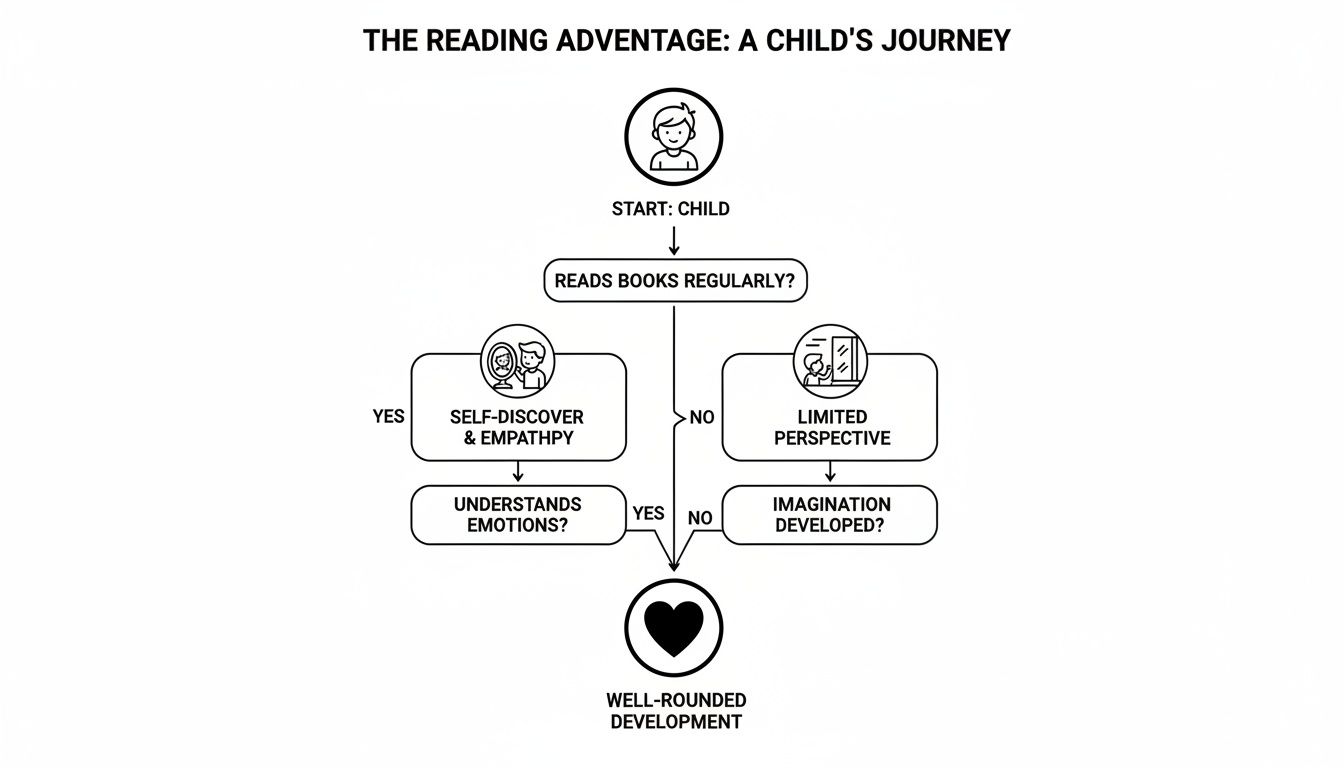
As you can see, books that act as mirrors or windows both contribute to a child's positive social and emotional growth—it's a win-win.
Championing Own Voices Literature
One of the best signs of an authentic book is the concept of “own voices” literature. This simply means the author shares the same marginalized identity as their main character. An “own voices” book is written from the inside out, offering a layer of nuance and lived experience that’s incredibly difficult for an outsider to capture.
When an author writes from their own cultural background, they can naturally weave in the small details, real-sounding dialogue, and honest emotions that bring a story to life. While authors outside a culture can certainly write respectful, well-researched stories, starting with creators who share their characters' identities is a fantastic way to build an authentic collection.
Moving Past Tokenism and Stereotypes
Authenticity also means knowing how to spot and steer clear of tokenism and damaging stereotypes. Tokenism is when a character from a marginalized background is dropped into a story just to check a “diversity” box, without being given a real personality or purpose. They often feel flat and one-dimensional.
Stereotypes are even worse. They paint an entire group of people with a broad, oversimplified, and often wrong brush. Truly authentic books push back against these lazy portrayals by showing characters as complex individuals with their own unique personalities, dreams, and flaws.
"Authentic representation is not about showcasing a single 'diverse' character. It's about populating a story with fully realized people whose culture is an integral part of who they are, not their only defining trait."
To help you tell the difference between stories that enrich and those that fall flat, here's a simple checklist to keep in mind when you're at the library or bookstore. For more great examples, you can always check out curated lists of recommended multicultural books for elementary students to see these principles in action.
Checklist for Selecting Authentic Books
This table breaks down what to look for versus what to avoid when evaluating a book's cultural representation.
| What to Look For (Green Flags) | What to Avoid (Red Flags) |
|---|---|
| Complex Characters: Individuals are shown with a full range of emotions, strengths, and weaknesses. | Stereotypical Portrayals: Characters are defined by clichés or oversimplified cultural traits. |
| Cultural Specificity: Traditions, foods, and languages are presented with accuracy and context. | Generic or Vague Depictions: Culture is treated as a monolithic or interchangeable backdrop. |
| "Own Voices" Creators: The author or illustrator shares the cultural background of the characters. | Outsider Perspective Without Nuance: The story feels like it was written by a tourist, lacking insider details. |
| Agency and Empowerment: Characters are active drivers of their own stories and destinies. | Passive or Helpless Characters: Characters are portrayed as needing to be saved or taught by a dominant culture. |
| Authentic Dialogue: Language and speech patterns feel natural and true to the community being represented. | Exaggerated or Inaccurate Dialect: Dialogue relies on harmful caricatures or sounds unnatural. |
By keeping these points in mind, you can confidently pick books that truly honor the cultures they represent.
Finally, remember to think about the book as a whole. Beyond cultural representation, physical accessibility matters, too. Features like using the most accessible fonts can make a world of difference for children with different visual or cognitive needs. Combining all these strategies will help you build a library that isn't just diverse, but truly welcoming and enriching for every single reader.
Finding Great Books for Every Age and Stage
Picking out a culturally responsive book isn't just about the topic. It's really about matchmaking—connecting the right story with the right reader at the right moment. What makes a second grader’s eyes light up might feel too simple for a middle schooler, and a complex young adult novel could easily overwhelm a younger child. It all comes down to understanding their developmental stage and what they need from a story.
This isn't some passing fad, either. The hunger for diversity and inclusion is fundamentally changing the children's book world. In fact, culturally responsive titles are expected to push the industry to USD 24.5 billion by 2031. Even board books for our littlest readers are part of this movement, with that slice of the market projected to hit USD 2,300 million by 2034. Publishers are finally focusing on creating inclusive designs for a global audience. You can discover more insights about the children's books market to see the trends for yourself.
So, let's walk through how to find books that are engaging, appropriate, and authentic for every step of a young reader's journey.
Early Readers: Toddlers to Grade 2
For the youngest crowd, picture books are where the magic happens. At this stage, we’re looking for positive, affirming stories built around simple, universal ideas. The pictures are just as crucial as the words, so seek out illustrations that show diverse characters in a natural, joyful way.
The whole point is to make diversity feel normal right from the start. We want books showing kids from all kinds of backgrounds just doing everyday things—playing at the park, sharing dinner with family, or heading off to school.
- Focus on Foundational Themes: Look for stories about family, friendship, community, and celebrating what makes us different in simple, upbeat ways.
- Prioritize Visual Representation: The illustrations should be inclusive and never slip into caricature. Do the characters look like real people? Are different skin tones, hair textures, and family types shown with care and respect?
- Keep It Concrete: Little kids get tangible ideas. A story about trying a new food from a friend's culture will stick with them far better than an abstract lesson on tolerance.
A perfect example for this age could be a board book showing babies from all over the world or a picture book about best friends who celebrate different holidays. The message is beautifully simple: our world is full of amazing people, and our connections are what truly matter.
Middle Grade Readers: Grades 3 to 7
Once kids hit the middle grades, their ability to grasp more complex ideas really takes off. They’re ready for chapter books and longer stories that dig into identity, social issues, and history with more nuance. This is the ideal time to introduce stories that explore challenges and build empathy on a much deeper level.
For this age group, culturally responsive books can go beyond just showing diverse faces. They can explore what it feels like to move through the world with a specific cultural identity, asking bigger questions and encouraging kids to see things from someone else’s perspective.
This is the age where a "window" book can truly change a child's perspective. A well-told story can transport them into a character's life, helping them understand experiences they might never have otherwise considered.
Think about a historical fiction novel on the Civil Rights Movement told through a child’s eyes—it makes history feel real and personal. Or a modern story about an immigrant family finding their way in a new country, which can build a profound sense of empathy. A great starting point is finding excellent stories that center specific cultural experiences, like our handpicked list of Native American books for kids.
Young Adult Readers: Grades 8 and Up
Young adult (YA) literature is where authors can really dive into the full complexity of identity and social justice. Teens are not only ready for stories that don’t pull punches—they need them. The best culturally responsive YA books explore intersectionality, which is how different parts of a person's identity (like race, gender, and class) overlap to create unique experiences.
These stories are powerful tools. They help teens understand systemic problems, privilege, and why being an ally is so important. They validate the experiences of teens from marginalized backgrounds while challenging every reader to think more critically about the world we live in.
Look for books that feature:
- Nuanced Protagonists: Characters who aren’t perfect heroes. They’re complex, messy individuals figuring out who they are and where they fit.
- Unflinching Honesty: Stories that tackle tough subjects like prejudice, systemic inequality, and social activism without pretending there are easy answers.
- Authentic Voices: Narratives that truly capture the voice, worries, and hopes of modern teenagers from a specific cultural point of view.
By matching the book to the reader’s stage in life, you make sure the story doesn’t just get read—it gets felt, and leaves a lasting, positive mark.
Bringing These Stories to Life at Home and School
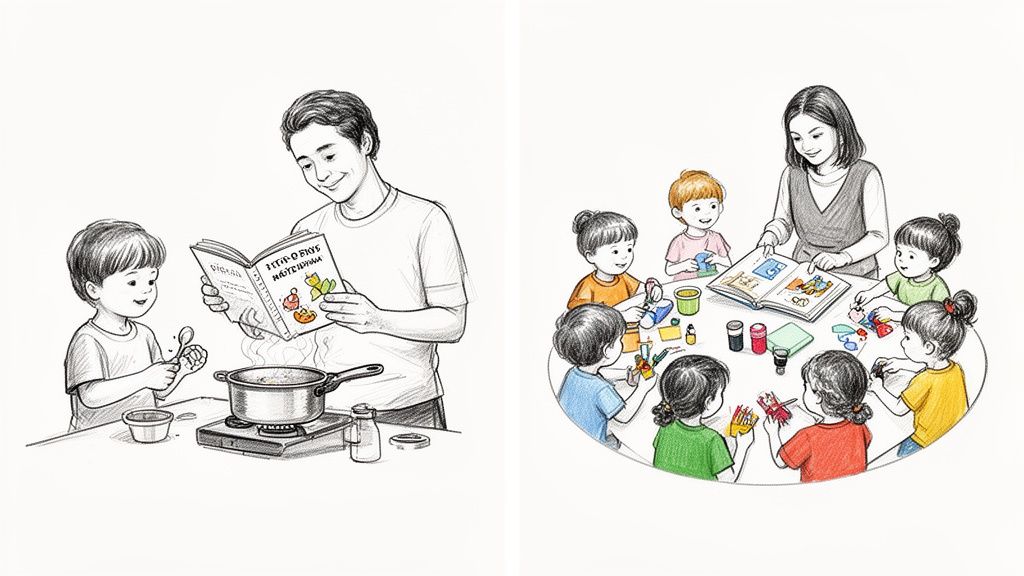
Just having a culturally responsive book on the shelf is a good start, but it’s only the first step. The real magic happens when these stories become launchpads for conversation, curiosity, and genuine connection.
You don’t need elaborate lesson plans to make this happen. All it takes is a little intention to move beyond the plot and use the story as a bridge—a way to better understand the world and ourselves. For parents and educators, these books are a fantastic opportunity to build lasting relationships and a real love for learning.
Interactive Reading Strategies for Home
At home, you have the freedom to turn storytime into an experience that sticks with a child long after the final page. The goal is to tie the story directly to your own family’s life and the world right outside your door.
Simple, hands-on activities make the cultures and themes in the book feel real and immediate. This way, learning feels a lot more like play, which is exactly how kids absorb things best.
Here are a few simple ideas to get going:
- Cook Together: Did the story mention a special meal? Look up a simple recipe and make it together. The smells and tastes create a powerful sensory memory tied to the culture you’re exploring.
- Explore Music and Art: Hop online and find music, art, or dance from the culture featured in the book. Listening to a song or seeing traditional artwork adds an entirely new layer of understanding.
- Connect to Family History: Let the book be a prompt to share your own family’s stories. You could say, “This reminds me of when Grandma moved to a new city,” helping your child see those universal themes in their own heritage.
Reading a book should be the beginning of a conversation, not the end. The most powerful questions are the ones that make a child think, wonder, and connect the story to their own world.
Classroom Activities That Deepen Understanding
In a classroom, culturally responsive children's books can be the cornerstone of projects that are far more engaging than a standard book report. These activities help students develop empathy, critical thinking, and a much more complete view of history and society.
When stories become the starting point for inquiry, teachers can create a vibrant, inclusive classroom where every single student feels seen and valued.
Consider these project ideas:
- Author and Illustrator Studies: Pick a creator with a unique cultural background and spend time exploring their work. Students can learn about the author's life and what inspires them, gaining real insight into what authentic representation looks like from the inside out.
- Community Story Maps: After reading a book set in a specific place, have students create a map highlighting key locations from the story. They can add drawings and notes about cultural landmarks, helping them visualize the world the characters live in.
- "Text-to-World" Connections: Challenge students to find current news articles or videos that connect to the themes in the book. This activity bridges fiction and reality, showing them just how relevant the issues in the story are today.
Sparking Meaningful Conversations
Ultimately, the best tool you have is conversation. Asking thoughtful, open-ended questions helps kids move beyond just retelling the plot and start digging into the deeper emotional and cultural layers of a story. The goal isn’t to quiz them, but to spark their curiosity and make them feel comfortable sharing their own ideas.
Here are a few sample prompts you can adapt for almost any book:
- How did the character's family or community help them out?
- What was a tradition in the book that was totally new to you?
- If you could ask one of the characters a question, what would it be?
- Did anything in this story remind you of your own life?
- How do you think the setting—the city or country—shaped what happened in the story?
These questions don't have right or wrong answers. They're designed to open the door to a real discussion, building the empathy and critical awareness that are at the very heart of culturally responsive reading.
Of course. Here is the rewritten section, crafted to sound completely human-written and natural, following the style and tone of the provided examples.
Answering Your Common Questions
Diving into the world of culturally responsive children's books can bring up some important questions, and that's a good thing. Whether you're a parent trying to build a thoughtful home library or an educator dedicated to creating an inclusive classroom, it’s completely natural to have a few hesitations.
Our goal here is to address those common concerns with clear and practical answers. We want you to feel confident and purposeful as you build a bookshelf that truly opens up the world for your kids. Let's tackle some of the most frequent questions that come up.
Why Are These Books Important for My Child If We Are Not a Minority?
That’s a fantastic and very common question. It really gets to the heart of why these stories matter for all children. Remember the idea of books serving as both mirrors and windows? While some children desperately need "mirrors" that reflect their own lives, your child gets the powerful gift of a "window" into the rich experiences of others.
This isn't just a nice-to-have; it's a critical life skill. Reading these stories builds genuine empathy, helping your child connect with and understand people from different walks of life. It also prepares them for a diverse world by gently challenging stereotypes before they can even take root, fostering a natural respect for others.
Ultimately, these books help every child develop a more complex and compassionate view of the world they'll inherit. They learn that their own experience is just one of many, which is a foundational lesson in becoming a thoughtful global citizen.
How Can I Avoid Choosing the Wrong Book or Saying the Wrong Thing?
This concern is completely valid and honestly, it shows just how much you care about getting it right. The key is to approach this with a mindset of learning right alongside your child. You absolutely do not have to be an expert on every culture to share these beautiful stories.
Start by using the selection criteria we discussed earlier—look for books by "own voices" authors and check that the story steers clear of tired stereotypes. When you're reading together and a question comes up that you can't answer, it's perfectly fine to say, "I'm not sure, but that's a great question. Let's find out more about that together!"
Your goal isn't perfection; it's about opening a thoughtful and respectful conversation. Modeling humility and curiosity is one of the most powerful lessons you can teach. It shows your child that learning is a lifelong process.
By embracing this journey together, you create a safe space for exploration and dialogue. The focus shifts from a fear of making mistakes to the joy of shared discovery—which is what reading is all about.
Where Can I Find Good Recommendations for These Books?
Finding great books is the fun part! Once you know what to look for, you'll start seeing wonderful options everywhere. Thankfully, there are many trusted resources dedicated to highlighting authentic and high-quality culturally responsive literature.
Here are some excellent places to start your search:
- Your Local Librarian: Never underestimate the power of your school or public librarian! They are incredible resources, passionate about connecting readers with the right books and often very knowledgeable about diverse titles.
- Look for Book Awards: Certain awards specifically recognize outstanding work by and about diverse communities. Keep an eye out for winners of the Coretta Scott King Award, the Pura Belpré Award, and the Asian/Pacific American Award for Literature.
- Trusted Online Sources: Organizations like We Need Diverse Books and The Brown Bookshelf offer carefully curated book lists, author interviews, and recommendations that are updated regularly.
Exploring these sources is a great way to discover new favorites and feel confident that you're choosing titles celebrated for their authenticity and quality. Building your library becomes less of a chore and more of an adventure.
At Number 6 Publishing, we believe every child deserves stories that open their hearts and minds. From whimsical adventures to heartfelt tales, we are dedicated to connecting families and educators with books that inspire. Explore our collection and curated reading lists to find your next unforgettable story at https://www.number6publishing.com.