
Don't Let the Pigeon Drive the Bus! is a modern classic, but it’s more than just a book—it’s an interactive game. The story’s genius lies in its simple premise: a bus driver puts you, the reader, in charge with just one rule: don't let the Pigeon drive the bus.
Why This Pigeon Became a Phenomenon
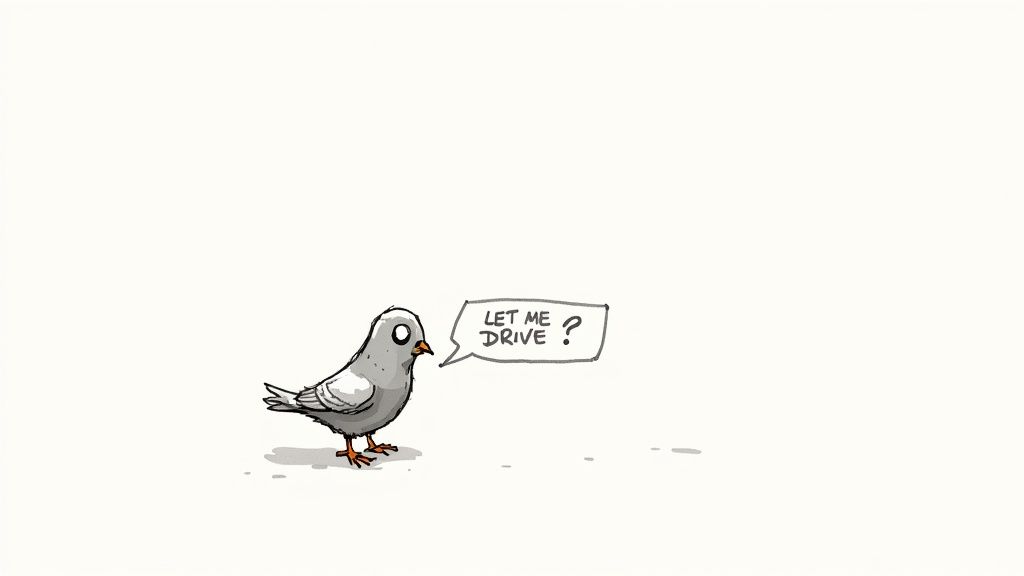
Welcome to the brilliantly simple and chaotic world Mo Willems created. The story kicks off with a bus driver looking right at the reader and asking for a favor while he takes a quick break. This immediately breaks the fourth wall, pulling your child straight into the action.
Suddenly, they aren't just listening to a story; they are a central character with a very important job. For a young child who is always being told what to do, this is incredibly empowering. The roles are flipped, and for once, they’re the one holding all the power.
A Masterclass in Interactive Storytelling
The real fun begins when the Pigeon shows up. His pleas to drive the bus grow more and more creative, escalating from simple requests to bribery, flattery, and even a full-blown, page-filling tantrum. Every single attempt is aimed directly at the reader, creating a real back-and-forth conversation.
This format works wonders for toddlers and preschoolers. It gives them a safe and hilarious space to practice a word they’re just starting to get a handle on: "NO!"
By putting the child in a position of authority, the book cleverly reinforces concepts of boundaries, responsibility, and decision-making without ever feeling like a lesson. It’s play-based learning at its finest.
Building Confidence with Every Page Turn
Each time a child tells the Pigeon "no," they’re not just saying a word; they're actively shaping the story's outcome. They get to see the direct result of their decision, which is a powerful confidence-builder that shows them their voice matters.
The simple, expressive illustrations are a huge part of the charm, perfectly capturing the Pigeon’s wild emotional ride and making his feelings clear to even the youngest kids. It’s an experience many children can relate to, making the Pigeon feel like a mischievous but understandable friend. This kind of emotional connection is what makes certain books stick, much like the depth found in classics you can read about in our guide on Where the Wild Things Are.
Ultimately, the shared joke of keeping that silly Pigeon away from the wheel makes for a memorable and joyful read, every single time.
Meet the Mind Behind the Pigeon: Mo Willems
Long before the Pigeon ever begged to drive a bus, his creator, Mo Willems, was working his magic on the small screen. Willems got his start as a writer and animator, spending nine years on the legendary show Sesame Street. It turned out to be the perfect training ground for his future as a picture book icon.
Working in children's television taught him that every second counts. He became a master at telling a great story with laser-sharp comedic timing and beautifully simple visuals. This experience is the secret sauce behind his literary style, where just a few expressive lines can pack a universe of emotion. You can practically see the DNA of his Emmy-winning animation in every single book he creates.
From Screen to Page
With this unique background, it's no surprise that his first jump into children's books was a runaway hit. When Don't Let the Pigeon Drive the Bus! hit shelves in 2003, it instantly became a modern classic.
The book's cover, highlighted on its Wikipedia page, shows off that simple yet powerful art that grabs you right away.
That clean background and bold character design are pure Willems. It’s a direct nod to his animation roots and makes the Pigeon's personality practically leap off the page.
Right out of the gate, the book was awarded the prestigious Caldecott Honor, a huge nod to its artistic genius and how deeply it connected with kids. This debut was so massive that every standard-format Pigeon book since has landed on the New York Times best-seller list—an incredible achievement for any picture book series. You can learn more about the book's incredible reception and history on Wikipedia.
"I get my ideas from listening to everyday life and then trying to make it funny," Mo Willems has said, which perfectly sums up his gift for creating characters we all see ourselves in.
His talent for finding the humor in life's little frustrations is what ties all his work together. He brought that same magic to other beloved series, like the one we explore in our look at the Knuffle Bunny books. Willems' journey from television to the bookshelf cemented his place as a true giant in the world of children's stories.
The Important Lessons Hidden in the Humor
While the book is undeniably hilarious, it’s also a surprisingly powerful tool for social-emotional learning. The entire story flips the typical parent-child dynamic right on its head. By putting the young reader in charge, Mo Willems cleverly introduces big ideas like responsibility and setting boundaries.
The child isn't just a passive audience member; they're the one enforcing the rules. This simple but brilliant setup gives them a chance to practice being assertive in a totally safe and playful way. They quickly learn that their "no" actually matters and can change what happens next—a huge lesson for building self-confidence.
Understanding Big Emotions
The Pigeon's wild emotional ride is a masterclass in empathy for little ones. He cycles through a whole range of feelings that any toddler will immediately recognize:
- Hopeful Pleading: He starts off polite, with simple requests.
- Creative Bargaining: He moves on to bribery and making promises he probably can't keep.
- Frustrated Tantrum: It all ends in a full-blown, page-filling meltdown.
Seeing this emotional arc helps kids put a name to complex feelings in others. They watch the Pigeon’s frustration grow, which opens the door for a great conversation about why he feels that way and why the answer still has to be "no."
To really understand how the book supports a child's growth, let's break down the key developmental themes woven into the Pigeon's pleas.
Key Developmental Themes in the Story
| Theme | Explanation | Importance for Child Development |
|---|---|---|
| Setting Boundaries | The reader is tasked with consistently saying "no" to the Pigeon's requests, reinforcing the main rule. | Teaches children that it's okay to say no and helps them practice establishing personal limits in a safe context. |
| Responsibility | The bus driver entrusts the reader with a single, important job: don't let the Pigeon drive the bus. | Gives children a sense of ownership and importance, showing them that their actions have consequences. |
| Empathy | The Pigeon displays a wide range of emotions, from hopeful to desperate to full-blown anger. | Helps kids recognize and name emotions in others, building a foundation for understanding different perspectives. |
| Emotional Regulation | The reader witnesses the Pigeon's tantrum but must hold firm, learning not to give in to emotional outbursts. | Models the idea that while big feelings are valid, they don't have to dictate our decisions or change the rules. |
These themes work together to turn a simple, funny story into a rich learning experience, giving kids a playground to practice crucial life skills.
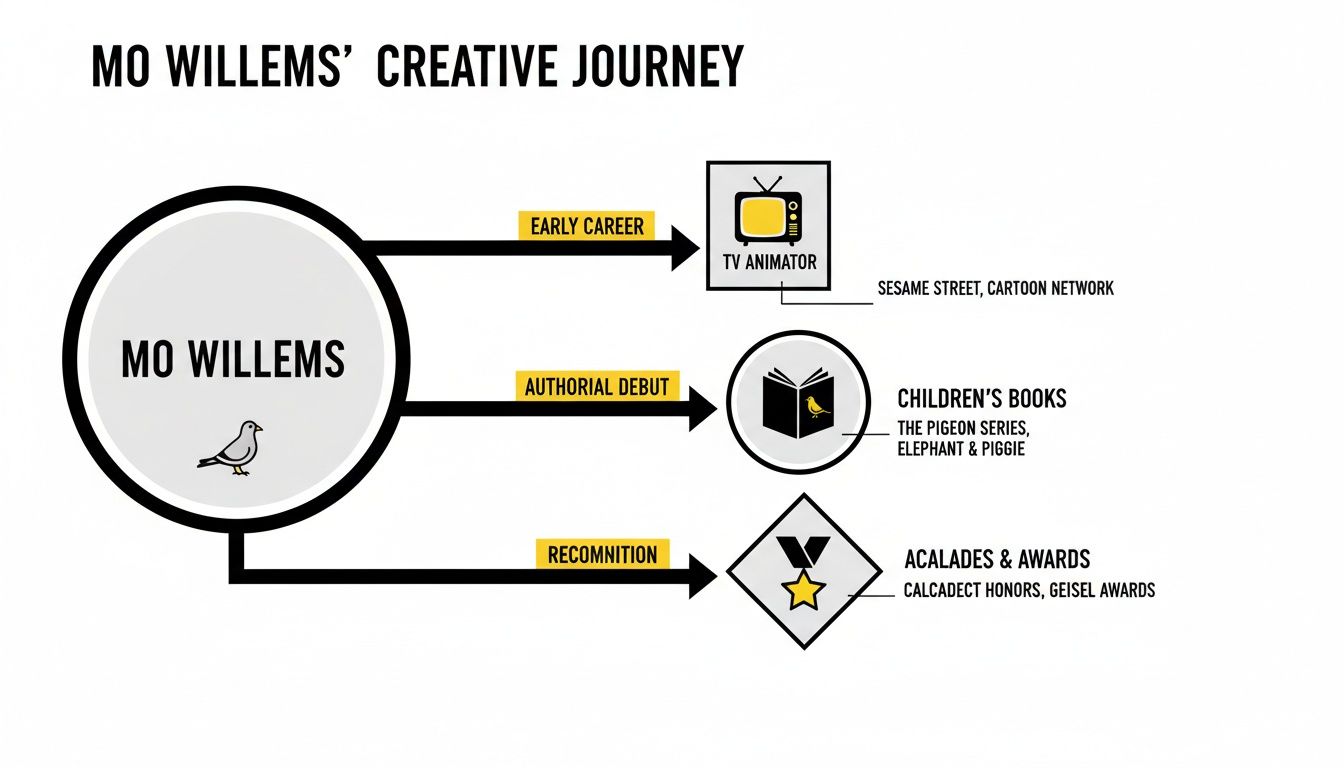
You can really see how Mo Willems’ background as a TV animator shaped his unique storytelling. His experience with visual comedy and getting a point across quickly was the perfect recipe for the picture book world.
Ultimately, that persuasive pigeon offers a safe space for kids to practice thinking for themselves and standing firm. It’s what turns a fun little story into a truly profound experience.
How to Make Storytime an Interactive Adventure
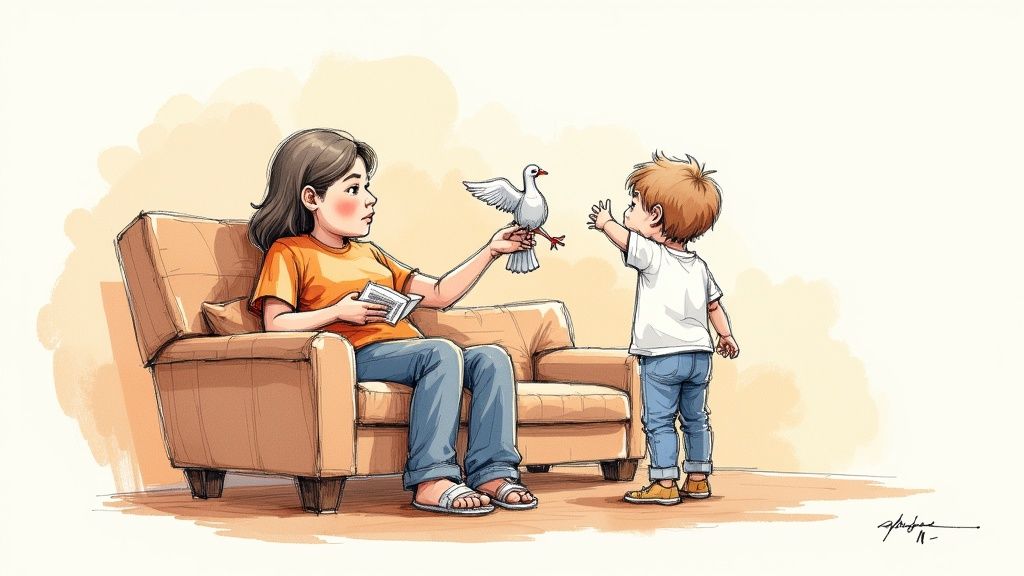
Reading Don't Let the Pigeon Drive the Bus! isn't just about saying the words on the page. Think of it more like a performance where you and your child get to be the main stars. To really make it shine, you have to lean into the Pigeon's hilarious schemes, turning what could be a simple story into a back-and-forth conversation.
The real secret is to go all-in on your Pigeon impression. Give him a whiny, pleading voice that gets more and more desperate with every turn of the page. And when he throws that epic tantrum? Don't just read it—act it out! A dramatic sigh or even a little flop onto the couch can turn a regular reading into an unforgettable, laugh-out-loud moment.
Master the Dramatic Pause
One of the best tools you have is the dramatic pause. It's so simple but so effective. After the Pigeon makes one of his outrageous requests, just stop. Look at your child, raise an eyebrow, and wait.
That moment of silence is a direct invitation for them to jump in and yell their "NO!" It gives them the space to take ownership of the story. This simple trick does more than just make reading fun; it helps build their language skills and confidence. You're showing them that their voice actually matters.
The goal is to make your child feel like the most important character in the story—because they are. Each "no" they yell reinforces their role as the responsible decision-maker.
Actionable Tips for an Engaging Reading
If you want to bring the story to life, here are a few practical things you can try the next time you sit down to read:
- Ask Follow-Up Questions: When your child says "no," try asking why the Pigeon shouldn't drive the bus. This gets them thinking a little deeper and helps them practice explaining their ideas.
- Use Your Whole Body: Get physical! Point right at the words, mimic the Pigeon's desperate shrugs, and make your eyes go wide when he gets an idea. Your expressions tell half the story.
- Vary Your Pace: When the Pigeon gets excited, speed up your reading to match his energy. When he’s trying to be sneaky, slow things down to a whisper. It adds a whole new layer of drama.
By making reading an active experience, you help build a genuine love for books that can last a lifetime. This interactive approach works wonders for many classics, as you'll see in our guide on Brown Bear, Brown Bear, What Do You See. To take your storytime to the next level, you might also find this guide to picking the perfect board book helpful for your little ones.
Creative Activities to Extend the Fun
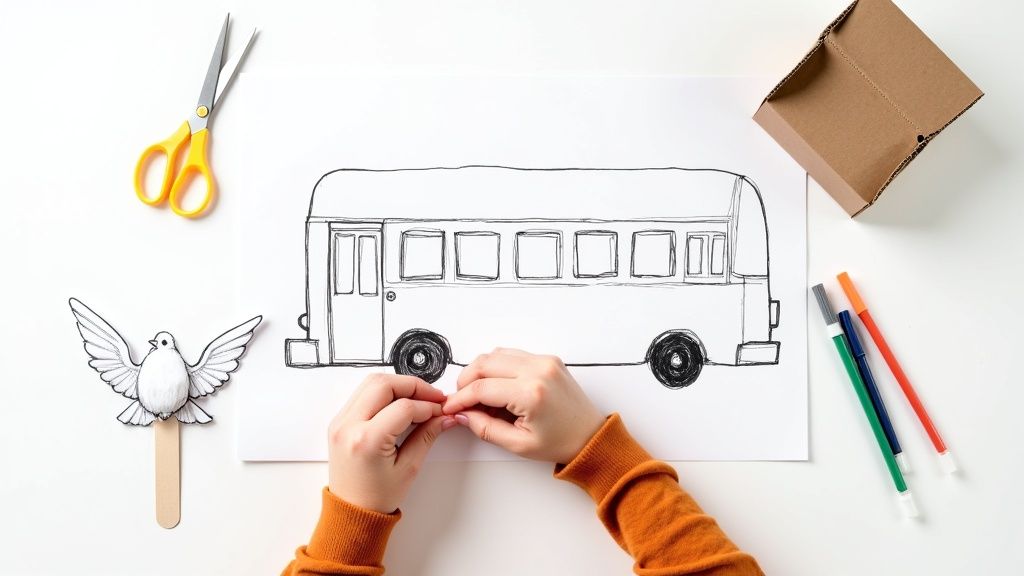
The story doesn't have to end when you close the book. The world of Don't Let the Pigeon Drive the Bus! is a perfect launching pad for all sorts of hands-on activities that keep the spirit of the story alive and kicking.
These projects are more than just a good time; they're a clever way to reinforce the book's core ideas of responsibility, persuasion, and boundless creativity. When you bring the story into the real world with crafts and play, you help kids forge a much deeper connection to what they've read. This is where learning stops feeling like a chore and becomes genuinely joyful.
Hands-On Pigeon Projects
Ready to get creative? These are simple, high-impact activities you can do at home or in the classroom. They need very few supplies but deliver a whole lot of fun.
- Build a Cardboard Box Bus: Grab a large cardboard box and transform it into the Pigeon’s dream ride. Cut out some windows, let your little one paint it yellow, and glue on paper plate wheels. It’s the perfect prop for acting out the story.
- Create Pigeon Stick Puppets: Just draw a simple Pigeon shape on paper, cut it out, and tape it to a craft stick. Don't forget to make one for the bus driver, too! Now you’re ready for a puppet show where you can even invent new, sillier arguments for the Pigeon.
- Design a "Do Not Let..." Sign: Hand over some paper and crayons and let your child make their own official-looking sign. Ask them what else the Pigeon shouldn't be allowed to do. You might get "Don't let the Pigeon eat all the cookies!" or something even more imaginative.
Activities like these are great for building fine motor skills and sparking creative expression, all while tying back to the book’s central conflict. To keep that creative fire going, it's also worth looking into the best imaginative play toys that can expand on the themes Mo Willems introduces.
The best post-reading activities don't just retell the story; they expand its universe. They invite children to imagine what could happen next, putting them in the role of creator.
For even more inspiration, you can look to the stage. Don't Let the Pigeon Drive the Bus! The Musical! takes the story to a whole new level with catchy songs and interactive fun, proving just how far one simple, brilliant idea can go. These creative extensions are what make a book a lasting favorite for years to come.
Got Questions About the Pigeon?
If you're a parent or educator diving into this modern classic for the first time, you probably have a few questions. Its one-of-a-kind style and the way it begs for audience participation tend to spark a lot of curiosity. Let's dig into some of the most common ones to help you make the most of every read-aloud.
One of the first things people ask is about the right age for this book. While every kid hits milestones at their own pace, the sweet spot is generally for children aged 2 to 6. Toddlers absolutely adore getting the chance to shout "NO!", and preschoolers are old enough to really get a kick out of the Pigeon's increasingly wild arguments.
Why Is the Art So Simple?
Mo Willems’s beautifully minimalist art style always gets people talking. With his background as an animator, he mastered the art of showing huge feelings with just a handful of lines. That simplicity is 100% on purpose, and it works wonders for young kids.
The clean backgrounds and expressive characters help kids focus entirely on the Pigeon’s emotional journey without any distractions. This visual clarity makes it easy for them to read his feelings, from hopeful to furious, building their emotional literacy.
That sparse artwork is also an invitation for kids to use their own imagination. It leaves room for them to fill in the blanks, which makes the story feel more personal and keeps them hooked. It’s a masterclass in how less can absolutely be more.
What if My Child Sides With the Pigeon?
It happens! Sometimes, a kid will decide the Pigeon has made a good case and insist that he should be allowed to drive the bus. Don't worry, this isn't a problem—it's actually a fantastic teaching moment. If your child shouts "yes," just roll with it and use the opportunity to explore what might happen next.
You can ask some simple follow-up questions:
- "Oh, really? What do you think would happen if he drove the bus?"
- "Do you think the Pigeon would be a safe driver? Why or why not?"
- "What was the one rule the bus driver gave us at the beginning?"
This approach turns the story into a gentle lesson about responsibility and listening to instructions, all without shutting down your child's independent thinking. It’s a perfect way to go a little deeper into the book's themes.
At Number 6 Publishing, we believe stories like this are essential for building confident, curious readers. Explore our curated collections and find your next family favorite at https://www.number6publishing.com.