
If you've spent any time around toddlers, you've almost certainly heard the familiar chant: "Brown Bear, Brown Bear, What Do You See?" This beloved book is a giant in the world of children's literature, using a simple, repetitive question-and-answer format to introduce little ones to a whole parade of colors and animals.
It’s the brilliant pairing of Bill Martin Jr.'s rhythmic words and Eric Carle's vibrant collage art that has made it a cornerstone of early childhood literacy for generations.
The Enduring Magic of a Childrens Classic
Stepping into this book is like entering a colorful world that has captivated kids and parents for decades. The collaboration between Martin and Carle created a powerful and joyful learning experience—really, it's a masterclass in early childhood education cleverly disguised as a playful lineup of animals.
The secret to its lasting appeal is all in the structure. That repetitive call-and-response—"Brown Bear, Brown Bear, What do you see? / I see a red bird looking at me"—is so much more than just a catchy phrase. It’s a carefully designed tool that builds foundational reading skills, introduces colors, and helps children learn different animals in a way that truly sticks.
A Legacy of Global Appeal
First published way back in 1967, the book has shown incredible staying power. It has sold over 16 million copies and been translated into more than 30 languages, which is a powerful testament to its universal charm that just works, no matter the culture. This amazing success shows how a simple idea can grow into a global phenomenon.
The magic of a classic like this lies in its ability to turn learning into a game. For more on this powerful educational approach, you can explore these powerful learning through play examples that show how fun and development go hand-in-hand.
More Than Just a Story
For countless children, this book is one of the very first steps into the world of reading. Its predictable pattern is empowering for toddlers, letting them "read" along long before they can actually decipher the words on the page. This builds their confidence and helps them form a positive connection with books from the very beginning.
Many classic books share this quality of being more than just a story. For instance, you can learn more about the deeper themes in Where the Wild Things Are in our related article. Brown Bear's place on bookshelves everywhere is well-earned.
Walking Through the Story Page by Page
The real magic of Brown Bear, Brown Bear, What Do You See? is its beautifully simple, looping structure. Each page just rolls right into the next, creating a predictable rhythm that little kids find incredibly comforting and empowering. It's less of a story and more of a vibrant parade of animals, all introduced with a brilliant call-and-response pattern.
It all kicks off with the book's namesake, the Brown Bear. The story opens by asking him what he sees, and his answer—"I see a red bird looking at me"—does more than just introduce the next character. It sets the stage and establishes the entire pattern for the book. This instant rhythm is what pulls a child in, making them feel safe and eager to join the fun.
From there, the red bird sees a yellow duck, the duck sees a blue horse, and the chain continues. Each animal is brought to life in Eric Carle’s iconic tissue-paper collage style, giving them a bold, textured feel that makes them pop off the page. The colors are bright and primary, a smart choice that grabs the attention of the youngest readers.
The Rhythmic Chain of Characters
The narrative keeps marching forward, building a predictable chain of sight and sound. By repeating the core phrases over and over, the book lets children guess what’s coming next, turning storytime into a fun, interactive game. They pick up the pattern almost immediately and start "reading" along, which is a huge confidence booster and helps build a positive connection with books.
This infographic really captures the simple, yet powerful, process behind creating such a timeless classic.
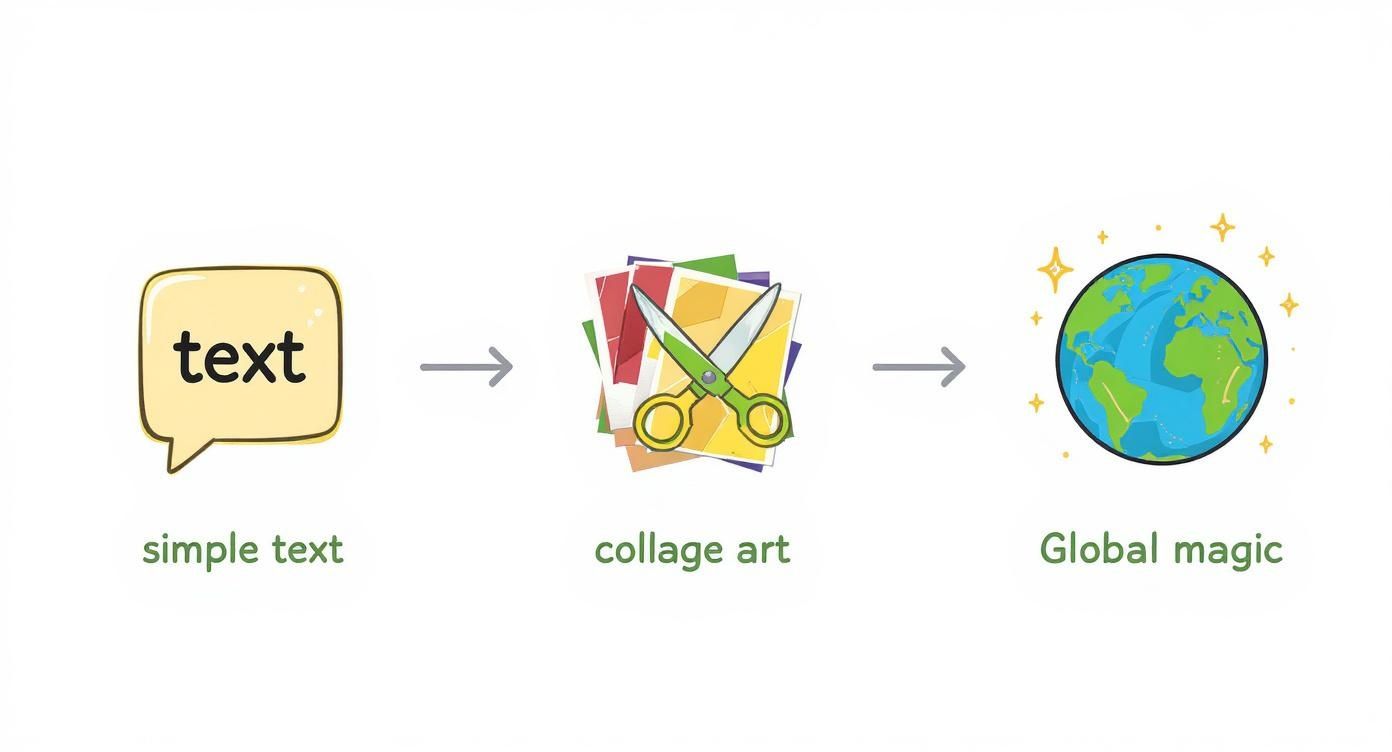
You can see how the blend of straightforward text and one-of-a-kind art creates an experience that just works. It's this perfect mix that has let the book connect with kids all over the world for so many years.
For a quick reference, here’s how the animal and color parade unfolds.
Character and Color Sequence
| Character | Color | What They See |
|---|---|---|
| Brown Bear | Brown | A Red Bird |
| Red Bird | Red | A Yellow Duck |
| Yellow Duck | Yellow | A Blue Horse |
| Blue Horse | Blue | A Green Frog |
| Green Frog | Green | A Purple Cat |
| Purple Cat | Purple | A White Dog |
| White Dog | White | A Black Sheep |
| Black Sheep | Black | A Goldfish |
| Goldfish | Gold (Orange) | A Teacher |
This simple sequence is the backbone of the book's charm and makes it easy for kids to follow along.
A Surprising and Satisfying Conclusion
Just when you think you've got the pattern down completely, the story throws in a wonderful little twist. The goldfish, the last animal in the line, doesn't see another animal. It sees a teacher. This pivot is a delightful surprise that suddenly brings the story right into a child’s own world.
The final pages reveal that the teacher sees "children looking at me." The children, in turn, see all the animals from the preceding pages, beautifully tying the entire narrative together in a full-circle moment.
The ending is just so satisfying. It reinforces all the animals and colors the child just learned, but it also grounds the whimsical animal parade in a familiar, comforting place—a classroom full of children. By bringing the teacher and kids into the picture, the book makes the reader a part of the story, celebrating their own powers of observation.
The Science Behind the Rhyme and Repetition
At first glance, Brown Bear, Brown Bear, What Do You See? looks like a simple, fun story for toddlers. But if you look a little closer, you'll see there’s a powerful engine for learning hidden beneath its colorful pages, expertly designed to build the foundation for reading. The real genius isn't just in the charming animals; it’s baked into the very science of how a young child’s brain learns language.
The heart of the book is its powerful use of repetition. The steady, looping question—"What do you see?"—creates a predictable rhythm that is incredibly comforting for a young mind. This pattern reduces the mental effort needed to follow along, freeing up a child's brain to focus on the new stuff: a new animal and a new color on each page.
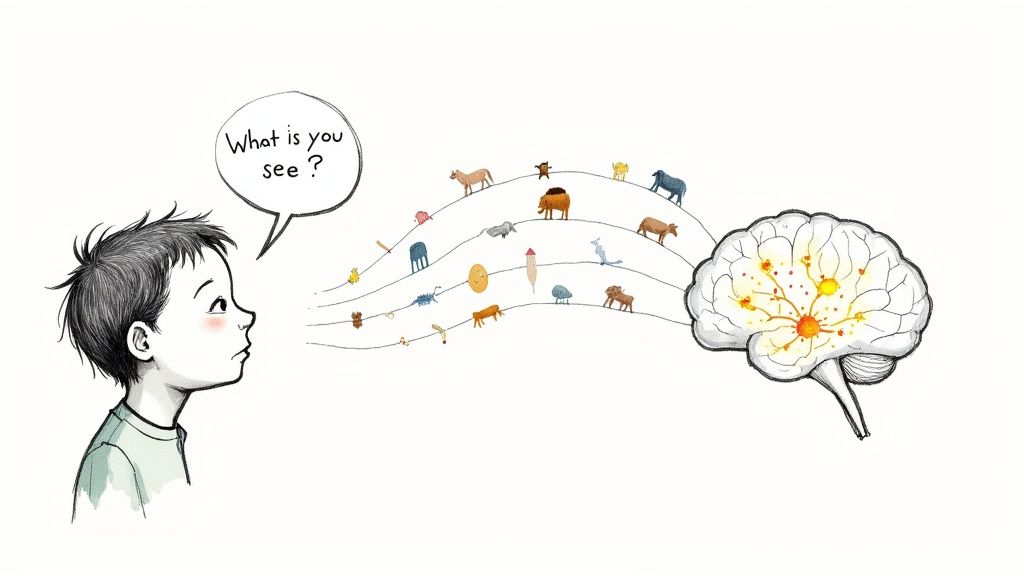
This structure is empowering. It lets kids anticipate what's coming next, and pretty soon, they're not just listening—they're "reading" along, shouting out the familiar phrases. That moment of participation is a huge confidence booster and often one of their very first experiences feeling like a successful reader.
Building the Brain for Reading
The musical, almost lyrical, quality of the text is no accident. Author Bill Martin Jr., who held a Ph.D. in early childhood education, specifically crafted the book to take advantage of rhyme and rhythm. This structure is a direct line to developing phonemic awareness—the ability to hear, identify, and play with the individual sounds in spoken words.
Hearing the pattern helps a child's brain start noticing that different words share common sounds, which is a critical step on the path to reading. If you're curious about this, you can read more about how to develop reading comprehension skills in our related guide.
The book’s predictable text is so effective, it's often used in classrooms as part of formal teaching strategies. This intentional design encourages kids to jump in and participate, supporting both language skills and cognitive growth. You can dive deeper into its pedagogical background from its publisher, Henry Holt and Co.
The book acts like a set of training wheels for the brain. The repetition and rhythm provide the support and structure, allowing a child to practice language patterns and build memory without the risk of falling off the "story."
This gentle support helps children internalize sentence structure, new words, and the concept of sequencing. They aren't just memorizing a list of animals; they're learning how language fits together in a logical, predictable way. Each page builds on the last, reinforcing what they've learned in a gentle, cumulative cycle.
How Structure Strengthens Memory
That simple, repetitive format also happens to be a fantastic memory aid. Think of it like learning the words to a catchy pop song. The chorus repeats over and over, making it easy to remember, while the verses introduce new lines. In Brown Bear, the question-and-answer format is the "chorus," and the different animals are the "verses."
This structure helps children exercise several key cognitive functions:
- Working Memory: They hold the current animal in mind while getting ready for the next one.
- Sequencing: They begin to understand the specific order the animals appear in.
- Recall: After just a few read-throughs, they can remember the entire sequence.
By turning learning into a fun and predictable game, Brown Bear, Brown Bear, What Do You See? does so much more than just entertain. It masterfully lays down the neural pathways a child needs to grow into a confident, capable reader.
Bringing the Story to Life with Fun Activities
Reading Brown Bear, Brown Bear, What Do You See? is a brilliant start, but the real magic happens when you bring the story off the page and into your child’s world. Hands-on activities are a fantastic way to cement the book's core ideas—colors, animals, and sequencing—and turn a simple storytime into a full-blown learning adventure.
These ideas are all about low prep and high engagement. They’re designed to build understanding, sharpen those all-important fine motor skills, and ignite a little creative spark. When you connect the story to something they can touch and do, the concepts really stick.
Create Eric Carle Inspired Collages
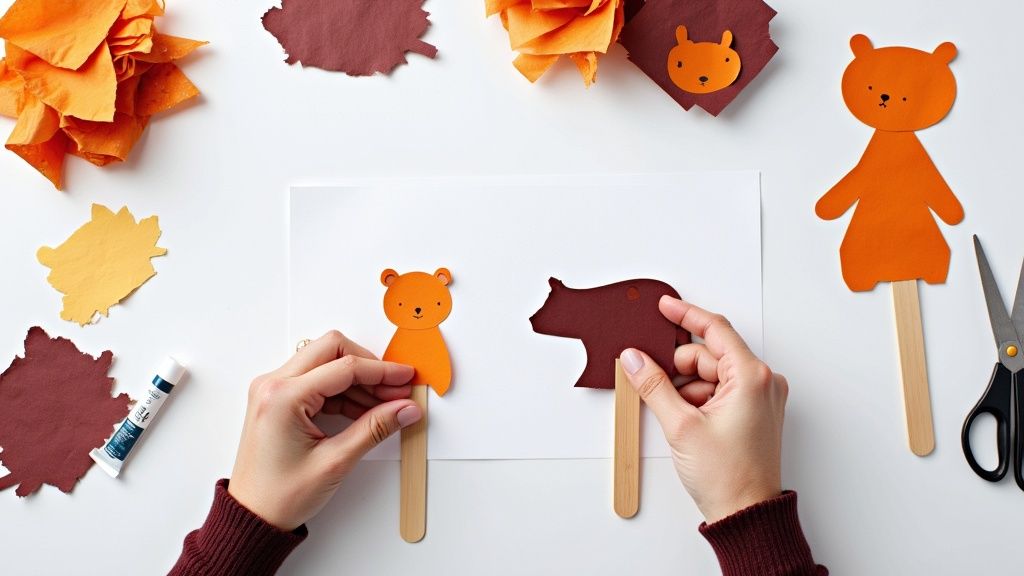
Eric Carle's iconic tissue-paper collage art is what makes the book so visually memorable. You can easily bring this technique home for a multi-sensory art project that helps your child connect with the illustrations on a much deeper level.
All it takes is some construction paper, watered-down glue, and scraps of colored tissue paper. Let your child tear the paper into little pieces (which is wonderful for building hand strength!) and glue them onto an animal shape from the book. Don’t aim for perfection here; the real goal is to explore textures and colors, just like Carle himself.
This isn’t about the finished product. It’s about the process of developing fine motor control and making those color connections. In the same way, the alphabet fun we outline in our guide to https://www.number6publishing.com/blogs/number-6-blog/chicka-chicka-boom-boom shows just how powerful hands-on projects are for bringing books to life.
Organize a Color Scavenger Hunt
Take the book's main theme and apply it to the real world with a color scavenger hunt. After reading the story, call out a color from the book—"I see something red looking at me!"—and send your child on a mission to find an object of that color.
This activity is a winner for a few reasons:
- Reinforces Color Recognition: It directly links the book's lessons to their own environment.
- Encourages Observation: It trains them to really look at the details around them.
- Gets Them Moving: It adds a physical, playful element to learning time.
You can level it up by asking them to find the "yellow duck" or the "blue horse," tying the color directly to the animal from the story.
This simple game transforms passive learning into an active experience. It solidifies the connection between the abstract concept of 'blue' on a page and the tangible 'blue' of their favorite toy car or cup.
Make Animal Stick Puppets for Story Retelling
Another fantastic way to keep the story going is through dramatic play. Print or draw the animals from Brown Bear, Brown Bear, What Do You See?, let your child color them in, and then just tape them to popsicle sticks.
Once your puppets are ready, you can act out the entire story together. This puts your child in the driver's seat, letting them retell the sequence of events in their own words. It’s an incredible exercise for building memory, sequencing skills, and narrative comprehension.
For even more ideas, check out these quick tips for making reading fun. Simple activities like these transform storytime into a dynamic experience, building a strong foundation for a lifelong love of reading.
Why This Book Remains a Global Bestseller
How does a children’s book from 1967 manage to not just stick around, but dominate bookshelves for decades? It’s a question worth asking. Brown Bear, Brown Bear, What Do You See? has achieved a rare kind of staying power, becoming a cultural touchstone that still goes head-to-head with modern releases year after year.
Its journey from a simple educational idea to a perennial bestseller comes down to a perfect mix of straightforward language and unforgettable, vibrant art. This combination creates an experience so core to early learning that it feels perpetually fresh. It’s a book that never needs an update because its purpose—teaching colors, animals, and the pure joy of rhythm—is always essential.
A Legacy Built on Numbers
The book's commercial success is frankly staggering, and the numbers paint a clear picture of its lasting impact. Sales data shows just how deeply Brown Bear, Brown Bear has woven itself into the global market.
With total sales soaring past 16 million copies worldwide and over 8 million hardcover copies sold by 2003 alone, its status as a commercial powerhouse is undeniable. Even today, it continues to sell hundreds of thousands of copies every year, a feat most new books can only dream of. You can get a better sense of its impressive market performance and availability from major retailers.
This isn't just luck; a few key factors keep the momentum going:
- Built for Little Hands: The introduction of sturdy board book versions made the story accessible to even the youngest toddlers, cementing its place in the baby market.
- The Go-To Educational Tool: Its widespread use in schools and daycares solidifies it as a foundational text, which means consistent bulk purchases.
- A Family Tradition: Parents who grew up loving the book now share it with their own children, creating a powerful cycle of nostalgia and word-of-mouth recommendation.
The book’s success isn't just about the number of copies sold; it’s about becoming part of a family’s reading ritual. It’s often a child's very first "favorite book," the one they ask for again and again, locking it into their memory for good.
The Timeless Formula for Success
At the end of the day, the book lasts because it just works. Its simple, repetitive structure is perfectly in sync with how young children learn, making it an incredible tool for both parents and educators. It doesn't lean on fleeting pop culture jokes or complicated stories. Instead, it focuses on the pure, simple joy of discovery, rhythm, and color.
Publishers have kept the book in the spotlight with anniversary editions and new formats, but the core product is the same as it ever was. The magic was there from the start. The blend of Bill Martin Jr.’s poetic rhythm and Eric Carle’s bold, textured artwork created a formula so effective it has secured its spot as an essential children’s book across the globe, generation after generation.
Common Questions from Parents and Educators
Even with a book as straightforward and charming as Brown Bear, Brown Bear, What Do You See?, it's natural for parents and teachers to wonder how to get the most out of it. It’s more than just a simple story; understanding its thoughtful design can turn reading time into a truly powerful learning moment.
Let’s walk through some of the questions we hear most often. My goal is to give you clear, practical advice to help you tap into the book’s incredible educational power for your child or students.
What Is the Best Age for a Child to Enjoy This Book
The sweet spot for this classic is typically between 1 and 4 years old. What’s so brilliant about the book is how it meets kids where they are at different points within this developmental window.
For the youngest readers, around 1-2 years old, it's a feast for the senses. Eric Carle’s bold, high-contrast illustrations are captivating for little eyes, and the rhythmic, sing-song text is both engaging and soothing. At this stage, it's all about exposure to language, rhythm, and vibrant images.
As children move into their toddler years (2-4 years old), the book's deeper layers start to shine. It becomes a fantastic tool for building vocabulary, locking in color and animal names, and developing those all-important memory skills. Because the pattern is so predictable, it’s often one of the first books a child can proudly "read" all by themselves from memory—a huge confidence boost for any little one just starting their reading journey.
How Can I Make Reading This Book More Interactive
This is where the real fun begins! Turning this book into an interactive game is easy, and it makes a world of difference. The trick is to move beyond simply reading the words and invite your child to become part of the story.
Here are a few ideas to get you started:
- Use Expressive Voices: Give each animal its own personality. Try a deep, rumbly voice for the bear and a high, quick one for the bird. It makes the experience so much more lively.
- Pause for Predictions: Before you turn the page, stop and ask, "Who do you think the Red Bird sees next?" This simple question encourages them to listen closely and think ahead.
- Incorporate Physical Actions: Get moving! Flap your arms like the bird, puff out your cheeks like the goldfish, or stomp your feet like the horse. Connecting words to movement helps kinesthetic learners grasp concepts faster.
- Play "I See" in Real Life: Once the book is closed, keep the game going. Say, "I see something green in the kitchen... what do you see?" This takes the book's core pattern and applies it to the world around them, reinforcing observation skills.
The real goal of interaction is to make your child a co-creator of the story, not just a passive listener. That shared experience forges a deeper connection to the book and strengthens the learning that’s happening.
What Are the Most Important Learning Themes in the Book
While recognizing colors and animals is what most people notice first, the book's most important contribution is actually to early literacy. Bill Martin Jr. was a master, and he designed the text to build phonological awareness—the ability to hear and play with the smaller sounds that make up words. This is one of the most critical skills a child needs before they can learn to read.
The repetitive, rhyming structure helps a child's brain tune into the natural sounds of language. They start to understand cadence, rhythm, and how sentences are built without even knowing they're learning. The predictable sequence also gives them the confidence to chime in, which makes them feel like successful readers long before they can actually sound out words on their own.
At Number 6 Publishing, we believe that the right book at the right time can spark a lifelong love of reading. Explore our collection of heartfelt and imaginative stories curated to inspire curiosity and joy in every child. Discover your next family favorite at https://www.number6publishing.com.