
If you've ever been a parent, you know the feeling. That gut-wrenching, heart-in-your-throat moment when your child realizes their most beloved toy is gone. Mo Willems’ Knuffle Bunny: A Cautionary Tale taps directly into this universal panic, but with a blend of humor and warmth that has made it a modern classic. This isn't just a story about a lost stuffed animal; it’s a brilliant look at early childhood communication and the fierce, unwavering love of family.
The Enduring Charm of Knuffle Bunny
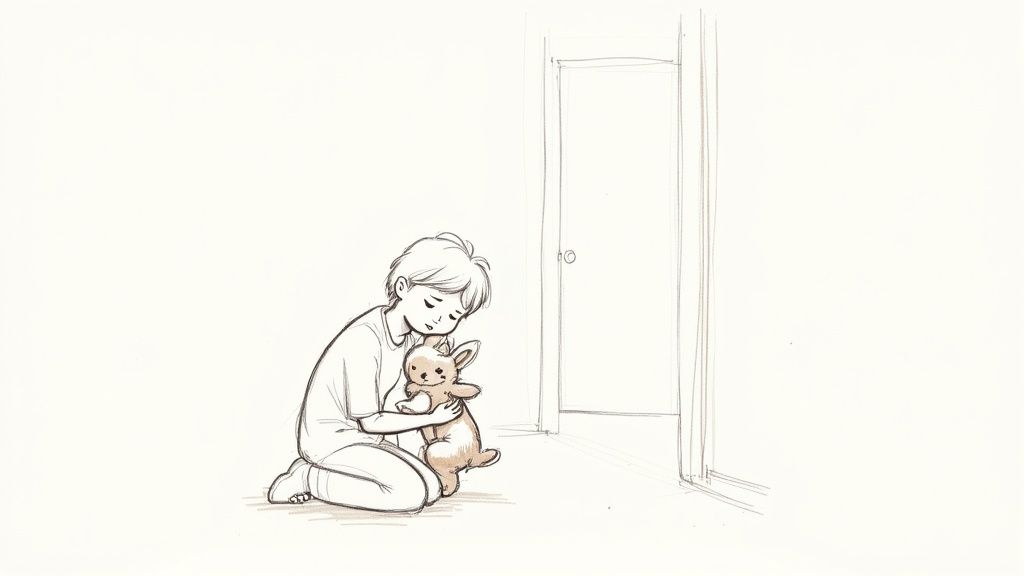
Mo Willems has an incredible gift for bottling up the huge, chaotic emotions of being a toddler and pouring them into simple, powerful stories. In Knuffle Bunny, he zeroes in on the raw frustration a child feels when they simply can't make the grown-ups understand what's wrong.
Trixie's journey from a perfectly happy trip to the laundromat to a full-on, "boneless" tantrum is a scene that has played out in households everywhere. This deep sense of relatability is a huge part of the book's magic, creating a shared moment of understanding for both the child hearing the story and the parent reading it.
A Unique Artistic Vision
What really makes Knuffle Bunny stand out on the shelf is its one-of-a-kind art style. Willems cleverly layers his expressive, hand-drawn cartoons over real, sepia-toned photographs of his own Brooklyn neighborhood. This combination is genius for a few reasons:
- It grounds the story in reality. The photographic backdrops make Trixie's world feel completely real and familiar, like it could be just around the corner.
- It makes the emotions pop. The vibrant, cartoonish characters stand out against the monochrome photos, drawing your eye right to what they're feeling.
- It pulls you into the story. This blend of real and illustrated feels both cinematic and incredibly personal, making the reader feel like they’re right there with Trixie.
First published in 2004, Knuffle Bunny: A Cautionary Tale was an instant hit, quickly earning a 2005 Caldecott Honor—one of the most prestigious awards in children's books. Adding to its charm, Willems even named the main character, Trixie, after his own daughter, which lends an authentic, personal touch that truly shines through.
This simple yet profound story reminds us that even before words, communication is about connection, patience, and love. It perfectly illustrates the importance of the lifelong gift of reading to your baby.
By capturing these fundamental truths about family and communication, Knuffle Bunny has cemented its place on bookshelves for years to come. The story's themes are also a perfect jumping-off point for talking about why representation in children's books matters and how stories help shape our view of the world.
A Laundromat Trip That Changed Everything
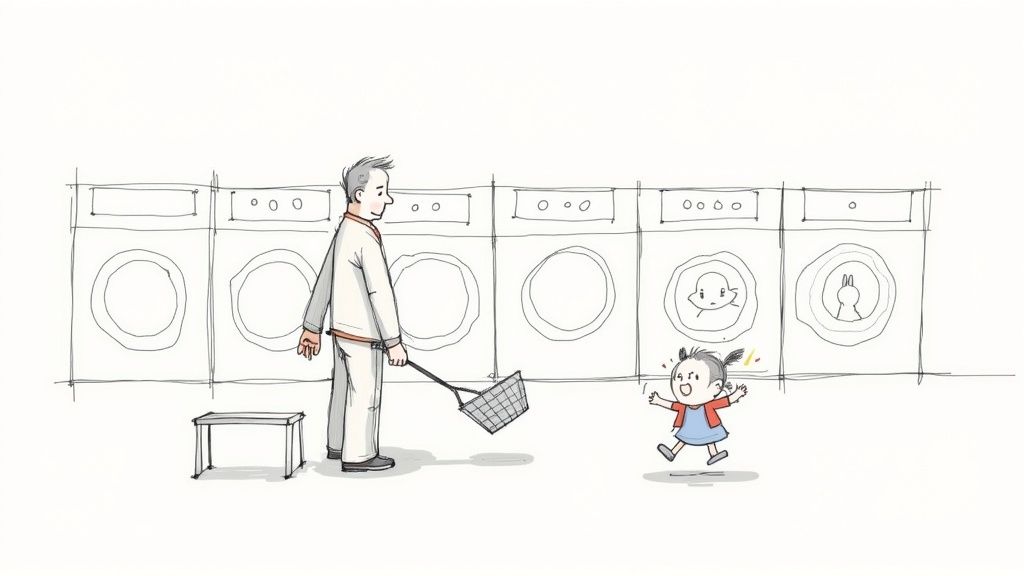
The charm of Knuffle Bunny: A Cautionary Tale is rooted in its everyday setting. The story kicks off with a completely normal errand: a father taking his young daughter, Trixie, to the neighborhood laundromat. With a basket of laundry and her most treasured stuffed animal, Knuffle Bunny, the day begins like any other.
For Trixie, this is an adventure. She gets to "help" her dad with the washing, and every part of the trip is a thrill. But on the walk home, something feels off. That initial excitement starts to curdle into a nagging feeling that a crucial piece of her world is missing.
The Breakdown of Communication
Here's the problem: Trixie can't talk yet. She can’t just form the words, "Dad, we left Knuffle Bunny behind!" So, she does what any toddler would do. She points. She tugs. She tries with all her might to steer her dad back in the right direction, but her signals are completely lost on him.
This is where the heart of the story’s conflict really takes shape. Trixie's attempts to get her point across grow more and more frantic, leading to the legendary, nonsensical exclamation:
"Aggle flaggle klabble!"
Her dad, who means well but is totally oblivious, just sees a fussy toddler. He has no idea what she’s trying to tell him, and her frustration boils over with every step they take away from her friend. The gulf between what Trixie knows and what her dad understands becomes a massive chasm, making the communication gap in the Knuffle Bunny story painfully relatable for any parent or child.
When Words Fail Emotions Take Over
Trixie’s frustration reaches a tipping point that parents everywhere will recognize instantly. After trying everything she can think of, she finally has a full-blown meltdown. Mo Willems captures this moment perfectly by having Trixie “go boneless”—an amazing visual for the total emotional collapse of a toddler tantrum.
It isn't until they get home and her mom asks the simple, fateful question, "Where's Knuffle Bunny?" that the penny finally drops for Dad. The dawning horror on his face is priceless. The family then bolts back to the laundromat, racing against time. The desperate search and the tearful, joyous reunion with the lost toy give the story its powerful emotional punch.
Through this simple tale, Willems perfectly captures the intense inner world of a toddler, full of big feelings but lacking the words to explain them. It's a journey from simple joy to overwhelming frustration and, ultimately, to the profound relief of finally being understood.
Unpacking the Heartwarming Themes
The simple story of a lost toy in Knuffle Bunny hits home for so many of us because it’s built on powerful, universal ideas. Mo Willems doesn’t just tell a story about a trip to the laundromat; he taps into the real, core experiences of being a little kid and a parent, making the book an absolute gem of emotional storytelling. When you look closer at these ideas, you can see why this book feels so incredibly true to life.
At its very heart, the book is about the intense, frustrating struggle of trying to communicate before you have the words. Trixie knows exactly what’s wrong, but she simply can't form the sentences to explain her rising panic. Her famous "aggle flaggle klabble" isn't just cute gibberish; it perfectly captures that profound frustration toddlers feel when their huge emotions are trapped inside.
This is a classic developmental rite of passage. A child's brain often races ahead of their vocabulary, creating a gap where they understand something but can't yet express it. Willems portrays this gap with amazing empathy and a touch of humor, turning a common trigger for tantrums into a relatable moment of connection.
The table below breaks down the central themes of the story, explaining what they mean and why they are so important for a child's development.
Key Themes and Their Significance in Knuffle Bunny
| Theme | Description | Developmental Significance |
|---|---|---|
| Pre-Verbal Communication | Trixie's inability to use words to express her distress, leading to frustration for both her and her dad. | Highlights the common gap between a toddler's understanding and their verbal skills, teaching empathy for this difficult stage. |
| The Parent-Child Bond | The story focuses on the dad's journey from obliviousness to understanding his daughter's emotional needs. | Reinforces the importance of parental attunement and shows that love means trying to understand, even without words. |
| Finding One's Voice | Trixie's first words are spoken out of the intense emotional need to identify her beloved toy. | Illustrates how significant emotional events can often trigger major developmental leaps, like speech. |
| The Significance of Comfort Objects | Knuffle Bunny is more than a toy; it's a source of security and a part of Trixie's identity. | Validates the deep emotional attachment children form with transitional objects, which is crucial for their sense of security. |
These themes work together to create a story that is not just entertaining but also deeply meaningful for both the children listening and the adults reading to them.
The Parent and Child Connection
Beyond Trixie's personal struggle, the story paints a beautiful picture of the parent-child connection. Trixie's dad isn't a bad parent; he's just... a little clueless in the moment. He clearly adores his daughter but completely misreads every single signal she’s sending, chalking up her desperation to a sudden, random tantrum.
His journey is one of dawning awareness. The real climax of the story isn't just finding the bunny—it's the moment her dad finally gets it. He sprints back to that laundromat not just to get a stuffed animal, but to fix his mistake and show his daughter that her feelings matter.
This shift from confusion to empathy is a powerful lesson for parents. It reminds us to look past the surface of a child's behavior and seek the unmet need or unspoken feeling underneath.
This focus on emotional bonds is a common thread you see in the most powerful children's literature. It's a lot like the cherished toy in The Velveteen Rabbit becoming real through a child's love. You can explore how a toy’s significance deepens through a child's affection in our related article. The object itself is almost secondary to the immense emotional weight it carries.
Finding the Power of a Voice
Ultimately, Knuffle Bunny is a story about finding your voice—and in Trixie's case, that's literal. The entire emotional ride of the story builds toward one single, critical moment. After the frantic search and the joyful reunion, the overwhelming wave of relief and excitement finally unlocks her ability to speak.
Her very first words, "Knuffle Bunny!!", are a triumphant finish to her struggle. This isn’t just a cute, tidy ending; it’s a meaningful breakthrough that was pushed forward by a powerful emotional experience. Losing her most beloved friend created a need so intense that it helped her jump over a developmental hurdle.
This theme really shines a light on a key part of how kids grow:
- Motivation: Strong feelings can be a huge motivator for developmental leaps.
- Communication: Finding the right words provides a release, turning raw frustration into sweet relief.
- Milestones: Big life events, even the stressful ones, often come right before a period of significant growth.
By wrapping these deep, developmental truths in a simple, funny, and relatable story, Mo Willems created a book that works on so many levels. It’s a cautionary tale for parents, a heartwarming family story, and a brilliant look at what it means to finally, truly be understood.
The Creative Genius of Mo Willems
To really get the magic of Knuffle Bunny, you have to understand the mind of its creator, Mo Willems. His knack for tapping directly into the emotional heart of childhood isn’t some happy accident. It's a skill he spent years sharpening, long before Trixie and her bunny ever came to be.
Before he was a picture book superstar, Willems cut his teeth as a writer and animator for the legendary PBS show Sesame Street. That experience, which lasted nearly a decade, was the perfect training ground. It taught him how to communicate big, complicated feelings through simple, powerful stories that little kids could instantly connect with.
A Background in Animation and Storytelling
Working in television and animation taught Willems a crucial lesson: be economical. Every single line in his drawings and every word on the page has a job to do. His signature is conveying maximum emotion with zero clutter, and it works beautifully.
You can see this same philosophy in his other beloved books, especially the Pigeon series. With Don't Let the Pigeon Drive the Bus!, Willems gave us a character whose wants and frustrations are immediately familiar to any child (or adult, for that matter). The way the book speaks directly to the reader was a game-changer, cementing his reputation as a master of engagement.
This screenshot from his Wikipedia page gives a quick glimpse into his celebrated and wide-ranging career. It really shows how much of an impact he's had on both television and children's literature.
The Unique Artistry of Knuffle Bunny
When he created the Knuffle Bunny series, Willems did something artistically that felt both nostalgic and brand new. He layered his signature cartoon characters on top of real-life, black-and-white photographs of his own Brooklyn neighborhood, like Park Slope.
This wasn't just a gimmick. This stylistic choice does a few incredible things all at once:
- It builds a tangible world. The photo backgrounds make the story feel grounded and real, as if Trixie’s dramatic adventure could be happening right down your own street.
- It makes the emotions pop. By setting his colorful, expressive characters against a monochrome world, Willems ensures their feelings are the star of the show. Trixie's joy, panic, and eventual relief become the vibrant center of every single page.
- It adds a personal touch. These weren't random stock photos. The locations are places Willems and his own family, including his daughter Trixie, actually went. This embeds the story with a deep, heartfelt authenticity.
Mo Willems’ unique ability to blend the real with the illustrated creates an immersive experience that pulls readers directly into Trixie's world, making her emotional journey our own.
His incredible career has produced over 40 children's books, earning him three Caldecott Honors and a staggering six Emmy Awards for his work on Sesame Street. This long list of accolades points to a consistent, undeniable talent for crafting stories that stick with families everywhere. You can discover more insights about his award-winning career and exhibitions at High.org.
Ultimately, Willems’ genius lies in his profound respect for the emotional lives of children. He treats their "little" problems with all the gravity and heart they deserve.
Following Trixie's Journey Through the Series
The story of Trixie and her beloved stuffed animal was far from over when they were reunited at the laundromat. Mo Willems saw more to Trixie's story, expanding her world into a beautiful trilogy that lets readers grow right alongside her as she hits new, more complex childhood milestones.
Each book marks a significant leap in Trixie's development. We watch her go from the simple terror of a lost toy to the more complicated challenges of getting bigger. The sequels, Knuffle Bunny Too and Knuffle Bunny Free, carry on the journey with that same signature mix of humor, heart, and stunning artwork. These stories beautifully capture how a child's bond with their comfort object changes as they do.
Navigating Friendship and Identity
In Knuffle Bunny Too: A Case of Mistaken Identity, Trixie is a bit older and off to preschool. The trouble starts when she discovers another classmate, Sonja, has the exact same Knuffle Bunny. This kicks off an identity crisis of epic proportions, leading to a classic late-night mix-up and another frantic adventure to set things right.
This story really gets into themes that hit home for preschoolers:
- Individuality: Trixie has to figure out that having something in common with someone else doesn't make her own connection to her toy any less special.
- Friendship: What starts as a rivalry becomes the very thing that sparks Trixie and Sonja's first real friendship.
- Problem-Solving: Trixie uses her words this time, working with her new friend to fix the problem. It’s a huge step up from the pre-verbal toddler we met in the first book.
What starts as a rivalry over a toy blossoms into a lesson about sharing, identity, and the pure joy of finding a kindred spirit. It’s a perfect story for kids just learning to figure out social situations.
The Knuffle Bunny series has earned a loyal following, carving out a unique space in children's literature. It has sold over 750,000 copies, which really speaks to its staying power. That success is especially impressive when you compare it to massive franchises like Diary of a Wimpy Kid, which sold millions each year. Willems’ books found their audience by focusing on deep emotional truths rather than just broad humor. You can discover more insights about children's book franchises on PublishersWeekly.com.
Letting Go and Embracing Change
The final book, Knuffle Bunny Free: An Unexpected Diversion, gives Trixie her most grown-up challenge yet. While on a trip to Holland to visit her grandparents, she accidentally leaves Knuffle Bunny behind on the airplane. This time, the loss feels different—more permanent and deeply poignant.
The story gently introduces bigger themes of letting go and accepting change. Trixie's journey through sadness to acceptance is handled with incredible care and sensitivity. In a beautiful, bittersweet ending, she decides to let her bunny go, realizing that another child might need him now. This selfless act shows just how much she has grown, marking the end of one chapter in her life and the beginning of a new one.
Bring the Story to Life With Fun Activities
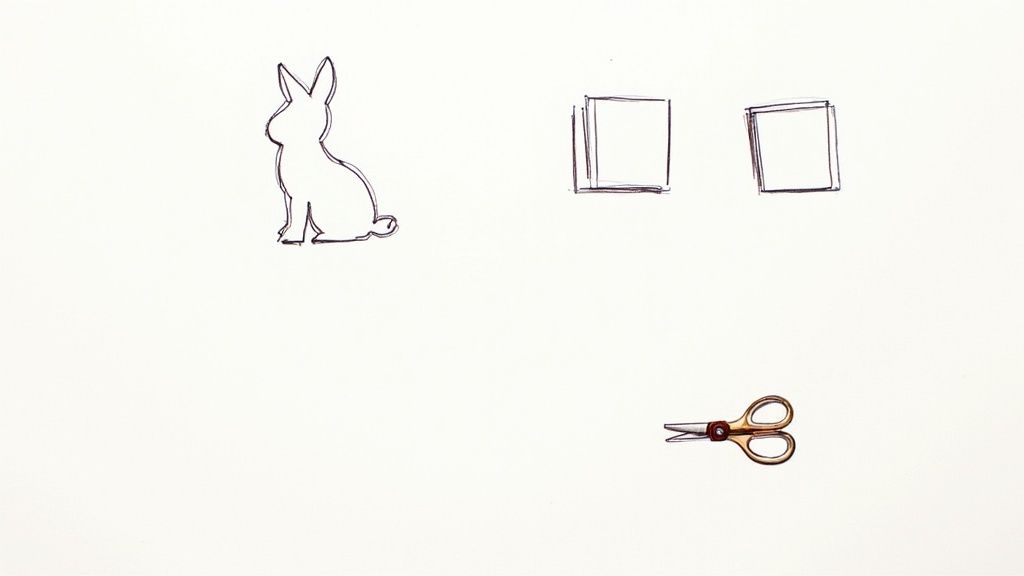
After you've finished reading about Trixie’s big adventure, you can keep the fun going with some hands-on activities that really bring the story home. Moving beyond the page is a fantastic way to help children connect with the book's themes, practice new skills, and let their own creativity shine. These activities are perfect for parents and teachers looking to extend the Knuffle Bunny experience.
One of the best ways to build narrative skills is with a simple story sequencing game. Just create a few cards with pictures of key moments: Trixie and Dad at the laundromat, the walk home, Trixie realizing Knuffle Bunny is gone, and that happy reunion. Then, have your child arrange them in the right order and retell the story in their own words.
Get Creative and Expressive
Another great idea is to have kids create their very own Knuffle Bunny! With simple craft supplies like paper plates, cotton balls, glue, and construction paper, they can design a personal version of Trixie’s beloved toy. This project is not only fun but also a great way to develop fine motor skills and give kids a real, tangible connection to the book.
You can also dig into the emotional journey of the characters, which is a wonderful chance to build emotional intelligence. For more ideas on this, check out our guide to kids' books about emotions for some extra resources to help with these important conversations.
A fun game of emotional charades is a perfect way to explore feelings. Write down different emotions from the story—like happy, frustrated, sad, and relieved—on small slips of paper. Have your child act them out, which is a playful way to help them name and understand the big feelings Trixie went through.
Finally, why not mimic Mo Willems’ unique artistic style with a neighborhood photo hunt? Grab a camera and take some black-and-white photos of familiar spots around your home or neighborhood. Later, print them out and let your child draw their own cartoon characters right onto the scenes, just like in the book. This activity cleverly combines art, photography, and local exploration, bringing the world of Knuffle Bunny right to your doorstep.
Common Questions About Knuffle Bunny
Even a story as straightforward as Knuffle Bunny can spark a few questions from curious readers (and their parents!). It’s one of those books that feels so personal and real, you can't help but wonder about the story behind the story.
Let's start with the big one: how in the world do you say "Knuffle"? Mo Willems has cleared this up himself. It starts with a hard "K" sound, so it’s pronounced K-nuffle. The name is actually a sweet little nod to his own family; it came from his daughter Trixie’s own adorable way of trying to say the word "snuggle."
This brings us to another question people often ask: is Trixie a real person? Yes, absolutely! The character is lovingly named after and inspired by Mo Willems's own daughter, Trixie. Knowing that this is a real father-daughter story just adds another layer of heart to the whole series.
Ideal Age and Key Takeaways
So, what’s the sweet spot for reading Knuffle Bunny? The first book is perfect for toddlers and preschoolers, right in that 2 to 5 age range. The frustration of not being understood and the deep love for a comfort object? That's the toddler experience in a nutshell.
The sequels, Knuffle Bunny Too and Knuffle Bunny Free, grow up right alongside Trixie. They are fantastic for kids ages 4 to 7 who are starting to figure out preschool friendships and grapple with slightly bigger, more complex feelings.
When you're thinking about the emotional world of little ones and their attachments, it's natural to have questions. For parents navigating this stage, resources like pacifier introduction guidance can offer some helpful perspective on those all-important comfort items.
At its core, the whole series is really about empathy and the power of communication. It's a beautiful reminder that even when words fail, a parent’s love, patience, and determination to understand their child can bridge any gap.
This simple, powerful lesson is exactly why Knuffle Bunny continues to be a classic that families treasure.
At Number 6 Publishing, we believe stories like these are essential for building empathy and joy. Explore our curated collections of heartfelt children’s and young adult books at https://www.number6publishing.com to find your family’s next favorite read.