
Finding the right books for an 11 year old can feel like its own special kind of quest. They’re standing at a thrilling crossroads in their reading journey, leaving behind the simpler stories of childhood but not quite ready for the heavy themes of most young adult fiction. This guide is your map for navigating this exciting time and finding stories that will truly captivate their growing minds.
Welcome to the World of Middle Grade Reading
The adventure of finding the perfect book for an 11-year-old is one of the most rewarding experiences for any parent, teacher, or librarian. At this age, a reader's world is expanding at an incredible pace. They're suddenly able to follow more intricate plots, understand morally complex characters, and start thinking about big ideas like friendship, justice, and their own identity.
The right book doesn't just entertain—it's a powerful tool that builds empathy and opens a window to entirely different worlds.
Think of "middle grade" fiction as more than just a category on a bookstore shelf; it's a developmental sweet spot. These stories are crafted to meet kids exactly where they are, offering a safe space to explore the very challenges they might be facing in their own lives. From navigating tricky social dynamics at school to figuring out their place in the family, middle grade books wrap relatable scenarios in absolutely engaging plots.
Why This Age Is So Important for Reading
At eleven, a child's connection to reading can either cement into a lifelong passion or start to fade as other interests take over. It’s a make-or-break moment where a single fantastic book can truly make all the difference. The goal is simple: match their growing intellect and boundless curiosity with stories that feel both exciting and meaningful.
This guide is designed to help you do just that. We'll dive into:
- Developmental Milestones: Getting a handle on the cognitive and emotional shifts happening at this age.
- Genre Deep Dives: Exploring everything from epic fantasy and realistic fiction to hilarious tales and graphic novels.
- Curated Recommendations: A list of can't-miss books for 11 year old readers that we know really connect.
- Beyond the Book Activities: Fun, hands-on ways to extend the reading experience long after the last page is turned.
The right book at the right time can be a mirror, reflecting a child's own experiences, and a door, opening up entirely new perspectives on the world. It’s about more than just reading; it’s about discovery.
Ultimately, our mission is to arm you with the insight and resources to find stories that won't just be read, but will be remembered. Let’s get started on this quest to connect your young reader with their next great adventure.
What Makes an 11-Year-Old Reader Tick
To find the right book for an 11-year-old, you have to get inside their head. This age is a massive turning point, both emotionally and intellectually. Their brains are firing on all cylinders, suddenly capable of following more tangled plots, understanding characters who aren't just good or evil, and wrestling with big ideas like justice, loyalty, and who they are.
They're like explorers charting brand-new territory inside their own minds. Simple good-guy-versus-bad-guy stories don't quite cut it anymore. Now, they can appreciate the shades of gray that make a character feel real. It's a huge leap from the books they loved just a year or two ago.
The Bridge Between Childhood and a Bigger World
An 11-year-old is standing on a fascinating bridge. One foot is still firmly planted in the make-believe world of childhood, but the other is stepping into a life that feels much more complex. The books that really hit home for them often sit right on that bridge.
They're looking for stories that feel familiar, reflecting their own lives filled with friendships, family drama, and school. But they also want a safe way to explore bigger, tougher worlds—whether that's a kingdom full of magic, a pivotal moment in history, or a real-world social issue.
Books at this age serve a dual purpose. They are both a mirror reflecting the reader's own evolving identity and a window offering a glimpse into lives and experiences completely different from their own.
Finding that perfect balance is everything. A book that feels relatable but also stretches their worldview is the sweet spot. This is exactly why themes of belonging, finding courage, and figuring out your place in the world are so powerful for this age group.
Key Developmental Shifts That Shape Their Reading
A few key things are happening at eleven that totally change what they look for in a book. If we understand these shifts, we can pick stories that will grab them and not let go.
-
Growing Independence: They're starting to form their own opinions, separate from their parents. Books with characters who make their own decisions and figure things out on their own are incredibly appealing.
-
Complex Social Awareness: Friendships are becoming the center of their universe, and they're getting a lot more complicated. Stories that dig into the ups and downs of peer groups, betrayal, and loyalty feel intensely real and important.
-
A Developing Sense of Justice: They are building a strong internal compass for what’s fair and what isn't. They love characters who stand up for what's right, especially when it's the harder path to take.
This need for stories that build empathy isn't just a hunch; it's a huge driver in the publishing world. The global market for children's and young adult books is on track to be worth $12.16 billion by 2025, pushed by a huge demand for books that encourage critical thinking and emotional smarts. You can discover more insights about this growing market and see how it’s shaping what middle-graders read.
This level of investment shows just how much parents and educators value stories that do more than just entertain. The right books for an 11 year old are the perfect gear for their journey, helping them navigate their own world with a little more confidence and heart.
Exploring the Top Genres for Curious Minds
The world of middle-grade books is a vast and thrilling place, with a perfect corner for every kind of reader. For an 11-year-old, finding the right genre is like discovering a secret world they never knew existed. It’s not just about picking a category off a shelf; it’s about matching a story’s heartbeat to their own.
Let’s walk through some of the most popular genres and see what makes them click for this age group. Think of this as your field guide to finding the perfect literary home for the young reader in your life. Each one offers a unique adventure and helps build different skills, from critical thinking to deep-seated empathy.
Fantasy Where Courage Is Forged
Fantasy novels are so much more than dragons and magic wands—they’re powerful training grounds for resilience. In these worlds, young heroes are often thrown into impossible situations where they have to dig deep and find a courage they never knew they had. This really echoes the real-life challenges 11-year-olds face as they navigate their own increasingly complex worlds.
These stories teach them that even ordinary kids can do extraordinary things. When a character faces down a terrifying beast or overthrows a dark tyrant, the reader learns that bravery isn't about being fearless; it’s about taking action even when you're scared. This genre is perfect for dreamers who love big, epic quests.
Mystery That Sharpens the Mind
Every 11-year-old loves a good puzzle, and mystery novels are the ultimate brain-teasers. These books don't just tell a story; they invite the reader to become an active participant. They're right there alongside the protagonist, piecing together clues, spotting red herrings, and trying to solve the case. It’s an incredible way to sharpen critical thinking and deductive reasoning skills without it ever feeling like homework.
Mystery novels teach young readers to pay attention to details, question assumptions, and think logically. They turn reading into an interactive game where every chapter brings them one step closer to a satisfying conclusion.
This genre is a fantastic fit for analytical kids who enjoy a challenge and the thrill of that "aha!" moment when everything clicks into place.
Realistic Fiction That Builds Empathy
Realistic fiction holds up a mirror to a young reader’s world. It reflects the friendships, family dynamics, and school struggles they experience every day, validating their feelings and showing them they aren’t alone. Just as importantly, these stories also serve as a window into the lives of others, building a true foundation for empathy.
By stepping into the shoes of a character from a different background or with different challenges, readers learn to see the world from multiple perspectives. This is a crucial skill for navigating social situations and becoming a more compassionate person. These books are ideal for readers who crave connection and stories that feel true to life.
Historical Fiction A Journey Through Time
There’s no better time machine than a great historical fiction novel. It drops readers right into pivotal moments in history, letting them experience the past not as a list of dates and facts, but as a living, breathing story. This is what makes history personal and unforgettable.
Whether they’re breaking codes at Bletchley Park or surviving on the American frontier, readers gain a much deeper understanding of how past events have shaped the world we live in today. These stories are perfect for curious minds who love learning about different eras and the people who defined them.
To help you match the right book to the right kid, here’s a quick breakdown of what makes each genre special.
Genre Guide for the 11-Year-Old Reader
| Genre | What It Offers | Perfect For Readers Who... | Example Theme |
|---|---|---|---|
| Fantasy | Epic worlds, magic systems, and tests of inner strength. Builds resilience and imagination. | Love "what if" scenarios, world-building, and epic quests. | An ordinary child discovers they have extraordinary powers and must save their world. |
| Mystery | Puzzles, clues, and suspense. Develops critical thinking and deductive reasoning. | Enjoy solving problems, paying attention to details, and a good challenge. | A group of friends stumbles upon a local secret and must uncover the truth before it's too late. |
| Realistic Fiction | Relatable characters and situations. Fosters empathy and emotional intelligence. | Want stories that feel true to life and explore friendships, family, and school. | Navigating the ups and downs of middle school and finding your place. |
| Historical Fiction | A ticket to the past. Makes history personal and engaging. | Are curious about different time periods and how people lived in the past. | Experiencing a major historical event through the eyes of a young protagonist. |
| Sci-Fi | Future worlds, technology, and ethical questions. Sparks curiosity about science and society. | Are fascinated by technology, space, and the future. | A young inventor creates something that could change the world—for better or worse. |
Each of these genres opens up a different kind of conversation and a different way of seeing the world, which is exactly what we want for readers at this curious age.
Graphic Novels The Visual Gateway to Storytelling
Graphic novels have become an absolute powerhouse in children's literature, and for good reason. They blend compelling narratives with dynamic art, making them incredibly accessible, especially for visual learners or kids who might be reluctant to pick up a traditional novel. The format breaks down complex plots and emotional arcs into manageable, visually supported chunks.
This unique mix of text and art is dominating the middle-grade scene. In fact, graphic novels accounted for a full 25% of all sales in the category just a couple of years ago, a share that continues to grow. Booksellers and agents see this format as a key way to keep young readers hooked. You can learn more about these publishing trends and see why this format just keeps surging.
For many 11-year-olds, a graphic novel is the perfect bridge to a lifelong love of reading.
How to Find the Perfect Book for Any Child
What happens when an 11-year-old says, “I just don’t like reading”? More often than not, it’s not a final verdict on books. It’s a code for, “I just haven’t found my book yet.” Turning a reluctant reader into an enthusiastic one isn't about force; it’s about becoming a skilled book matchmaker.
This means looking past reading levels and bestseller lists to see the unique person right in front of you. Their passions, their curiosities, and even their favorite video games are all crucial clues. The goal is to connect the dots between what they already love and a story just waiting to be discovered.
Start with Their Interests, Not a Book List
The surest way to find a book they’ll devour is to start with what they already love to do. Think of their hobbies as signposts pointing you directly to specific genres and themes. This approach transforms the search from a chore into a personalized adventure.
Does your child spend hours building elaborate worlds in Minecraft? That’s a powerful sign they'll get lost in an epic fantasy series with detailed world-building, like Fablehaven or The Ranger's Apprentice. Do they live for solving puzzles or playing detective games? Hand them a fast-paced mystery like Escape from Mr. Lemoncello’s Library.
This decision tree can help you see how a child's core interests can lead straight to their next favorite genre.
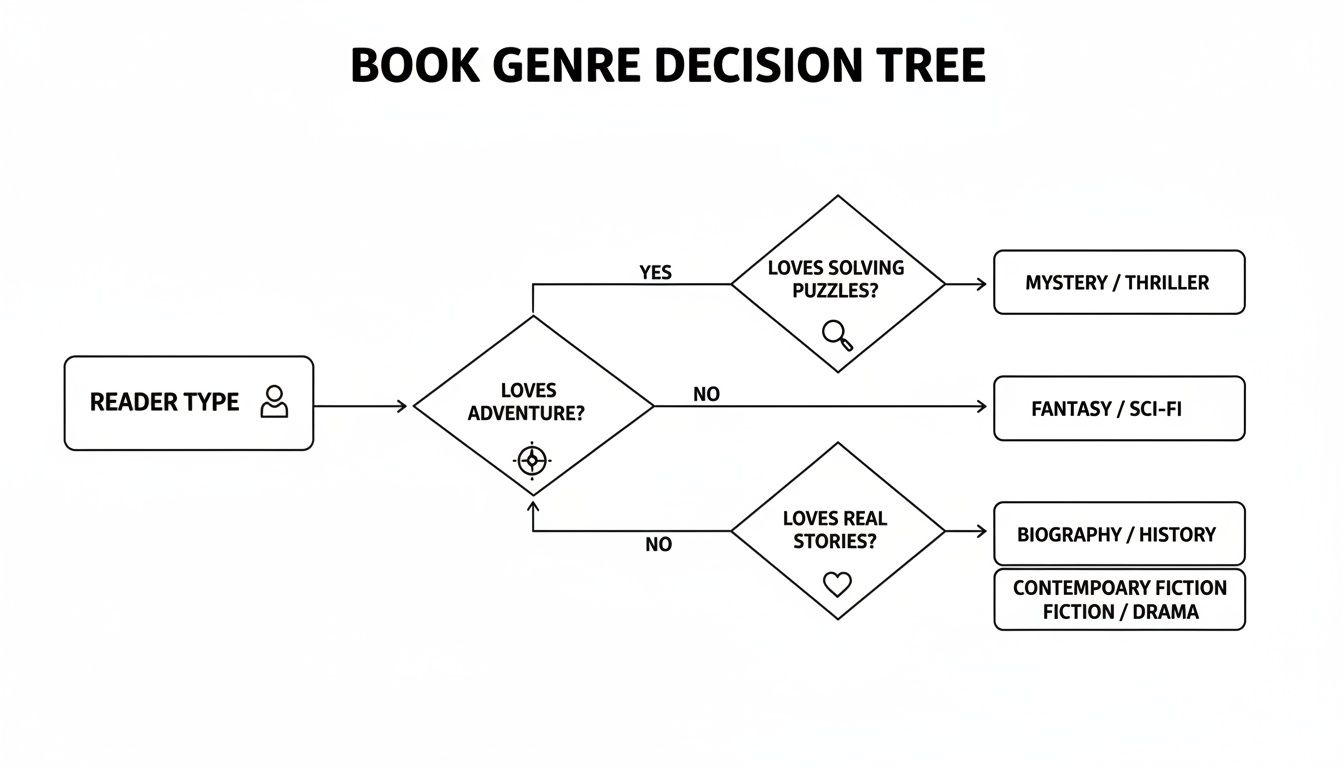
As the chart shows, whether a kid is into adventure, mystery, or real-life stories, there's a clear path to a genre that will grab their attention.
Here are a few more ways to link hobbies to books:
- Loves sports? Find realistic fiction centered on teamwork and overcoming challenges. Tim Green’s The Big Game is a great example.
- Fascinated by history documentaries? Introduce them to historical fiction that makes the past feel alive, like one of Alan Gratz’s action-packed novels.
- Always drawing or sketching? Graphic novels such as Mexikid or the Last Kids on Earth series can be the perfect fit, blending visual storytelling with a great plot.
Go Beyond "What's It About"
Once you have a potential book, getting them interested takes more than a plot summary. Instead of asking generic questions, try sparking a conversation that builds real curiosity and connection.
The best way to sell a book to a kid isn't to talk about the plot, but to talk about the feeling. Focus on the adventure, the mystery, or the friendship at the heart of the story.
Frame the book in a way that connects to their life. You could say, "This book is about a group of kids who have to solve a mystery, and it reminds me of how you and your friends love figuring things out together." Or, "The main character in this story has to make a really tough choice about standing up for a friend, which I know is something you think about."
If you’re looking for more titles that strike the right chord, you might be interested in our guide to the https://www.number6publishing.com/blogs/number-6-blog/best-middle-grade-books that resonate with this age group.
Leverage Your Local Resources
You don’t have to become a book-matching expert all on your own. Your local community is filled with people and places ready to help you find the perfect books for an 11 year old.
-
Talk to a Librarian: School and public librarians are masters of this. They know the new releases, the hidden gems, and exactly what’s popular with local kids. Give them a few details about your child's interests, and they can often pull several perfect options off the shelves in minutes.
-
Explore the Bookstore: Don't just head for the middle-grade section. Wander through different genres and let your child’s eye be caught by covers that intrigue them. Sometimes, the physical act of discovering a book for themselves is half the magic.
-
Embrace Different Formats: Reading isn’t just about physical books. For some kids, an audiobook can be a game-changer, especially for long car rides or while doing chores. A story performed by a skilled narrator can bring characters to life in a whole new way and make complex plots easier to follow.
By using these strategies, you shift the dynamic from assigning reading to sharing an adventure. To round out your search, you might want to explore broader gift ideas for 11-year-old boys to find other items that can spark curiosity. The goal is simple: to prove that no one "hates reading"—they just need a guide to help them find the story that speaks their language.
Our Curated List of Essential Reads for 11 Year Olds
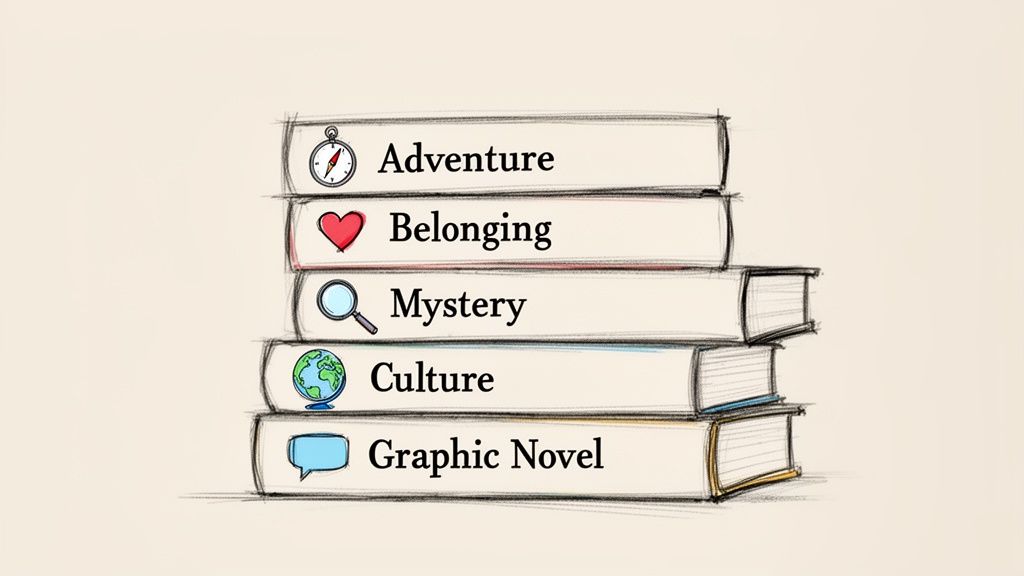
Alright, this is the part you’ve been waiting for. Here is our handpicked list of essential books for 11 year old readers. But we’ve organized it a little differently. Instead of just listing authors or titles, we’ve grouped these books by the very feelings and experiences kids this age are navigating every day. Think of it less as a rigid reading list and more as a compass for finding the right story for the right moment.
Each recommendation is a doorway into a new world, a story chosen specifically to resonate with their growing minds and hearts. From wild, page-turning adventures to quieter stories of figuring out who you are, these are the books that will stick with them long after they’ve read the last page.
Epic Adventures That Build Courage
These are the stories that whisk readers away to other worlds or challenge them with impossible odds. But they’re more than just exciting escapes. These books are a training ground for resilience, showing kids that totally ordinary people can dig deep and find extraordinary courage when it really counts.
- Percy Jackson & The Olympians: The Lightning Thief by Rick Riordan: This modern classic introduces Percy Jackson, a kid who discovers he's the son of a Greek god. It’s a perfect mix of ancient mythology and modern middle school drama, full of humor, action, and powerful lessons about loyalty and destiny.
- Fablehaven by Brandon Mull: When siblings Kendra and Seth visit their grandparents, they stumble upon a secret sanctuary for magical creatures. This series is a masterclass in world-building and a fantastic exploration of how our choices have consequences.
Stories About Finding Your Place
At eleven, that big question—“Where do I fit in?”—is on every kid’s mind. These books dive right into that feeling, exploring friendship, identity, and belonging with so much honesty and heart. They act like a mirror, letting readers see their own lives and questions reflected in the story.
- Restart by Gordon Korman: A notorious school bully gets amnesia after a fall and has the chance to completely start over. It’s a powerful story about identity and redemption that gets kids thinking about whether people can truly change. A great conversation starter about second chances.
- Ghost by Jason Reynolds: Castle "Ghost" Cranshaw joins an elite track team and realizes he has to face his past to have a shot at a future. This is a fast-paced, deeply emotional story about finding your people and learning to trust them.
A great book for an 11-year-old is one that feels both relatable and expansive. It should speak to their current reality while showing them the infinite possibilities of who they can become.
The need for these kinds of impactful stories is huge. The global children's books market, valued at USD 10.40 billion in 2025, is expected to grow to USD 15.52 billion by 2032. This isn’t just about numbers; it shows a worldwide hunger for books that do more than just entertain—they build bridges to curiosity and joy. You can read the full research on the children's book market to learn more.
Mysteries That Will Keep You Guessing
Nothing sharpens a young mind like a good mystery. These books don’t just tell a story; they invite the reader to become a detective, piecing together clues right alongside the characters. They’re a perfect way to build critical thinking skills while feeling like you’re just playing a game.
- Escape from Mr. Lemoncello’s Library by Chris Grabenstein: A group of kids wins a chance to get locked in the world's most amazing library, but they have to solve a ton of puzzles to get out. It's basically a love letter to books, wrapped in a super clever, high-stakes mystery.
- City Spies by James Ponti: This thrilling spy adventure brings together five kids from around the world who are recruited into a secret MI6 division for young operatives. It’s all about teamwork, creative problem-solving, and a bit of international intrigue.
Tales That Celebrate Different Cultures
Reading is one of the best ways to build empathy, and stories that open a window to other cultures are absolutely essential. These books introduce readers to worlds and experiences that might be very different from their own, fostering a real sense of understanding and compassion. For more ideas, our guide on the best chapter books for 5th graders has great picks that often hit the sweet spot for 11-year-olds, too.
- Amari and the Night Brothers by B.B. Alston: While searching for her missing brother, Amari discovers a hidden world of magic and myth. The story brilliantly weaves fantasy with real-world themes of prejudice and belonging, all centered around a strong, determined Black protagonist.
- Mexikid by Pedro Martín: This award-winning graphic memoir chronicles a family’s epic road trip to Mexico to bring their abuelo home. It’s a hilarious and heartfelt look at family, culture, and what it’s like to feel caught between two worlds.
Keep the Adventure Going Beyond the Last Page
A great story shouldn't just end when you close the back cover. The real magic happens when the characters and their world leap off the page and into a child's imagination. Extending the reading experience is a fantastic way to deepen their understanding and make the joy of a good book truly last. It turns reading from a quiet, solo activity into a shared adventure.
These activities are designed to keep the conversation going and help a story's themes and lessons stick. They work perfectly for families, book clubs, or classroom settings, turning any of the recommended books for 11 year old readers into an even more memorable experience.
Creative and Hands-On Activities
Getting the senses involved helps make abstract ideas feel real. Hands-on projects let kids connect with a story in a physical way, firing up different parts of their brain to process what they’ve read.
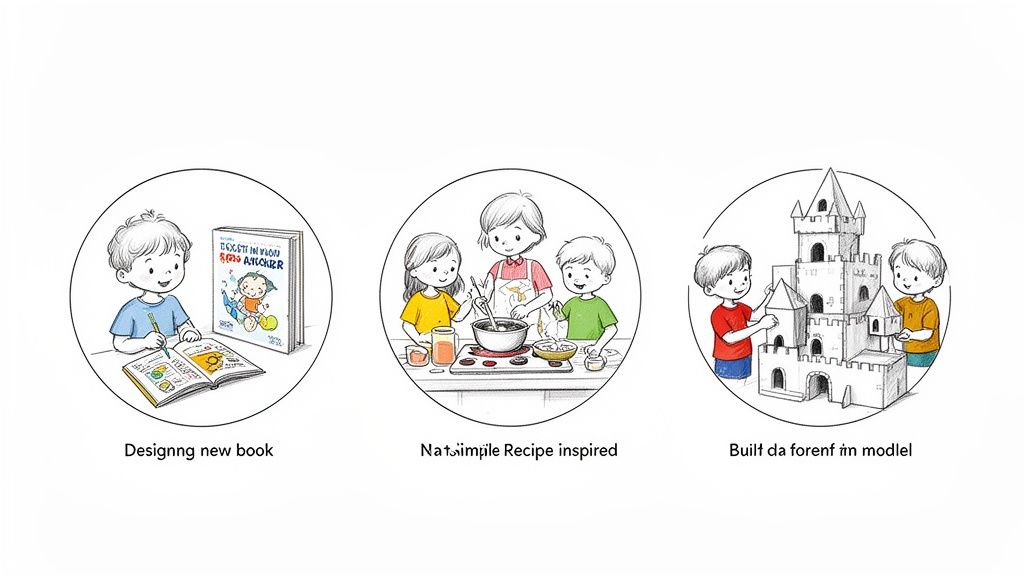
- Design a New Book Cover: Ask your young reader to create a new cover that shows what they felt was the most important part of the story. This is a great way to see what they identified as the central theme.
- Write a Letter to a Character: Prompt them to write a letter offering advice, asking a question, or just sharing how a character’s actions made them feel. This really builds empathy and a personal connection to the story.
- Build a Scene: Use LEGOs, clay, or whatever craft supplies you have to build a key setting from the book. Imagine constructing the magical Fablehaven sanctuary or Mr. Lemoncello's incredible library!
When you turn reading into a creative act, you’re not just testing comprehension—you're inviting the reader to become a co-creator in the story's world. This sense of ownership is what sparks a lifelong passion for books.
Sparking Deeper Conversations
Talking about the book is where a young reader truly starts to grapple with complex ideas. Moving beyond simple plot summaries helps them develop critical thinking skills and connect the story's themes to their own lives.
Try using these questions to kickstart a meaningful chat:
- Tough Choices: Which character had the most difficult decision to make? What would you have done in their shoes, and why?
- Character Growth: How did the main character change from the beginning of the book to the end? What do you think caused that change?
- Real-World Connections: Does this story remind you of anything happening in our world today?
These aren't just fun add-ons; they are essential tools for building stronger, more engaged readers. They ensure the adventure continues long after the final chapter is read.
Common Questions About Choosing Books
Stepping into the world of middle grade books can feel a little tricky. It’s totally normal to have questions! In fact, most parents and educators run into the same handful of concerns, and getting them answered can give you the confidence to find stories your young reader will absolutely love.
One of the biggest worries is always about content maturity. You pick up a book and wonder, "Is this theme too old for my child?" The best way to find out is to simply preview it yourself. Read a few chapters, or at least check out reviews from sources you trust that talk about specific themes. This way, you're making a call based on your own kid's personality and readiness, not just a generic age rating.
Handling Specific Reading Habits
Another common question is what to do when your child gets stuck on a single author or series and refuses to read anything else. First off, that's something to celebrate! Any reading is good reading, and that kind of passion is fantastic.
Instead of trying to pull them away from it, use their favorite series as a bridge. Try saying something like, "If you loved the magic in that series, I found this other book with a totally different kind of magic system you might think is cool." This frames the new book as an exciting discovery, not a replacement for what they already enjoy.
The goal is never to restrict what a child loves, but to broaden their horizons by showing them how many other amazing stories are out there waiting to be discovered.
Finally, a lot of parents ask how to figure out the right reading level without turning it into a stressful test. A simple, low-pressure trick is the five-finger rule. Just have them read one page of a book. If they stumble over five or more words, it might be a bit too challenging for them to read on their own right now. For a deeper look, you can explore more strategies on how to assess reading level without any of the pressure.
At Number 6 Publishing, we believe finding the right story is a journey worth taking. Explore our curated book lists and find your child’s next great adventure at https://www.number6publishing.com.