
The middle grades, typically covering ages 8 to 12, are a magical time for young readers. It's a period of transition from early chapter books to more complex narratives, a time for discovering characters and worlds that can shape their perspectives for years to come. But with countless titles released annually, how do you find the gems? The search for the best middle grade books isn't just about finding popular titles; it's about connecting a specific child with a story that resonates.
For parents, librarians, and educators, the challenge is navigating this vast literary landscape to find books that inspire curiosity, build empathy, and foster a lifelong love of reading. This guide moves beyond a simple, static list. Instead, it offers a strategic roundup of seven invaluable resources and platforms that will transform how you discover, borrow, and buy exceptional middle grade literature.
We will explore a diverse range of tools, from indie publishers with a heartfelt mission like Number 6 Publishing to powerful library apps and major online retailers. Each entry is designed to provide actionable insights, helping you pinpoint the perfect book for your needs. Whether you're building a diverse classroom library, stocking home bookshelves, or helping a reluctant reader find "the one," these platforms provide curated, practical pathways to stories that matter. You'll find direct links and practical tips for using each resource effectively, simplifying your search for your child's next favorite story.
1. Number 6 Publishing
For parents, educators, and librarians navigating the crowded landscape of children's literature, Number 6 Publishing offers a refreshingly focused and mission-driven resource. This family-run independent press serves as both a publisher of original titles and a trusted curator of high-quality reading lists, making it an exceptional one-stop destination for discovering some of the best middle grade books available today. Its core philosophy revolves around stories that foster curiosity, empathy, and emotional honesty, moving beyond mass-market trends to deliver content with lasting impact.
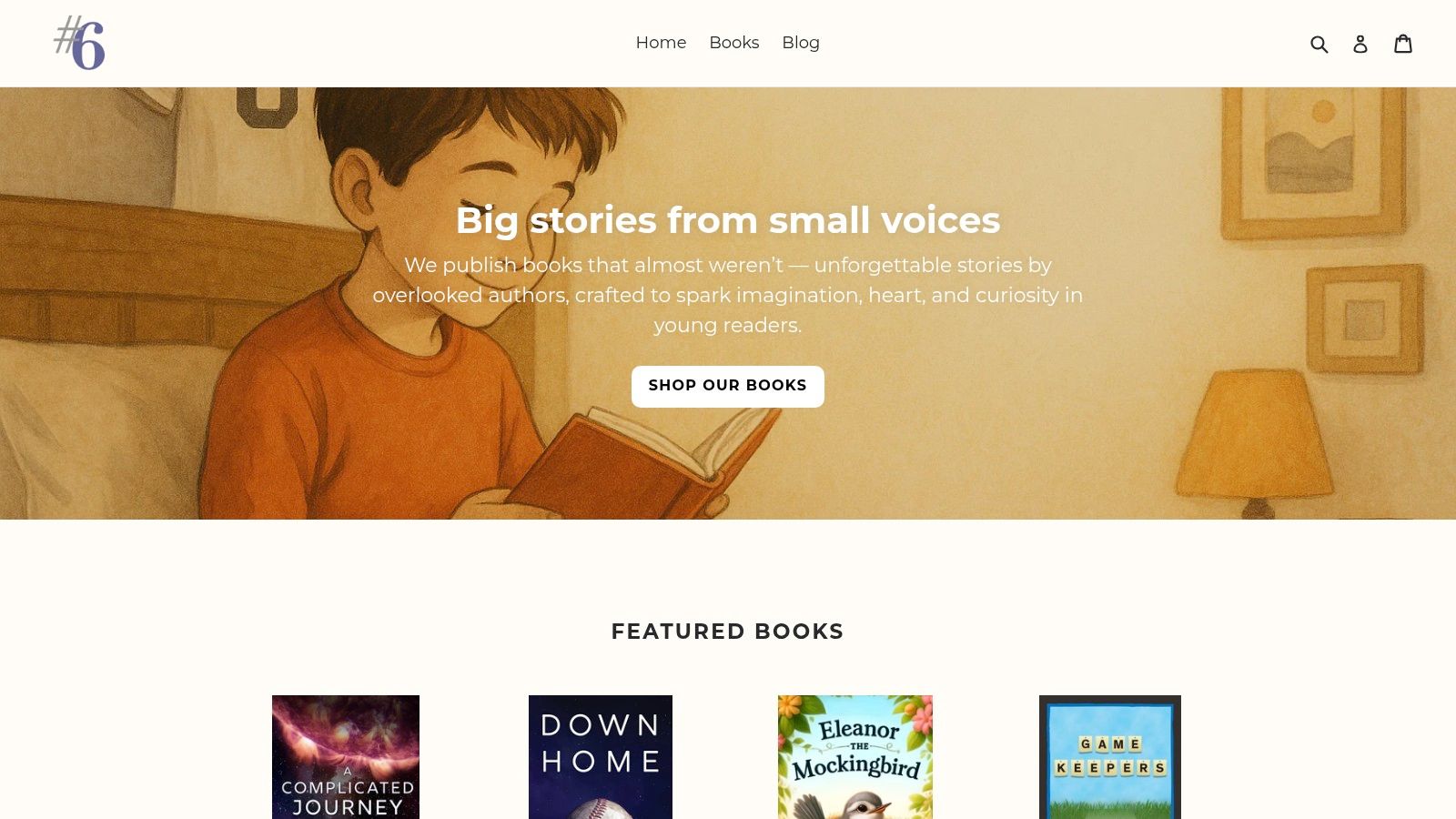
The platform's dual function is its greatest strength. As a publisher, Number 6 champions heartfelt, character-driven fiction like A Complicated Journey and Eleanor the Mockingbird, which tackle relatable coming-of-age themes with sensitivity and depth. These titles are ideal for starting meaningful conversations with middle schoolers about identity, resilience, and connection. Simultaneously, its website provides expertly curated book lists that simplify the discovery process for busy adults.
Key Strengths and Features
Number 6 Publishing distinguishes itself through a commitment to quality over quantity. Instead of overwhelming visitors with endless options, it provides thoughtful recommendations organized by theme and reading level. This makes it an invaluable tool for homeschoolers designing a curriculum, teachers building a classroom library, or parents searching for the perfect next read.
Standout Features:
- Curated Reading Lists: The site features practical, easy-to-navigate lists such as "unforgettable middle grade reads" and "must-read elementary classics." These selections are handpicked to align with the publisher's values, ensuring every recommendation is both age-appropriate and emotionally resonant.
- Focus on Overlooked Voices: A central part of its mission is to elevate stories from diverse and underrepresented perspectives, offering young readers a broader, more inclusive window into the world. You can learn more about its philosophy and place within the world of independent children's book publishers to understand its unique mission.
- Educator and Parent-Friendly Resources: The platform is designed with the needs of educators and caregivers in mind, providing clear guidance for finding books that support social-emotional learning and spark classroom discussions.
Expert Insight: Number 6 Publishing excels at bridging the gap between finding a good book and finding the right book. Its curated approach saves educators and parents significant time and effort, offering a trusted filter in a noisy market.
For independent authors or smaller presses like Number 6 Publishing looking to distribute their titles, understanding the process for publishing is crucial. Platforms like Amazon offer wide reach, and resources explaining How to Publish Your Book on Amazon can provide a clear roadmap for navigating that ecosystem effectively.
Navigating the Platform
To make the most of Number 6 Publishing, start by exploring its curated blog posts and reading lists. These are not just lists of titles; they often include context and thematic connections that help you choose books that align with specific learning goals or a child’s interests.
Because Number 6 is an independent press, its original titles may have more limited distribution than those from major publishing houses. Pricing and specific retailer availability are not listed on the site, so you will need to check major booksellers or contact the publisher for purchase details. This minor inconvenience is a small trade-off for access to a carefully selected and emotionally rich collection of books that truly stand out.
Visit the website: https://www.number6publishing.com
2. Amazon Books (Children’s / Middle Grade)
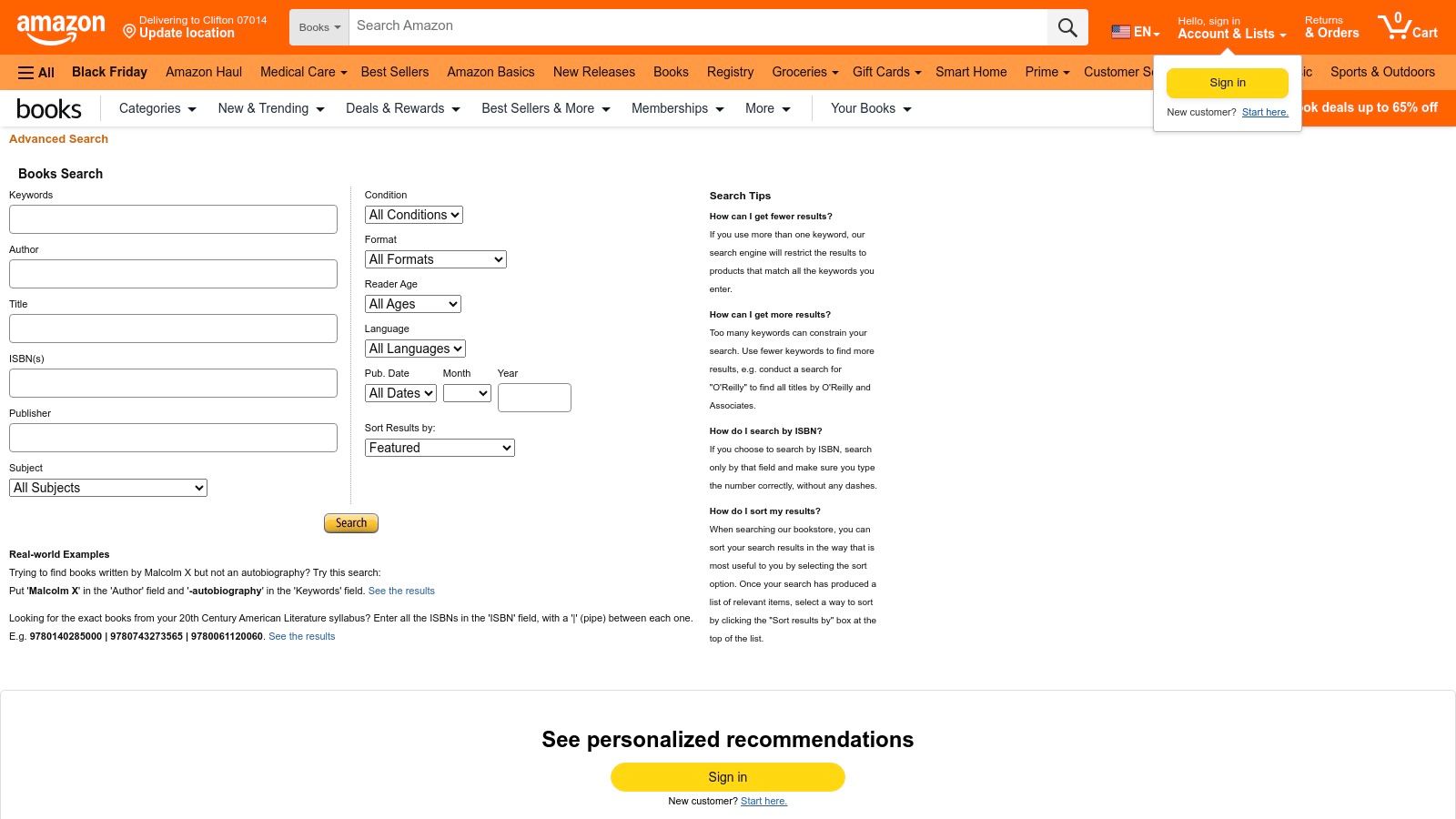
When it comes to sheer volume and immediate availability, Amazon Books remains a dominant force for finding the best middle grade books. Its massive catalog covers everything from timeless classics and award-winners to the latest bestsellers and undiscovered gems, making it an essential resource for parents, educators, and young readers alike. The platform's primary strength lies in its powerful search and filtering capabilities, which allow users to quickly narrow down an otherwise overwhelming selection.
The user experience is built around convenience. With features like Prime shipping, most titles can be delivered within a couple of days in the US. The platform also excels at offering multiple formats for a single title, including hardcover, paperback, Kindle eBook, and Audible audiobook versions, catering to every reading preference.
Key Features and User Experience
Amazon's interface provides several tools to help you pinpoint the perfect book. The customer reviews section offers crowdsourced opinions, while the "Look Inside" feature provides a crucial preview of the text and illustrations before you buy. For building a library, the ability to create and share wish lists is invaluable for birthdays, holidays, or classroom donation drives.
Pro Tip: Use the Advanced Search page to bypass the busy main interface. You can filter directly by "Reader Age: 9–12" to isolate middle grade titles and combine it with other criteria like publication date or author to find exactly what you need without distraction.
Pros and Cons
| Strengths | Weaknesses |
|---|---|
| Unmatched Selection: Vast inventory of new releases, backlist titles, and series. | Overwhelming Discovery: The sheer volume and sponsored results can make browsing difficult. |
| Multiple Formats: Print, Kindle, and Audible versions are often available on one page. | Lacks Curation: Unlike smaller indie sites, it offers minimal expert curation. |
| Fast Fulfillment: Prime shipping ensures quick delivery for most items. | Not Indie-Focused: Does not directly support independent bookstores or publishers. |
How to Use It Effectively
- Filter Aggressively: Start by using the "Reader Age: 9–12" filter found in the sidebar or via Advanced Search. This is the fastest way to segment the middle grade category.
- Verify with Reviews: Scan both positive and negative reviews to get a balanced perspective on a book's themes, pacing, and age-appropriateness.
- Bundle and Save: Look for boxed sets of popular series, which often offer a better value than purchasing books individually. You can find more tips on selecting impactful kids' books at Number 6 Publishing's blog.
- Leverage Wish Lists: Create targeted wish lists for different needs, like "Classroom Library Needs" or "Summer Reading," to stay organized and share your selections easily.
While Amazon may lack the curated, community-focused feel of an independent bookstore, its convenience, selection, and multi-format availability make it an indispensable tool for acquiring specific titles quickly.
Website: https://www.amazon.com/advanced-search/books
3. Barnes & Noble (Kids’ Store: Middle Grade)
For readers who appreciate the blend of online convenience with the immediacy of a physical bookstore, Barnes & Noble offers a compelling hybrid experience. As a major national bookseller, its platform provides well-curated pages dedicated to finding the best middle grade books, complete with staff picks, seasonal lists, and trend highlights. Its standout feature is the seamless integration between its online store and its network of physical locations, making it perfect for those who want to browse online and pick up their books the same day.
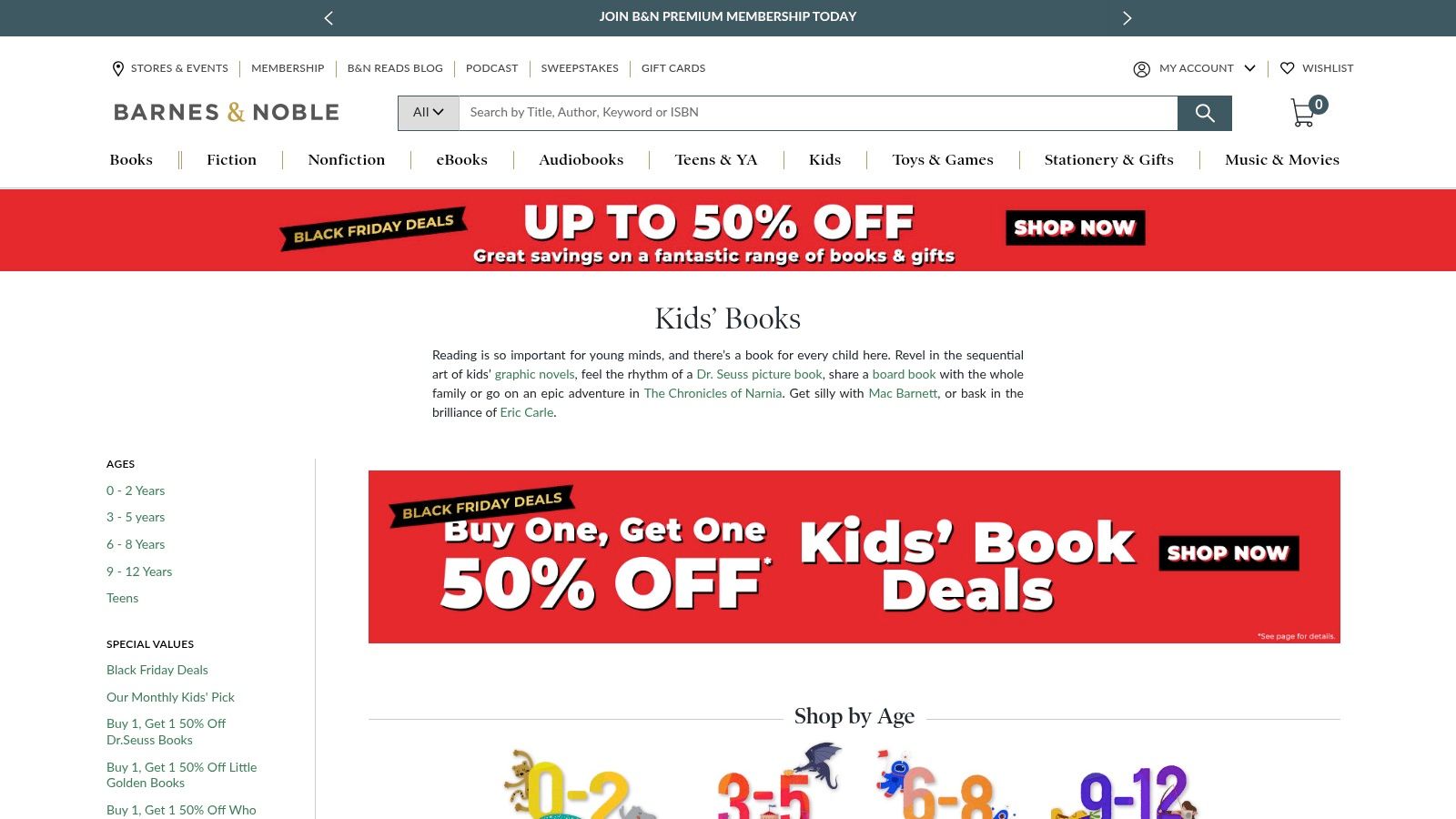
The user experience is designed to bridge the gap between digital discovery and in-person shopping. Features like the store availability checker allow you to see if a specific title is in stock at your local B&N before you even leave the house. This makes it an invaluable tool for last-minute gifts, school project needs, or simply satisfying the urgent desire to start a new book right away.
Key Features and User Experience
Barnes & Noble’s Kids’ Store is more than just a search bar; it's a curated space that guides discovery. You’ll find curated carousels for "Must-Read Middle Grade," "Young Reader Favorites," and lists tied to events like Children's Book Week. The interface clearly displays formats like hardcover, paperback, and NOOK Book, while prominently featuring the "Pick up in store" option if available locally.
Pro Tip: Before heading to the store, use the website to check local inventory and place a "Buy Online, Pick Up in Store" order. This reserves your copy, ensures you get the online price, and saves you the potential disappointment of finding an empty shelf.
Pros and Cons
| Strengths | Weaknesses |
|---|---|
| Online Buying with Local Pickup: Combines the ease of online shopping with same-day, in-store access. | Inventory Can Be Limited: Not all books are stocked locally; some are online-only. |
| Helpful Curated Lists: Staff picks and themed collections aid in book discovery. | Complex Promotions: Coupons and member discounts sometimes have different rules online versus in-store. |
| Supports a National Bookseller: A good middle ground between Amazon and small indie shops. | Shipping Isn't Always Free: Free shipping usually requires a minimum purchase amount for non-members. |
How to Use It Effectively
- Check Local Availability First: On any book’s product page, enter your zip code in the "Pick up in store" section to see if a nearby B&N has it on the shelf.
- Browse Themed Collections: Start on the main Middle Grade page to explore curated lists like "Tween & Teen Recommended Reads" to discover new authors and series.
- Sign Up for Educator Discounts: If you are a teacher or librarian, the B&N Educator Program offers discounts on purchases for the classroom, which can be used both in-store and online.
- Explore the NOOK Section: For digital readers, the NOOK Book section often features exclusive deals and pre-orders for highly anticipated middle grade titles.
By leveraging both its digital and physical assets, Barnes & Noble provides a flexible and reliable resource for families and educators to find and acquire their next favorite book quickly.
Website: https://www.barnesandnoble.com/b/books/kids/_/N-2wjtZ29Z8q8Ztu1
4. Bookshop.org
For readers who love the convenience of online shopping but want to support local bookstores, Bookshop.org offers the perfect solution. This innovative platform is designed to financially support independent bookstores across the country, making it an ethical and community-focused choice for finding the best middle grade books. It combines a user-friendly e-commerce experience with a mission to help local businesses thrive.
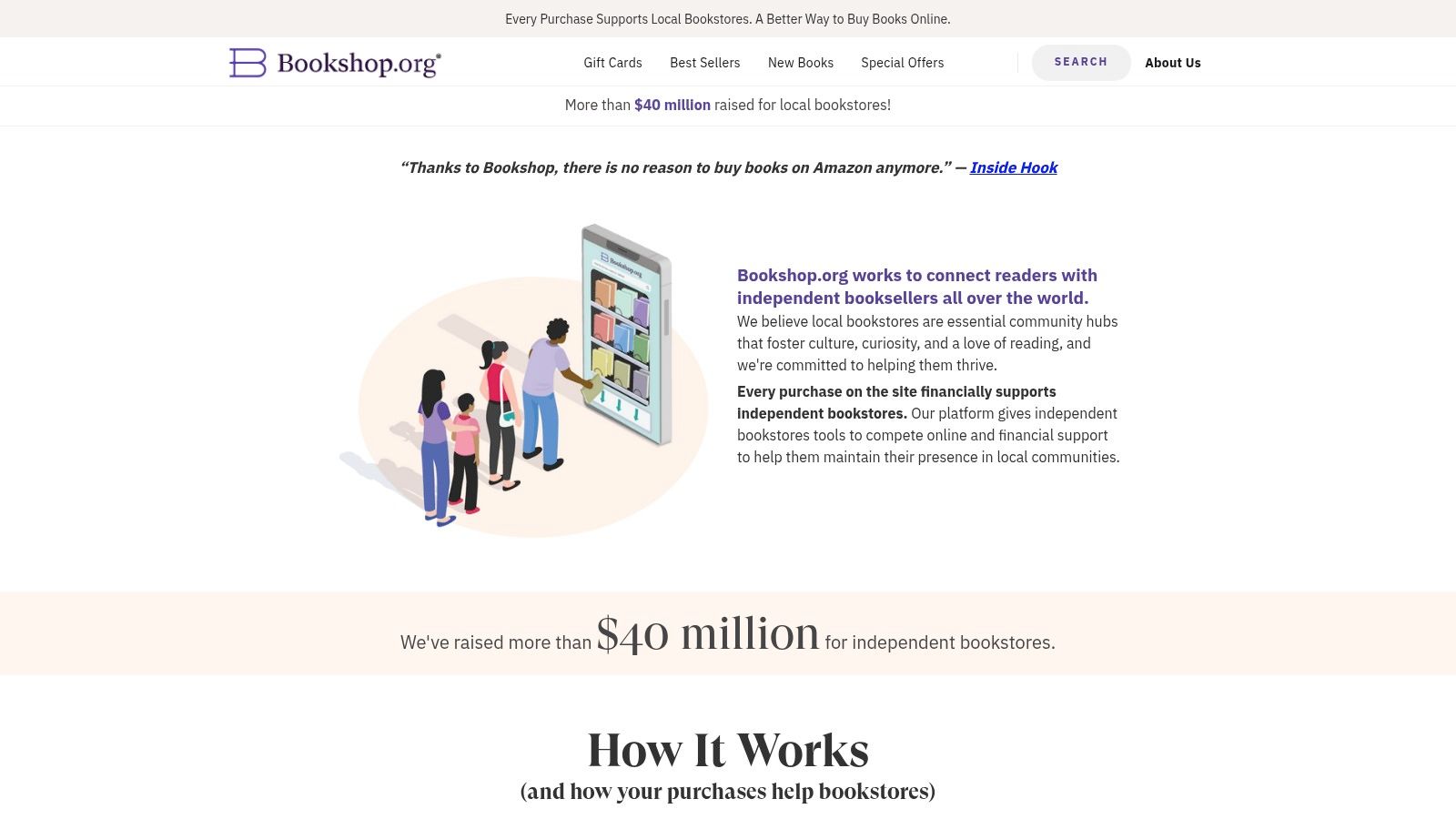
The platform functions as an online marketplace where every purchase contributes directly to a pool that is evenly distributed among participating indie stores. Alternatively, users can choose a specific local shop to receive the full profit from their order. This model ensures that your spending has a positive impact, even when you're ordering from home.
Key Features and User Experience
Bookshop.org excels at curation, offering a discovery experience that feels more like browsing a beloved local bookstore than a massive online retailer. The site features expertly crafted reading lists on countless themes, including dedicated sections for "Middle Grade" and sub-categories like "Middle Grade Fantasy & Sci-Fi." This makes it easy for parents, teachers, and young readers to find new titles and hidden gems. The interface is clean, visually appealing, and focused on book discovery.
Pro Tip: Look for curated lists created by independent bookstores themselves. Many shops maintain their own pages on Bookshop.org with staff picks and recommendations, giving you direct access to expert-curated selections for middle grade readers.
Pros and Cons
| Strengths | Weaknesses |
|---|---|
| Directly Supports Indies: A significant portion of profits goes to local bookstores. | Ship-to-Home Only: Does not support in-store or curbside pickup options. |
| Excellent Curation: Features themed lists from experts, authors, and booksellers. | Limited Discounts: Prices are less likely to be deeply discounted compared to larger retailers. |
| Community-Focused Mission: Offers a way to shop consciously and support small businesses. | Selection Based on Ingram: Inventory is tied to a single major distributor, which may affect availability. |
How to Use It Effectively
- Find and Support Your Local Store: Use the store locator map to designate a specific independent bookstore to receive the full profit from your purchases. If you don't have a favorite, your order will contribute to the general profit pool.
- Browse Curated Lists: Start your search in the "Kids" section and explore the "Middle Grade (Ages 9-12)" category. Pay special attention to lists like "Award-Winning Middle Grade" or seasonal reading guides.
- Check for E-book Options: In addition to print books, Bookshop.org partners with My Must Reads (MMR) to offer e-books, with profits also supporting independent bookstores.
- Follow Booksellers and Publications: Many of your favorite publications and bookstores curate their own storefronts on the platform, providing a trusted source for discovering the best middle grade books.
Bookshop.org successfully bridges the gap between online convenience and the curated, community-oriented feel of an independent bookstore, making it an invaluable resource for conscientious book buyers.
Website: https://bookshop.org
5. Scholastic (Parents / Teachers + Store)
For decades, Scholastic has been a trusted name in children's literature, deeply integrated into the educational landscape. Its website serves as a multifaceted resource, combining an online store with rich editorial portals for parents and teachers. This makes it an invaluable platform for discovering the best middle grade books that are not only engaging but also often aligned with school curricula and developmental milestones. The site excels at providing expertly curated lists and recommendations you can trust.
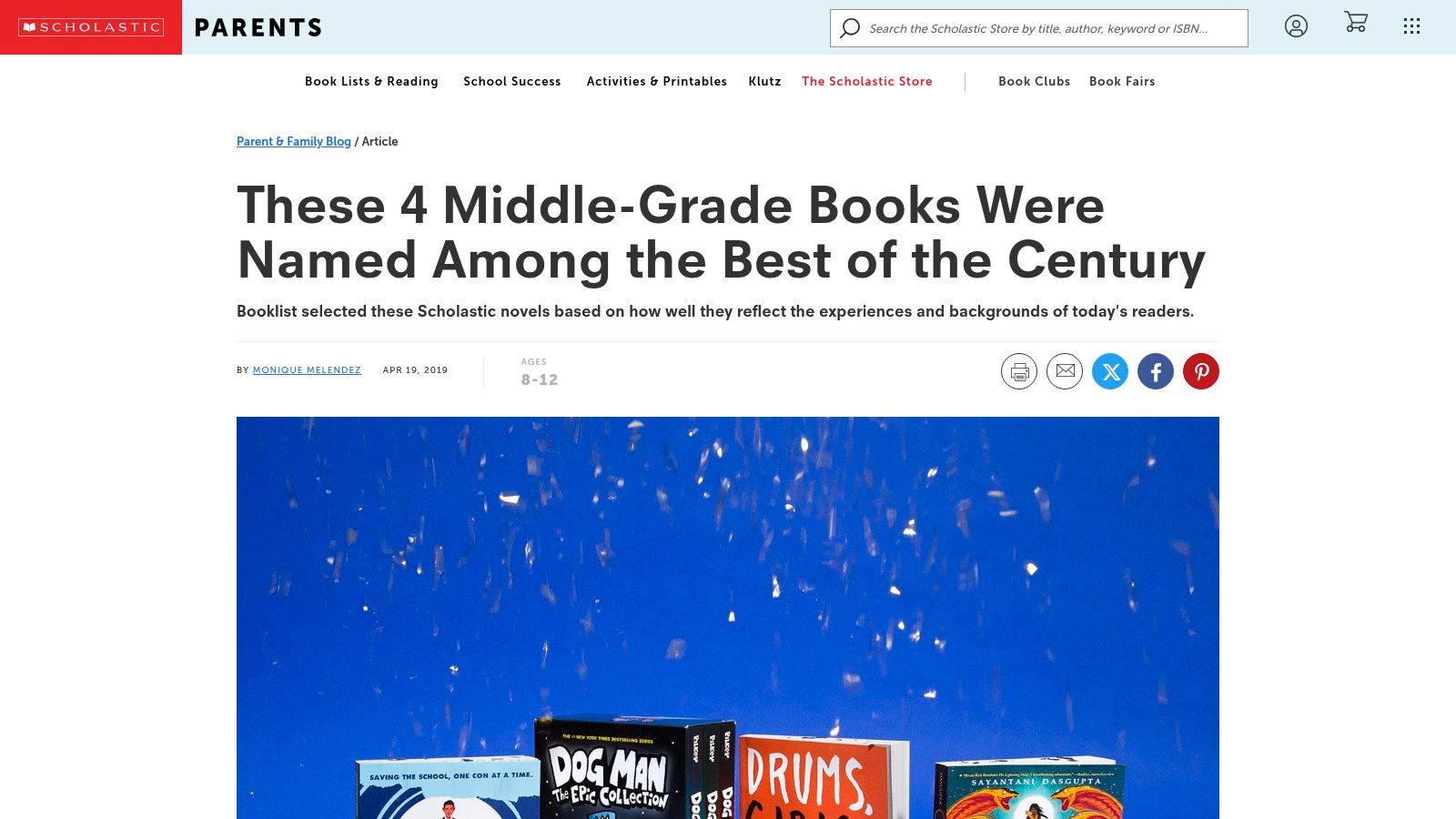
The user experience is divided between its retail side and its informational hubs, like the "Raise a Reader" blog. While the store offers direct purchasing, the true strength for discovery lies in its articles and book lists. These resources provide themed recommendations, grade-level guidance, and spotlights on award-winners and new releases, making it easier to find a book that resonates with a specific reader.
Key Features and User Experience
Scholastic’s platform is designed to support the adults guiding young readers. The Parents and Teachers sections feature countless articles on everything from navigating tough topics to finding the perfect series for a reluctant reader. You will find editorial lists like "Best Middle Grade Books" or selections organized by interest, such as fantasy, mystery, or graphic novels. This expert curation helps cut through the noise of an otherwise crowded market.
Pro Tip: Don't just browse the store. Explore the "Parents" and "Educators" tabs first. The articles and blogs often link directly to the books they recommend, providing a more context-rich and curated shopping experience than a simple search.
Pros and Cons
| Strengths | Weaknesses |
|---|---|
| Education-Focused Curation: Recommendations are trusted by teachers and librarians. | Scholastic-Centric: Inventory and lists may heavily feature Scholastic imprints. |
| Strong Series Selection: Excellent source for popular series and graphic novels. | Program-Specific Access: Some programs, like Book Clubs, require a teacher's code. |
| Helpful Guidance: Articles offer valuable tips on reading levels and book choice. | Less Indie Focus: Primarily showcases major and in-house published titles. |
How to Use It Effectively
- Start with the Blog: Begin by exploring the "Raise a Reader" blog within the Parents section. Use its search function to look for topics like "middle grade fantasy" or "books for 11-year-olds" to find curated lists.
- Filter by Grade and Genre: When in the Scholastic Store, use the filters on the left-hand sidebar to narrow your search by "Grade" (e.g., Grades 3-5, Grades 6-8) and "Genre" to quickly find relevant titles.
- Look for Collections: Scholastic often bundles popular series or themed books into collections, which can offer better value and a great way to get a reader hooked.
- Check for Teacher Resources: Many book pages include links to related teaching guides or activities, providing extra value for educators and homeschool families looking for supplemental materials.
As a publisher and retailer, Scholastic offers a uniquely education-centric lens for discovering the best middle grade books, making it a go-to resource for parents and teachers who value expert-vetted selections.
6. Goodreads
Goodreads is the world's largest social cataloging site for readers, making it an invaluable community-driven tool for discovering the best middle grade books. Instead of focusing on sales, it centers on reader experience, offering a massive database of ratings, reviews, and curated lists to help parents and educators gauge a book's reception and age-appropriateness. Its strength is in leveraging crowd-sourced data to validate book choices before you commit to buying or borrowing.
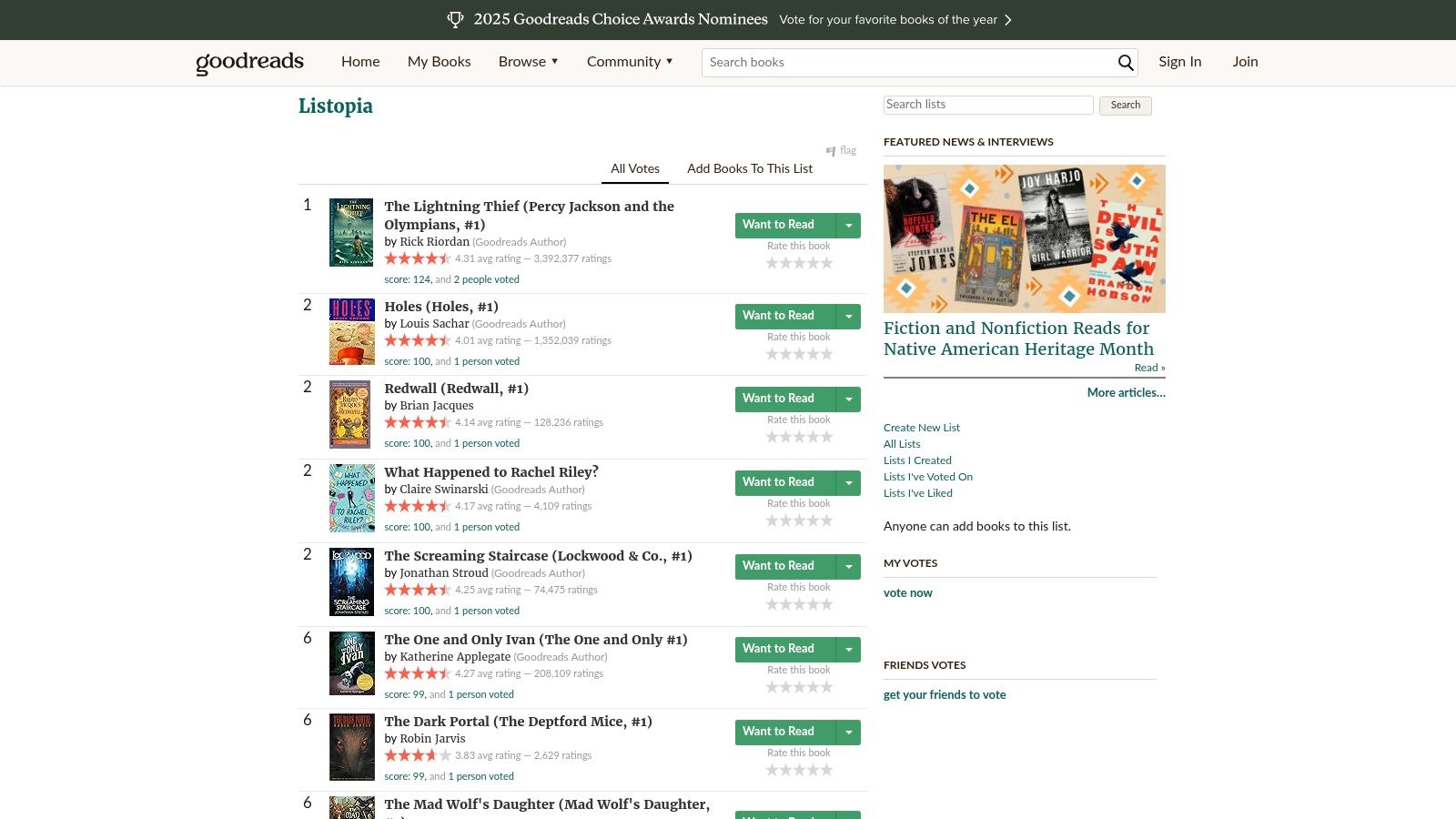
The platform functions as a digital bookshelf and a research hub. Users can track what they've read, see what their friends are reading, and join discussions in groups. For finding new middle grade titles, its community-curated "Listopia" collections are a goldmine, gathering thousands of votes on lists like "Best Middle Grade Books of the 21st Century" or "Diverse Middle Grade Reads."
Key Features and User Experience
Goodreads' interface is built around community interaction. Every book page features an average star rating, detailed reader reviews, and links to purchase from major retailers or check for availability at local libraries via WorldCat. Users can create custom shelves to organize books, such as "Read," "Currently Reading," and "Want to Read," which is perfect for building a future reading list for a child or a classroom.
Pro Tip: When evaluating a book, look beyond the average star rating. Read a mix of 5-star and 3-star reviews written by parents or teachers. They often provide specific details about complex themes, reading level, and emotional maturity that can help you decide if a book is the right fit.
Pros and Cons
| Strengths | Weaknesses |
|---|---|
| Gauges Reader Consensus: Quickly see a book's popularity and reception among a huge audience. | Lists Can Be Messy: User-generated lists may include off-topic or borderline YA titles. |
| Builds Reading Lists: Excellent for tracking books you want to read and have read. | Skews Toward Popular Titles: Discovery can favor well-known franchises over indie gems. |
| Community Recommendations: Find similar books based on what other readers enjoyed. | Interface Can Be Dated: The website design is less modern than some other platforms. |
How to Use It Effectively
- Explore Listopia: Start by searching for lists using keywords like "middle grade fantasy" or "8-12 historical fiction." Sort by the number of votes to see the most popular community picks.
- Analyze User Shelves: On a book's page, look at the "Community Reviews" section and see what shelves users have added it to. Tags like "ages-9-12" or "classroom-read" can be strong indicators of its intended audience.
- Follow Curators: Find and follow librarians, teachers, and middle grade authors. Their shelves and reviews can serve as a highly curated source for quality recommendations.
- Track Your Reading: Encourage your middle grader to create an account to track their reading progress. The sense of accomplishment and community can be a powerful motivator.
While Goodreads doesn't sell books directly, its power as a free research and discovery tool is unmatched, allowing you to tap into the collective wisdom of millions of readers to find the next great book.
Website: https://www.goodreads.com/list/show/125220.Best_Middle_Grade_Books
7. Libby (by OverDrive)
For readers who devour books faster than they can be purchased, Libby is a game-changing free resource. Powered by OverDrive, this app connects directly to your local public library's digital collection, offering an extensive catalog of the best middle grade books in eBook and audiobook formats. It provides an economical and convenient way to explore new authors, sample a series before committing, and satisfy the needs of even the most voracious young readers without straining the family budget.
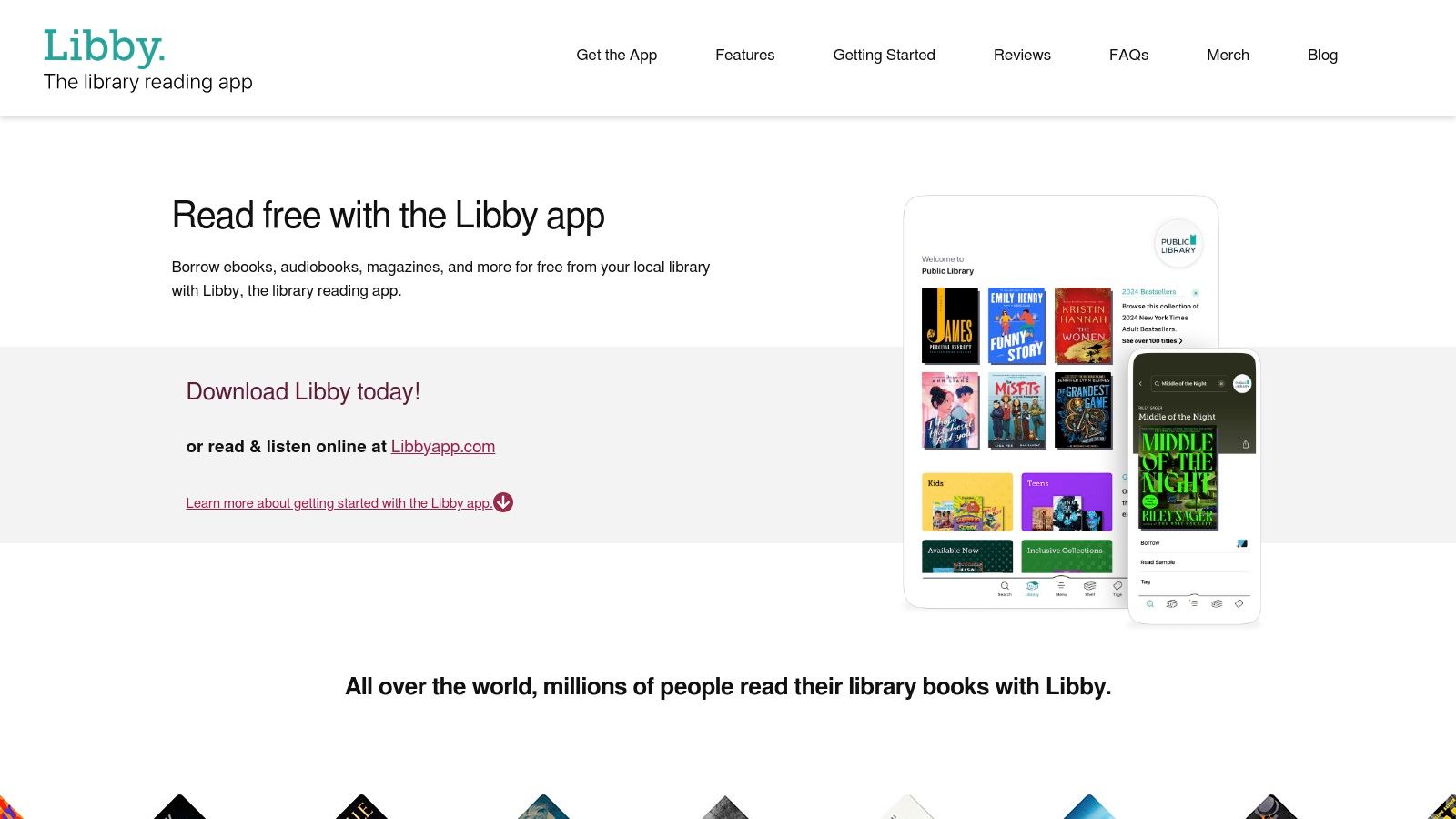
The user experience is clean, modern, and highly intuitive. Once you've linked your library card, borrowing a title is as simple as a few taps. Features like cross-device syncing mean a reader can start a book on a tablet at home and pick it up right where they left off on a phone during a commute. In the US, many titles can even be sent directly to a Kindle device, blending the library's free access with a preferred e-reader.
Key Features and User Experience
Libby's interface is designed for easy discovery within your library's specific collection. Many libraries curate special shelves for kids and middle grade readers, featuring award-winners, new releases, and themed lists. The app manages your loans automatically, returning books on their due date and sending notifications when your holds become available. For families, the ability to add multiple library cards to one app is a major convenience.
Pro Tip: Use the "Define Audience" filter and select "Juvenile" to immediately hide adult and young adult titles, creating a safer browsing environment for middle grade readers. This ensures they only see age-appropriate content.
Pros and Cons
| Strengths | Weaknesses |
|---|---|
| Completely Free: Access thousands of eBooks and audiobooks with a valid library card. | Wait Lists for Popular Books: High-demand titles often have a long digital queue. |
| Excellent for Sampling: Try a book or an entire series before you decide to buy. | Selection Varies by Library: Your library's budget determines the size of its digital catalog. |
| Multi-Platform Access: Use on phones, tablets, or send books to a Kindle (US only). | Digital Only: No access to physical books for readers who prefer print. |
How to Use It Effectively
- Place Holds Strategically: Don't be discouraged by a long waitlist. Place holds on several desired books at once; you’ll have a steady stream of reading material as they become available.
- Explore Curated Lists: Check out your library's curated collections, often found on the app’s home screen. These are great for discovering new authors or finding titles related to a specific theme.
- Utilize Tags: Create custom tags like "Want to Read," "Favorites," or "Summer Reading" to organize titles you discover. This acts as a personal wish list within the app.
- Connect Multiple Libraries: If you have cards for more than one library system (e.g., city and county), add them all to Libby to significantly expand your selection. You can find a deeper dive into Libby and other top digital reading tools in our guide to the best reading apps for kids.
Libby is an indispensable tool for families and educators, promoting reading by removing the cost barrier and providing immediate, on-the-go access to a world of middle grade stories.
Website: https://www.overdrive.com/apps/libby
Top 7 Middle-Grade Book Sources Comparison
| Option | 🔄 Implementation complexity | 💡 Resource requirements | 📊 Expected outcomes | ⚡ Ideal use cases | ⭐ Key advantages |
|---|---|---|---|---|---|
| Number 6 Publishing | Low–Medium 🔄 — browse curated lists; direct ordering may need retailer checks | Web access; possible indie-ordering or retailer lookup | ⭐⭐⭐⭐ 📊 — high editorial quality, emotionally rich titles | Classroom curation, homeschool, readers seeking indie/heartfelt MG/YA | Curated educator lists; diverse, empathetic fiction; indie-focused |
| Amazon Books (Children’s / Middle Grade) | Low 🔄 — advanced filters, fast checkout | Amazon account, payment method; optional Kindle/Audible devices | ⭐⭐⭐⭐⭐ 📊 — widest selection and fastest fulfillment | Quick purchases, multi-format needs, finding bestsellers/series | Huge catalog; Prime shipping; extensive reviews and previews |
| Barnes & Noble (Kids’ Store: Middle Grade) | Low 🔄 — online shopping with local pickup option | Account or in-store visit; store availability lookup | ⭐⭐⭐⭐ 📊 — reliable local availability with curated picks | Same-day pickup, gifts, local browsing and classroom needs | Store pickup/curbside; staff picks; dedicated kids storefront |
| Bookshop.org | Low 🔄 — simple online checkout; no local pickup | Account/payment; shipping (supports chosen indie) | ⭐⭐⭐⭐ 📊 — supports indies while offering curated discovery | Buying to support local bookstores; curated list discovery | Directs profits to indies; themed lists; national shipping |
| Scholastic (Parents / Teachers + Store) | Low–Medium 🔄 — editorial lists; some school programs require codes | Account for classroom programs; teacher/class codes for some offers | ⭐⭐⭐⭐ 📊 — school-aligned recommendations and classroom staples | School purchases, classroom libraries, teacher-recommended reads | Education-focused curation; trusted by schools; strong series selection |
| Goodreads | Low 🔄 — browse lists and reviews; account for interaction | Free account helpful; web/mobile access | ⭐⭐⭐ 📊 — broad community consensus but can be noisy | Researching popularity and reader opinions before buying | Large reader reviews; Listopia collections; user ratings |
| Libby (by OverDrive) | Medium 🔄 — library card registration and app setup | Local library card; smartphone/tablet or compatible e-reader | ⭐⭐⭐⭐ 📊 — cost-effective sampling and audiobook access | Borrowing, sampling series, heavy readers on a budget | Free loans; send-to-Kindle (US); audiobooks and holds management |
Building a Generation of Readers, One Book at a Time
Finding the best middle grade books is less a final destination and more of a continuous, rewarding journey. The tools and platforms we've explored serve as your compass and map, guiding you through an ever-expanding world of stories that can shape, challenge, and inspire young readers. The right book, discovered at the perfect moment, has the power to build empathy, spark curiosity, and make a child feel seen and understood.
Your goal isn't just to hand a child a book but to cultivate a vibrant and dynamic reading ecosystem. By blending the strengths of the resources covered, from the vast community-driven insights on Goodreads to the hyper-local, free digital access provided by Libby, you create a powerful toolkit. This multi-platform approach ensures every young reader can find stories that resonate with them, whether it's a mainstream bestseller from Scholastic or a uniquely crafted, heartfelt tale from a mission-driven independent publisher like Number 6 Publishing.
Key Takeaways for Your Reading Journey
This guide was designed to equip you with a strategy, not just a list. As you move forward, keep these core principles in mind to effectively find and share the best middle grade books:
- Diversify Your Sources: Don't rely on a single platform. Use Amazon for its massive selection and user reviews, but balance it with curated, ethical sources like Bookshop.org that support local bookstores. Use Barnes & Noble for in-person discovery and Number 6 Publishing for unique, diverse voices.
- Empower Reader Choice: The most powerful tool is a child's own interest. Use these platforms to present options, not to dictate them. Show them trailers, read summaries together, and let them browse categories. A book chosen is far more likely to be a book loved.
- Balance Digital and Physical: Leverage the convenience of Libby for instant access and trying new authors, but also cherish the experience of physical books. The tangible nature of a book can create a deeper, more focused connection for many middle grade readers.
Your Action Plan: Putting These Tools to Work
To translate this information into immediate action, consider implementing a simple, sustainable discovery routine.
- Weekly Curation: Dedicate 30 minutes a week to exploration. Browse a "new releases" section on one platform and a "highly rated" list on another. For instance, check the latest middle grade titles on Barnes & Noble one week, then explore a specific genre tag on Goodreads the next.
- Create a "Want to Read" Hub: Use a Goodreads shelf or a simple digital note to collect titles you discover. When a birthday or holiday comes around, or a trip to the library is planned, you'll have a pre-vetted list ready to go.
- Engage Beyond the Chapter Book: Remember that reading engagement comes in many forms. While longer novels are fantastic, they aren't the only option. Exploring the best short stories for kids can be an excellent way to introduce new genres, build reading confidence, and fit literature into a busy schedule. Short stories often provide a complete narrative arc in a single sitting, which is perfect for reluctant readers or for classroom analysis.
Ultimately, the search for the best middle grade books is a collaborative adventure. It's a conversation between you and the young readers in your life. Ask them what they think, listen to their opinions, and share in their discoveries. By doing so, you're not just finding their next favorite book; you are validating their voice and empowering them to build a personal, passionate, and lifelong relationship with reading.
Ready to discover books that challenge, inspire, and reflect the true diversity of the world? Explore the catalog at Number 6 Publishing to find carefully curated middle grade stories that champion underrepresented voices and tackle meaningful themes. Start your journey toward more inclusive reading today at Number 6 Publishing.