
The Velveteen Rabbit, by Margery Williams, is a deeply cherished children's book that tells the story of a stuffed rabbit’s profound wish to become "Real" through his owner's love. For over a century, this classic tale has touched readers with its exploration of love, what it means to be authentic, and how we handle loss.
Exploring a Century of Nursery Magic
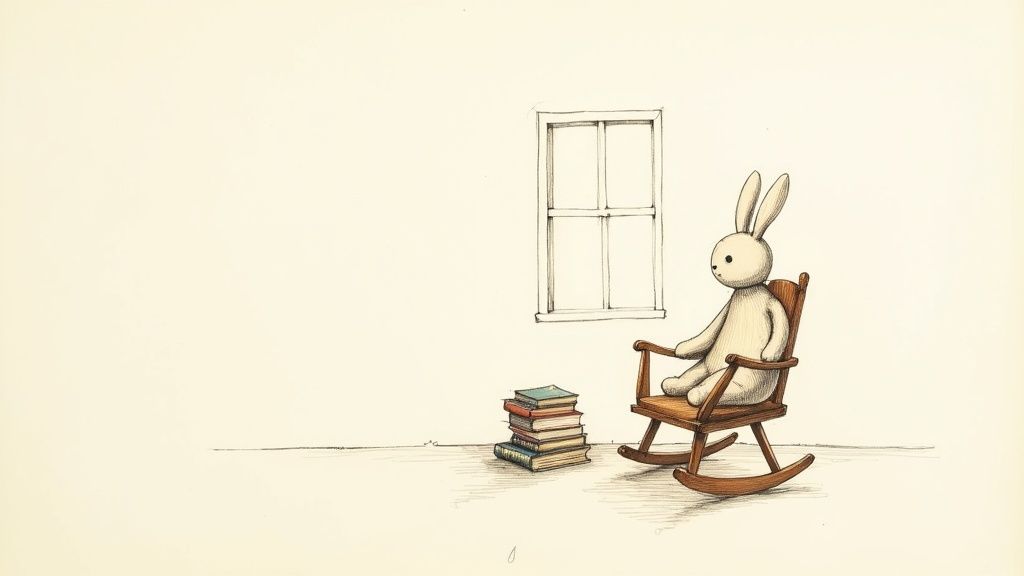
Let's step back into the nursery and rediscover a story that has truly shaped our understanding of love and reality. For more than 100 years, The Velveteen Rabbit has been so much more than a simple children's story; it's become a guide to the power of devotion and the quiet beauty found in our imperfections.
In this guide, we'll follow the little toy rabbit on his big quest to become Real. We'll see how a child's unwavering affection can transform a simple plaything into a treasured friend, and uncover just why this story continues to capture the hearts of kids and adults alike.
A Timeless Journey Begins
The heart of the story’s message comes from the gentle wisdom of the Skin Horse, who explains that becoming Real isn’t about how you’re made. It’s about being loved.
"Real isn't how you are made... It's a thing that happens to you. When a child loves you for a long, long time, not just to play with, but REALLY loves you, then you become Real."
This simple, powerful idea is the foundation for the entire book. It suggests that true existence is earned through connection and allowing yourself to be vulnerable, a theme that feels more relevant today than ever. The rabbit's journey is one of emotional transformation, where becoming worn, shabby, and even losing your whiskers is a badge of honor—a sign that you have been truly and deeply loved.
More Than Just a Story
First published in the United States in 1922 after appearing in Harper's Bazaar the year before, Margery Williams Bianco's book is now an undisputed classic of children's literature. Since entering the public domain, it continues to inspire countless new editions and adaptations across the globe.
Its lasting appeal places it in a special category of stories that help shape childhood itself. Much like other classics that teach empathy and resilience, such as Where the Wild Things Are, this book offers lessons that stay with you for a lifetime. If you're looking to explore more timeless stories, you might enjoy reading about other unforgettable children's books.
The Rabbit's Journey from Toy to Real
The story of The Velveteen Rabbit kicks off simply enough, with a brand-new toy arriving in a child’s nursery on Christmas morning. At first, the Rabbit feels plain and insignificant, especially next to the flashy, modern mechanical toys who brag about their clever inner workings. He’s just a quiet little thing made of velveteen, and it doesn't take long for him to be overlooked.
This early loneliness, however, sets the stage for the book’s most important relationship—not with the Boy, but with the wise old Skin Horse. Having been in the nursery longer than anyone, the Skin Horse is worn, shabby, and his tail is nothing but a stump, yet he carries an air of deep wisdom. He becomes the Rabbit's mentor, introducing him to the magical idea of becoming Real.
The Wisdom of the Skin Horse
The Skin Horse explains that Real isn't something you’re made with. It's a state of being you have to earn through love. This process isn’t easy; it often means getting shabby, losing your fur, and having your joints grow loose. But these are marks of affection, not flaws to be ashamed of.
"By the time you are Real, most of your hair has been loved off, and your eyes drop out and you get loose in the joints and very shabby. But these things don't matter at all, because once you are Real you can't be ugly, except to people who don't understand."
This profound idea plants a seed of hope in the Velveteen Rabbit. He starts to long for this transformation more than anything, even if it means losing his newness. The Skin Horse, who was made Real by the Boy’s uncle long ago, assures him the whole process is worth every bit of wear and tear.
It isn't long before the Boy's Nana gives him the Velveteen Rabbit to sleep with one night, and just like that, everything changes. The Boy adores him instantly. They become inseparable, sharing everything from grand garden adventures to quiet bedtime stories. The Rabbit is no longer just a toy; he is now the Boy’s most trusted friend.
The Price of Becoming Real
The Boy loves the Rabbit so fiercely that his velveteen fur becomes worn, his whiskers are loved clean off, and the pink lining of his ears fades to grey. He looks nothing like the pristine Christmas gift he once was, but to the Boy, he is absolutely perfect. To everyone else, he’s just an old, shabby toy, but in the Boy's eyes, he is finally becoming Real.
Their perfect friendship is tragically cut short when the Boy comes down with scarlet fever. The Rabbit never leaves his side, a constant comfort through the long, difficult illness. When the Boy finally recovers, the doctor orders everything in the nursery to be disinfected or destroyed to keep the germs from spreading—and that includes the beloved Rabbit.
Heartbroken, the Boy is given a new, clean rabbit, and the Velveteen Rabbit is tossed in a sack to be burned. This painful separation is the ultimate price of being loved. As he lies waiting in the garden, a single, real tear falls from his eye, and from that very spot, a magical flower begins to grow.
The Magic of Transformation
From this flower emerges the Nursery Magic Fairy. She explains that her job is to take care of all the toys who have been made Real through the deep love of children. Because the Rabbit has become Real to the Boy, she can now make him Real to everyone.
She kisses the Velveteen Rabbit, and he is transformed into a living, breathing rabbit. He joins the other wild rabbits in the woods, finally able to run, leap, and be truly free. In a touching final scene, he returns to watch the Boy playing, forever connected by the love that made him Real. The essence of this journey—turning a simple object into something profound through love—is what makes personalized family gifts that become cherished treasures so meaningful.
This powerful theme of a toy's emotional growth is beautifully explored in other classic stories, too. You can read about a similar adventure in The Miraculous Journey of Edward Tulane.
To better understand this incredible arc, let's break down the key moments that define the Rabbit's path from a simple plaything to a being made whole by love.
Key Stages in the Velveteen Rabbit's Transformation
| Stage of Journey | Key Events and Experiences | Central Theme or Lesson |
|---|---|---|
| Initial Loneliness | Arrival in the nursery; feeling insignificant compared to mechanical toys. | The feeling of being ordinary and the desire for purpose. |
| Awakening Hope | Meeting the Skin Horse and learning about what it means to be Real. | Understanding that love, not appearance, is what gives life meaning. |
| Being Loved | Becoming the Boy's favorite companion; sharing adventures and secrets. | The joy and fulfillment that come from true companionship. |
| Physical Decline | Becoming shabby, worn, and losing his "newness" from constant play. | The idea that physical imperfections are signs of a well-loved life. |
| Heartbreak & Loss | The Boy's illness; being discarded and sentenced to be burned. | The pain and sacrifice that are often intertwined with deep love. |
| Ultimate Reward | Transformation by the Nursery Magic Fairy into a real, living rabbit. | Love has the power to create life and make things truly "Real." |
Each stage builds on the last, showing that the path to becoming Real isn't just a single event, but a collection of moments—joyful, painful, and ultimately, magical. It's a journey of the heart that resonates with readers of all ages.
Meet Author Margery Williams Bianco
To really get to the heart of The Velveteen Rabbit, you have to look past the nursery door and meet the woman who brought it to life. Margery Williams Bianco (1881–1944) wasn't just telling a story; she was sharing a piece of her own soul. Her life was a living reflection of the book's core ideas: love, loss, and the messy, beautiful journey of becoming real.
Born in London, England, Margery’s childhood was filled with imagination but also shadowed by big changes and early heartbreak. Her father, a classical scholar, was the one who first ignited her love for stories. But when he died when she was only seven, that loss left a mark that would shape her writing for years to come, giving it a depth that tugs at your heartstrings no matter how old you are.
The family later moved to the United States, and this constant back-and-forth often left Margery feeling like an outsider looking in. It’s a feeling a lot of her characters share, especially the Velveteen Rabbit, who starts out as just another toy in a crowded room. This perspective gave her a special kind of sensitivity, an eye for the quiet moments and deep connections that most people hurry past.
From Personal Life to Timeless Story
It was only after she married and started a family of her own that Margery’s voice as a writer truly began to shine. She started crafting stories for her own kids, pulling inspiration directly from their imaginative games and the well-loved toys scattered around their home. The Velveteen Rabbit grew out of this warm, intimate world, touched by a mother's insight into how fiercely and completely a child can love.
Writing for her wasn't just a job; it was how she made sense of life's biggest questions. What does it actually mean to be "Real"? How do the people we love change us? These weren’t just lofty ideas for her; they were things she’d lived through.
"He didn't mind how he looked to other people, because the nursery magic had made him Real, and when you are Real shabbiness doesn't matter."
That quote says it all, doesn't it? It perfectly captures Margery's belief that you don't become authentic by looking perfect. You earn it through love, through being vulnerable, through getting a little worn around the edges. Her own life, full of its own bumps and bruises, taught her that the real value is in our relationships and the stories our scars tell.
The Rabbit's journey—from a simple toy to a beloved friend, and finally to a truly "Real" creature—is a gradual and beautiful process.
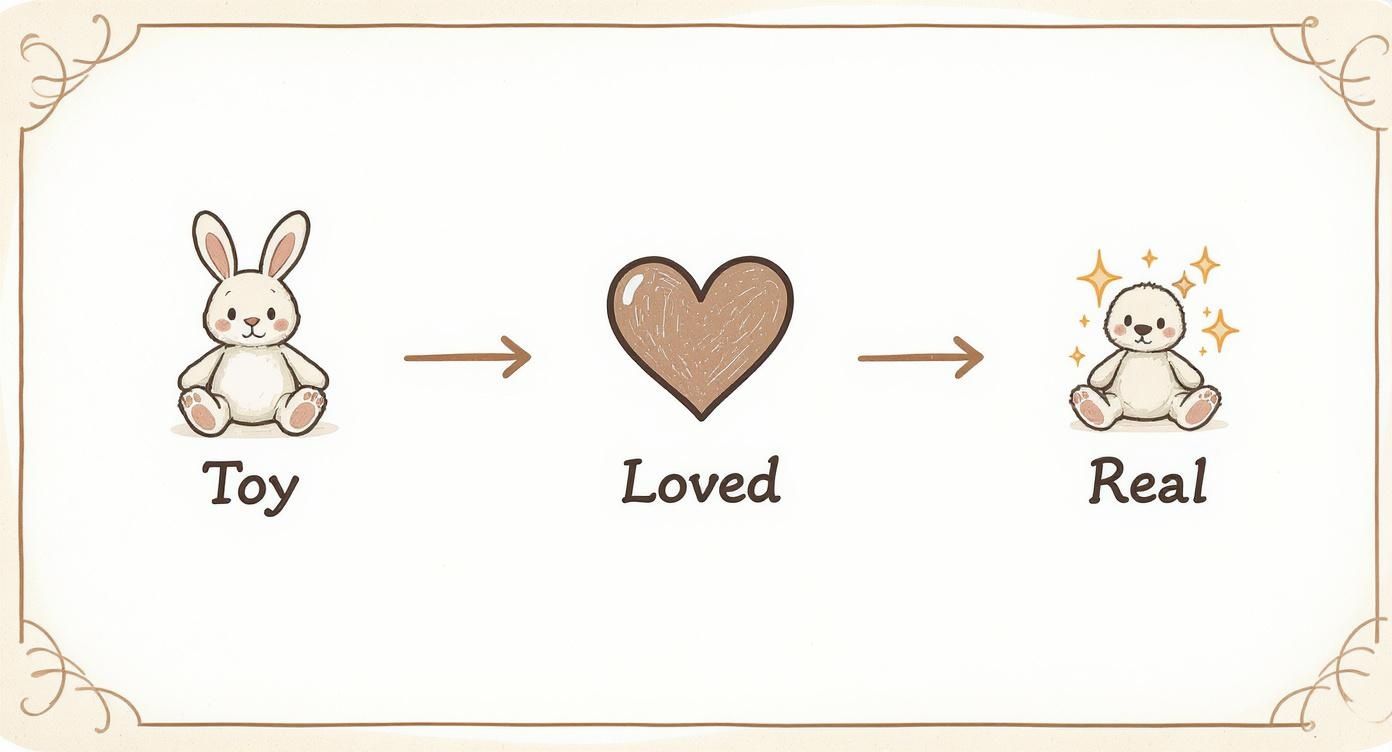
As this shows, becoming Real isn't a single event. It’s a journey fueled by love, one that ends in a quiet, magical transformation.
Beyond the Nursery
While The Velveteen Rabbit is the book everyone knows, Margery Williams Bianco was far from a one-hit-wonder. She was an incredibly productive writer, publishing over 25 books for both kids and adults. Her other stories often touch on similar, heartfelt themes:
- The Little Wooden Doll: Another tale about a toy's search for a place to belong, driven by kindness.
- Poor Cecco: A wild adventure that gives a peek into the secret lives of toys, really showing off her amazing imagination.
- Winterbound: This novel for young adults even won a Newbery Honor in 1937, proving she could tell powerful stories for any audience.
No matter what she wrote, Margery’s gentle but powerful way of seeing the world came through. She just got it—that life's most important lessons often come from the simplest moments. Her legacy is a powerful reminder that a story born from an honest heart can reach across generations, teaching us all that love is the realest magic there is.
Unpacking the Story's Deeper Meanings
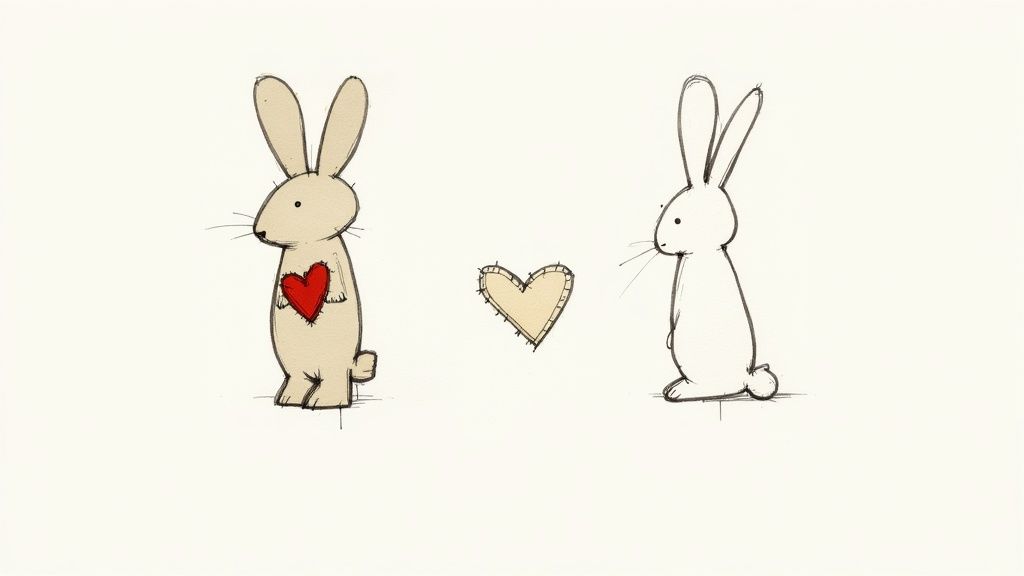
While The Velveteen Rabbit is simple enough for any child to follow, its real magic lies just beneath the surface. It’s here, in the story’s powerful themes, that the book moves beyond the nursery and taps into the very real complexities of the human heart.
These aren't just lessons for kids; they are timeless truths that stick with us at every stage of life. The story gently asks us to reconsider what we value. It suggests that the things we often chase—newness, perfection, looking good on the outside—are shallow. Instead, it champions a life defined by love, vulnerability, and the beautiful scuff marks left behind by our experiences.
What It Means to Be Real
The whole story orbits around a single, profound question: "What is REAL?" The answer comes from the wise old Skin Horse, and it has nothing to do with manufacturing or appearances.
"Real isn't how you are made... It's a thing that happens to you. When a child loves you for a long, long time, not just to play with, but REALLY loves you, then you become Real."
Becoming "Real," then, isn't about what you are, but whose you are. The Rabbit doesn't become Real because of his velveteen fur or glass-bead eyes. He becomes Real because the Boy loves him unconditionally, making him a confidant, a keeper of secrets, and a partner in every adventure.
It’s a beautiful metaphor for our own lives, isn't it? We never feel truly "seen" or "real" until someone loves us for who we are, flaws and all. The story frames authenticity as a gift we receive from others, earned through shared moments and genuine connection. It’s a process, not a destination.
The Connection Between Love and Sacrifice
Another powerful idea woven into the book is that true love and sacrifice go hand in hand. The journey to becoming Real isn't pretty. In fact, for the Rabbit, it’s physically destructive.
The Skin Horse lays it out plainly, warning him that the process involves becoming shabby, losing your fur, and even having your "eyes drop out." As the Boy’s love for the Rabbit grows, the predictions come true. His whiskers are kissed off, his pink lining turns a dull grey, and he becomes worn from being held so tight.
But this decay isn't a tragedy—it's a badge of honor.
- Becoming Worn: Every faded patch is a testament to a moment of comfort or play. The shabbiness is a physical record of the love he received.
- Losing Perfection: The Rabbit has to let go of his pristine, store-bought look to gain something far more precious: a genuine existence.
- The Ultimate Sacrifice: In the end, being loved so fiercely is what leads to him being tossed aside. Because he was so cherished, he is now covered in scarlet fever germs and must be destroyed.
This theme teaches a poignant lesson about vulnerability. To truly love someone, you have to let your guard down and risk getting a little "worn out" or even hurt. The story shows us that a life lived in a protective bubble, like the shiny mechanical toys, might keep you perfect, but it will never let you become Real.
Resilience in the Face of Loss
The moment the Rabbit is tossed into a sack to be burned is one of the most heartbreaking scenes in children's literature. He has lost everything—his purpose, his best friend, his very existence. He was loved into obsolescence.
But that moment of utter despair isn't the end. It's actually the catalyst for his final, magical transformation. A single, real tear, born from genuine sorrow, summons the Nursery Magic Fairy. This is where the story shifts to resilience and rebirth.
"He had longed to be Real, to know what it was like; and now he saw that he was no longer a toy at all, but a real rabbit."
The story shows that even after a devastating loss, a new beginning is possible. The Rabbit’s transformation into a living creature feels like a reward for his unwavering devotion and all the suffering he endured. He isn't just restored; he's elevated to a freer, more vibrant existence.
It’s a beautiful way to show that pain and grief aren't just endings; they can be doorways to profound change. The Rabbit’s journey validates the sadness that comes with loss while offering a flicker of hope that what feels like the end can pave the way for a brand-new life. Helping kids navigate these complex feelings is so important, and you can explore more books that teach empathy and emotional intelligence.
The Enduring Legacy in Popular Culture
It's been over a century since it was first published, but The Veleteen Rabbit has done more than just stay in print—it has woven itself into the fabric of our culture. What started as a simple nursery story has become a touchstone for generations, its message about love and authenticity proving just as powerful today as it was a hundred years ago.
The story has been retold countless times, from animated TV specials in the 1970s and 80s to modern films. Each new version introduces the Rabbit's quest to become Real to a new audience, keeping its timeless wisdom alive and well in the hearts of today's children.
From Page to Stage and Beyond
The Rabbit's influence doesn't stop at the screen. It has also inspired all sorts of theatrical productions, from small community plays to elaborate ballets. Each medium offers a unique way to experience the story's emotional weight, transforming the quiet nursery into a dynamic world of music, dance, and drama.
Beyond entertainment, the book has carved out a special place in classrooms and therapy offices. Teachers and counselors often turn to the Rabbit’s journey to help children explore complex emotions. It’s a gentle but powerful way to open up discussions on tough subjects that young minds can easily grasp.
- Discussing Grief: The Rabbit's painful separation from the Boy offers a safe way to talk about loss and saying goodbye.
- Understanding Love: His transformation through the Boy’s affection is a beautiful illustration of unconditional love and acceptance.
- Exploring Authenticity: The story sparks conversations about self-worth, teaching kids that being "Real" is far more important than being perfect.
This use in educational settings really highlights the story’s incredible emotional intelligence. It gives us a shared language for experiences that are often so hard to put into words.
A Metaphor for Modern Life
At its heart, the Rabbit’s story has become a universal metaphor for authenticity. The idea of becoming "Real" through experience, love, and even a little bit of wear-and-tear is referenced everywhere, from self-help books to corporate speeches. It’s become a kind of shorthand for choosing a life of substance over a superficial one.
The enduring appeal lies in this simple truth: our scuffs and worn edges are not flaws but proof of a life well-lived and a heart well-loved. The story validates the messy, imperfect journey of growing up and growing older.
Despite its iconic status, the book’s place isn't set in stone. Over the years, it has faced plenty of competition. For instance, it was once ranked #28 on the National Education Association’s prestigious “Teachers’ Top 100 Books for Children” but was later bumped by contemporary favorites like Mo Willems’ Knuffle Bunny. This just goes to show how publishing trends evolve, yet The Velveteen Rabbit holds onto its special place in our collective imagination. You can learn more about its publication history and cultural impact.
Why The Velveteen Rabbit Still Matters
It’s been a century since its nursery magic first enchanted readers, but The Velveteen Rabbit holds onto our hearts for a simple reason: it gets to the core of what it means to be human. The story’s real power isn’t just in its sweet plot. It’s in the universal truths it whispers about our deepest longings—the ache to be truly seen, the sting of loss, and the quiet beauty of a life well-worn by experience.
In a world obsessed with shiny new things and fleeting trends, the book’s central idea feels more important than ever. It champions the kind of enduring love that sees past the superficial, reminding us that our scuffs, scars, and faded spots aren’t flaws. They’re proof. They’re evidence of a life fully lived and deeply loved.
Timeless Emotional Wisdom
The real genius of this story is how it speaks to the child and the adult in all of us at the same time. For a kid, it’s a wonderful adventure about a toy who wants to be real. For an adult, it’s a gut-punch of a reflection on authenticity, vulnerability, and what we gain when we dare to let ourselves be loved, unconditionally.
That emotional chord has resonated so strongly that the book's legacy has spilled far beyond the page. The market for collectible and antique editions of The Velveteen Rabbit is still buzzing. In fact, rare first printings from 1922 have been valued at over $2,000. This shows just how much the story has become a treasured piece of our shared cultural history. You can even explore the fascinating world of vintage editions for yourself.
The Velveteen Rabbit doesn't just tell a story; it gives us a language for understanding that to be loved is to be changed, and to be changed is to become truly real.
Ultimately, its message is simple but incredibly profound. It teaches us that being "Real" has nothing to do with how you're made and everything to do with letting your heart be touched, even if it means getting a little shabby along the way. That’s why, after all these years, this quiet little rabbit still feels so very real.
Frequently Asked Questions
Even a century after it was first printed, The Velveteen Rabbit still has a way of sparking questions from new readers and those who have loved it for years. Its beautiful, simple story wraps around some big emotional ideas, leading to thoughtful conversations with parents, teachers, and kids.
This is a space to explore some of the most common questions that pop up. We'll look at the best age to introduce the story, offer some gentle ways to talk about its sadder moments, and shed some light on the magical figures who help the Rabbit on his journey to becoming Real.
What Is the Best Age to Read This Story?
Generally, The Velveteen Rabbit is a perfect fit for children between the ages of four and eight. For the younger kids in this group—think preschoolers and kindergarteners—the idea of a favorite toy coming to life is pure magic. They connect instantly with the core message: that love is what makes something truly special and Real.
For the slightly older kids, around ages six to eight, the story opens up much deeper conversations. They’re old enough to start wrapping their heads around more abstract ideas like loss, change, and what it really means to be authentic. The story has a wonderful way of growing with a child, revealing new layers of meaning as they get older.
How to Discuss the Sad Parts with Children
One of the toughest spots for parents is navigating the story’s more heartbreaking moments, especially when the Boy falls ill and the Rabbit has to be left behind. These scenes are what give the book its emotional weight, but they can definitely be upsetting for little ones.
Here are a few ways to talk through it:
- Let them feel their feelings. First things first, just acknowledge how they feel. Saying something like, "I know it's so sad that the Rabbit was left all alone. It's okay to feel sad about that," can make all the difference.
- Circle back to the love. Remind them that the reason the Rabbit was in that situation was because he was loved so fiercely. His worn-out fur and the germs were proof of the incredible friendship he shared with the Boy.
- Focus on the beautiful new beginning. Don't forget to shine a light on the magical ending! You can explain that the Rabbit's story didn't end in the garden—it was just the start of a brand new, wonderful life. The Nursery Magic Fairy was there to reward him for all his love and loyalty.
"Of course, it is a sad story... But it is the kind of sadness that helps you appreciate the love all the more."
This helps frame the story's tough moments not as a tragedy, but as a necessary part of a beautiful change, teaching a gentle lesson about resilience along the way.
Who Is the Nursery Magic Fairy?
The Nursery Magic Fairy shows up right when the Rabbit is at his absolute lowest point. She’s not just a convenient magical character; she represents something much deeper and more powerful in the world of the story.
She is the embodiment of the idea that real, unconditional love holds a power that goes beyond the physical world. Her job is to watch over all the toys that children have loved so much that they've become Real. When their time in the nursery is done, she gives them a new life, turning them "Real to everybody." In the end, the fairy is a symbol of hope and rebirth, showing us that the love we pour into something is never, ever lost—it just transforms into something new and just as beautiful.
At Number 6 Publishing, we believe stories like these are vital for building empathy and wonder in young readers. To find more books that will become cherished favorites in your home, we invite you to explore our curated collections at https://www.number6publishing.com.