
For generations, the story of a young donkey, a shiny red pebble, and a wish gone terribly wrong has been a staple in countless family read-alouds. Sylvester and the Magic Pebble isn't just a simple children's book; it's a gentle yet profound look at some of our biggest emotions. It masterfully taps into those universal childhood fears of being lost and the deep, instinctual need for the safety and comfort of home.
This Caldecott Medal-winning picture book by the brilliant William Steig introduces us to Sylvester Duncan, an earnest young donkey with a charming hobby: collecting unique pebbles. His quiet life takes a magical turn when he stumbles upon a pebble that is "flaming red, shiny, and perfectly round, like a marble." This is no ordinary stone—it grants any wish you can think of.
But Sylvester's excitement quickly turns to terror when he comes face-to-face with a lion. In a moment of pure panic, he makes a rash wish to become a rock. Just like that, his wish is granted, trapping him in a long, lonely, and silent existence.
The Enduring Power of a Simple Tale
So, what gives this book its staying power? It’s all in its emotional honesty. The themes are simple but so deeply resonant that they connect with readers of any age.
Steig’s masterpiece beautifully illustrates a few core truths:
- Family Comes First: Sylvester quickly learns that no amount of magic can ever replace the love and comfort of his parents.
- Be Careful What You Wish For: The story serves as a classic fable, reminding us to appreciate what we already have instead of always wanting more.
- The Power of Hope: Mr. and Mrs. Duncan’s tireless search for their son is a touching, powerful picture of parental love and unwavering hope.
Published way back in 1969, Steig's book won the prestigious Caldecott Medal in 1970, cementing its place in the children's literature hall of fame.
This book has a unique way of going from magical, to scary, to so sad, but then the ending is very happy and joyous. It draws you into poor Sylvester's plight and the overwhelming joy in the resolution.
Beyond the story itself, parents often look for ways to foster that same sense of wonder, exploring different creative activities for toddlers to help their little ones grow. Much like other classics that aren't afraid to tackle big feelings, like the ones we explored in our analysis of https://www.number6publishing.com/blogs/number-6-blog/where-the-wild-things-are, Steig's work gives children a safe space to process complex ideas. It remains a true cornerstone of children's literature, reminding us all that the greatest magic is simply being together.
Tracing Sylvester’s Heartwarming Journey
The story of Sylvester and the Magic Pebble kicks off with a simple, familiar pleasure. Sylvester Duncan, a young donkey, has a hobby: collecting unique pebbles. This innocent pastime is what leads him to a life-changing discovery one rainy day—a pebble that is perfectly round and a brilliant, flaming red. This isn't just another rock for his collection; it’s a magical stone that grants his every wish.
At first, the pebble is a source of pure delight. Sylvester tests its power with small wishes, his wonder growing with each success. The real test, however, comes in a moment of sheer terror. When a lion appears, Sylvester’s mind scrambles. In a panic, he makes a desperate wish driven by pure instinct: "I wish I were a rock."
Just like that, his wish comes true. He’s safe from the lion, but he’s also trapped—a silent, unmoving rock. The magic pebble, the very source of his power, now lies uselessly beside him on the ground. Sylvester can still see and hear everything around him, but he can't move or speak. He’s a sentient mind locked inside cold stone.
The Long Seasons of Silence
As Sylvester remains a rock on Strawberry Hill, time stretches into a lonely, silent wait. The story's emotional core deepens when the focus shifts to his frantic parents. When their son doesn't return home, Mr. and Mrs. Duncan are thrown into despair. They search tirelessly, ask everyone they know, and slowly, their hope gives way to a quiet, heartbreaking grief.
William Steig brilliantly uses the changing seasons to mark the passage of time and amplify the family's sense of loss.
To truly grasp the long, lonely wait Sylvester and his family endure, it's helpful to see how their experiences unfold through the changing seasons. This table breaks down Sylvester's state and his parents' emotional journey month by month.
Sylvester's Journey Through the Seasons
| Season | Sylvester's State as a Rock | His Parents' Actions and Emotions |
|---|---|---|
| Autumn | The leaves change and fall around him. He is still, silent, and aware of everything. The world moves on without him. | The Duncans' search becomes more frantic, then slowly turns to a somber, sorrowful acceptance as days turn into weeks. |
| Winter | Snow blankets Strawberry Hill, covering Sylvester in a cold, isolating layer. He endures the harsh weather, completely helpless. | His parents try to carry on with their lives, but their home is filled with a heavy sadness and the constant ache of his absence. |
| Spring | The world around him comes back to life. Flowers bloom and animals return, but he remains an unchanging, lonely rock. | With the new season comes a faint, painful flicker of hope, but with no news, it quickly fades back into quiet resignation. |
This prolonged separation is what makes the story so powerful, building a deep, resonant longing for the family to be whole again. It makes the final reunion feel that much more earned and joyful.
This timeline captures the book's journey, from its initial release to its lasting legacy in children's literature.

The graphic points to its immediate critical acclaim in 1970 but also its enduring relevance, highlighted by a new edition published more than 50 years later.
A Wish for What Truly Matters
The story hits its emotional peak on a beautiful day in May. Looking for a way to lift their spirits, Mr. and Mrs. Duncan decide to have a picnic on Strawberry Hill—the very same hill where their son sits, trapped as a rock. Not knowing he's right there, they pick his stony form as the perfect place to lay their picnic blanket.
As his father sets the magic pebble right on top of him, Sylvester is flooded with emotion. He strains with all his might to communicate, to let them know he’s there. A single, desperate thought finally forms in his mind: "I wish I were my own self again." Because the pebble is touching him, the wish works.
In an instant, Sylvester is a donkey again, standing before his shocked and overjoyed parents. The story ends in a scene of pure, unbridled happiness. Back home, they put the magic pebble in an iron safe. Its power is no longer needed. The Duncan family already has everything they could ever wish for: each other.
Finding the Meaning in the Magic
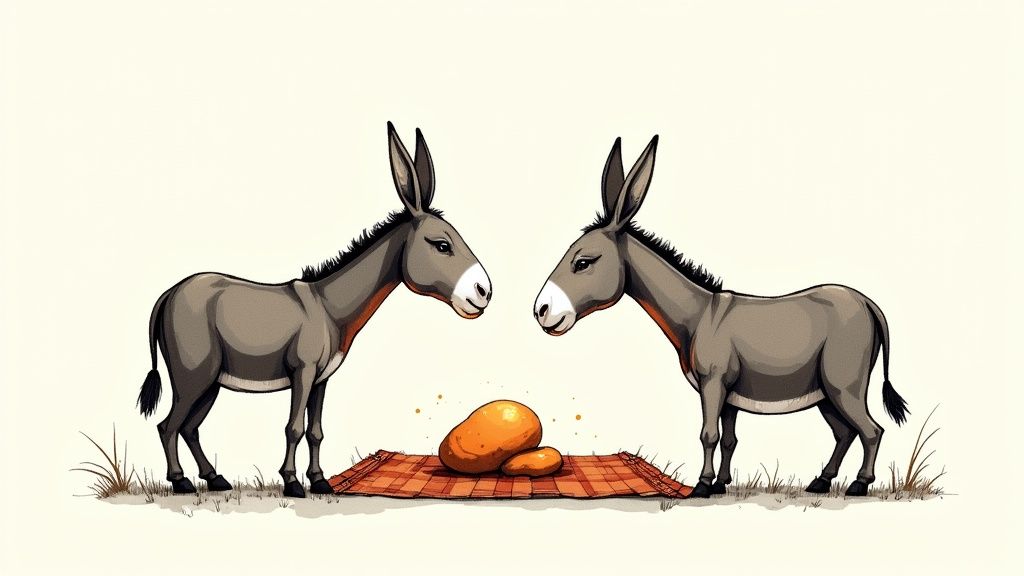
Sure, it's a delightful story about a donkey who turns into a rock, but Sylvester and the Magic Pebble goes so much deeper than that. For more than 50 years, its lessons have resonated with families because it acts like a modern-day fable, using a simple bit of magic to unpack some truly complex human feelings. At its core, the book is really a powerful meditation on what truly matters.
Sylvester's ordeal shows us that the best treasures aren't shiny, wish-granting pebbles but the simple, unwavering security of family. When he could wish for absolutely anything, his one desperate, all-consuming desire is just to be home. It's a moment that strips away all the fantasy, leaving a profound truth that even the youngest readers can understand: you can't put a price on belonging.
The Dangers of a Wish
The story is a masterclass in the old saying, "be careful what you wish for." Sylvester’s wish to become a rock wasn't driven by greed; it was born out of pure fear. He just wanted to be safe from the lion, a reaction anyone would have. The consequence, however, is something far more terrifying than a predator: complete and utter isolation.
By becoming a rock, he gains physical safety but loses everything that makes life worth living—his voice, his ability to move, his connection to the family that adores him. He becomes a prisoner of his own desperate wish. It's a surprisingly sophisticated concept for a picture book.
The magic pebble reveals a paradox: having the power to do anything is useless if you can't share your life with the people you love. Sylvester's predicament proves that real safety isn't about being untouchable, but about being seen, heard, and cared for.
This idea—finding true joy in what you already have—is a theme you see in many children's classics. You can find similar sentiments about love and belonging in our deeper look at the timeless story of The Velveteen Rabbit. The most precious things in life are the ones you could never wish for.
A Story of Grief and Hope
While Sylvester is stuck in his lonely, stone-like state, the story also devotes a lot of time to his parents' experience. Their journey is one of grief, loss, and ultimately, the incredible power of hope. We see them search relentlessly for their son, and their sorrow is almost tangible on the page as the seasons turn.
Steig doesn't sugarcoat their deep sadness, which makes their enduring love for their son feel that much more real and powerful. Their refusal to give up, even when things look hopeless, is what finally brings them back to Strawberry Hill. The story beautifully captures the unbreakable bond between a parent and child through:
- Unwavering Dedication: Even as they try to find a new normal, their search for Sylvester never really stops.
- Shared Memory: Their choice to have a picnic on the hill is an act of remembrance, a way to feel close to their son in a place he loved.
- The Power of Presence: In the end, it’s their physical presence—and the love they still hold—that makes the magical reunion possible.
Ultimately, Sylvester and the Magic Pebble isn't really about a magical rock at all. It's about the magic of family. It reminds us that the greatest comfort in a scary world isn't some superpower, but the simple, profound joy of knowing you have a home to come back to.
The Unique Vision of William Steig
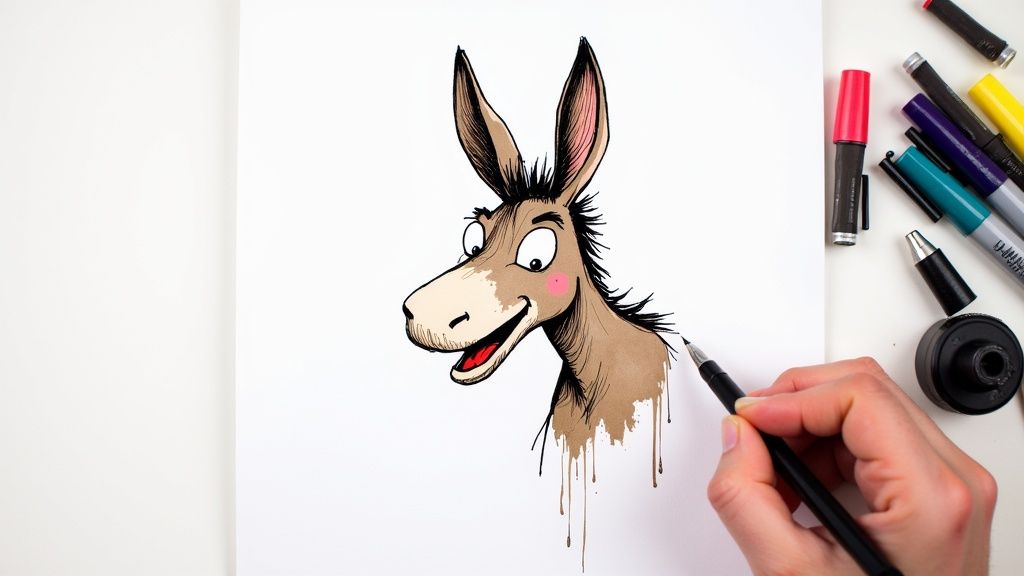
To really get to the heart of Sylvester and the Magic Pebble, you have to understand the incredible artist who brought this story to life. William Steig wasn't your typical children's author. For most of his career, he was celebrated as the "King of Cartoons," a brilliant satirist whose work filled the pages of The New Yorker for almost 70 years.
It wasn’t until he was over 60 years old that Steig began his journey into children’s books. This late-career pivot is key. He came to the world of picture books not as a newcomer to art, but as a seasoned observer of life, bringing a lifetime of wit, empathy, and insight with him.
You can spot a Steig illustration a mile away. His style is so distinct. Forget rigid, perfect lines—Steig’s drawings are fluid, expressive, and practically buzzing with life. It feels like the characters' emotions are spilling directly onto the page through his pen.
From Satire to Storytime
Making the jump from sharp, adult-focused humor to gentle children’s stories seems like a huge leap, right? But for Steig, it was a completely natural move. His cartoons always had a knack for finding the humanity in life’s little absurdities, and he applied that same skill to his books.
The magic of Steig is that he never, ever talked down to kids. He trusted them to understand big, complicated feelings like loneliness, fear, and overwhelming joy.
This unique background is exactly what gives Sylvester and the Magic Pebble its soul. The story perfectly balances moments of real danger with the pure, heartwarming relief of being found, all captured by Steig's signature art.
- Emotional Honesty: The raw terror on Sylvester’s face when he meets the lion, the profound sadness in his parents’ eyes—Steig drew these feelings with unfiltered honesty.
- Subtle Wit: Even in a children's story, his cleverness shines through. You can see it in the little details of the world he built and the funny expressions on his characters' faces.
- Timeless Charm: His artwork feels both classic and completely fresh. He wasn't chasing trends; he was creating a world that was entirely his own.
The art world has long recognized just how important Steig's work is. The Eric Carle Museum of Picture Book Art, for example, holds original pieces from 40 of his books, including Sylvester and the Magic Pebble, as part of its permanent collection. It’s a testament to the cultural value of his art, which includes other beloved classics like Doctor De Soto and Abel's Island. You can read more about William Steig's enduring legacy and the efforts to preserve his work.
William Steig’s genius was his ability to use simple lines to convey complex feelings. He understood that a child’s emotional world is just as rich and complicated as an adult’s, and his art always respected that depth.
Ultimately, Steig’s work was always about connection. His late-in-life shift to creating books like Sylvester and the Magic Pebble wasn't a departure from his cartoons—it was an extension of it. He was still exploring what it means to be alive; he just swapped his audience and proved, once and for all, that a great story speaks to everyone, no matter their age.
Why the Story Still Resonates Today
Even decades after it first hit the shelves, Sylvester and the Magic Pebble remains a treasured classic on bookshelves and in classrooms. Its appeal isn’t just nostalgia; the story's themes are so timeless that they connect with new generations of readers just as strongly as they did back in 1969.
The book’s staying power comes from its honest, gentle way of exploring some pretty deep emotions. It taps into that universal childhood fear of being lost and separated from family—a primal feeling that kids and even adults understand instinctively. Sylvester’s journey from pure, magical joy to sudden, lonely terror gives children a safe way to think about feelings like fear, hope, and the incredible relief of being found again.
A Legacy of Acclaim and Connection
The book’s initial success, marked by the 1970 Caldecott Medal, was just the beginning. Its influence continued for years, earning the Lewis Carroll Shelf Award in 1978 and helping to cement William Steig’s reputation with nominations for the Hans Christian Andersen Awards. These honors all point to a simple fact: this story just works on a fundamental level. To learn more about Steig’s celebrated career, you can discover additional insights from his publisher.
Interestingly, despite being so widely loved, the book did stir up a bit of controversy shortly after its release. The choice to draw the police officers as pigs drew criticism from some law enforcement groups, which led to it being temporarily pulled from a few library shelves.
In the context of a story where every character is an animal, this choice felt natural rather than like a political statement. Today, most people see this detail as a historical footnote, completely overshadowed by the book's overwhelmingly positive and unifying message.
The story’s focus on a community of different animals is also a great starting point for talking about why it's so important to see different perspectives in literature. These early experiences with varied characters help shape a child's worldview, a topic we explore more in our guide on the importance of representation in children's books.
The Unchanging Heart of the Story
When it comes right down to it, Sylvester and the Magic Pebble endures because it speaks to a simple, unshakeable truth: the greatest magic in the world is the comfort of home and the love of family. Sylvester gets the power to have anything he could possibly want, yet all he truly wishes for is to be himself again, safe with the people who love him.
That powerful conclusion offers a timeless lesson about being content and finding what truly makes us happy. It’s a message that never gets old, ensuring this touching tale of a lost donkey will continue to charm readers for many, many years to come.
Common Questions About the Book
It's a story that has captivated readers for generations, and like any great classic, Sylvester and the Magic Pebble tends to stir up a lot of questions. Its simple tale holds a surprising amount of depth, leaving both kids and adults curious about its creator, its deeper meanings, and its journey into the world of children's literature.
Let's dig into some of the most common questions people have. Answering them really helps unlock a new level of appreciation for the beautiful world William Steig created.
What Is the Main Moral of the Story?
At its heart, Sylvester and the Magic Pebble is all about one powerful idea: the love and security you get from family is worth more than any magic in the world. Sylvester's adventure really drives this point home. He starts out with a pebble that can grant any wish he can imagine—what could be better than that?
But when real trouble hits, he quickly learns that magic can't give him the comfort of his parents' hugs. The one thing he wants more than anything is just to be back home. It's a profound lesson in contentment, teaching us to value the people in our lives above everything else.
The story beautifully shows that true happiness isn't found in having everything you want, but in wanting everything you already have. Sylvester's reunion with his parents is the real magic.
What Age Group Is This Book Best For?
Sylvester and the Magic Pebble is a perfect fit for children between 4 and 8 years old. For the younger crowd, the charming illustrations and straightforward story are incredibly engaging. Preschoolers and early elementary kids can easily follow along with Sylvester's journey and understand his feelings of joy, fear, and ultimate relief.
For kids who are a little older, say 6 to 8, the book opens up a whole new world of conversation. The themes of loneliness, hope, and what it means to be a family are rich ground for meaningful discussions. This emotional depth is what makes it such a wonderful story for families to read together, revealing new layers as children grow.
Why Was This Book Considered Controversial?
Believe it or not, the book hit a bit of a snag back in the 1970s, shortly after it came out. The controversy was all because William Steig drew the police officers as pigs. In a story where every character is an animal, it seemed like a natural choice for the author. However, some police associations and libraries felt it was disrespectful.
This led to the book being pulled from a few shelves and even banned in some places. Steig himself explained that he never intended it as a political statement. Thankfully, that controversy has mostly faded into a historical footnote, and the book is now celebrated for its art and its incredibly heartfelt message.
What Are Some Other Famous Books by William Steig?
William Steig was an absolute giant in the world of children's books, with a long list of beloved titles to his name. While many know him for Sylvester, his most famous creation is probably Shrek!—the very book that inspired the blockbuster movies.
Beyond that, his work is filled with award-winning stories celebrated for their warmth and unforgettable characters. A few standouts include:
- Doctor De Soto (A Newbery Honor book)
- Abel's Island (A Newbery Honor book)
- The Amazing Bone (A Caldecott Honor book)
- Amos & Boris
If you're looking to pick up a copy of Sylvester and the Magic Pebble or discover other timeless children's stories, a great place to start is an online bookshop that carries a wonderful selection.
At Number 6 Publishing, we believe stories like this are essential for sparking curiosity and empathy. We are dedicated to helping families discover books that create lasting memories. Explore our collections to find your next great read. Find out more at https://www.number6publishing.com.