
A Lexile level chart is an incredibly useful tool that helps match a reader's ability with the difficulty of a book, all on the same scale. Think of it as a roadmap for your child's reading journey, helping you find those "just right" books that are challenging enough to inspire growth but not so tough they lead to frustration.
What Is A Lexile Level and Why Does It Matter
At its core, the Lexile Framework for Reading is a scientific approach to measuring both a student's reading skill and the complexity of a text. It gives us a simple, unified scale that makes it much easier to connect young readers with books they can succeed with.
When you come across a score like 900L, the "L" simply stands for Lexile. This number is a specific point on the Lexile scale, which starts below 200L for beginning readers (often marked as BR) and goes up beyond 1600L for very advanced, complex texts. A student gets their reader measure from a standardized test, while a book gets its text measure based on factors like vocabulary and sentence length.
Finding the Sweet Spot for Growth
This is where the real magic happens. The power of the Lexile system is in finding a reader's "Lexile range"—the ideal zone for building both reading skills and confidence.
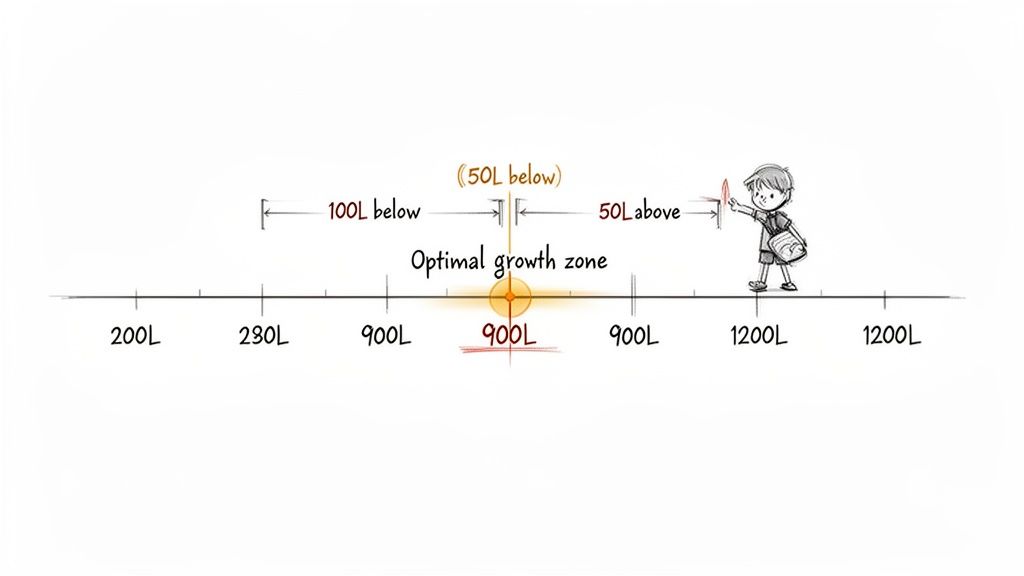
This optimal range is generally understood as:
- 100L below a student's personal Lexile score. Books in this part of the range are perfect for building fluency and enjoying a story without struggling.
- 50L above their score. Texts here provide just the right amount of challenge to encourage new skills and push comprehension forward.
So, if a child has a Lexile measure of 800L, their sweet spot for growth would be from 700L to 850L. Books inside this window are truly "just right." They aren't so simple that the reader gets bored, but they also aren't so difficult that they feel overwhelmed and give up.
The goal is to use the Lexile level chart not as a restrictive label, but as an empowering guide. It helps ensure every child can connect with stories that build skills and a lifelong love of reading simultaneously.
It's important to remember that a Lexile score is a fantastic starting point, but it's not the final word. While it's great at measuring text complexity, it doesn't account for a book's themes, the maturity of its content, or, most importantly, a reader's own interests. It's just one valuable piece of the much larger puzzle of choosing the perfect book.
The Complete Lexile Level Chart By Grade
At the heart of the Lexile framework is the Lexile level chart. Think of it as your quick-reference map, giving you a snapshot of typical reading abilities across different grade levels. It's an incredibly useful starting point for parents and teachers trying to put a student's score into context.
But it’s important to remember this chart is a guide, not a set of hard-and-fast rules. Every classroom is different, and reading ability can vary wildly among students in the same grade. A fifth-grade class, for instance, will always have a mix of kids reading at, above, and below the typical fifth-grade range. That’s completely normal.
Understanding the Grade Level Ranges
These benchmarks aren't just guesses; they’re built on extensive data from a national sample of over 3 million U.S. students. The most common charts you’ll see from MetaMetrics, the creators of the framework, detail how Lexile ranges shift from the 10th percentile all the way to the 90th.
For example, an average seventh-grade student (at the 50th percentile) might start the year around 910L and finish it near 940L. Seeing this progression helps you understand what typical growth looks like. You can dive deeper into how these norms are established and even explore the full percentile charts to see where a particular student falls.
Key Takeaway: The Lexile chart is your starting point. It gives you a data-backed estimate of where a reader might be, but always—always—pair that number with the child’s actual interests and maturity level when picking out a book.
Lexile Reader Measures By Grade Level (50th Percentile)
The table below maps out the typical Lexile range for students right in the middle of the pack (the 50th percentile), showing the expected progress from the beginning to the end of each school year. It’s a fantastic tool for finding those 'just right' books that challenge a reader without causing frustration.
| Grade | Beginning-of-Year Lexile Range | End-of-Year Lexile Range |
|---|---|---|
| Kindergarten | BR160L – BR55L | BR40L – 170L |
| 1 | BR130L – 105L | 225L – 360L |
| 2 | 220L – 380L | 420L – 545L |
| 3 | 415L – 565L | 570L – 695L |
| 4 | 565L – 725L | 685L – 810L |
| 5 | 665L – 830L | 770L – 895L |
| 6 | 735L – 925L | 840L – 990L |
| 7 | 790L – 995L | 895L – 1055L |
| 8 | 835L – 1050L | 940L – 1105L |
| 9 | 875L – 1100L | 985L – 1155L |
| 10 | 910L – 1140L | 1020L – 1195L |
| 11 & 12 | 940L – 1185L | 1050L – 1230L |
Looking at this data, you can really see the steady climb in text complexity students are expected to handle as they move through school. In a later section, we'll connect these ranges with specific book recommendations to help turn these abstract numbers into exciting reading adventures.
How to Find a Child's Lexile Measure
Wondering about your child's Lexile measure? The good news is, you probably already have access to it. Schools are the most common source for this information, and it's often a byproduct of the standardized testing students take throughout the year.
Assessments like the NWEA MAP Growth tests or other state-level exams frequently report reading comprehension scores as Lexile measures. You can usually spot these numbers on your child’s report card or find them tucked away in the school district's online parent portal. If you can't find it, a quick email to their English teacher is often all it takes.
What If The School Does Not Provide a Score?
Don't worry if your child’s school doesn’t use tests that report Lexile scores, or if you're a homeschooling parent. You've still got some great options to figure out their reading level. The official Lexile website has a free "Find a Book" tool that's incredibly helpful for estimating a reader's range based on books they're already comfortable with.
Getting a handle on your child's reading ability can also start at home. Learning how to assess reading level with a few informal methods can give you a solid starting point.
This chart below does a great job of showing how reading proficiency grows from those early elementary days all the way through high school.
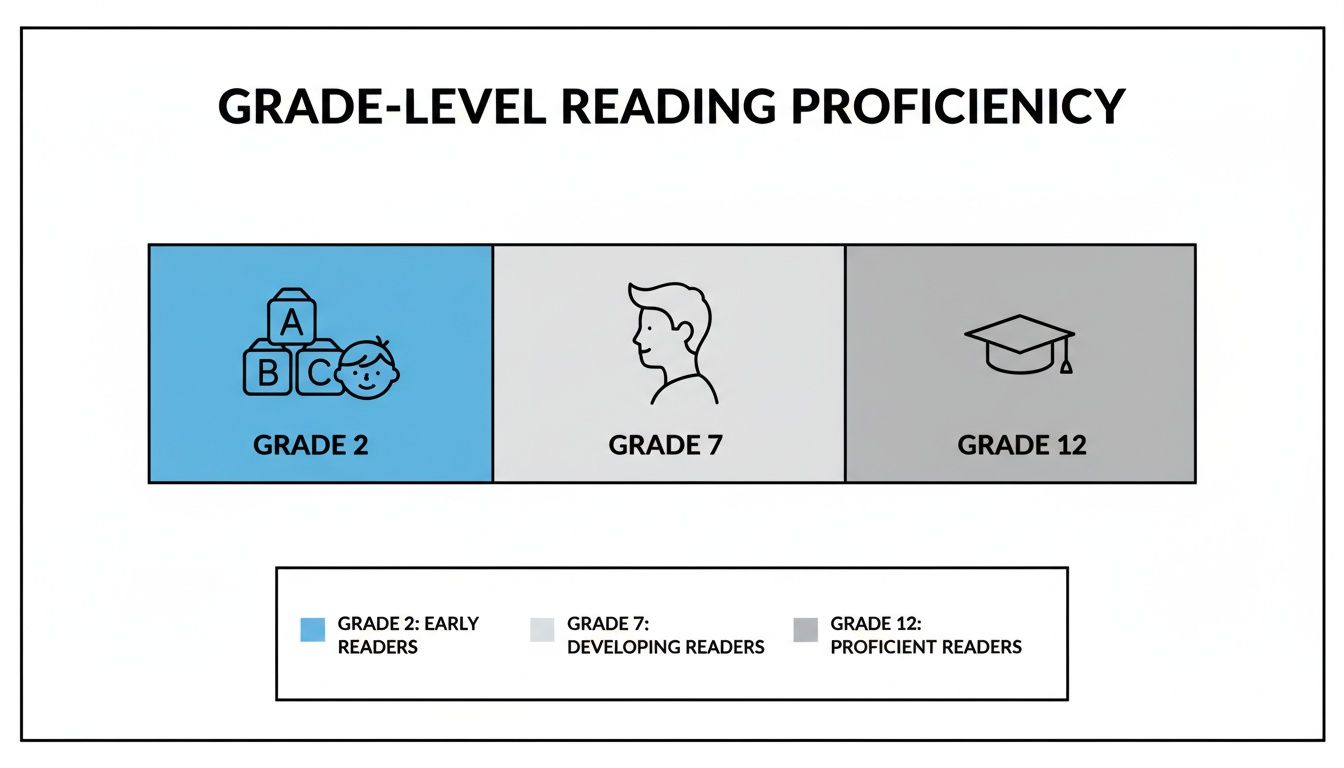
As you can see, the complexity of texts a student is expected to read and understand really ramps up between second grade and senior year.
Simple At-Home Techniques
For a quick check on the fly, try the "five-finger rule." It's simple. Have your child read one full page of a book they're interested in. If they stumble over five or more words on that single page, the book is probably a bit too tough for them to tackle on their own right now.
This trick is a lifesaver for gauging difficulty without causing frustration, making sure a book is a good fit before they dive in.
It's a similar approach used when a child starts tutoring. A good student intake process for tutoring almost always includes these kinds of initial checks to get a baseline. These quick assessments, combined with other tools, paint a clear picture of where a reader is, which helps make a Lexile level chart truly useful.
How To Use The Lexile Chart To Choose The Right Books
Once you know a reader's Lexile measure, the lexile level chart becomes a fantastic guide for finding new books. The real magic happens when you aim for a reader's "sweet spot"—a special range around their score that helps them grow without feeling frustrated. It’s all about picking books that are engaging, build new skills, and spark a true love for reading.
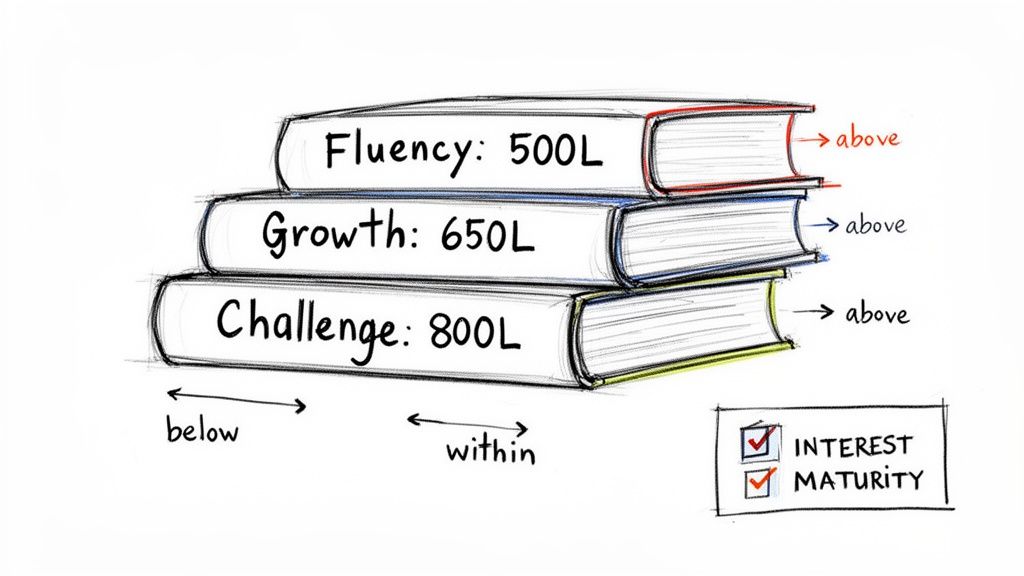
The sweet spot for growth is generally from 100L below to 50L above a reader’s personal Lexile measure. For instance, if a child has a 700L score, their ideal reading zone is between 600L and 750L. Books in this window usually strike that perfect balance between being comfortable and offering a healthy challenge.
Of course, a Lexile score is just one piece of a much bigger puzzle. It's great at measuring how complex a text is, but it won't tell you a thing about a book’s themes or whether a child will actually find it interesting. The best approach is always to combine the data from the chart with what you know about the reader’s unique personality.
Beyond The Numbers: A Holistic Approach
Think of a Lexile score as a starting point, not a strict rule you have to follow. Honestly, the most important things to consider are a child's interest, maturity, and motivation. A kid who is obsessed with dinosaurs might happily tear through a 900L book about fossils, even if their own measure is only 750L. Their excitement will power them right through the tougher vocabulary.
On the flip side, a book with a lower Lexile score might touch on mature subjects that just aren't right for a younger reader. It’s crucial to look at the whole book, not just the number on the cover.
There are also great reasons to pick books outside of that recommended sweet spot:
- Reading Below Range (The Fluency Zone): Choosing books more than 100L below a reader’s measure is a wonderful way to build confidence. These "easy reads" are fun, low-stress, and help make their reading skills automatic.
- Reading Above Range (The Challenge Zone): Picking a book more than 50L above their measure can be a fantastic way to stretch their abilities, especially if an adult is there to help. These make for great shared reading experiences.
The goal is to build a well-rounded reading diet. Mixing in 'just right' books for growth, easier books for fun, and a few challenging ones for shared learning is what creates a positive, lasting reading habit.
Ultimately, using the lexile level chart well means pairing its scientific measurement with a real understanding of the individual reader. When you balance the data with their interests, you empower kids to find stories they’ll absolutely cherish. For some great ideas to get you started, you can explore our curated lists of amazing kids' books.
Book Recommendations For Key Lexile Bands
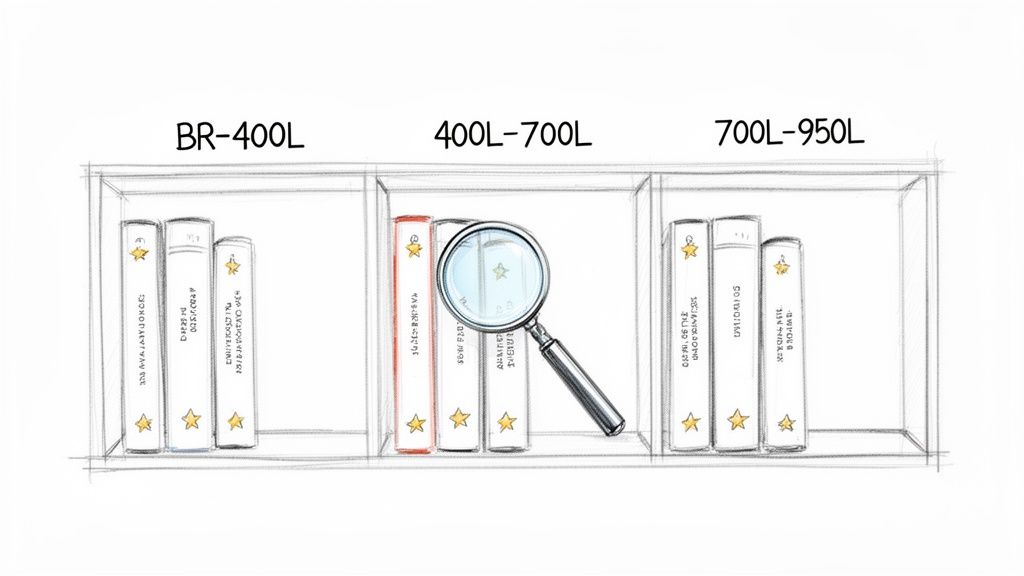
A lexile level chart gives you the data, but the real fun starts when you turn those numbers into an actual reading adventure. Once you know a child's Lexile measure, the next step is finding that perfect book to capture their imagination. I’ve put together this list of beloved titles, organized by key Lexile bands, to help you find a story that truly clicks.
Think of these recommendations as a jumping-off point. A child’s interest is always the most important factor, so use what they love to guide your final choice.
BR To 400L: Emerging Readers
This is the starting line for a lifelong reading journey. Kids in this range are moving from simple, repetitive words to actual short stories. Books here are all about building confidence with predictable plots and lots of great illustrations for support. They're perfect for reading together and celebrating those first solo reading victories.
Here are a few wonderful choices for this foundational stage:
- Don't Let the Pigeon Drive the Bus! by Mo Willems (BR70L): An absolute riot of a book that puts the reader in charge. A very persistent pigeon wants to drive the bus, and it's up to your child to say "No!" The simple, direct text and hilarious drawings make it a fantastic read-aloud and a great first book.
- Frog and Toad Are Friends by Arnold Lobel (290L): A timeless classic about the sweet friendship between a cheerful frog and a slightly grumpy toad. The gentle humor and relatable stories help young readers build up their reading stamina and fluency without even realizing it.
- Where the Wild Things Are by Maurice Sendak (310L): When Max gets sent to his room, he sails off to an island of Wild Things. This iconic book explores big feelings with beautiful, poetic text and unforgettable artwork. It’s a story kids come back to over and over.
400L To 700L: Developing Readers
At this stage, readers are starting to fly solo. They're ready for their first chapter books, which bring more complex plots, new vocabulary, and characters facing challenges they can understand. These books often mark that exciting shift from being read to to reading on their own.
Consider these popular titles that really resonate with kids in this phase:
- Magic Tree House: Dinosaurs Before Dark by Mary Pope Osborne (430L): This is the book that kicks off a massive series for a reason. Siblings Jack and Annie find a tree house that sends them back to the age of dinosaurs. With short chapters and a fast-moving plot, it's an irresistible pick for new independent readers.
- Ramona Quimby, Age 8 by Beverly Cleary (600L): Nobody captures the mind of an eight-year-old like Beverly Cleary. We follow the one-and-only Ramona as she deals with third grade, a new baby in the family, and all the chaos and charm that comes with it. Its humor and heart make it a forever favorite.
- Because of Winn-Dixie by Kate DiCamillo (610L): When ten-year-old Opal adopts a big, scruffy dog named Winn-Dixie, her life changes completely. This beautifully written story explores friendship, loss, and community with so much warmth. It’s a wonderful bridge to books with more emotional depth.
The big goal here is to build momentum. Getting a kid hooked on a series like Magic Tree House can be a game-changer, turning reading from a task into a genuine hobby.
700L To 950L: Independent Readers
This Lexile band usually hits right in the middle grades. Readers are now confidently handling longer novels with more going on—think tricky plots, different character perspectives, and bigger themes like identity and courage.
For readers ready for a richer experience, these books are fantastic options:
- The Lion, the Witch and the Wardrobe by C.S. Lewis (710L): Four siblings tumble through a wardrobe into the magical land of Narnia. This epic fantasy is filled with adventure and unforgettable characters, serving as a gateway to classic literature for countless young readers.
- Wonder by R.J. Palacio (790L): Auggie Pullman is starting fifth grade at a regular school for the first time. Told from multiple points of view, this powerful story is a moving look at kindness, empathy, and what it means to be different. It’s a book that gets everyone talking.
- Harry Potter and the Sorcerer's Stone by J.K. Rowling (880L): The book that started it all. Harry Potter finds out he's a wizard on his eleventh birthday, and a magical adventure begins. This story of friendship and bravery has proven that a great story can inspire kids to tackle even a long, challenging book.
For more great titles perfect for this age group, check out this guide to the top 10 books for 6th graders, which offers even more ideas for engaging young minds.
950L and Above: Advanced Readers
Readers in this range are skilled and ready for the complex and nuanced worlds of young adult literature. These books don't shy away from advanced vocabulary, tricky sentence structures, and mature themes like social justice, ethical questions, and deep historical context.
Here are a few compelling choices for skilled, mature readers:
- The Hunger Games by Suzanne Collins (960L): In a dark future, Katniss Everdeen volunteers for a televised fight to the death to save her sister. This thrilling novel digs into themes of survival, sacrifice, and rebellion, making it a gripping read for teens.
- The Book Thief by Markus Zusak (1050L): Set in Nazi Germany and narrated by Death himself, this incredible novel tells the story of Liesel, a young girl who steals books to find comfort. It’s a profound and beautifully written story about the power of words and the human spirit.
- To Kill a Mockingbird by Harper Lee (1070L): A pillar of American literature, this story is told through the eyes of a young girl named Scout as her father defends a Black man falsely accused of a crime. It remains a timeless and essential exploration of morality and injustice.
Understanding Reading Levels and Broader Trends
When you connect a child's reading journey to the lexile level chart, you're tapping into something incredibly powerful. But that chart becomes even more meaningful once you understand the bigger picture. Choosing a "just right" book is more than just a sweet family activity; it’s a critical step in helping a reader grow, especially in a world where reading achievement is facing some real headwinds.
What the Numbers Are Telling Us
Recent data from the National Assessment of Educational Progress (NAEP) shows exactly why this is so important. Between 2020 and 2022, the average reading scores for 9-year-olds in the U.S. declined by 5 points. That's the biggest drop ever recorded in the assessment's long history. If you have a child reading at the 25th percentile for their grade, they're part of a much larger trend where struggling readers are, unfortunately, falling further behind. You can see more about the long-term trends in literacy to get the full context.
Knowing this frames your efforts in a new light. Every single book you help a child choose is a building block, not just for their skills but for their confidence, too. It’s a way to actively push back against those national trends.
Why Consistent Measurement Matters
In an environment where scores can fluctuate, a steady, reliable tool like the Lexile Framework is invaluable. It gives parents and teachers a clear, understandable scale to talk about a student's progress. When national reports show a dip, a Lexile score helps you see exactly where your reader is and what kind of book will give them the right amount of challenge to keep moving forward.
By using the Lexile chart to make thoughtful choices, you are actively helping a child build the skills needed to overcome broader educational hurdles. Your choices directly contribute to their long-term success and confidence as a reader.
This isn't just true for English-speaking students, either. The principles of matching text complexity to a reader's ability are universal. For anyone curious about how text difficulty is assessed across different languages, this readability guide for multilingual readers offers some great insights.
Turning Data Into Action
At the end of the day, understanding these bigger trends makes your use of the lexile level chart that much more purposeful. You're not just finding a book to get through the weekend; you're making choices that build a strong foundation for a child’s entire academic future.
Here’s how you can put this knowledge to work:
- Be Proactive: Use the chart to make sure your child is consistently reading books in their growth zone—that sweet spot from 100L below to 50L above their measure.
- Monitor Their Journey: Keep an eye on their Lexile measure over time. This lets you celebrate their personal growth, completely separate from what national averages are doing.
- Advocate with Confidence: Bring their Lexile data into conversations with teachers. It’s the perfect starting point for creating a collaborative plan to support their reading development.
Common Questions About The Lexile Chart
Diving into the world of reading levels can definitely bring up a few questions. This last section is all about tackling those common queries head-on, giving you quick and clear answers to help you use the Lexile level chart with confidence.
My goal here is to clear up any lingering confusion you might have, making sure you feel totally ready to support your young reader’s journey.
What Does BR Mean On The Lexile Scale?
You might notice that some scores on the Lexile chart start with "BR." This simply stands for Beginning Reader, and it's used for books and readers who fall below 0L on the scale. Think of it as the starting line for a brand new reader.
These books are carefully crafted for kids who are just starting out. They usually have simple sentences, lots of repetition, and strong picture clues to help children build those foundational skills. A score of BR150L, for example, is a bit more complex than one at BR50L, which shows how you can see progress even at these very early stages.
Can My Child Read Books Outside Their Lexile Range?
Absolutely! In fact, you should encourage it. A child's suggested Lexile range—from 100L below to 50L above their score—is just a guideline for comfortable learning, not a strict rule.
There are great reasons to read outside this zone:
- Reading Below Range: Picking up a book well below their level is a fantastic way to build fluency and confidence. These "easy reads" are low-stress and can make reading feel like a fun, relaxing activity instead of a chore.
- Reading Above Range: A book that’s more than 50L above their score can be a wonderful challenge, especially when it’s about a topic they’re passionate about. This is a perfect opportunity for reading together, where you can help them with new words and trickier ideas.
Does A High Lexile Score Mean A Book Is Age-Appropriate?
No, and this is probably one of the most important things to understand about the Lexile framework. A Lexile score is a purely scientific measure of text complexity; it looks at things like sentence length and how often certain words are used.
It does not look at a book's content, themes, or emotional maturity. For instance, a classic novel like The Grapes of Wrath has a Lexile measure of only 680L, a level many middle schoolers could read. But its mature themes of poverty and social injustice make it a much better fit for older, high school-aged readers.
Always take a moment to preview a book's content or read reviews to make sure its themes are right for your child. The Lexile score is just one piece of the puzzle.
How Does The Lexile Chart Handle Graphic Novels?
Many graphic novels do get a Lexile measure, but it's important to know how that number is figured out. The score is based only on the text in the book—the dialogue and captions—while the illustrations are not part of the calculation.
This means the score doesn't really tell the whole story. The visual storytelling in a graphic novel adds its own layer of complexity and support. A reader has to figure out panel layouts, character expressions, and action sequences, all of which are skills the Lexile number doesn't measure. When picking a graphic novel, use its Lexile measure as a starting point, but also think about the visual skills it requires.
At Number 6 Publishing, we believe every child deserves to find stories that spark their imagination and make them feel seen. From whimsical adventures to heartfelt tales, our books are crafted to inspire a lifelong love of reading. Explore our collection to find your child’s next favorite book at https://www.number6publishing.com.