
For more than 50 years, Don Freeman's Corduroy has been a staple on children's bookshelves, introducing one generation after another to a sweet little teddy bear in green overalls just looking for a friend. This simple story about a lost button and the deep desire for a home has become a true cornerstone of children's literature, loved for its quiet warmth and huge heart.
Rediscovering the Magic of Corduroy
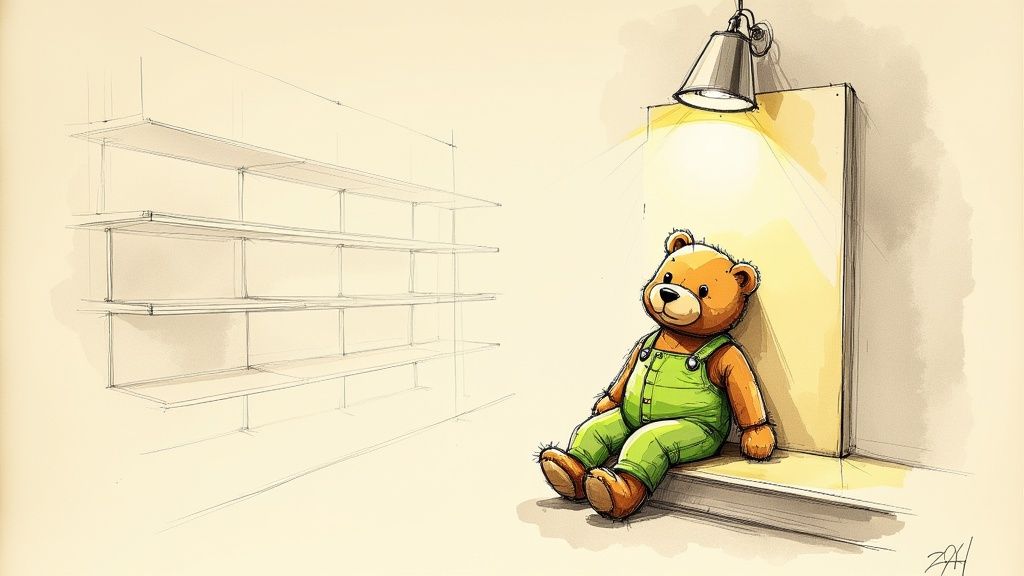
Let's step back into that cozy, comforting world of a department store after closing time, where a small bear is about to have a very big adventure. This guide is for all the parents, teachers, and anyone who still holds a fond memory of this beloved character. We're going to dig into why this humble tale about a toy bear still captures the hearts and minds of children everywhere.
The story's real charm is in its simplicity. Corduroy, our hero, sits patiently on a toy shelf, just hoping someone will finally take him home. When a little girl named Lisa spots him, she knows he's the one, but her mother points out that one of his overall straps is missing a button. That single observation sends Corduroy on a determined quest through the dark, empty store to make himself "perfect."
What Makes This Story Endure
The incredible staying power of Corduroy comes from its universal themes, which feel just as relevant today as they did when the book was first published back in 1968. It's so much more than a sweet story; it’s a gentle introduction to some of life's most important lessons.
- A Tale of Belonging: At its core, the story taps into that universal desire for a home and a friend—a feeling every single child can understand.
- Embracing Imperfections: Lisa's love for Corduroy has nothing to do with a missing button. She sees him for exactly who he is, and in doing so, teaches a beautiful lesson about acceptance.
- The Courage of Friendship: Corduroy’s nighttime journey is a brave act, all fueled by the hope of finding a friend. And Lisa’s return the next day shows her own commitment and kindness in action.
This simple narrative serves as a perfect illustration of unconditional friendship. It reminds readers that true connection is about looking past surface flaws to see the value within.
This guide will take a deep dive into the book's plot, its place in history, and the timeless lessons it continues to teach, giving you a complete resource for appreciating this classic all over again.
The Unforgettable Story of a Bear and a Button
The story of Corduroy starts simply, on a toy shelf in a big, bustling department store. There, a small teddy bear in green corduroy overalls sits and waits. He watches all the people, day in and day out, just hoping someone will finally take him home. From the very first page, we feel the bear’s deep-down desire to belong, something every kid can understand.
One afternoon, a little girl named Lisa spots him and knows he's the one. But her mother points out a missing button on his overalls, and they leave him behind. Corduroy isn't heartbroken, though. He's determined. He figures if he can just find that button, he'll find his home.
That decision kicks off a grand adventure after the store doors lock for the night. Corduroy scrambles down from his shelf to explore the giant, shadowy building. It's a journey fueled by pure childhood curiosity, turning the everyday department store into a landscape of mystery and excitement.
A Midnight Adventure
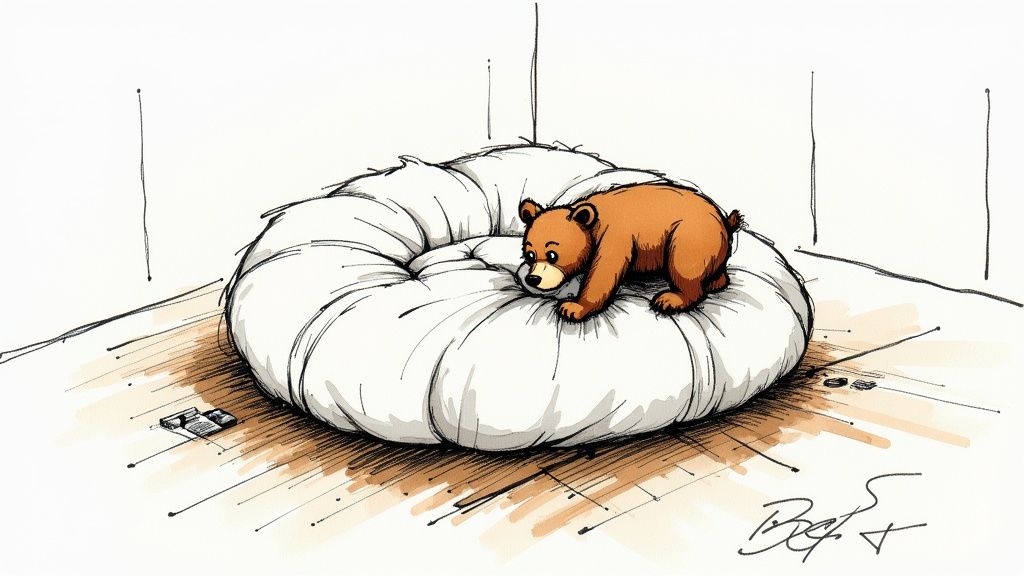
His quest takes him all the way up to the furniture department, a world of giant chairs and towering beds. He thinks he’s found his button—but it’s just the tuft on a mattress. When he gives it a mighty tug, he goes tumbling off, knocking over a lamp with a huge crash! It’s a funny, clumsy moment that changes everything.
A night watchman hears the racket, finds the little bear, and plops him right back on his shelf in the toy department. Corduroy’s big adventure seems to be over. He's right back where he started, and he never even found his button.
But the real magic is just around the corner. The very next morning, Lisa comes back, clutching money she saved from her own piggy bank. She marches straight to Corduroy, looks right past his missing button, and buys him. That simple act of seeing him for who he is, flaws and all, is the true heart of the Corduroy story.
Corduroy's journey isn't just about a lost button; it’s about the deeper search for acceptance. Lisa’s return shows that he was already worthy of love, exactly as he was.
A New Home and a New Friend
Once they get to her room, Lisa carefully sews a new button onto his overalls. With that one little stitch, she mends his strap and seals their friendship. The story closes with one of the warmest, most satisfying moments in all of children's literature. Tucked into his new bed, Corduroy thinks to himself, "You must be a friend... I've always wanted a friend."
And Lisa whispers back, "Me too!"
This perfect little exchange says it all. Through his nighttime escapade and Lisa’s simple act of kindness, Corduroy finds something much more important than a button. He finds a home, and best of all, a friend.
How Corduroy Changed Children's Literature
To really get why Corduroy was such a big deal, you have to picture the world back in 1968 when it first hit bookshelves. It was a time of massive social upheaval in America, but you wouldn't know it from looking at most children's books. The stories were overwhelmingly filled with white characters, leaving a huge number of kids without ever seeing someone who looked like them on the page.
Don Freeman, the author and illustrator, wasn't what you'd call an activist. He was just a person with a powerful sense of empathy and a sharp eye for the world around him. He saw the humanity in small, everyday moments, and when he sat down to create Corduroy, he made one simple choice that cemented the book's legacy.
He made Lisa, the little girl who finds and loves the bear, African American.
A Quiet Statement with a Lasting Impact
What made this so powerful was how quietly it was done. This isn't a story about race. It’s a timeless tale about friendship, the feeling of wanting to belong, and a lost button. Lisa is simply a girl who desperately wants a teddy bear. Her race is just a fact, as normal as the color of her coat—not a central conflict or a lesson to be taught.
That quiet normalization was the most powerful statement of all. By putting a Black child and her mother at the heart of such a warm, relatable story, Freeman presented a vision of inclusion that was almost unheard of at the time. He wasn't preaching; he was just showing a world where a loving family, who happened to be Black, were the heroes.
Don Freeman’s approach was gentle yet firm. He once stated that he made Lisa Black because he wanted the book to be for all children, not just some. He wanted every child to see that the desire for a friend is universal.
This single decision was monumental. It gave Black children a much-needed mirror, a chance to finally see themselves in a beloved mainstream story. At the same time, it gave white children a window into a world where families might look different from their own but share the exact same love and kindness.
Paving the Way for Future Stories
Corduroy's wild success proved that there was a huge market for stories featuring diverse characters. It became a quiet landmark, nudging other authors and publishers to start telling more inclusive stories. The importance of this shift can't be overstated; seeing diverse faces in books is how we build empathy and a more connected world. For a deeper look at this, you can learn about the power of representation in children's books in our detailed guide.
Don Freeman’s gentle depiction of a loving, middle-class Black family was a huge step forward. Corduroy didn't just tell a sweet story about a bear; it helped reshape the landscape of children's literature, making it a little more welcoming for every single child.
Unpacking the Core Themes of Corduroy
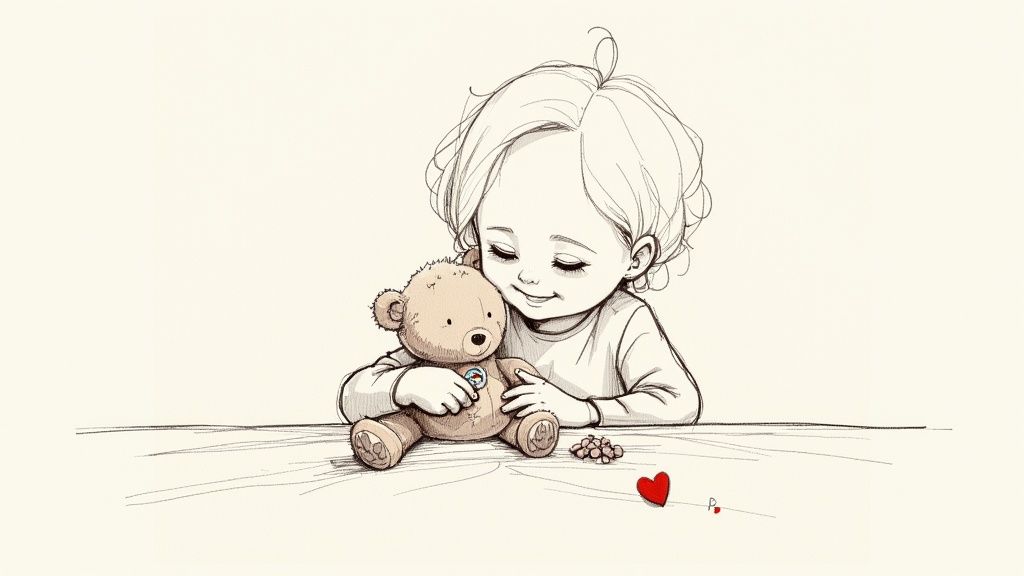
While the plot of Corduroy is simple enough for even the youngest listeners to follow, its emotional weight is what really makes it a classic that sticks with us. The book is layered with gentle, yet powerful, themes about universal human experiences. Each one is a perfect jumping-off point for conversations with kids.
At its very heart, this is a story about the deep need to belong. Corduroy’s whole motivation, from his lonely spot on a department store shelf to his brave nighttime adventure, comes from his desire for a home and a friend. This feeling of wanting a place where you are loved and accepted is something every child understands instinctively.
The Beauty of Imperfection
One of the most touching lessons in Corduroy is the idea of looking past surface-level flaws to see the true worth inside. When Lisa’s mother first points out the missing button, it’s framed as a reason not to buy him. But from the start, Lisa never sees him as broken or incomplete.
This theme is absolutely central to the story’s message. Corduroy sets off on his quest because he thinks fixing his own imperfection is what will make him worthy of a home. And yet, Lisa chooses him before he is "fixed," proving that her love for him is unconditional.
Corduroy's journey teaches a vital lesson in self-acceptance. He thought he needed to be perfect to be loved, but Lisa shows him that he was already enough, exactly as he was. Her love wasn’t dependent on a button.
This gives us a beautiful way to talk about empathy and kindness with children. It shows them how to value others for who they are, not just for how they look.
Friendship and Determination
The story also paints a wonderful picture of friendship and determination in a way that young readers can easily understand. Corduroy’s quiet, solo journey through the dark, unfamiliar store is an act of real courage. He is determined to find that button, all because he hopes it will lead him to a friend.
And Lisa’s actions perfectly mirror his determination. She doesn’t just forget about the little bear on the shelf. Instead, she goes right home, empties her piggy bank, and comes back the very next day to take him home. Her commitment shows what true friendship is all about.
These key lessons work in tandem to create a truly rich and emotional experience for anyone reading the book. Here's a quick look at how they all tie together.
Key Lessons from Corduroy
This table breaks down the core themes in 'Corduroy' and how they are demonstrated through the story's events.
| Theme | How It's Demonstrated | Key Takeaway for Readers |
|---|---|---|
| Belonging | Corduroy’s longing for a home and Lisa’s immediate connection to him. | Everyone deserves a place where they feel safe, accepted, and loved. |
| Acceptance | Lisa loves Corduroy despite his missing button, seeing his true value. | True friendship means looking past imperfections and valuing someone for who they are. |
| Determination | Corduroy’s nighttime quest and Lisa’s effort to save her money to buy him. | It is worth being brave and persistent for the things—and people—that matter most. |
Ultimately, Corduroy is a story that validates the deep-seated emotional needs of children. It tells them that their desire for a friend is important, that they are worthy of love just as they are, and that a little bit of courage can lead to the greatest reward of all: a place to call home.
Creative Ways to Teach with Corduroy

Beyond just reading the words on the page, Corduroy is a fantastic springboard for all sorts of interactive learning. When we turn storytime into a hands-on experience, it really deepens a child's connection to the characters and their journey, making the book’s lessons stick.
These activities are simple enough for a classroom or a living room floor. They don't require much more than a few common materials and a bit of imagination, helping to bring the story to life while building comprehension, motor skills, and emotional awareness.
Hands-On Learning Activities
Let's get tactile and bring Corduroy's department store adventure to life. One of the simplest and most effective ideas is to set up a button sorting station. Just gather a collection of buttons in different colors, sizes, and shapes, and let the kids sort them into separate containers. It’s a wonderfully simple exercise for building fine motor skills and introducing early math concepts like sorting and counting.
Another great activity is to create a story map together. On a big piece of paper, help the children draw the different places from the book—the toy shelf, the big furniture department, and finally, Lisa's room. They can use a little toy bear or a drawing of Corduroy to trace his journey step-by-step, which is a huge boost for understanding sequence and recalling the narrative. For more ideas on sharpening these skills, check out these powerful reading comprehension strategies for teachers.
What does it mean to feel like you belong? This simple question can open up a meaningful conversation about friendship and empathy, helping children connect Corduroy’s feelings to their own experiences.
Fostering Deeper Discussions
The real heart of Corduroy is its emotional core, which gives us a perfect opportunity for meaningful chats. With a few open-ended questions, you can get kids thinking about the story’s bigger themes of friendship, acceptance, and not giving up.
Here are a few prompts to get the conversation rolling:
- Exploring Empathy: "How do you think Corduroy felt when he was all alone in the big store at night?"
- Understanding Friendship: "Why was it so important for Lisa to be a good friend and sew on Corduroy’s button?"
- Seeing Beyond Imperfections: "Was Corduroy still a good bear even with a missing button? Why do you think so?"
These kinds of discussions help children build their social-emotional vocabulary and start to grasp complex feelings. For educators looking to innovate, incorporating tools like AI for teachers can offer new ways to create engaging activities around classic stories. By mixing hands-on fun with thoughtful conversation, you can ensure the gentle lessons from Corduroy stay with a child long after the book is closed.
What to Read After Loving Corduroy
So, you’ve turned the last page of Corduroy, but that doesn't mean the adventure has to stop. When a child falls in love with the little bear in green overalls, they're often looking for another story to give them that same warm, fuzzy feeling. Finding that next perfect book is a fantastic way to build on the story’s themes of friendship and belonging, helping to spark a lifelong love for reading.
The easiest place to start is with more from Don Freeman himself. He wrote a direct sequel, A Pocket for Corduroy, which picks up right where the first story left off. This time, Corduroy finds himself on a new escapade in a laundromat. It has all the same gentle charm as the original, making it a natural next step for any young fan.
Tales of Toys with Big Hearts
If your child was captivated by the idea of a toy coming to life, you’re in luck—there’s a whole world of stories just waiting to be discovered. These books explore similar ideas about love and what it means to be “real,” all through the eyes of a beloved plaything.
- The Velveteen Rabbit by Margery Williams: This timeless classic is the perfect companion to Corduroy. It’s the story of a stuffed rabbit who learns that it’s being loved that truly makes you real. For a closer look, you can explore the timeless themes of The Velveteen Rabbit in our guide.
- Knuffle Bunny by Mo Willems: A more modern favorite, this book hilariously captures the real-life drama of a toddler who loses her most cherished stuffed bunny at—you guessed it—the laundromat.
Stories Celebrating Kindness and Acceptance
At its core, Corduroy is about Lisa’s unconditional acceptance of him, missing button and all. That powerful message is echoed in many other wonderful picture books that celebrate kindness and looking past surface-level appearances.
Just like Lisa saw past Corduroy’s imperfection, these stories teach children that true friendship is about seeing the good in others and offering kindness without expectation.
You might want to check out titles like Last Stop on Market Street by Matt de la Peña, a beautiful story about finding beauty in everyday things. Another great one is The Snowy Day by Ezra Jack Keats, a groundbreaking classic that captures a simple moment of childhood wonder with incredible warmth and inclusivity.
Still Wondering About Corduroy?
Even decades after it first hit the shelves, Don Freeman's classic tale continues to capture hearts and spark questions. Parents and teachers often find themselves wondering about the deeper layers and historical importance of this little bear in green overalls. Let's dig into some of the most common curiosities about this beloved story.
What Is the Book's Main Message?
One of the first questions people ask is about the core message of Corduroy. When you get right down to it, the book is a powerful, yet gentle, lesson on friendship and belonging. It shows us that everyone deserves a home and that real friends look right past our little imperfections, like a missing button.
The big idea is simple but so important: you are worthy of love just as you are. Corduroy’s adventure reminds us that our value doesn’t come from being flawless, but from being ourselves.
Why Is Corduroy Considered a Groundbreaking Book?
Many readers want to know why Corduroy is so often called a landmark in children's books. Its true power is in how it quietly and naturally handled diverse representation. By placing an African American girl, Lisa, and her mother at the center of a warm, loving, and totally normal story, the book took a huge step forward back in 1968.
This wasn't a story about race; it was a universal story about a girl who wanted a teddy bear, and the family just happened to be Black. That kind of normalization was a big deal. It gave Black children a mirror to see themselves in and gave other children a window into a life that might be different from their own, building empathy one page at a time.
What Is the Best Age for Corduroy?
Finally, a very practical question from parents and educators: what's the sweet spot for this story? Corduroy is a perfect fit for preschoolers and kids in early elementary school, usually between ages 3 and 6.
The straightforward story, clear emotional beats, and soft, gentle illustrations make it easy for young minds to follow along. Its lessons on friendship, belonging, and not giving up are foundational ideas that really click with this age group, making it an all-star pick for storytime at home or in the classroom.