
The best books for 3rd grade are the ones that meet a child right at that incredible turning point—the year they stop learning to read and start reading to learn. This is the moment when early chapter books, exciting series, and colorful nonfiction don't just teach them words, but show them how to discover entire new worlds all on their own.
The Year Readers Are Made
 Third grade is a magical leap in a kid’s reading journey. Around ages eight and nine, something fundamental clicks. They move past the hard work of just decoding words and start to really live inside the story, connecting with characters and exploring big ideas. It’s not just about what a word says anymore; it’s about understanding the plot, feeling for a character, and asking questions about the world.
This transition is exactly why finding the right books for 3rd grade is so critical. The stories they fall in love with now can build a foundation for a lifetime of reading.
Why This Age Is So Special
For third graders, the world of books suddenly blows wide open. They're finally ready for more complicated stories and deeper emotions, making it the perfect time to introduce them to richer, more rewarding reads.
Here’s a glimpse of what’s happening at this unique stage:
- Growing Independence: They can tackle longer books by themselves, which gives them a huge and powerful sense of accomplishment.
- Developing Empathy: Characters navigating relatable problems—like friendship troubles or feeling left out—help them understand their own feelings and see the world through someone else's eyes.
- Expanding Curiosity: Their minds are buzzing with questions. Suddenly, nonfiction books about animals, history, or how things work become just as thrilling as any fantasy adventure.
Third grade is where the spark of reading often catches fire. It's the stage where a single book can turn a hesitant reader into an enthusiastic one by showing them that stories are not just words on a page, but gateways to adventure and understanding.
This growing appetite for meaningful stories is a big deal. The global children's book market, which heavily features titles for this age group, was valued at roughly USD 10.40 billion in 2025 and is expected to climb to USD 15.52 billion by 2032. This isn't just a business trend; it shows a real demand for great, age-appropriate books that help kids build their vocabulary and their capacity for empathy. You can explore more data on the children's book market over at 360iResearch.com.
What Makes a Great 3rd Grade Book
Finding the right book for a third grader is a lot like picking out a new bike. If it’s too small, they’ll get bored and feel like they aren't going anywhere. But if it’s too big, they might get frustrated and lose the confidence to even try. You're looking for that perfect fit—something that gives them a little room to grow while still letting them enjoy the ride.
That balance is what turns a good book into a great one for an eight- or nine-year-old. They’re graduating from simple, predictable stories and are ready for something with more substance. At this age, they’re not just sounding out words anymore; they’re starting to read between the lines, making connections and figuring out why characters do what they do.
Moving Beyond Basic Stories
The best books for this age group gently nudge kids forward with more complex plots. Instead of one straight line from beginning to end, these stories start weaving in smaller side plots that add a lot more depth. Think of it as the difference between watching a simple cartoon and a full-length movie with interesting twists and turns.
This is also when character development really starts to shine. Third graders are ready to meet characters who aren't perfect. The protagonists in these books make mistakes, face tough choices, and have to think their way out of problems, which is fantastic for helping young readers build empathy and start thinking critically.
The magic of a third-grade book is that it mirrors a child's own expanding world. It respects their growing independence and their new understanding of big feelings around friendship, fairness, and doing the right thing.
These aren't just random themes. They connect directly with what kids are navigating every day at school and with their families. When they see a character struggle with a hard decision or stand up for a friend, it gives them a safe space to think about these big ideas for themselves.
Key Features of a "Just Right" Book
So, what should you actually look for on the shelf? While every kid is unique, the most successful books for 3rd grade tend to share a few key ingredients that hit that sweet spot between challenging and fun.
Here’s what to keep an eye out for on your next trip to the library or bookstore:
- Longer Chapters: Books are now broken into chapters, usually around 5-10 pages each. This gives kids a natural place to pause and a real sense of accomplishment as they make their way through the book.
- Richer Vocabulary: The writing is more descriptive and uses new words in context, so kids can learn them naturally as part of the story instead of feeling like they’re studying a list.
- Developing Subplots: The main adventure might be about solving a mystery, but a smaller story about the main characters having a disagreement adds another interesting layer to it all.
- Character Growth: The main character might start off feeling shy but learns to be brave by the end. This kind of journey is a huge step up from the one-dimensional characters found in early readers.
These elements come together to create a reading experience that’s both exciting and educational. Publishers like Number 6 Publishing know that compelling stories are critical for hitting third-grade reading milestones. At this stage, kids are expected to read 90-120 words per minute fluently. What's more, research shows that children who read for just 20 minutes a day can jump 1.8 grade levels ahead of their peers, making third-grade books a true foundation for their future academic life. You can dig into more data on the global children's book market over at dataintelo.com.
Matching Books to Every Young Reader
Every single third grader is on their own unique reading journey. Their needs and tastes can be as different as the stories they pick up. Just like a coach wouldn't give every player the same training plan, we can't expect one type of book to click with every child. The real magic happens when we meet them right where they are, offering stories that feel like an exciting next step—not an impossible climb.
When you get a feel for your child’s reader profile, you can find the perfect books for 3rd grade that build their confidence and spark a genuine love for reading. It’s all about turning potential frustration into a feeling of victory, one page at a time.
This flowchart can help you take that first step: Is your child looking for a comfortable, fun read, or are they ready to dig into something with a bit more depth?
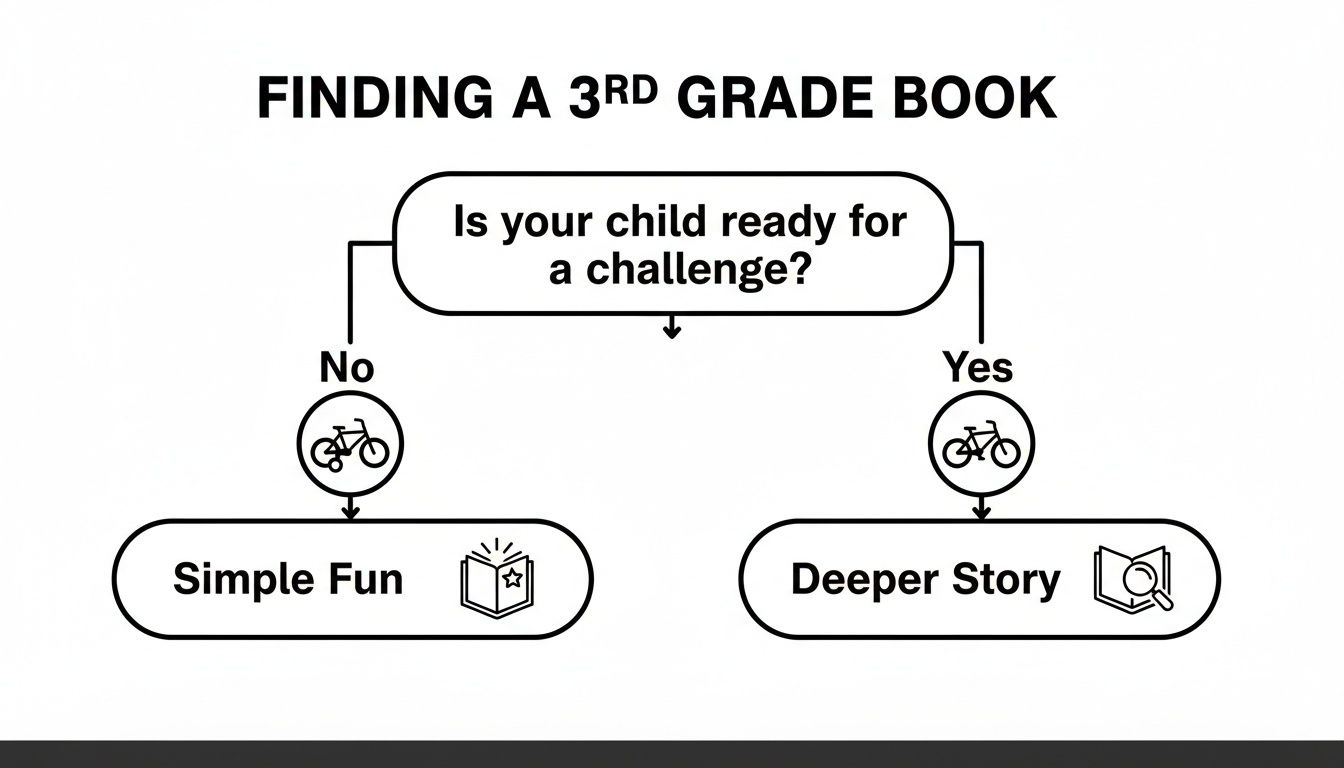
As you can see, simply figuring out if your child is ready for a challenge is a powerful way to narrow down the right kind of story and make sure the whole experience is a rewarding one.
Supporting the Developing Reader
The developing reader is moving along just fine but is still building up their reading stamina and confidence. While they can read on their own, a dense page of text or a super-complex plot might feel overwhelming. For them, the goal is to make reading feel as effortless and fun as possible.
This is where high-interest series become your best friend. Once a child finds characters they absolutely love, they can't wait to find out what happens next. That excitement powers them through book after book, building fluency and making them feel like a reading superstar.
A few ideas to try:
- Graphic Novels: The pictures do a lot of the heavy lifting. Visual storytelling helps with comprehension, making it easier to follow the plot and decode characters’ emotions.
- Humorous Series: You can’t go wrong with funny. Books with fast-paced, silly plots create a positive vibe around reading and keep them eagerly turning pages.
- Illustrated Chapter Books: Books that break up the text with plenty of pictures give the eyes a rest and provide helpful context clues. This makes longer stories feel way less intimidating.
Challenging the Advanced Reader
Advanced readers are often hungry for more—more complex stories, richer vocabulary, and deeper themes. They fly through books and are ready to think more critically about what they’re reading. The challenge here is keeping them engaged without accidentally pushing them into material that's emotionally or thematically too mature.
For these kids, hunt for books with sophisticated storytelling and characters who face real, meaningful dilemmas. These are the kinds of reads that will stretch their thinking and give them something substantial to chew on. To find that perfect balance, you can learn more from our guide on the typical 3rd grade reading level.
The goal for an advanced reader isn't just to read more books, but to read books that make them think more deeply. It’s about moving from "what happened" to "why it happened" and "what it means."
These readers often get a lot out of:
- Intricate Fantasy or Mystery Series: Stories with layered plots, detailed world-building, and subtle clues are perfect for encouraging close reading and critical thinking.
- Historical Fiction: These books introduce new vocabulary and complex historical concepts, but wrap them in a narrative that makes it all accessible and engaging.
- Nonfiction with a Strong Narrative: Look for well-written biographies or books about science and history that tell a compelling story, not just rattle off a list of facts.
Engaging the Reluctant Reader
A reluctant reader might tell you they "hate reading." But more often than not, what they really mean is they just haven't found a book that speaks to them yet. For these kids, the trick is to connect reading to their existing passions and take all the pressure off.
Think way outside the traditional chapter book. If they love video games, find a book about coding or a graphic novel based on a popular game. If they live and breathe sports, a biography of their favorite athlete or a magazine about their team can be the perfect gateway.
Here are some strategies that really work:
- Connect to Hobbies: Find books, magazines, or even instruction manuals related to what they already love, whether it's LEGOs, Minecraft, or animals.
- Offer Choice and Freedom: This one is huge. Take them to a library or bookstore and let them pick anything that looks interesting, no judgment allowed. Giving them that control is incredibly powerful.
- Try Audiobooks: Listening to a well-narrated story removes the hard work of decoding and lets them just get lost in a great plot. This often sparks their interest in picking up the physical book later.
Top Book Recommendations for 3rd Graders
Alright, we’ve figured out what makes a book just right for this age and how to match stories with all kinds of readers. Now for the really fun part.
Here’s our go-to list of can’t-miss books 3rd grade readers will absolutely get lost in. We picked these titles to spark curiosity, bring on the laughs, and make kids eager to find out what happens next. Think of this as more than just a list—it's a launchpad for countless adventures.
Timeless Classics and Modern Favorites
Some stories just stick with you. These have either been loved for generations or have quickly become essentials on every kid's bookshelf. They're packed with unforgettable characters and big ideas about friendship, courage, and imagination that really connect with eight- and nine-year-olds.
- Charlotte's Web by E.B. White: An enduring classic about the incredible friendship between a pig named Wilbur and a very clever spider named Charlotte. It’s a beautiful, gentle way to introduce kids to heavy themes like life, loss, and loyalty.
- The One and Only Ivan by Katherine Applegate: Inspired by a true story and told from the perspective of a gorilla living in a shopping mall. This one is a powerful and moving read about friendship, what it means to be free, and the importance of keeping your promises.
- Because of Winn-Dixie by Kate DiCamillo: When a lonely girl adopts a scruffy stray dog, the two of them manage to bring an entire community together. This book is all heart, humor, and quirky characters you can't help but love.
- Ramona Quimby, Age 8 by Beverly Cleary: Ramona is taking on third grade with all her usual spunk and hilarious mix-ups. Kids just get her; they see their own daily struggles and triumphs in her stories.
Must-Read Series That Get Kids Hooked
There's a special kind of magic in finishing a great book and knowing there are more adventures waiting with the same characters. A fantastic series is one of the surest ways to turn a casual reader into a passionate one. The familiar world makes it easy to just keep going.
- Magic Tree House Series by Mary Pope Osborne: Join siblings Jack and Annie as they travel through time. These books perfectly blend history, mystery, and magic, and the short chapters are great for building reading confidence.
- The Boxcar Children Series by Gertrude Chandler Warner: The story of four orphaned siblings who make a home for themselves in an abandoned boxcar. It’s a classic tale of resilience, independence, and what it means to be a family.
- The Humphrey Series by Betty G. Birney: Told from the point of view of a classroom hamster, these stories are funny, sweet, and filled with gentle life lessons about friendship and being responsible.
- Zoey and Sassafras Series by Asia Citro: This series is a brilliant mix of science and magic. Zoey uses the scientific method to help magical creatures, making tricky concepts feel fun and totally accessible.
A great book series acts like a friendly guide, inviting a child deeper into the world of reading. When they find characters they love, the motivation to read the next book—and the one after that—comes naturally, building fluency and stamina without feeling like work.
There's a reason the children and young adult book market is such a massive industry. Valued at USD 16,878.2 million globally in 2020, its real worth is measured in the curiosity it ignites in young minds. Even with all the screens, print is still king for this age group, making up 70% of the market and proving the simple joy of holding a book. In fact, over 70% of avid readers by fourth grade say it was those early chapter books that first got them hooked on stories. You can find more insights on this growing market over at ResearchAndMarkets.com.
Engaging Graphic Novels
Don’t ever underestimate the power of a graphic novel. They're fantastic for all readers, but they can be a total game-changer for kids who are more visual or a little reluctant to pick up a thick chapter book. The mix of words and art helps them follow along with complex plots and character emotions.
- Dog Man Series by Dav Pilkey: Part dog, part man, and all hero! These books are ridiculously funny, action-packed, and famous for getting even the most hesitant kids to start reading.
- The Bad Guys Series by Aaron Blabey: A hilarious series about a crew of classic villains—Mr. Wolf, Mr. Piranha, Mr. Snake, and Mr. Shark—who are trying really hard to become heroes, with laugh-out-loud results.
- Lunch Lady Series by Jarrett J. Krosoczka: She serves sloppy joes by day and fights crime by night! This series is a perfect recipe of action, mystery, and super-clever gadgets.
Celebrating Diversity and Empathy
Stories are powerful. They can be windows that let us see into other worlds or mirrors that show us our own experiences. Books with diverse characters are so important for building empathy and helping every single child see that they, too, can be the hero of the story.
- Last Stop on Market Street by Matt de la Peña: A young boy named CJ takes a bus ride with his grandmother and learns to see the beauty in his city and the people all around him. It’s a wonderfully written and illustrated story about finding joy and gratitude in the everyday.
- The Name Jar by Yangsook Choi: Unhei, a young girl from Korea, is nervous about her first day at an American school and thinks about changing her name. This is a thoughtful book about identity, acceptance, and being proud of who you are.
- Amazing Grace by Mary Hoffman: Grace loves stories and acting them out. But when her classmates tell her she can’t be Peter Pan because she’s a girl and she's Black, she sets out to prove she can be anything she puts her mind to. It's a truly empowering story about smashing stereotypes.
- Each Kindness by Jacqueline Woodson: This poignant story shows the lasting impact of small acts of unkindness when a new girl is left out by her classmates. It’s a powerful book that opens up important conversations about empathy, inclusion, and regret.
Bringing Stories to Life Beyond the Page
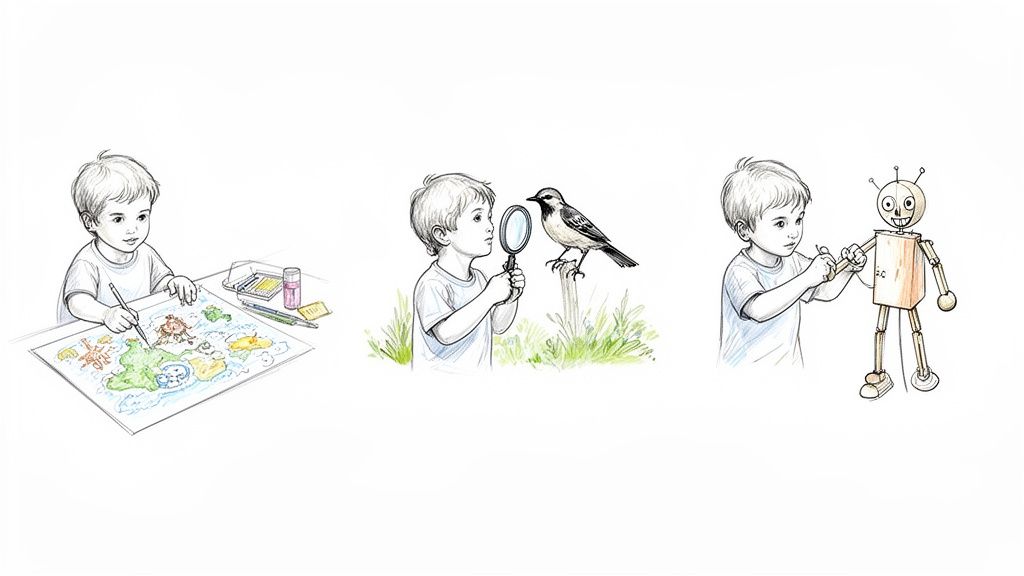
The journey with a great book doesn’t have to stop at the last page. In fact, that’s often just where the real adventure begins. Extending the story with simple, hands-on activities is a fantastic way to cement what they’ve read, turning a quiet, solo activity into something you can share.
Think of it this way: reading the book is like watching a movie, but the activities you do afterward are like getting to explore the set. These little projects connect the story's world to your child's, making the characters, settings, and ideas feel more tangible and memorable.
Simple Activities for Deeper Connections
You don’t need a cart full of craft supplies or a complicated lesson plan. Often, the best activities are the simplest ones—the ones that get the imagination going and start a good conversation. The trick is just to match the activity to the feeling of the book.
Here are a few ideas to get you started, based on genre:
- For Fantasy Books: Just finished a tale set in a magical kingdom? Grab some paper and crayons and draw a map of that world. Ask your child to mark all the important spots, like where the hero lives or where the dragon’s lair is hidden.
- For Mystery Novels: Let your child play detective! They can put together a "case file" with drawings of the main characters, a list of clues, and their own theory on who solved the mystery and how.
- For Nonfiction Reads: If they’ve just read a book about animals, head to a local park and see what wildlife you can find. If it was a book about space, find a clear night to go outside and do some stargazing together.
When a child retells a story through a drawing, a model, or a conversation, they are actively organizing its key elements in their mind. This process reinforces their understanding of plot, character, and setting far more effectively than a simple quiz.
Sparking Meaningful Conversations
One of the most powerful things you can do is just talk about the book. Asking open-ended questions invites your child to think more deeply and share what the story meant to them. It’s also a wonderful way to connect and find out what’s on their mind. If you want to dive deeper into this, we have an article exploring the benefits of reading aloud to children.
Try asking questions that go a little beyond what happened:
- "Which character in the story reminds you of yourself? Why?"
- "If you could change one thing that happened in the book, what would it be?"
- "What do you think the main character learned by the end of the story?"
These kinds of conversations do more than just check for comprehension; they build empathy and critical thinking skills. To add another layer to their learning journey, you could also explore various educational courses that can complement what they’re reading.
By connecting books for 3rd grade to hands-on projects and thoughtful chats, you help your child build a much deeper, more personal connection to the stories they love.
How to Build a Powerful Home Library
Building a rich home library for your child isn't about spending a ton of money. It’s really about creating a space where great books are always within arm's reach, making reading a natural, joyful part of the day. Think of your home as a launchpad for literary adventures, filled with stories that excite and inspire your third grader.
Your local public library is, without a doubt, your greatest ally in this mission. It offers a practically endless supply of books for 3rd grade at no cost at all. But it’s more than just a place to borrow; librarians are true book matchmakers who can give you personalized recommendations based on what your child loves. Many libraries now have fantastic digital catalogs and e-books, too, so you can browse and borrow right from your couch.
Finding Treasures Beyond the Big Stores
While the big box stores are convenient, the real magic often happens in independent bookstores. These shops are usually run by people who are passionate about reading, and they stock unique and diverse titles you might never find otherwise. Just visiting an indie bookstore is an experience—and a wonderful way to support a local business while you hunt for your child's next favorite story.
If you want to keep costs down while still growing your collection, try some of these smart strategies:
- Used Book Sales: Library book sales and local thrift stores are absolute goldmines. You can often find high-quality, gently used children's books for just a fraction of their original price.
- Book Swaps: Why not organize a book swap with friends, neighbors, or other families from school? It’s a fun, zero-cost way to refresh your shelves and pass along beloved stories.
- Online Marketplaces: Websites often have dedicated sections for used books where you can track down specific titles or even find entire series bundled together for a great price.
A powerful home library isn’t measured by how many brand-new books are on the shelf. It’s measured by the variety of stories it holds and the excitement it sparks. A healthy mix of library loans, second-hand finds, and a few special purchases creates a collection that feels both dynamic and accessible.
Creating an Inviting Reading Nook
Finally, set aside a special spot just for reading. It doesn’t need to be anything fancy—a comfy beanbag chair, a soft rug with a few pillows, or even a well-lit corner of their room can become a perfect retreat. Keep a rotating selection of books there to make it a welcoming place where your child can get lost in a good story. For more ideas on fantastic reads, check out this great list of chapter books for 3rd grade in our other guide.
The impact of connecting a child with stories they genuinely love is truly immeasurable. By thoughtfully building a home library, you’re giving them a gift that lasts a lifetime: a deep and meaningful friendship with books.
Questions We Often Hear
As you dive into the world of third-grade reading, you're bound to have some questions. It’s a big year for young readers! Here are a few of the most common ones we hear from parents and educators, with straightforward answers to help guide you.
How Many Books Should a 3rd Grader Read?
There really isn't a magic number here. The goal is to build a genuine love for reading and deep understanding, not just to check books off a list. That said, many schools aim for a benchmark of around 20-30 books during the school year.
What truly makes a difference is creating a consistent habit. Just 20-30 minutes of reading each day has been shown to dramatically improve a child's vocabulary, fluency, and how well they understand the story. The secret is helping them find books they actually want to read. That natural excitement is what will keep them coming back for more.
A good mix of formats also keeps reading from feeling stale. Encourage them to try out:
- Chapter books to build up their reading stamina.
- Graphic novels, which are fantastic for visual literacy.
- Nonfiction books that fuel their curiosity about the real world.
What if My 3rd Grader Hates Reading?
First things first, take all the pressure off. Reading should feel like an exciting discovery, not a chore they have to get through. A lot of the time, when a child says they "hate reading," it's because the books are too hard or they just haven't stumbled upon a topic that really grabs them yet.
Try starting with things that are high-interest but low-pressure. Hilarious series like Dog Man or magazines about their passions—whether that's video games, sports, or animals—can totally change their perspective on what reading is. Also, keep reading aloud to them, even if they're reading on their own. Hearing you read with expression models what good reading sounds like and can reignite their love for a great story.
Sometimes, the most powerful motivator is giving a child complete freedom of choice. A trip to the library where they can pick anything that catches their eye—no judgment—gives them a powerful sense of ownership over their own reading journey.
How Do I Know if a Book Is Too Hard?
There’s a great, simple tool for this called the "five-finger rule." Just ask your child to read one full page from a book they're interested in. For every word they don't know or can't figure out, they hold up one finger.
Here's a quick guide to what the results mean:
- 0-1 Finger: This book is probably pretty easy for them. It’s perfect for relaxed, fun reading.
- 2-3 Fingers: You've found the sweet spot! It’s challenging enough to help them grow without making them frustrated.
- 4-5+ Fingers: This book is likely too difficult for them to read alone right now. It could be a wonderful one to read together, but tackling it by themselves might just lead to frustration.
You can also just listen to them read. If it sounds very slow and choppy, the book might be a bit too tough, which can quickly discourage them. The goal is always to find that balance that builds their skills and their confidence at the same time.
At Number 6 Publishing, we believe every child deserves stories that spark curiosity and joy. Discover our collection of heartfelt children's books and find your next reading adventure today!