
It’s more than just a sweet bedtime routine. Reading a story aloud is one of the single most powerful things you can do for a child’s development. The simple act of sharing a book together strengthens everything from brain power and language skills to emotional bonds, truly setting the stage for a lifetime of success. It’s a small habit that delivers a huge impact.
Why Reading Aloud Is a Developmental Superpower
Think of a child's brain like a library being built from the ground up. Every story you read aloud is like adding a whole new wing, filling it with words, ideas, and connections. This isn't just a feel-good metaphor; it's what's happening on a developmental level. Sharing a book builds a foundation for literacy and learning in a way that day-to-day conversation simply can't match.
One of the most eye-opening reasons to make reading a daily habit is what researchers call the "million-word gap." It’s a staggering difference. A landmark 2019 study found that children whose parents read to them just five times a day hear nearly 1.5 million more words by the time they turn five than children who aren't read to at all.
The Word Gap: How Reading Frequency Impacts Vocabulary by Age 5
This table breaks down just how dramatically word exposure increases for young children based on how often they are read to at home.
| Reading Frequency | Estimated Words Heard by Age 5 |
|---|---|
| Never | 4,662 words |
| 1-2 times per week | 63,570 words |
| 3-5 times per week | 169,520 words |
| Daily (1 book) | 296,660 words |
| Daily (5 books) | 1,483,300 words |
As you can see, even moving from never reading to just a few times a week makes a huge difference. Making it a daily routine creates a rich linguistic environment that gives a child a massive head start.
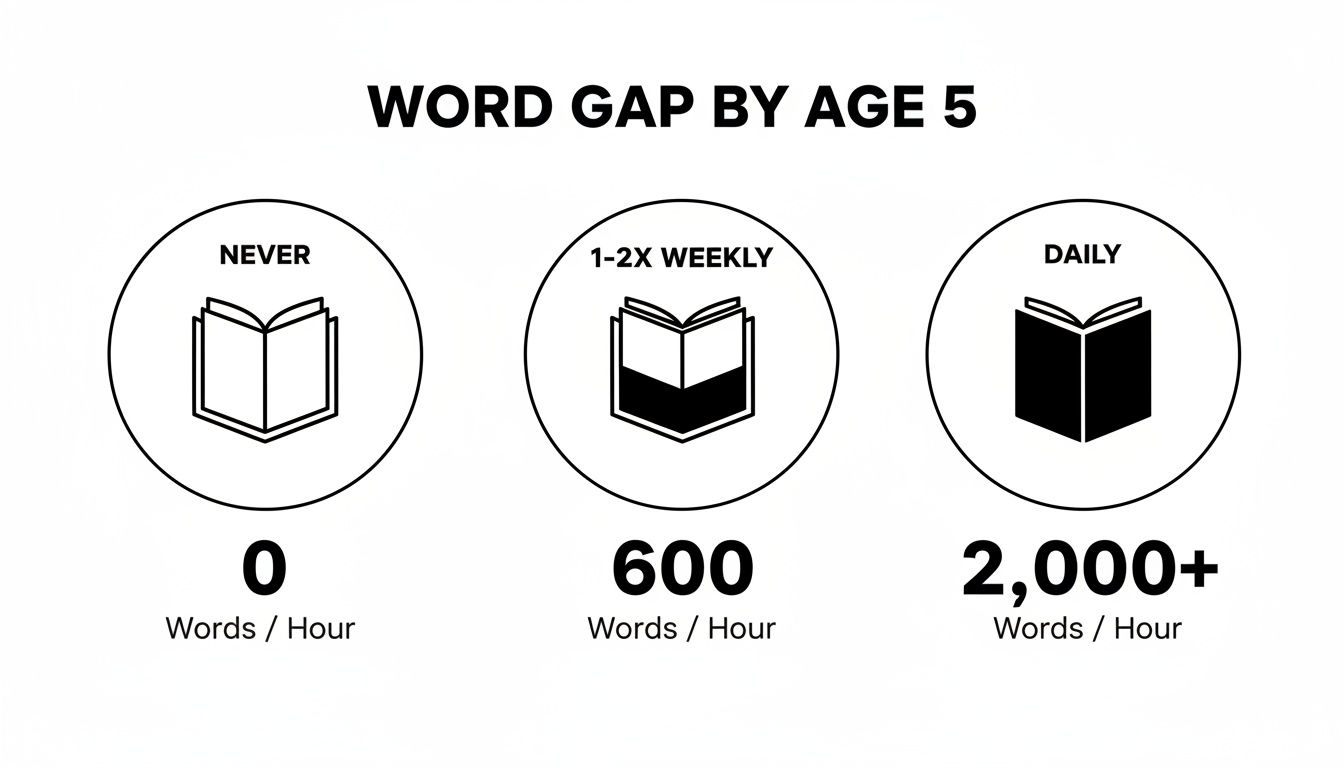
This kind of early exposure is directly tied to stronger cognitive development, preparing them for the challenges of school and beyond.
Reading aloud is the single most important activity for building the knowledge required for eventual success in reading. It is a practice that should continue throughout the grades.
While reading aloud builds a powerful foundation, some children may face specific challenges where more targeted support is needed. In these cases, professional help through child speech therapy can offer crucial assistance.
Now, let's explore the specific cognitive, emotional, and academic benefits in more detail, and see how every story shared is a step toward a brighter future.
Building a Better Brain Through Stories
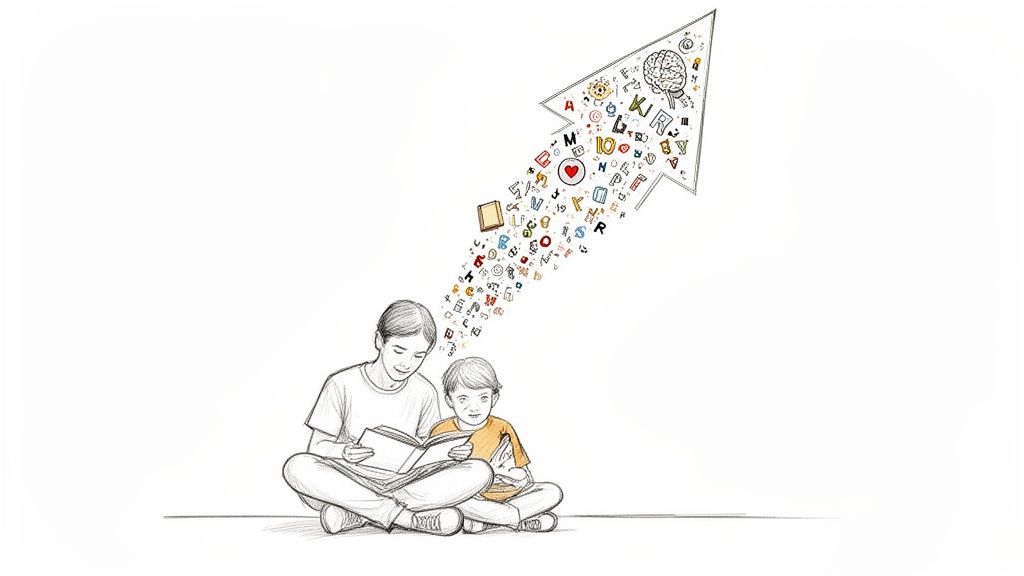
When you sit down to read a story with a child, something truly remarkable happens. It’s about so much more than just sharing words on a page—you're actively helping to build a stronger, more connected brain. Think of it as a workout for their developing mind, where every sentence, character, and plot twist strengthens the cognitive muscles they’ll rely on for a lifetime of learning.
This mental exercise kicks into gear by lighting up key parts of the brain tied to language and visual imagery. As a child listens to you, their mind is hard at work turning your words into pictures, a process that flexes their memory and fires up their imagination. They aren't just hearing a story; they're building an entire world inside their head.
Accelerating Language and Logic
One of the most powerful things about reading aloud is the sheer variety of words and sentences it introduces. Books expose children to a much richer vocabulary and more complex sentence structures than they'd typically hear in day-to-day conversation. This helps them absorb the natural rhythm of grammar and syntax without a formal lesson.
This exposure directly fuels their ability to think logically and see how things connect. Every story has a plot—a beginning, a middle, and an end—which is a perfect, built-in lesson on cause and effect. As children follow a character's journey, they start predicting what might happen next and figuring out why people do what they do, laying the groundwork for real problem-solving skills.
The talk that surrounds the reading is what gives it power, helping children to bridge what is in the story and their own lives. This connection-making is the cornerstone of true comprehension.
And this isn't just a nice idea; the results are measurable. An incredible project by Italy's IBSA Foundation showed stunning results over four years. Preschoolers who were read to saw an 82% increase in social problem-solving. Meanwhile, primary students’ Verbal Comprehension Index—a key measure of understanding—shot up by a remarkable 14.3%.
From Listening to Understanding
This whole brain-building process also has a wonderful effect on a child's attention span. At first, a toddler might only sit still for a minute or two. But as they get pulled into the magic of stories, their ability to focus grows right along with them. That skill is absolutely essential for success once they get to a classroom.
While they listen, kids are also quietly picking up crucial skills for learning to read themselves. They start to understand that the words on the page move from left to right and that those funny-looking squiggles actually stand for the sounds they're hearing. This is the foundation of phonemic awareness—knowing the individual sounds in words—which is one of the biggest predictors of a child's future reading success. If you're looking for more ways to nurture this skill, check out our guide on how to develop reading comprehension skills.
Every single story you share is an investment in a child’s mind, building a resilient and curious brain that's ready to take on new challenges and explore a world of ideas.
Fostering Empathy and Emotional Intelligence
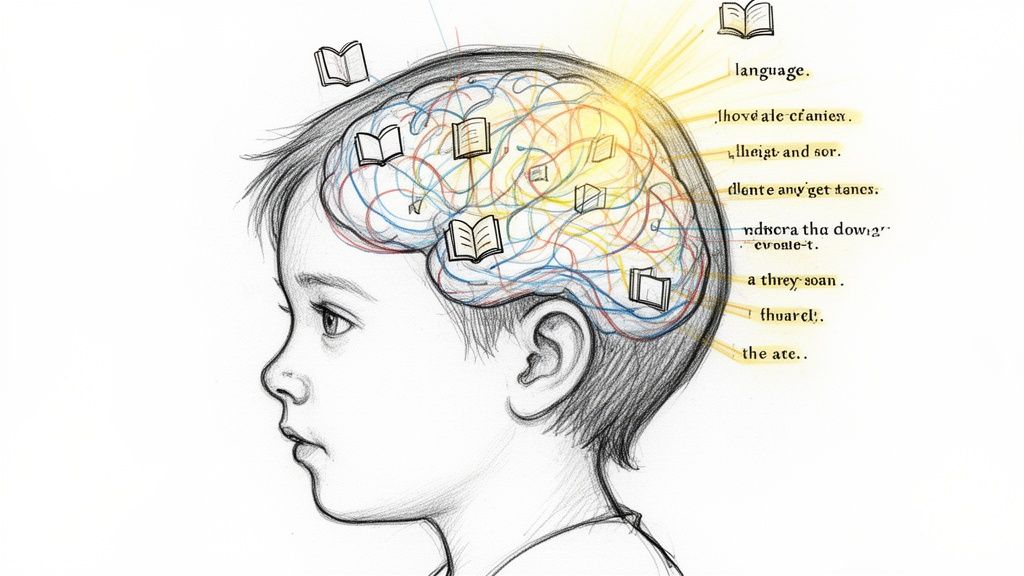
While stories are fantastic for building a stronger brain, they're just as powerful when it comes to nurturing a child’s heart. Reading aloud is one of the very best ways to cultivate empathy and emotional intelligence. It gives kids a safe space to explore the messy, complicated, and wonderful world of human feelings.
Think of books as a gentle simulator for life. Tucked into the pages of a good story, a child can experience friendship, disappointment, joy, and even fear, all from the security of your lap. This process gives them a priceless gift: the chance to walk in a character's shoes and see the world from a completely different perspective.
When a character in a book has to make a hard choice or feels overwhelmed with sadness, your child gets to explore those emotions without any personal risk. This is the very foundation of empathy—that ability to truly understand and share what someone else is feeling. The real magic happens in the conversations that follow, the little questions like, "Why do you think the dragon felt so lonely?" For a deeper look into this, check out this practical guide on how to teach empathy.
Strengthening Bonds and Self-Regulation
Beyond helping them understand others, reading together has a huge impact on your child's own emotional regulation and, just as importantly, the bond you share. This dedicated, screen-free time creates a powerful feeling of security and connection that little else can match.
This consistent, positive time together reinforces a secure attachment, which is absolutely vital for healthy development. It’s like building up a bank of positive memories, teaching your child that learning, love, and connection all go hand in hand.
When we read with a child, we are doing so much more than teaching them to read or exposing them to language. We are teaching them to be human. When we open a book, we open our hearts.
It's not just a feeling; this practice has a real, measurable impact on behavior. Take the Video Interaction Project (VIP), for example. Researchers found that shared reading and interactive play could dramatically improve a child's ability to self-regulate. In fact, the project led to an incredible 69.2% relative risk reduction in hyperactivity when kids started school. It just goes to show how this simple habit helps children learn to manage their impulses and emotions far more effectively.
A Library of Feelings
By exploring all kinds of different stories, you're handing your child a vocabulary for their own feelings. This emotional literacy is a true superpower, helping them navigate the playground, the classroom, and life with more confidence and kindness.
- Naming Emotions: Stories give children words for big feelings, like "frustrated," "anxious," or "elated," helping them make sense of their own inner world.
- Modeling Solutions: Characters often have to work through problems, showing kids healthy and constructive ways to cope with disagreements or challenges.
- Celebrating Diversity: Reading about different cultures, families, and experiences builds an appreciation for the wider world and all the unique people in it.
Choosing stories that intentionally focus on these themes is a fantastic way to support this growth. For some great ideas, explore our list of the best books about social-emotional learning. Every story you share is another opportunity to build a more compassionate and emotionally aware child.
Creating a Lifelong Love of Learning
Just because a child learns to read on their own doesn't mean the magic of storytime has to end. Far from it. Continuing to read aloud is one of the most powerful things you can do to turn reading from a simple school skill into a genuine, lifelong passion for discovery.
When you share a book with a child who can already read, you send a clear message: books are about connection and enjoyment, not just homework. That shared experience keeps the magic alive, helping them build a library of happy, comforting memories tied to reading. This positive association is the secret ingredient for building intrinsic motivation—the drive to read for the pure joy of it.
Expanding Horizons Beyond Their Reading Level
One of the biggest perks of continuing to read aloud is that you can introduce your child to worlds, ideas, and words they aren't quite ready to tackle alone. For years, a child's listening comprehension level will outpace their independent reading level. This gap is a golden opportunity.
By reading more complex chapter books together, you're giving them a front-row seat to intricate plots and sophisticated language they couldn't access otherwise. This exposure builds a vital mental framework they can draw on to understand challenging topics across all their school subjects, whether it's the subtleties of a historical event or the logic behind a science experiment.
Every time we read to a child, we’re sending a ‘pleasure’ message to the child’s brain. You could even call it a commercial, conditioning the child to associate books and print with pleasure.
Think of it as building a bridge. The complex sentences and richer vocabulary you share become the model for their own speaking and writing. They start to absorb grammar and sentence structure naturally, which translates directly into stronger communication skills in the classroom and in life.
Fueling Curiosity and Academic Success
Reading together also opens the door to incredible conversations. When you stumble upon a complex character, a tough ethical dilemma, or a real-world issue within a story, you've got the perfect launchpad for discussions that build critical thinking and problem-solving skills.
This simple habit nurtures a deep-seated curiosity that is the very engine of academic achievement. Children who are regularly read to are more likely to:
- Develop longer attention spans: Following a story for an extended time is a skill, and it’s one that will serve them well in every single class they take.
- Achieve higher academic performance: The strong language skills and broad background knowledge they pick up from books are directly linked to better outcomes all through their school years.
- Become lifelong learners: When you frame reading as a thrilling adventure, you set your child on a path where they actively seek out new knowledge and perspectives for the rest of their lives.
At the end of the day, continuing to share stories—even with a middle schooler—is a profound investment in their future. It reinforces the beautiful idea that learning isn’t confined to a classroom; it’s a wondrous, exciting journey you get to embark on together, one chapter at a time.
Making Your Read Aloud Sessions Magical
Knowing why we should read aloud is one thing, but knowing how to do it is where the real magic happens. It’s about turning story time from a quiet, passive moment into a shared, interactive adventure. And the good news? You don’t need any special training—just a few simple ideas to get you started. The goal is to make reading together a cherished ritual, not just another item on the to-do list.
First things first: create a special, consistent routine. Find a cozy spot, maybe a favorite armchair or a pile of pillows on the floor, and try to read around the same time each day. This simple predictability builds a wonderful sense of security and anticipation. It signals to your child that it’s time to settle in and escape into a story together.
Tailoring Techniques for Every Age
It’s pretty obvious that the way you read to a toddler is completely different from how you’d share a story with a ten-year-old. Adapting your style to their developmental stage is the secret to keeping them hooked. A little shift in your approach can make a world of difference in holding their attention and deepening their connection to the story.
For the youngest listeners, like infants and toddlers, it's all about engaging their senses:
- Use an animated voice. Go all out with animal noises and vehicle sounds! Varying your tone for different characters helps little ones connect emotions to words long before they can read them.
- Point to pictures as you read. This simple gesture is powerful. It builds their vocabulary and teaches them that the sounds you’re making are directly linked to the images on the page.
- Choose interactive books. Think board books with fun flaps to lift, different textures to touch, or buttons to press for sounds. These turn reading into a fun, hands-on experience.
As children move into preschool and the early elementary years, you can start nudging them toward more complex thinking:
- Ask "what do you think will happen next?" This simple question is a game-changer. It encourages them to make predictions and start thinking about cause and effect.
- Connect the story to their own life. Try saying something like, "Hey, this reminds me of when we went to the park! Do you remember that?" This makes the story feel personal and much more relatable.
For older kids who are already independent readers, read-aloud time takes on a new role. It becomes a fantastic tool for having deeper conversations and exploring complex themes together. Even if they can easily read the book themselves, sharing it out loud opens up a whole new world of understanding.
It is the talk that surrounds the reading that gives it power, helping children to bridge what is in the story and their own lives.
This act of making connections is the very heart of comprehension. You can ask great, open-ended questions like, "How would you have handled that situation?" or "Why do you think the character made that choice?" Talking through these ideas helps them analyze plots, understand character motivations, and develop their own unique point of view.
For some fantastic titles that are perfect for sparking these kinds of discussions, be sure to explore our guide to the best read-aloud chapter books.
Effective Read Aloud Techniques by Age Group
To make it even easier, here's a quick guide you can reference to tailor your read-aloud style for maximum impact at every stage.
| Age Group | What to Read | Interactive Techniques |
|---|---|---|
| Infants & Toddlers | Board books, cloth books with textures, books with simple rhymes or repetition. | Use expressive voices and sounds. Point to pictures. Let them touch and hold the book. |
| Preschoolers (3-5) | Picture books with a clear plot, rhyming stories, books about familiar experiences. | Ask "what if" and "what's next" questions. Relate the story to their life. |
| Early Elementary (6-8) | Early chapter books, picture books with more complex themes, non-fiction books. | Pause to discuss characters' feelings. Ask them to summarize what just happened. |
| Middle Grades (9-12) | Chapter books, fantasy, realistic fiction, historical fiction, graphic novels. | Discuss complex themes and moral dilemmas. Ask for their opinions on character decisions. |
Remember, the goal isn't just to get through the book—it's to connect with your child and the story. These techniques are just starting points to help you make every read-aloud session a memorable one.
Frequently Asked Questions About Reading Aloud
Starting any new routine can feel a little uncertain, and it’s natural to have questions. To help you feel completely confident as you start—or even just improve—your read-aloud habit, we’ve gathered answers to some of the most common questions we hear from parents and caregivers.
Think of this as your practical guide to clearing up any lingering doubts you might have.
At What Age Should I Start Reading to My Child?
It’s never, ever too early. You can begin reading aloud to your child from day one. Newborns benefit so much from the simple, soothing rhythm of your voice. It creates an emotional connection that is absolutely foundational for their future language development.
Long before they can grasp the words, the experience is building positive neural pathways in their rapidly developing brains. For infants, try focusing on board books with high-contrast images, simple patterns, and gentle, rhythmic text to really engage their senses.
What if My Child Is Too Wiggly to Sit Still?
First, know that this is completely normal, especially for toddlers and preschoolers! The real key is to be flexible and always associate reading with fun, not with force.
- Keep sessions short and lively. A few genuinely engaged minutes are worth far more than a long, frustrating struggle.
- Choose interactive books. Look for stories with flaps they can lift, different textures to feel, or buttons that make sounds.
- Don't demand stillness. It's perfectly fine if they move around while you read. Many kids absorb much more when their bodies are in motion.
- Try reading during other activities. Story time can happen during a snack, in the bathtub, or even while they're building with blocks on the floor.
The goal is simply to create a positive, joyful experience around books. The attention span and focus will grow naturally over time as they come to love this special shared ritual.
Should I Stop Reading Aloud Once My Child Can Read?
Definitely not. In fact, continuing to read together is one of the most powerful things you can do, even after they become independent readers. This is your chance to introduce them to more complex stories, richer vocabulary, and deeper themes than they could tackle on their own.
When you keep reading together, books remain a source of connection and enjoyment, rather than just an academic chore. It also creates a natural, comfortable space to talk about the important ideas and life lessons that pop up in the stories you explore together.
At Number 6 Publishing, we believe in the power of stories to spark curiosity and build connections. Explore our collections of heartfelt children's and young adult books to find your next great read-aloud adventure. Discover a new favorite today at https://www.number6publishing.com.