
Step into the charming Italian village of Calabria and meet Strega Nona, the beloved 'Grandma Witch' whose magical pasta pot has been delighting readers for decades. This classic tale by Tomie dePaola is a warm hug in book form, a story that feels both comforting and familiar every time you open its pages.
The Enduring Charm of a Magical Pasta Pot
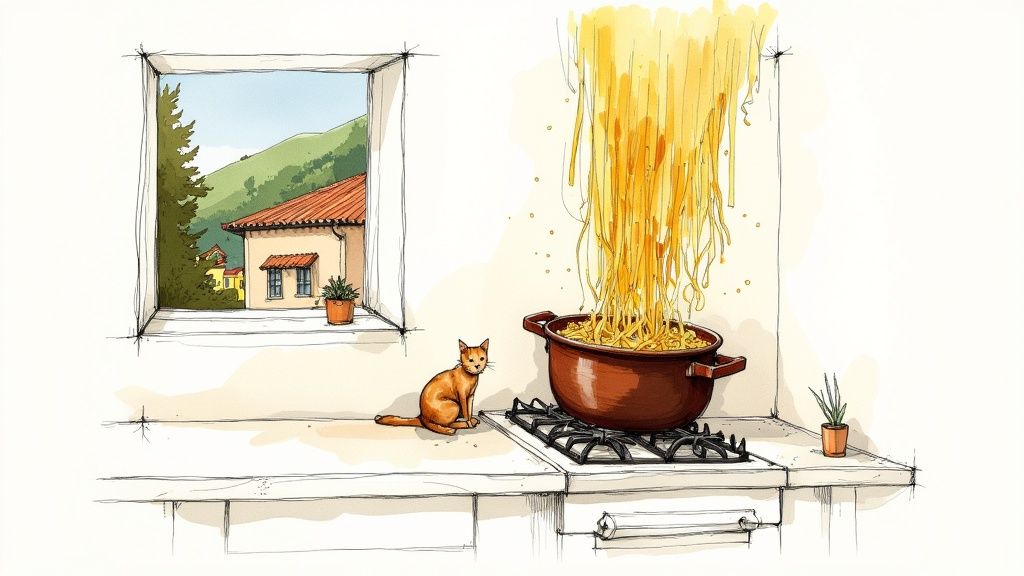
For generations, Strega Nona has been a staple on children's bookshelves, whisking readers away to a quaint village where a wise old woman helps her neighbors with all sorts of potions and cures. It's this beautiful blend of everyday village life and a sprinkle of magic that makes her world feel so real and inviting.
The story's appeal comes from its simple but surprisingly deep narrative. It’s one of those tales that works on many levels, much like other children's classics that explore big feelings through straightforward plots. You can see a similar kind of depth in our analysis of Where the Wild Things Are, where imagination becomes a tool for navigating complex emotions. In Strega Nona, a runaway pasta pot becomes the perfect vehicle for lessons that stick with you.
What Makes This Story a Classic
At its core, the book has all the right ingredients for a timeless story. You've got a wise, kind grandmotherly figure, a clumsy but well-meaning assistant, and a dash of magic that spirals wonderfully out of control. The image of pasta literally flooding an entire town is something no kid ever forgets.
Here's a quick rundown of what makes it so special:
- Relatable Characters: Strega Nona is the calm, all-knowing elder we all look up to, while Big Anthony perfectly captures that impatient curiosity that so often gets us into trouble.
- A Clear Moral: The story beautifully teaches the importance of listening and the pitfalls of taking shortcuts, all without ever feeling preachy.
- Humor and Heart: The pasta-pocalypse is genuinely funny, but the tale is grounded in the warmth of the community and Strega Nona’s gentle wisdom.
This folkloric quality, combined with Big Anthony’s bumbling and Strega Nona’s endearing ways, has captured the hearts of children and adults alike, securing its place as a beloved household favorite.
Strega Nona At a Glance
For anyone new to the story or just needing a quick recap, this table breaks down the essentials.
| Element | Description |
|---|---|
| Title | Strega Nona |
| Author & Illustrator | Tomie dePaola |
| Year Published | 1975 |
| Main Characters | Strega Nona, Big Anthony |
| Setting | A small village in Calabria, Italy |
| Key Themes | Listening to instructions, consequences, wisdom vs. haste |
It’s a simple setup, but it’s the foundation for a truly unforgettable tale.
A Legacy of Storytelling
First published in 1975, Strega Nona quickly became a defining work for author and illustrator Tomie dePaola. It was just one of over 250 books he created in a career that spanned more than 50 years—a remarkable achievement that cemented his place in children's literature history. You can learn more about his incredible catalog on the Simon & Schuster website.
Now, let's dig into what makes this particular book so special, from its unforgettable plot to the timeless themes bubbling just beneath the surface.
Meet the Storyteller Behind the Magic
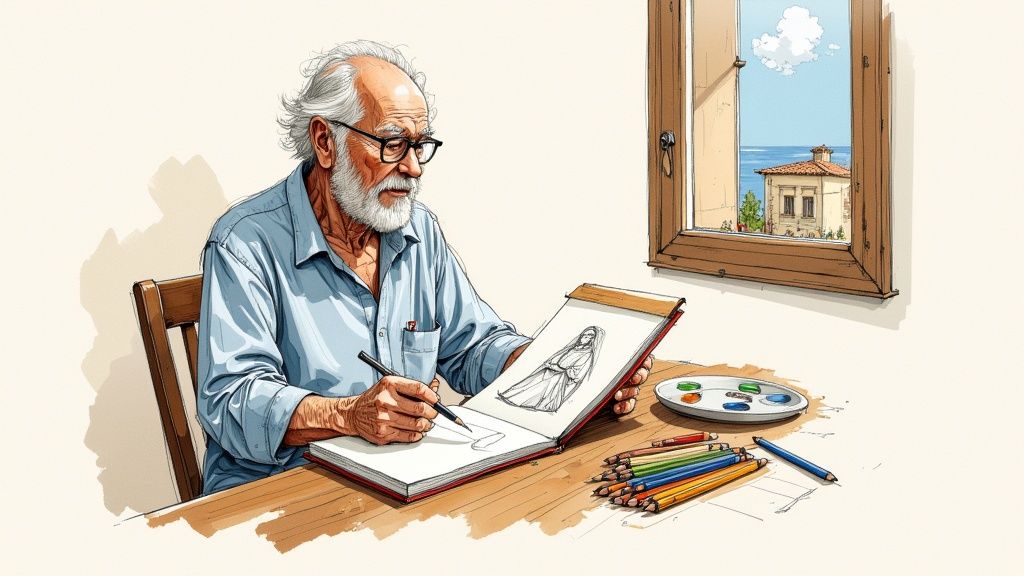
To really get the heart of Strega Nona, you have to meet the warm, creative spirit who brought her to life: Tomie dePaola. He wasn't just telling a story; with a career spanning more than five decades, dePaola was sharing a piece of his own heritage.
His work is a perfect example of how personal history makes for powerful storytelling. It reminds us that creating anything truly engaging, much like mastering the art of storytelling in recipes, needs a special touch. For dePaola, that special touch was his deep connection to his Italian roots.
This connection wasn't just a footnote in his biography—it was the ink in his pen and the color in his paints. The cozy village in Calabria, the wonderfully expressive faces of the townspeople, and even the name "Strega Nona" (Italian for "Grandma Witch") all sprang from his family’s history.
A Legacy Rooted in Family and Folklore
Born in 1934 in Meriden, Connecticut, Thomas Anthony "Tomie" dePaola grew up in a family of Irish and Italian descent. This cultural blend gave his artistic voice a unique warmth, filling his work with a love for community, tradition, and folklore that feels both deeply personal and universally understood.
He often talked about how his grandmothers and aunts were natural storytellers, weaving tales that lit up his childhood imagination. It’s easy to see reflections of these strong, nurturing women in Strega Nona herself—wise, kind, and the unshakable heart of her town.
"Why Strega Nona? It’s a picture book that’s like a hug."
This observation from Kerlan Collection curator Lisa Von Drasek just nails it. DePaola's books don't just tell stories; they wrap you in comfort and warmth, inviting you into a world that feels safe and familiar. Over his lifetime, he created more than 270 books, a stunning achievement that left a permanent mark on children's literature.
The Signature dePaola Artistic Style
Tomie dePaola's illustrations are just as famous as his stories. His unique style is recognizable from a mile away and is a huge part of why Strega Nona remains so beloved.
So, what makes his art so distinct?
- Soft, Muted Color Palettes: He often worked with gentle watercolors, giving his illustrations a timeless, folk-art feel.
- Expressive Character Designs: His characters have simple yet incredibly expressive faces. He could convey a world of emotion with just a few well-placed lines.
- Heartfelt Details: If you look closely at any page, you’ll find charming little details—a curious cat, a decorative border, or a tiny heart hidden somewhere in the drawing.
These elements come together to create a visual language that’s easy for young kids to understand but is also artistically rich. The pictures flow right from the text, propping up the story while adding extra layers of meaning and humor. He didn't just draw pictures; he built a world. This seamless blend of art and story is a hallmark of his genius and a key reason Strega Nona continues to win over new readers year after year.
A Tale of Mischief and Way Too Much Pasta
The story of Strega Nona kicks off in a quaint little cottage perched on a hill, overlooking a sunny town in Calabria, Italy. This is the home of Strega Nona, the town’s beloved “Grandma Witch.” She’s the one everyone turns to for a headache cure, a love potion, or a charm to get rid of warts. The townspeople absolutely adore her, but they’re also just a little bit afraid of her—especially when it comes to the mysterious, ever-full pasta pot she keeps in her kitchen.
One day, Strega Nona decides she could use some help around the house and garden. She puts up a sign and soon hires a young man named Big Anthony. He’s certainly eager to work, but he has one tiny problem: he just doesn't pay attention. Strega Nona gives him a simple list of chores, but she has one rule that is not to be broken.
"The one thing you must never do," she warned, "is touch the pasta pot."
Of course, this warning only makes the pot all the more fascinating to Big Anthony. He’s a good worker, but his imagination is completely captured by the magical pot. He finds himself peeking and spying, trying to figure out its secret.
The Secret Revealed
Then one evening, Big Anthony secretly watches as Strega Nona sings a special little rhyme to her pot. He sees her blow three kisses, and like magic, the pot starts bubbling over with delicious, steaming pasta. Stunned, he watches her serve herself a hearty dinner before she sings another rhyme and blows three more kisses to make the pot stop.
He is absolutely floored. He's convinced he has discovered the most incredible secret in the world. What he doesn't hear is the second, all-important part of the magic—the part about making it all stop.
Not long after, Strega Nona announces she’s heading over the mountain to visit her friend, Strega Amelia. She leaves Big Anthony in charge with one last reminder of her most important rule: do not touch the pasta pot. For Big Anthony, this is the moment he's been waiting for.
A Recipe for Disaster
The second Strega Nona is out of sight, Big Anthony decides it's his time to shine. He marches down to the town square, tells everyone he knows the secret of the magic pasta pot, and invites them all for a feast at Strega Nona's. The townspeople are a bit doubtful, but the thought of free pasta is just too tempting to pass up.
He confidently stands before the pot, recites the rhyme he overheard, and blows three kisses. To the absolute delight of the villagers, it works! The pot springs to life, churning out an endless stream of perfect pasta.
In an instant, Big Anthony is a hero. The villagers cheer his name and happily dig in. But as the pot keeps making more... and more... and more pasta, Big Anthony realizes he has a problem. A very big problem. He sings what he thinks is the second rhyme and blows three kisses, but nothing happens. The pasta just keeps coming.
The Pasta Flood
Panic starts to set in. The pasta spills out of the pot, across the floor, and right out the door. It flows down the cottage stairs and into the streets, a slow-moving river of spaghetti threatening to bury the entire town. The villagers drop their forks and flee in terror.
Just when all hope seems lost, Strega Nona returns. She takes one look at the chaos, calmly sings the correct rhyme, blows her three kisses, and at last, the pot stops.
The town is saved, but there's still the matter of Big Anthony's punishment. The furious villagers are ready to hang him, but Strega Nona has a much better idea.
- The Problem: Big Anthony created a pasta apocalypse that nearly destroyed the town.
- The Punishment: Instead of a harsh penalty, Strega Nona believes in a logical consequence.
- The Solution: She hands Big Anthony a fork and simply says, "The punishment must fit the crime."
The story closes with one of the most memorable images in children's literature: a very, very full Big Anthony, forced to eat his way through the mountain of pasta he created. He definitely learned a valuable lesson about listening and why you shouldn't take shortcuts.
Getting to Know the Memorable Characters
The real magic of Strega Nona isn't just a pasta pot—it lives and breathes in its wonderfully human characters. Tomie dePaola crafted personalities that feel both larger-than-life and deeply relatable, which is where the story's charm truly comes from. We don't just watch them; we get their motivations, frustrations, and victories on a personal level.
From the wise elder to the bumbling apprentice, each character has a specific, crucial role. They're the key ingredients that make the story's moral about consequences so memorable and easy for readers of all ages to understand.
Strega Nona, The Wise Grandmother
At the heart of the village, and the story itself, is Strega Nona. Her name might translate to "Grandma Witch," but she embodies so much more. She isn't some spooky, mysterious figure; she's the bedrock of her community—a calm, knowledgeable presence everyone trusts.
Strega Nona represents wisdom, tradition, and the value of hard-earned experience. Her magic isn't flashy or scary. It’s practical, used for things like healing headaches and solving everyday problems. She is the story's moral compass, showing patience and delivering justice that is firm but fair. Her decision to make Big Anthony eat all the pasta is a perfect example of a logical consequence, a teaching moment that's far more effective than just punishing him.
This entire dynamic is captured in the story's central plot, which all hinges on the secret she holds and the mistake that follows.
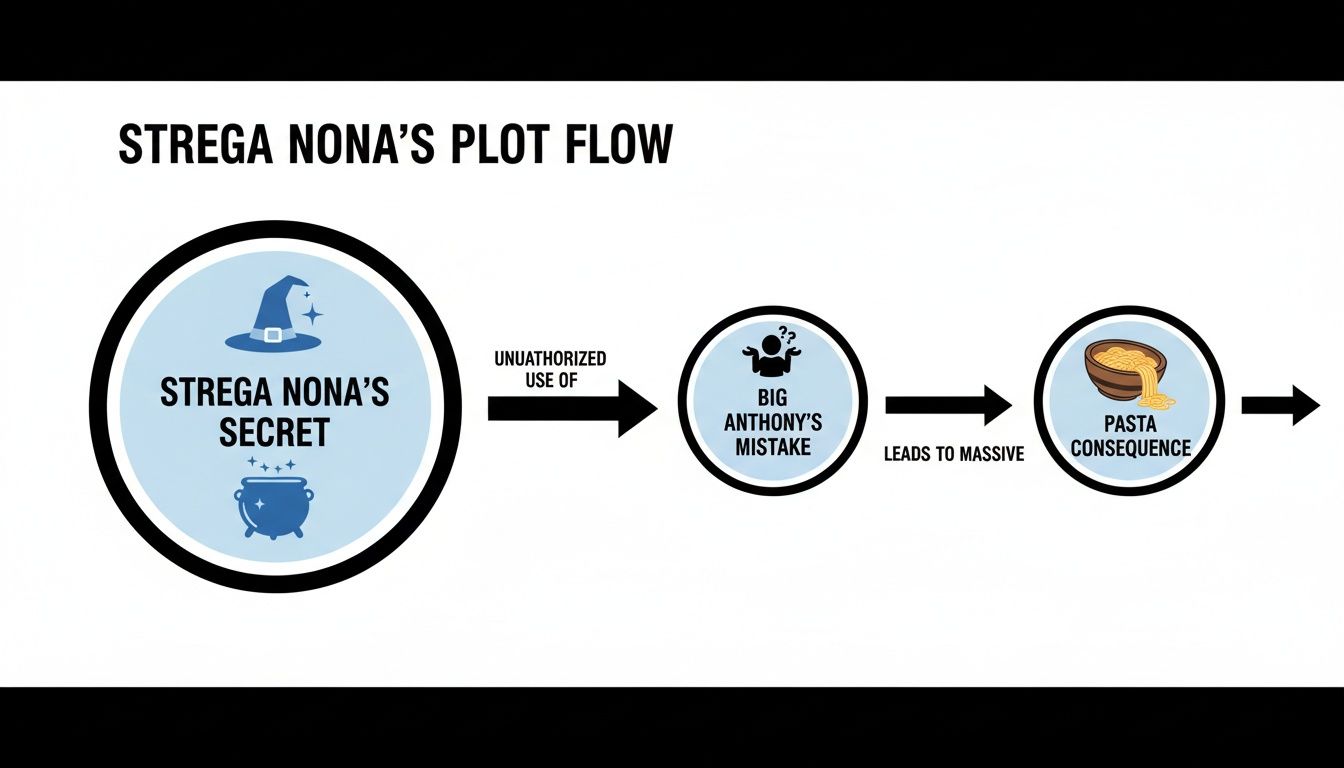
This simple flow—a hidden secret leading to a foolish mistake and then an overwhelming consequence—is the engine that drives the whole narrative.
Big Anthony, The Eager Apprentice
If Strega Nona is the voice of wisdom, Big Anthony is the embodiment of relatable human folly. He isn't a bad person, and his intentions are genuinely good. He just wants to impress the townspeople and maybe make life a little easier for them. His biggest flaw is one most of us share: impatience.
Big Anthony represents that temptation to find a shortcut, to get the reward without putting in the work. He overhears just enough of Strega Nona's secret to be dangerous, which highlights a key lesson: partial knowledge can be far more hazardous than no knowledge at all. He’s a classic example of a character whose eagerness outpaces his attention to detail, a trait you can find in other beloved literary figures. You can see similar themes of youthful impulsiveness in our deep dive into the classic novel Charlotte's Web.
His journey serves as a gentle, funny warning against the pitfalls of not listening to those with more experience.
The Townspeople, The Reflective Community
Though they don't have individual names, the townspeople of Calabria are a character in their own right. They stand in for the community at large and play a vital role in showing the ripple effects of one person's actions.
Their role shifts as the story unfolds:
- Initial Skepticism: At first, they doubt Big Anthony's claims, showing a healthy respect for Strega Nona's authority.
- Joyful Participation: The promise of free food quickly wins them over, and they happily celebrate his apparent genius.
- Shared Panic: When the pasta overflows, their celebration turns to collective terror. This shows how a single mistake can impact everyone.
- Demand for Justice: Their call for Big Anthony's punishment reflects a community's natural desire to restore order and fairness.
In the end, the townspeople learn the same lesson as Big Anthony. They benefit from Strega Nona's wisdom and witness firsthand why some secrets are best left in trusted hands. Their presence turns a personal mistake into a community-wide event.
Because these characters are so distinct and their roles so clear, they have become powerful teaching tools. The recognizable story elements have been used in countless classroom lesson plans, with dozens of guides available from educational publishers. You can explore more about the author's legacy and the book's impact in this tribute to Tomie dePaola. Together, these three character archetypes—the wise elder, the impulsive youth, and the watchful community—create a perfectly balanced tale that continues to connect with readers.
The Life Lessons Simmering in the Pot
Sure, the image of a town drowning in pasta is hilarious, but beneath all that delightful chaos, Strega Nona is simmering with some pretty hefty life lessons. On the surface, it's a simple, charming story. But Tomie dePaola was a master at weaving deep, meaningful morals into the fabric of his folktales. He gently guides young readers to understand that actions have consequences, and he does it in a way they'll never forget.
The biggest takeaway, of course, is the importance of listening to your elders. Strega Nona’s rule about the pasta pot isn't just random. Her warning comes from a place of wisdom and experience. When Big Anthony ignores her, he finds out the hard way that her instructions were meant to protect him—and the entire town—not to hold him back. It’s a classic reminder that the guidance we get from those who've been around longer is a gift.
The Problem with Shortcuts
Another big theme is the trap of looking for easy shortcuts. Big Anthony doesn’t want to put in the time and effort to earn the town's respect; he wants the instant fame that Strega Nona's magic promises. His decision to fire up the pot is a perfect example of wanting the prize without running the race, a feeling we can all relate to.
The overflowing pasta becomes this incredible visual for his mistake. What starts as a brilliant shortcut quickly turns into an out-of-control disaster. It's a fantastic way to show that the "easy way" often ends up being the most destructive. The story makes it clear that real respect and skill come from patience and learning, not from taking what you haven't earned.
Big Anthony’s pasta predicament isn’t just a funny accident; it’s a walking, talking lesson in cause and effect. His impatience and failure to listen lead directly to a consequence he literally has to eat his way out of.
This is what makes the story's approach to consequences so brilliant. Strega Nona doesn’t just wag her finger at him. His punishment is the logical result of the mess he made. It perfectly illustrates the concept of accountability: if you make the mess, you have to be the one to clean it up.
Wisdom is Earned, Not Overheard
Finally, the story makes a powerful case for the idea that wisdom is something you earn over time. Strega Nona’s magic isn’t just about reciting a few secret words. It’s about understanding the responsibility that comes with that power. She knows the full rhyme—how to start and stop the pot—because her knowledge is complete.
Big Anthony, on the other hand, only has a piece of the puzzle. He overhears the first part of the spell but misses the most important part at the end. This really drives home a few key truths for young readers:
- A Little Knowledge Can Be a Dangerous Thing: Knowing just enough to get started without knowing how to stop is a recipe for disaster.
- Real Wisdom is the Whole Picture: Strega Nona's power comes from understanding the magic from start to finish.
- You Have to Respect the Process: The story highlights how crucial it is to learn something completely, not just grab for the exciting parts.
With these themes woven together, Strega Nona becomes much more than just a sweet folktale. It’s a timeless fable about listening, the dangers of impatience, and the quiet strength of true wisdom. These lessons are delivered with so much humor and heart that they stick with you long after you've closed the book.
Bringing the Story to Life with Fun Activities
The magic of Strega Nona doesn’t have to end when you close the book. When you bring the story into the real world with hands-on projects, you help young readers connect with the story and its lessons on a much deeper level.
These activities are designed to be fun and engaging, but they’re secretly educational, too. Extending the story through interaction is a fantastic way to boost comprehension and memory. To get those creative juices flowing, exploring different play-based learning activities can make Strega Nona's world feel real and tangible for children.
Craft Your Own Pasta Pot Adventure
Let's be honest, the most memorable part of the story is the pasta! Recreating the overflowing pasta pot is the perfect place to start. You don’t even need real pasta—everyday craft supplies work wonders for sparking a child's imagination.
Here are a few simple ideas to get you started:
- Yarn Spaghetti: Give kids a paper bowl (the "pot") and some yellow or white yarn. They can cut up "spaghetti" and try to fill their pots, just like in the story.
- Play-Doh Pasta: Using play-doh, children can roll out their own pasta shapes. This is not only fun but also a great activity for developing their fine motor skills.
- Draw the Overflow: Grab some big sheets of paper and crayons and ask them to draw Big Anthony’s pasta flood. Encourage them to fill the entire page with noodles covering the town!
These simple, hands-on projects help children process the story's events in a new way. They can even add a little drawing of a worried-looking Big Anthony or Strega Nona coming to the rescue.
Map the Story and Discuss the Moral
For kids who are a little bit older, visual storytelling tools are excellent for cementing what they’ve read. Making a story map helps them understand sequence and cause-and-effect, which are building blocks for good reading comprehension. Better yet, these visual aids create a natural starting point for talking about the book's main themes.
A story map is a visual organizer that helps students learn the elements of a book or story. By identifying characters, plot, setting, problem, and solution, students read carefully to learn the details.
Here’s a simple structure you can follow:
- Beginning: Draw Strega Nona warning Big Anthony not to touch her magic pasta pot.
- Middle: Illustrate Big Anthony singing the spell and the pasta starting to overflow.
- End: Show Strega Nona returning to a town full of pasta and making Big Anthony eat it all.
Once the map is finished, use it to start a conversation. Ask open-ended questions like, "Why do you think Big Anthony didn't listen?" or "What would have been a better choice for him to make?"
Discussing these points is a powerful way to build understanding. For more ideas on how to guide these chats, check out our guide on reading comprehension strategies for teachers. These activities can transform a simple reading session into a memorable, interactive lesson.
A Few Common Questions About Strega Nona
After enchanting families and classrooms for nearly 50 years, it's no surprise that Strega Nona gets people talking. It’s one of those timeless classics that sparks a little curiosity every time you turn the page.
Here are some of the most common questions that pop up, whether you're reading it for the first time or the fiftieth.
What Does "Strega Nona" Actually Mean?
It's simpler than you might think! In Italian, "Strega Nona" translates directly to "Grandma Witch." And honestly, no name could fit her better.
She isn't the spooky, scary kind of witch. She’s the wise, grandmotherly heart of her village in Calabria, using her special brand of folk magic to help everyone around her. The name itself shows the warmth and respect the townspeople have for her—they see a comforting elder just as much as a magical helper.
Is Strega Nona a Real Folktale?
This is a great question, and the answer is a wonderful mix of yes and no. Tomie dePaola created the character of Strega Nona and her unique story himself. But, the idea behind the plot has very deep roots.
The story is a new spin on a classic folktale type known as "The Magic Mill." You can find versions of this story in cultures all over the world, usually featuring some magical object—a pot, a mill, a table—that creates endless food but causes total chaos when someone uses it without permission. DePaola took that ancient idea and gave it a distinctly Italian heart and characters we’ll never forget.
Tomie dePaola’s goal was to craft a story that felt like an old Italian folktale. He wove together threads from his own heritage with classic storytelling to create something that feels both brand new and comfortingly familiar.
What Is the Moral of the Story?
Strega Nona is packed with simple, powerful lessons that really stick with kids. At its core, the book is all about listening to your elders and the trouble that comes from trying to take shortcuts.
You can boil it down to a few key takeaways:
- Respect Wisdom: Big Anthony finds out the hard way that Strega Nona’s rules are there for a reason.
- Actions Have Consequences: His punishment of having to eat every last bit of pasta is a perfect, logical outcome that teaches him about accountability.
- Patience is a Virtue: The story is a gentle reminder that trying to get ahead quickly often creates much bigger problems than it solves.
Where Does the Story Take Place?
The story is set in Calabria, a beautiful region in Southern Italy. This was a deeply personal choice for Tomie dePaola, as it was where his own family came from.
By setting the story in a real place, he grounded all the magic in a world that felt warm and authentic. His illustrations are filled with little details that bring a sun-drenched Italian village to life, from the buildings to the countryside, making the setting a character all on its own.
At Number 6 Publishing, we believe stories like Strega Nona are essential for building a lifelong love of reading. Explore our collection of curated books and discover your family’s next favorite adventure at https://www.number6publishing.com.