
Navigating the teenage years is a complex journey of self-discovery, and the right book can feel like a trusted friend, a wise mentor, or a window into a world beyond one's own. For parents and educators, finding stories that resonate, challenge, and inspire young readers is more important than ever. This isn't just about fulfilling a reading assignment; it's about connecting teens with narratives that tackle real-world issues, celebrate diverse voices, and explore the universal questions of identity and belonging.
The challenge is sifting through endless options to find the true gems. That's why we've curated this definitive list of must-read books for teens. Each selection has been chosen for its literary merit, cultural impact, and ability to spark meaningful conversations. From modern classics addressing social justice to timeless tales of first love and fantastical heists, this guide provides more than just a summary.
We'll dive into recommended age ranges, key discussion prompts for parents and teachers, and important content notes to help you make informed choices. Many of the books on this list delve into complex characters and situations, providing rich opportunities for young readers to cultivate empathy and learn practical strategies for teaching emotional intelligence.
Consider this your roadmap to building a library that not only entertains but also empowers the next generation of thinkers, dreamers, and leaders. Here at Number 6 Publishing, we believe in the power of stories like these, which is why we're dedicated to helping families discover books that matter.
1. The Hate U Give - Angie Thomas
Angie Thomas's groundbreaking novel, The Hate U Give, is an essential modern classic and unequivocally one of the must read books for teens today. The story follows Starr Carter, a sixteen-year-old girl who lives in a poor, predominantly Black neighborhood but attends a wealthy, mostly white private school. This delicate balance is shattered when she witnesses the fatal police shooting of her unarmed childhood friend, Khalil.

The novel powerfully explores themes of systemic racism, identity, and activism through Starr's first-person narration. Readers experience her grief, fear, and ultimate decision to find her voice and speak out against injustice, navigating the complex social dynamics between her two worlds.
Why It's a Must-Read
The Hate U Give provides a crucial and accessible entry point for teens to understand contemporary social justice issues. It masterfully balances a gripping, emotionally charged plot with nuanced discussions on code-switching, police brutality, and community solidarity.
- Recommended Age: 14+
- Key Themes: Racial injustice, identity, activism, grief, community, code-switching.
- Content Considerations: Contains profanity, depictions of violence, and mature themes related to racism and police brutality that may be upsetting for some readers.
Discussion & Teaching Prompts
This book opens the door for vital conversations between parents, educators, and teens. Use these prompts to guide discussion:
- Discuss Starr's struggle to balance her two identities. Why does she feel the need to "code-switch" between her neighborhood and her school?
- Analyze the meaning of the title, which comes from Tupac Shakur's "THUG LIFE" concept ("The Hate U Give Little Infants F**** Everybody"). How does this idea play out in the novel's events?
- Examine the role of the media in shaping the public's perception of Khalil's death. How does this compare to real-world events?
The 2018 film adaptation further cemented the book's cultural impact, providing another medium for families and classrooms to explore its important themes.
2. The Fault in Our Stars - John Green
John Green's modern masterpiece, The Fault in Our Stars, remains one of the most impactful and must read books for teens, blending heart-wrenching emotion with sharp, intelligent humor. The novel introduces readers to Hazel Grace Lancaster, a sixteen-year-old living with thyroid cancer that has spread to her lungs. Her life changes when she meets Augustus "Gus" Waters, a charming and witty boy in remission, at a cancer support group.
What follows is an unforgettable love story that fearlessly confronts the realities of life, death, and illness. Through Hazel's sardonic and profound narration, the book explores big questions about meaning, legacy, and the nature of infinity, all while capturing the authentic voice of contemporary teenagers.
Why It's a Must-Read
The Fault in Our Stars handles its heavy subject matter with remarkable grace and wit, refusing to romanticize illness while still delivering a powerful romance. It teaches teens about empathy, resilience, and the importance of finding joy in the present moment, making it a staple on high school reading lists and a global bestseller.
- Recommended Age: 14+
- Key Themes: Mortality, love, meaning, grief, identity, illness.
- Content Considerations: Contains mature themes related to terminal illness, death, and some profanity. The emotional content can be intense and deeply moving.
Discussion & Teaching Prompts
The novel provides a rich foundation for conversations about life's most profound questions. Use these prompts to start a dialogue:
- Discuss Hazel and Gus's different views on leaving a legacy. What does it mean to live a meaningful life, according to the book?
- Analyze the role of humor throughout the story. How do the characters use wit and sarcasm to cope with their circumstances?
- Hazel is often frustrated by clichés surrounding cancer. How does the book challenge or subvert typical "sick lit" tropes? For more titles that balance romance and deep themes, explore our list of the best young adult romance books.
The widely acclaimed 2014 film adaptation, starring Shailene Woodley and Ansel Elgort, brought the story to an even broader audience and serves as an excellent companion to the novel.
3. The Book Thief - Markus Zusak
Markus Zusak's poignant historical novel, The Book Thief, is a profoundly moving story that has earned its place as one of the essential must read books for teens. Set in Nazi Germany, the story follows young Liesel Meminger, a foster girl who finds solace from the horrors around her by stealing books. Narrated by the haunting yet compassionate voice of Death, the novel explores the immense power of words to both destroy and to heal.
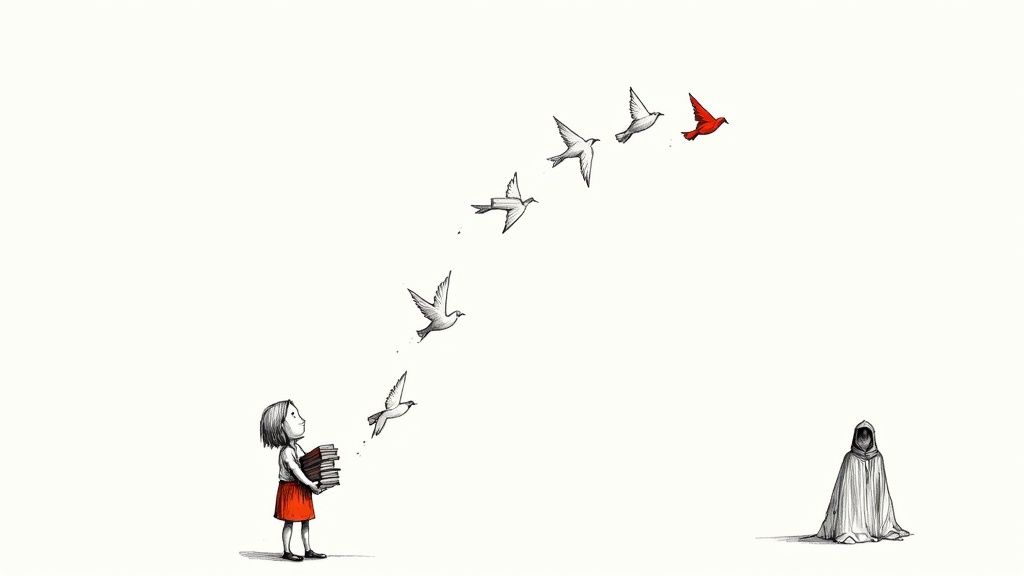
The narrative beautifully captures Liesel's relationships with her foster parents, her friend Rudy, and Max, the Jewish man her family hides in their basement. Through these connections, Zusak paints a powerful picture of human resilience, kindness, and the quiet acts of rebellion that can flourish even in the darkest of times.
Why It's a Must-Read
The Book Thief offers teens a unique and accessible lens through which to view the Holocaust, focusing on the lives of ordinary Germans rather than soldiers or direct victims in concentration camps. The unique narration and lyrical prose elevate a difficult subject, making historical events feel immediate and deeply personal, highlighting the humanity that persists against all odds.
- Recommended Age: 14+
- Key Themes: The power of words, mortality, love, loss, courage, humanity.
- Content Considerations: Contains mature themes related to war, death, the Holocaust, and some profanity. The subject matter is emotionally intense and may be disturbing for younger or more sensitive readers.
Discussion & Teaching Prompts
The novel's unique perspective provides rich ground for deep conversations. Consider these prompts:
- Why do you think the author chose Death as the narrator? How does this narrative choice affect your reading of the story and its events?
- Discuss the role of books and words in Liesel's life. How do they serve as both a form of rebellion and a source of comfort?
- Analyze the acts of kindness and courage shown by characters like Hans Hubermann. What do these actions say about human nature in times of extreme adversity?
As a beloved example of young adult historical fiction, this book is a staple in many classrooms and was adapted into a compelling film in 2013. For more titles in this genre, you can explore other great historical fiction books for young adults.
4. Simon vs. the Homo Sapiens Agenda - Becky Albertalli
Becky Albertalli’s debut novel, Simon vs. the Homo Sapiens Agenda, is a heartwarming and important contemporary story that has become a staple in young adult literature. The book introduces readers to Simon Spier, a sixteen-year-old who is navigating high school, friendship, and family, all while keeping a big secret: he’s gay. When an email falls into the wrong hands, he finds himself being blackmailed and must protect his identity while trying to uncover the identity of the anonymous classmate he’s fallen for online.
The novel is celebrated for its authentic voice, humor, and tender exploration of first love and identity. It handles the difficult experience of being outed with sensitivity while delivering a charming and relatable coming-of-age narrative. Simon's story is a powerful reminder that everyone deserves a great love story, regardless of their identity.
Why It's a Must-Read
This book is one of the essential must read books for teens because it offers a joyful, affirming, and mainstream portrayal of an LGBTQ+ character. It normalizes queer romance and identity for all readers, fostering empathy and understanding. The mystery of Simon's online love interest, "Blue," keeps the plot engaging and fun.
- Recommended Age: 13+
- Key Themes: Identity, sexuality, acceptance, friendship, love, blackmail, digital communication.
- Content Considerations: Contains some profanity, underage drinking, and mature discussions about sexuality and homophobia that may be sensitive for some readers.
Discussion & Teaching Prompts
This novel provides an excellent opportunity to discuss friendship, identity, and the digital world with teens.
- Discuss the role of online anonymity in Simon and Blue's relationship. How did it allow them to be more honest with each other?
- Analyze Simon’s reaction to being blackmailed. How do his fears about coming out shape his decisions throughout the book?
- Talk about the importance of allies. Which characters in the book acted as strong allies for Simon, and what did their support look like?
The book’s massive popularity led to the successful 2018 film adaptation, Love, Simon, which brought its inclusive message to an even wider audience and remains a beloved teen movie.
5. The Outsiders - S.E. Hinton
A pioneering work of young adult fiction, S.E. Hinton's The Outsiders is a timeless classic and an enduring entry on any list of must read books for teens. Famously written when Hinton was just a teenager herself, the novel tells the story of Ponyboy Curtis and the fierce rivalry between his gang, the Greasers, and their wealthy counterparts, the Socs.
The book’s raw and authentic voice captures the turbulent emotions of adolescence, exploring themes of socioeconomic division, chosen family, and the loss of innocence. When a violent confrontation forces Ponyboy and his friend Johnny to go on the run, they must confront the harsh realities of their world and the true meaning of heroism.
Why It's a Must-Read
The Outsiders essentially created the blueprint for the modern young adult genre by treating teenage struggles with seriousness and empathy. Its exploration of class conflict and the universal search for belonging remains profoundly relevant, resonating with young readers who feel like they are on the fringes of society.
- Recommended Age: 12+
- Key Themes: Social class, loyalty, chosen family, identity, violence, loss of innocence.
- Content Considerations: Contains depictions of gang violence, underage smoking and drinking, and character deaths that may be intense for younger readers.
Discussion & Teaching Prompts
A staple in American classrooms for decades, this novel provides rich ground for discussion about social structures and personal identity.
- Discuss the meaning of the labels "Greaser" and "Socs." How do these labels define the characters, and how do characters like Ponyboy and Cherry Valance challenge them?
- Analyze Ponyboy's appreciation for sunsets and literature. What do these interests reveal about his character and his desire to see beyond the conflict?
- Explore Johnny's famous last words, "Stay gold, Ponyboy. Stay gold." What does he mean, and how does this idea connect to the Robert Frost poem mentioned in the book?
The iconic 1983 film adaptation by Francis Ford Coppola helped cement the book's status as a cultural touchstone, introducing its unforgettable characters to a new generation.
6. Eleanor & Park - Rainbow Rowell
Rainbow Rowell’s beloved contemporary romance, Eleanor & Park, captures the tender, awkward, and all-consuming nature of first love. Set over the course of the 1986 school year, the story introduces two sixteen-year-old misfits. Eleanor is the new girl, with a chaotic family life and a style that makes her an immediate target for bullies. Park is a quiet, half-Korean boy who finds solace in his comic books and music. Their connection blossoms slowly on the school bus, a shared world built over X-Men comics and mixtapes.
The novel is celebrated for its authentic portrayal of teenage vulnerability and its focus on two protagonists who don't fit conventional molds. Rowell masterfully explores themes of body image, racial identity, and domestic abuse, all while telling a love story that feels intensely real and deeply moving. It’s a powerful narrative about finding one person who sees you when no one else does.
Why It's a Must-Read
Eleanor & Park is one of the essential must read books for teens because it offers a realistic and empathetic look at love and hardship. It champions unconventional heroes, showing readers that everyone, regardless of their appearance or background, is worthy of love and acceptance. Its nostalgic 80s setting adds a unique charm that has made it a massive favorite on platforms like BookTok.
- Recommended Age: 14+
- Key Themes: First love, identity, bullying, family dysfunction, body image, social acceptance.
- Content Considerations: Contains strong language, discussions of child abuse, and mature themes that may be difficult for some readers. It has faced some controversy and has been challenged in some school libraries.
Discussion & Teaching Prompts
This book provides a rich landscape for discussing complex emotional and social issues with teenagers. Consider these prompts for conversation:
- Discuss how Eleanor and Park’s shared interests (music, comics) help them build a connection. How do these external things help them express their internal feelings?
- Analyze the ways both Eleanor and Park feel like outsiders. How do their family backgrounds shape their perspectives and their relationship?
- Examine the novel's ending. Why do you think Rainbow Rowell chose to leave it ambiguous? What do you imagine the "three words" were?
The book’s enduring popularity and the planned film adaptation continue to introduce its poignant story to new generations of young readers.
7. The Perks of Being a Wallflower - Stephen Chbosky
Stephen Chbosky's epistolary novel, The Perks of Being a Wallflower, offers an intimate and poignant look into the mind of a high school freshman named Charlie. The story unfolds through a series of letters Charlie writes to an anonymous "friend," detailing his experiences as he navigates the tumultuous landscape of first dates, new friendships, family drama, and personal trauma.
The novel bravely tackles complex themes of mental health, including depression, PTSD, and social anxiety, alongside the universal struggles of adolescence. As Charlie finds a sense of belonging with a group of senior friends, he begins to confront the past that haunts him, making this a powerful and unforgettable coming-of-age story.
Why It's a Must-Read
The Perks of Being a Wallflower is an essential read for its honest and compassionate portrayal of adolescent mental health. It validates the feelings of loneliness and anxiety many teens experience, showing them they are not alone. The book serves as a crucial starting point for conversations about difficult topics in a way that feels authentic and non-judgmental.
- Recommended Age: 14+
- Key Themes: Mental health, friendship, trauma, belonging, sexuality, coming-of-age.
- Content Considerations: Contains mature themes including sexual abuse, suicide, drug use, and underage drinking. It is frequently challenged and requires careful consideration for younger or sensitive readers.
Discussion & Teaching Prompts
This novel provides a powerful opportunity to discuss empathy and the importance of mental health support.
- Charlie's letters are addressed to an anonymous "friend." Why do you think he chose this format to tell his story? How does it affect your experience as a reader?
- Discuss the meaning of the phrase "we accept the love we think we deserve." How do different characters in the book demonstrate this idea?
- Charlie is a "wallflower," an observer. What are the pros and cons of this perspective, and how does he grow beyond it by the end of the novel?
The popular 2012 film adaptation, also written and directed by Chbosky, provides an excellent visual companion to the book, further exploring its emotional depth.
8. Six of Crows - Leigh Bardugo
Leigh Bardugo's Six of Crows is a masterful fantasy heist novel that has captivated a massive global audience, making it one of the top must read books for teens. The story plunges readers into the gritty city of Ketterdam, where criminal prodigy Kaz Brekker assembles a crew of six dangerous outcasts for an impossible mission. Their goal: to break into the impenetrable Ice Court and retrieve a valuable hostage.
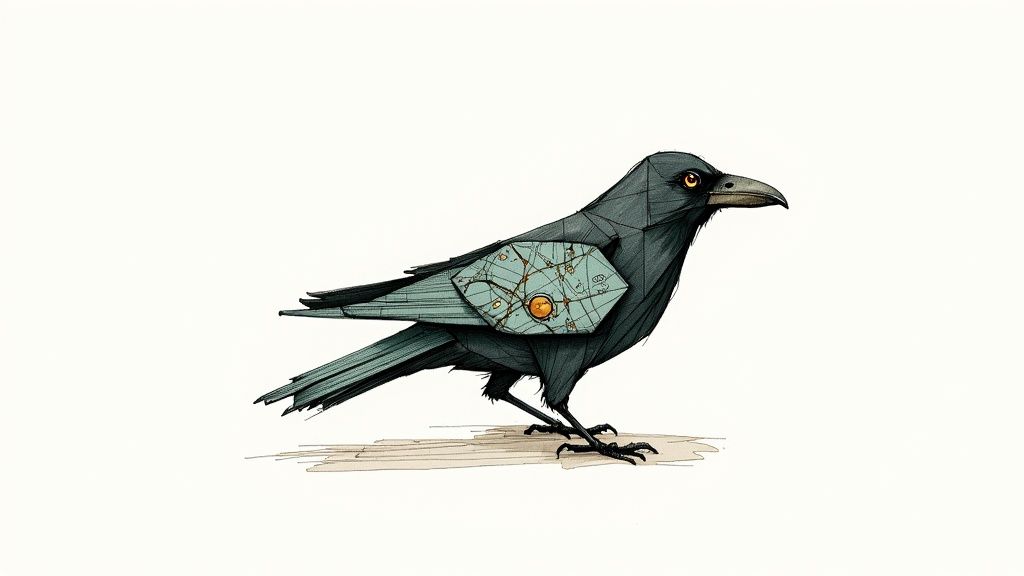
This thrilling narrative is driven by its complex, morally gray characters, each with a traumatic past that shapes their present. Bardugo expertly weaves together multiple points of view, building a rich world while exploring deep themes of found family, trauma, redemption, and loyalty. The diverse cast features LGBTQ+ representation and characters with disabilities, showcasing that strength and value come in many forms.
Why It's a Must-Read
Six of Crows offers more than just high-stakes fantasy escapism; it provides a profound look at how people scarred by their pasts can find belonging and purpose together. Its intricate plot and beloved characters have made it a phenomenon in online communities like BookTok, introducing a new generation to complex world-building. For more excellent YA fantasy titles, explore the best YA fantasy books from Number 6.
- Recommended Age: 14+
- Key Themes: Found family, trauma, redemption, loyalty, heist, moral ambiguity.
- Content Considerations: Contains violence, descriptions of past trauma (including abuse and human trafficking), and mature themes that may be difficult for some readers.
Discussion & Teaching Prompts
The novel's intricate character dynamics and moral questions are perfect for sparking deeper conversations.
- Discuss the concept of a "found family" versus a biological one. How does the Crows' loyalty to each other define them more than their pasts?
- Analyze Kaz Brekker's motto, "no mourners, no funerals." What does this reveal about his character and the world he lives in?
- Each character has a deep trauma they are dealing with. How do these past experiences influence their actions and decisions during the heist?
The story continues in the sequel, Crooked Kingdom, and has been adapted as part of the Netflix series Shadow and Bone, further expanding the reach of this unforgettable crew.
9. They Both Die at the End - Adam Silvera
Adam Silvera's heart-wrenching yet life-affirming novel, They Both Die at the End, has become a touchstone for modern young adult fiction. The story is set in a near-future world where an organization called Death-Cast can predict a person's death and notifies them on their final day. We meet Mateo Torrez and Rufus Emeterio, two teenagers who receive "the call" and, seeking a final connection, find each other through the Last Friend app.
The novel chronicles their last 24 hours as they embark on an adventure across New York City, forming a deep bond and falling in love. Despite the spoiler in the title, the narrative is a gripping and emotional exploration of what it means to truly live, even when faced with the inevitable end. It beautifully handles themes of mortality, love, grief, and the profound impact of human connection.
Why It's a Must-Read
This novel is one of the most poignant must read books for teens because it reframes the conversation around death to be a conversation about life. It challenges readers to consider how they would spend their final hours and what truly matters. Silvera's masterful storytelling makes a foregone conclusion feel urgent, suspenseful, and deeply moving.
- Recommended Age: 14+
- Key Themes: Mortality, love, friendship, grief, living in the moment, LGBTQ+ identity.
- Content Considerations: Deals heavily with themes of death and dying, which can be emotionally intense. Contains some profanity and depictions of violence.
Discussion & Teaching Prompts
The book provides a powerful springboard for deep conversations about life's biggest questions. Use these prompts to start a discussion:
- Knowing the ending from the start, how does this affect your reading experience? Does it make the characters' journey more or less meaningful?
- Discuss the role of technology like the Last Friend app. Is it a positive or negative force in the characters' world?
- Analyze the central message of the novel. What does it teach readers about living fully, forging connections, and facing fear?
The book's immense popularity, particularly within LGBTQ+ book communities, led to a prequel, The First to Die at the End, allowing readers to further explore its unique and thought-provoking world.
10. Speak - Laurie Halse Anderson
Laurie Halse Anderson's landmark novel, Speak, remains a profoundly important and brave entry on any list of must read books for teens. Published in 1999, its story of trauma and recovery is as relevant today as ever. The novel introduces us to high school freshman Melinda Sordino, who has become an outcast after she called the police on a summer party. Shunned by her friends and unable to communicate with her parents, she stops speaking almost entirely.
Through her internal monologue, the reader learns the truth: Melinda was sexually assaulted at the party. The book chronicles her painful first year of high school as she processes her trauma, navigates social isolation, and ultimately finds the courage to reclaim her voice and speak her truth.
Why It's a Must-Read
Speak offers an unflinching, honest, and sensitive portrayal of the aftermath of sexual assault. It validates the complex and often silent struggle of survivors, making it an essential tool for building empathy and understanding among young readers. Melinda's journey through art class provides a powerful metaphor for healing and self-expression.
- Recommended Age: 14+
- Key Themes: Sexual assault, trauma, mental health, isolation, finding your voice, art as therapy.
- Content Considerations: Contains mature themes including sexual assault, depression, and self-harm. Its direct handling of these topics has led it to be both required reading in some schools and challenged in others.
Discussion & Teaching Prompts
The novel is a vital catalyst for conversations about consent, trauma, and the importance of support systems.
- Discuss the symbolism of the tree in Melinda's art project. How does her ability to draw the tree reflect her own journey of healing and growth throughout the school year?
- Why do you think Melinda chooses to stop speaking? What does her silence represent, and what does it take for her to finally break it?
- Analyze the reactions of other characters (friends, teachers, parents) to Melinda's silence. How does the book show the ways adults and peers can fail to see the signs of trauma?
The powerful 2004 film adaptation, starring Kristen Stewart, offers another accessible way for older teens and families to engage with this critical story.
Top 10 Teen Must-Reads Comparison
| Title | Reading complexity (🔄) | Time & emotional commitment (⚡) | Expected outcomes / Impact (📊) | Ideal use cases / Audience (💡) | Key advantages (⭐) |
|---|---|---|---|---|---|
| The Hate U Give — Angie Thomas | Moderate (dual perspective, contemporary language) 🔄 | Moderate time; emotionally intense ⚡ | Promotes discussion on racial injustice and activism 📊 | High school curricula, book clubs on social justice 💡 | Powerful voice; relatable protagonist; timely themes ⭐⭐⭐⭐ |
| The Fault in Our Stars — John Green | Accessible with philosophical elements 🔄 | Moderate time; emotionally heavy ⚡ | Encourages reflection on mortality, meaning, empathy 📊 | Teen readers, discussions on grief and legacy 💡 | Balances humor and emotion; highly quotable ⭐⭐⭐⭐ |
| The Book Thief — Markus Zusak | High (dense structure, historical context, unique narrator) 🔄 | Longer read; emotionally demanding ⚡ | Deepens historical understanding; fosters empathy and literary appreciation 📊 | High-school literature/history classes, historical-fiction readers 💡 | Lyrical prose; profound themes about words and courage ⭐⭐⭐⭐ |
| Simon vs. the Homo Sapiens Agenda — Becky Albertalli | Low (contemporary, accessible voice) 🔄 | Short–moderate time; light to emotional moments ⚡ | Normalizes LGBTQ+ teen experiences; encourages acceptance 📊 | LGBTQ+ teens, school libraries, coming-out discussions 💡 | Positive representation; humorous and heartful storytelling ⭐⭐⭐ |
| The Outsiders — S.E. Hinton | Low (straightforward teen voice; classic) 🔄 | Moderate time; emotionally direct ⚡ | Explores class, identity, belonging; foundational YA impact 📊 | Middle/high school curricula; discussions on social pressure 💡 | Authentic teen perspective; genre-defining classic ⭐⭐⭐⭐ |
| Eleanor & Park — Rainbow Rowell | Moderate (alternating POV; cultural context) 🔄 | Moderate time; emotionally resonant ⚡ | Affirms marginalized identities; portrays first-love complexity 📊 | Readers seeking diverse protagonists; discussions on body image 💡 | Emotional depth; realistic voices; diverse representation ⭐⭐⭐ |
| The Perks of Being a Wallflower — Stephen Chbosky | Moderate (epistolary, non-linear revealing of trauma) 🔄 | Moderate length; high emotional intensity; triggers possible ⚡ | Validates teen mental health; encourages seeking support 📊 | Mental-health discussions, support groups, classrooms with content warnings 💡 | Sensitive trauma portrayal; emphasizes friendship and recovery ⭐⭐⭐⭐ |
| Six of Crows — Leigh Bardugo | High (complex heist, multiple POVs, worldbuilding) 🔄 | Series commitment; fast-paced and immersive ⚡ | Offers escapist entertainment; highlights diversity and found family 📊 | Fans of fantasy/heist stories; readers seeking ensemble casts 💡 | Complex characters; diverse representation; addictive plot ⭐⭐⭐⭐ |
| They Both Die at the End — Adam Silvera | Moderate (speculative premise; real-time narrative) 🔄 | Short timeframe but emotionally heavy ⚡ | Prompts reflection on mortality, choices, connection 📊 | Book clubs, philosophical discussions, LGBTQ+ teen readers 💡 | Thought-provoking premise; emotional resonance ⭐⭐⭐ |
| Speak — Laurie Halse Anderson | Moderate (direct voice; trauma-focused) 🔄 | Short–moderate length; emotionally intense and potentially triggering ⚡ | Educates on sexual assault, consent; supports survivor validation 📊 | Sex-assault education, school curricula with support resources 💡 | Compassionate, realistic portrayal; strong educational value ⭐⭐⭐⭐ |
Turn the Page: Cultivating a Lifelong Love of Reading
The journey through adolescence is a complex, transformative, and often confusing time. The ten must read books for teens we've explored in this list are more than just stories; they are companions, guides, and mirrors. Each title, from the timeless class struggles in The Outsiders to the urgent social commentary of The Hate U Give, provides a unique opportunity for young readers to see the world, and themselves, from a new perspective.
These books act as powerful catalysts for conversation and empathy. When a teen reads about Charlie's struggles in The Perks of Being a Wallflower or Simon's journey of self-acceptance in Simon vs. the Homo Sapiens Agenda, they are not just consuming a plot. They are engaging with authentic human experiences, learning to navigate complex emotions, and building a vocabulary for their own feelings. This literary engagement is a critical tool for developing the emotional intelligence and critical thinking skills necessary for a healthy, well-adjusted adulthood.
From Reading List to Reading Life
Simply handing a teen a book is not enough. The true value of this list lies in transforming these individual reading experiences into a sustainable, lifelong habit. The goal is to move beyond a checklist of "must-reads" and cultivate a genuine, personal connection to literature.
To achieve this, consider these actionable next steps:
-
Create a Shared Experience: Read one of the books alongside your teen. This creates a low-pressure environment for discussion and shows that you value their literary world. Use the discussion prompts provided for each book as a starting point, not a quiz. Ask open-ended questions like, "What did you think when that character made that decision?" or "Did any part of this story remind you of something in your own life?"
-
Connect Stories to the Real World: Use the themes from these books as a bridge to current events or personal experiences. After reading The Book Thief, you could watch a documentary on WWII or discuss themes of resistance and humanity in today's world. This demonstrates that literature is not an isolated activity but a vital lens for understanding reality.
-
Empower Choice and Exploration: While this list provides a solid foundation, the next step is to empower teens to find their own must-read titles. Visit a library or bookstore together with the goal of finding a book that wasn't on this list. Encourage them to explore different genres, authors, and formats, like graphic novels or audiobooks. Giving them ownership over their reading choices is the most effective way to foster a lasting passion.
Building Skills Alongside Passion
A love for reading is sustained when a reader feels confident and capable. Sometimes, a teen's reluctance to read stems from challenges with understanding the text, not a lack of interest in the story itself. To truly cultivate a lifelong love of reading, it's essential to also focus on practical aspects like improving reading comprehension. Building these foundational skills can transform reading from a chore into a deeply rewarding activity. For parents and educators looking for structured guidance, there are excellent resources and tips for improving reading comprehension that can help bridge any gaps and build a stronger, more confident reader.
By engaging with these powerful stories, fostering open dialogue, and supporting the development of core reading skills, you are giving the teens in your life a priceless gift. You are equipping them with the tools to navigate their own stories, understand the stories of others, and become more compassionate, informed, and engaged citizens of the world. The journey begins with a single page, but it leads to a lifetime of discovery.
At Number 6 Publishing, we are dedicated to discovering and sharing the kinds of powerful, diverse stories that change lives. Explore our catalog of award-winning young adult and middle-grade fiction to find your teen’s next favorite book. Visit Number 6 Publishing to continue the literary journey.