
Let's unpack the delightful, chaotic world of If You Give a Mouse a Cookie, a story that has wormed its way into the hearts of families and stayed there for decades. We're going to explore the simple magic behind its staying power and how its brilliant circular narrative—a perfect picture of cause and effect—grabs young readers and teaches them without ever feeling like a lesson.
Why We Still Love This Mouse and His Cookie
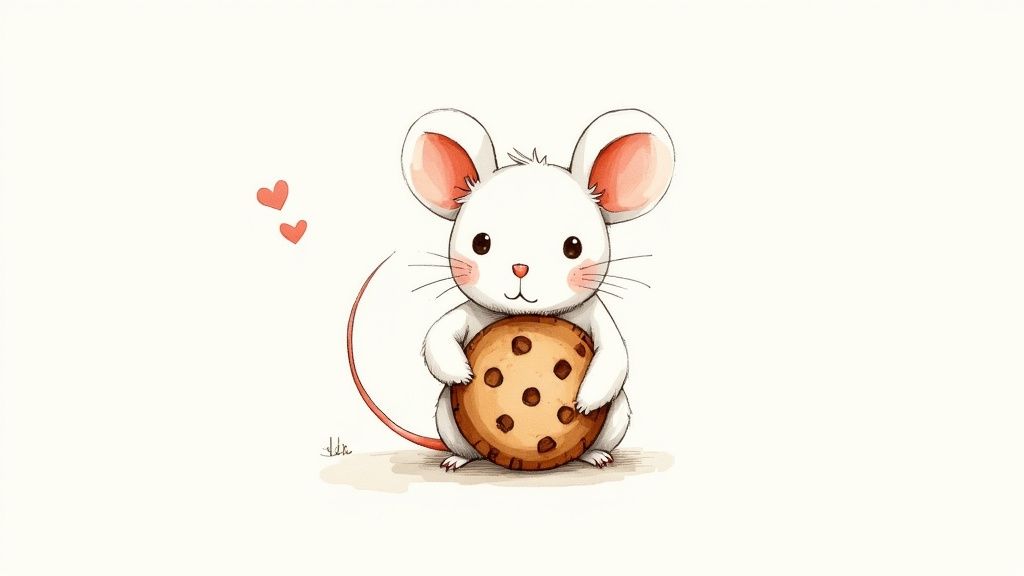
The charm of If You Give a Mouse a Cookie is all in its brilliant simplicity. It kicks off with a single act of kindness—giving a little mouse a cookie—that sets off an unpredictable and hilarious chain reaction. This one small request spirals into a full-blown adventure that has clicked with generations of readers, earning it a permanent spot on family bookshelves.
The story’s entire structure is a fantastic, kid-friendly introduction to the idea of cause and effect, framed as a "slippery slope" of one request leading to another, and another. It’s a pattern so relatable it’s actually become a common metaphor for how one tiny decision can snowball into a cascade of unexpected outcomes. This fundamental lesson comes wrapped in a funny and totally engaging package.
A Modern Storytelling Classic
What really cements this book's status as a modern classic is how perfectly the words and pictures work together. The synergy between the text and the illustrations creates a world that feels both wonderfully imaginative and completely familiar. This kind of powerful combination is a hallmark of truly great children's literature, much like the immersive world-building you find when you explore the themes of Where the Wild Things Are.
The book’s appeal goes way beyond just being a fun read. It’s also an excellent tool for:
- Teaching Sequencing: Young readers learn to follow a logical series of events from start to finish.
- Encouraging Prediction: Kids get a kick out of guessing what the demanding little mouse will ask for next, which helps build their critical thinking skills.
- Opening Dialogue: It’s a great jumping-off point for conversations about hospitality, needs versus wants, and what it means to help others.
The real genius of the book is its circular ending. It brings the whole adventure right back to where it started, providing a satisfying and funny conclusion that children just adore. It reinforces the core theme in a way they’ll never forget.
To find other beloved books that help build connections through storytelling, you should check out A Parent's Guide to the Best Baby Books for a wonderful look at foundational children's literature.
Meet the Minds Behind the Classic Story
You know how some of the best ideas pop up when you're least expecting them? That's exactly how If You Give a Mouse a Cookie came to be. It all started with a simple, creative spark during a long, boring car ride.
The book’s journey from a random thought to a beloved classic is a fantastic story of collaboration between author Laura Numeroff and illustrator Felicia Bond. They created a world where the words and pictures are so perfectly in sync, you can't imagine one without the other.
The Author: Laura Numeroff
During that tedious road trip, Numeroff started daydreaming to pass the time. She imagined a little animal that just kept asking for one thing after another, a thought that quickly snowballed into the circular story we all know and love today. One simple request just hilariously tumbles into the next, and the next, and the next.
Numeroff really gets what makes kids tick. She knew that a repetitive, predictable story structure is incredibly fun for young readers. Her words are simple and rhythmic, almost like a song, creating the perfect runway for the illustrations to take flight and deliver the story's real charm and humor.
It's a clever design that does more than just entertain. It’s actually a building block for early literacy. Kids start to anticipate what’s coming next, which reinforces their understanding of cause and effect. It's a formula that clearly worked, becoming the blueprint for an entire series that has sold over 40 million copies around the globe.
The Illustrator: Felicia Bond
While Numeroff built the story's skeleton, Felicia Bond gave the mouse his soul. Her charming, expressive illustrations are what really make the book pop. That tiny mouse in his signature denim overalls is just bursting with a personality that practically jumps off the page—endearing, energetic, and just a little bit demanding.
Bond’s artwork is where so much of the humor lives. She packs each page with details that add layers of comedy you don't get from the text alone. You can see the chaos slowly building in the house and feel the boy's gentle, patient frustration. Every illustration is a little treasure hunt, inviting kids to linger and spot new visual gags each time they read it.
The real magic of the book lies in the seamless partnership between Numeroff’s words and Bond’s art. It’s a perfect example of how text and illustration can elevate each other to create something truly special and enduring.
Their collaboration was the perfect match. Numeroff’s straightforward, cyclical prose set the stage, and Bond’s visual storytelling stole the show. The words tell us what the mouse wants, but the pictures show us why it's all so funny and chaotic. That synergy is the engine that has kept this book on shelves and in the hearts of families and teachers for decades.
Following the Mouse's Hilarious Chain of Requests
The real magic of If You Give a Mouse a Cookie is its deceptively simple plot. The entire story is just a funny, spiraling series of requests that all start with one small act of kindness. It’s a perfect domino effect, where a single event kicks off a chain reaction that quickly blossoms into the best kind of chaos.
This structure isn't just for laughs; it’s a brilliant way to teach young readers about cause and effect. The logic is crystal clear, making it one of the best first introductions a child can have to the idea of consequences. It all kicks off the moment a friendly boy offers a cookie to a little mouse who happens to be passing by.
From a Cookie to a Nap
Once that mouse gets his cookie, he naturally needs something to wash it down. If you give a mouse a cookie, you can bet he’s going to ask for a glass of milk. But it never stops there. The milk makes him think he needs a straw. The straw leads to a milk mustache, which of course requires a napkin.
Spotting his mustache in a mirror, he decides he needs a haircut. That leads to a mess, which means he has to sweep the floor. This burst of activity inspires him to wash the floors, which wears him out so much he needs a nap, and naturally, he’ll need a story before he can sleep. Each step follows its own quirky but surprisingly logical path.
The creative process for making the book itself follows a similar kind of logical flow, from a simple idea to a finished story.
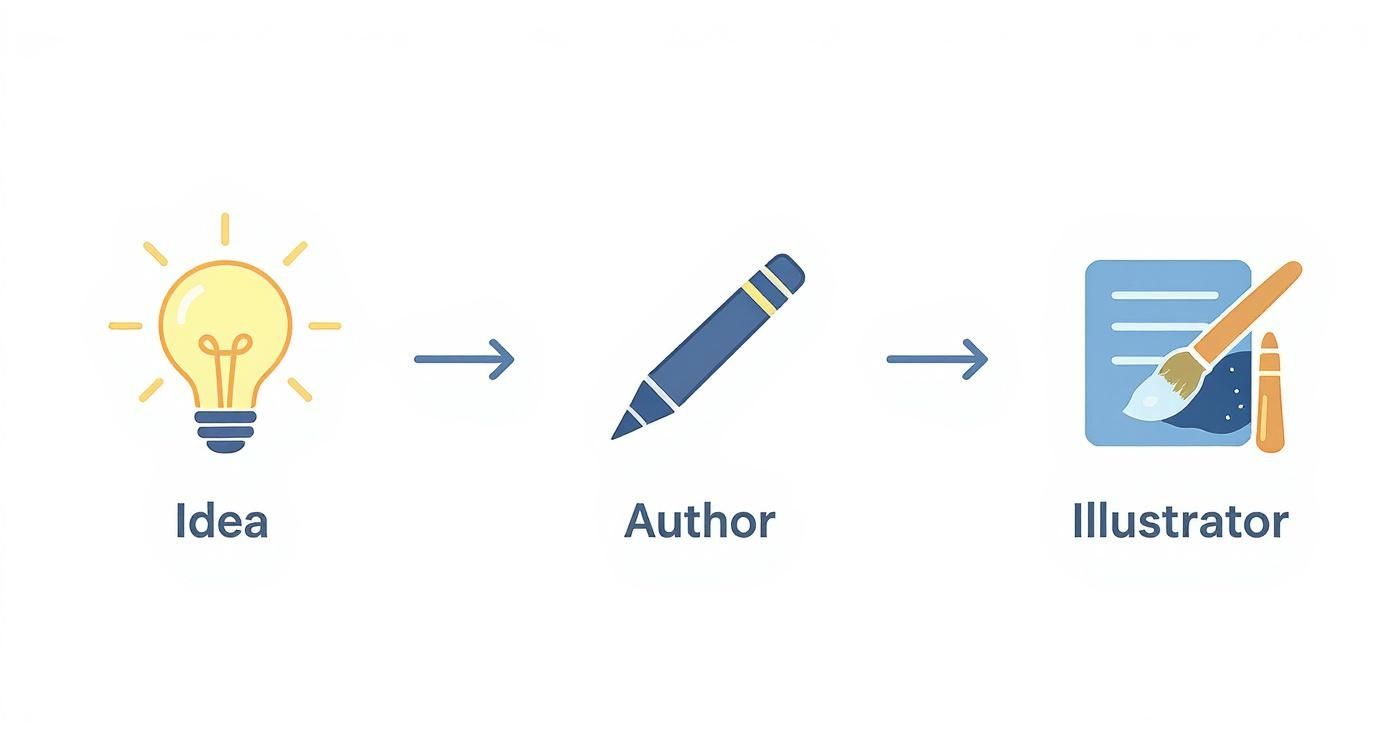
Just as the mouse's requests tumble one after another, an idea has to pass from the author to the illustrator and through the publishing process to become a book readers can hold.
The Full Circle Journey
The mouse's ever-growing demands take him, and the reader, on a journey that fills the boy's house with messes and memories. It's a masterclass in storytelling for kids because it isn't just a random list of wants. Every single action logically triggers the next one, creating a story that feels both silly and perfectly woven together.
Take this sequence, for example:
- The mouse draws a picture of his family.
- This makes him want to hang it on the refrigerator.
- To do that, he’ll need a roll of scotch tape.
This pattern is the engine of the whole story, right up to the very end. After he hangs his drawing, he steps back to admire his work and suddenly feels thirsty. And what do you think a thirsty mouse is going to want to go with his glass of milk?
This table breaks down the wonderfully absurd chain of events that makes the story so memorable.
The Mouse's Chain of Requests
| The Mouse's Request or Action | The Resulting Need or Consequence |
|---|---|
| Gets a cookie | Needs a glass of milk |
| Drinks the milk | Needs a straw, then a napkin for his mustache |
| Sees mustache in the mirror | Needs scissors for a trim |
| Makes a mess with hair clippings | Needs a broom to sweep |
| Sweeps the whole house | Gets tired and needs a nap |
| Needs a bed and a story | Draws a picture inspired by the story |
| Draws a picture | Wants to hang it on the refrigerator |
| Admires his picture on the fridge | Feels thirsty and asks for milk |
The beautiful, circular ending is what makes the book a classic. It brings the whole adventure right back to where it started.
The story's circular ending is its most brilliant feature. By bringing the narrative right back to the beginning—with the mouse wanting a cookie to go with his milk—it provides a deeply satisfying and humorous conclusion that perfectly reinforces the book's central theme.
This structure doesn't just make for a fun read. It subtly teaches children about patterns and cycles in a way that feels completely natural. The hilarious journey of if you give a mouse a cookie is a perfect loop of cause and effect that has kept kids and parents delighted for decades.
The Hidden Lessons in a Simple Story
Don’t let the charming pictures and escalating mess fool you. If You Give a Mouse a Cookie is a brilliant introduction to some pretty big ideas. The entire story is a perfect, pint-sized lesson in cause and effect, showing young kids how one small action can trigger a whole cascade of events.
It’s a simple, foundational concept for logical thinking, but it’s presented in the most delightful way possible.
The mouse gets a cookie, which makes him thirsty for milk. The milk leads to him needing a napkin. Each step flows directly from the last, creating a super clear narrative that even the youngest readers can follow. This pattern helps children naturally begin to understand sequencing and predict what might happen next, long before they ever hear those terms in a classroom.
This hilarious chain of requests is also a fantastic way to introduce the idea of a "slippery slope." It playfully shows how one tiny, simple request can spiral into a series of much bigger demands. Honestly, it's a concept that even adults can relate to when a simple decision ends up leading to a whole lot of unforeseen work.
More Than Just Consequences
The book also quietly opens the door to some important conversations about social and emotional skills. Think about the little boy—his incredible patience is a gentle model of kindness and hospitality, even when his furry guest becomes a bit much to handle. His actions are a great jumping-off point for talking with kids about what it means to be a good friend and a thoughtful host.
You can use the story to explore a few key themes:
- Needs vs. Wants: Does the mouse really need a haircut and scissors, or does he just want them? That's a huge life lesson, and the story introduces it with a smile.
- Responsibility and Helping: After making a huge mess with his haircut, the mouse actually grabs a broom to sweep up. It's a small moment, but it's a great illustration of cleaning up after yourself.
- The Cycle of Events: The story ends right back where it began, with the mouse wanting another glass of milk. This circular structure is really satisfying for young minds and shows them how events can come full circle.
Having these kinds of conversations is crucial for building empathy and understanding. Making sure children can see themselves and their own experiences in the stories they read is an incredibly powerful tool. It’s a topic worth digging into when you consider the value of representation in children's books.
By wrapping these lessons in such a fun and memorable story, the book does so much more than just entertain. It gives children the first building blocks for critical thinking, emotional intelligence, and seeing how all their actions are connected.
Ultimately, it’s these hidden lessons that turn If You Give a Mouse a Cookie from a cute story into a timeless classic. It manages to teach complex ideas without ever feeling preachy, which is the true magic of a great children's book.
A Global Appetite for a Classic Treat
That simple, irresistible cookie that kicks off the mouse's entire adventure is more than just a storytelling trick. It’s a direct link to a massive, real-world industry built on a treat loved by just about everyone. While the story keeps us in one boy's kitchen, the mouse's desire for that cookie mirrors a huge global economic truth.
That humble cookie stands for an enormous and ever-growing market. The demand for satisfying, easy-to-grab snacks has turned cookies from a simple homemade goodie into a heavyweight in the global food industry. This connection adds a really interesting layer to the story, grounding its whimsical fun in some tangible, everyday economics.
The Booming Business of Cookies
The world's appetite for cookies isn't just big; it's growing at a pretty impressive clip. This boom is fueled by our changing habits, from needing quick, on-the-go snacks to a growing interest in healthier or more gourmet options.
The global cookie market is expected to jump from USD 43.1 billion in 2025 to an estimated USD 72.3 billion by 2035. That’s a steady growth of about 5.3% every year, all driven by our collective craving for convenient and tasty food. You can explore additional details about these market trends to see the full picture of this growth.
This economic reality is a lot like the central theme of the book. Just as one little cookie leads to a whole chain of requests, the simple act of enjoying a snack helps power a dynamic and massive global industry.
The mouse’s laser focus on getting that cookie is the perfect metaphor for consumer desire. It’s this universal demand, multiplied by billions of people, that fuels all the innovation and growth we see in the worldwide snack market today.
Trends Driving the Cookie Market
A few key trends are shaping the future of the cookie world, much like the mouse's whims shape his afternoon. These trends show how cookie companies are adapting to meet the changing tastes of people everywhere.
- Health and Wellness: People are increasingly looking for healthier snacks. This has sparked a surge in cookies made with organic ingredients, whole grains, and less sugar, all aimed at a more health-conscious crowd.
- Convenience is Key: Our busy lives demand easy snacking solutions. Single-serving packages and other portable options have become incredibly popular, fitting perfectly into the fast pace of modern families.
- Flavor Innovation: A classic chocolate chip cookie will always have its place, but the market is also buzzing with creative and even exotic flavors. This kind of experimentation keeps things fresh and exciting for anyone eager to try something new.
Bring the Story to Life with Fun Activities
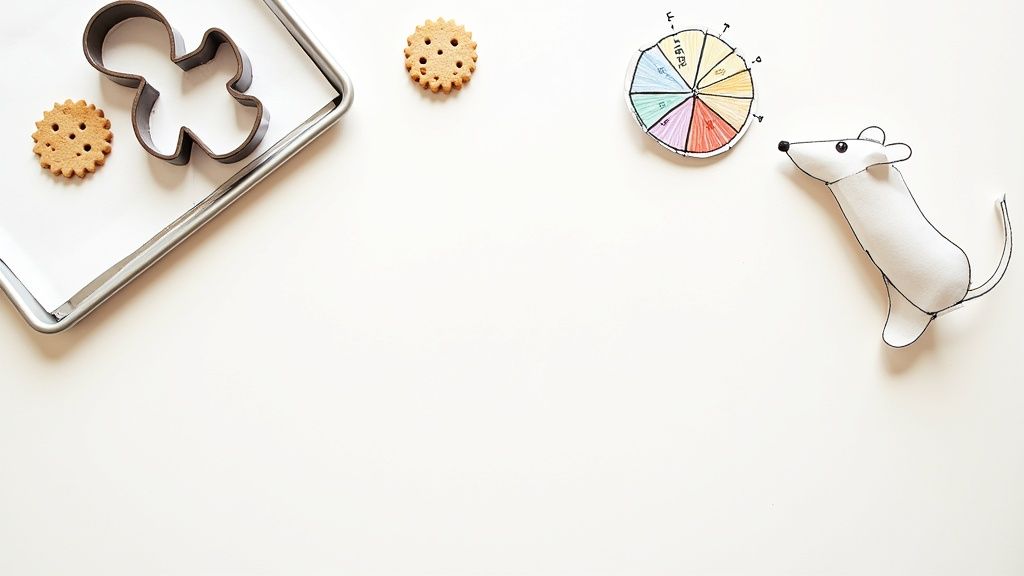
Don't let the magic of If You Give a Mouse a Cookie end on the last page. Reading together is wonderful, but bringing the story into the real world with hands-on activities is where comprehension and lasting memories are truly made.
These simple projects are perfect for parents and teachers who want to turn a fun story into an interactive experience. It’s all about transforming passive reading into active, creative play.
Creative Crafting and Baking
Time to get your hands messy with some fun inspired by the mouse's big adventure. These activities are a fantastic way to reinforce the story’s sequence of events while letting your little one’s creativity shine.
- Bake Your Own Cookies: This one is a no-brainer! Baking chocolate chip cookies is the perfect sensory experience that ties directly back to the very beginning of the book.
- Craft a Story Wheel: Grab a paper plate and divide it into sections. In each slice, have your child draw one of the mouse’s requests—the milk, the straw, the scissors. It’s a simple, visual way to map out his silly journey.
- Make Mouse Puppets: Use paper bags or old socks to create your own mouse puppets. Kids can use them to act out the story as you read, which is a great way to build their storytelling confidence.
When kids can physically recreate parts of a story, they build much stronger connections to the plot. This kind of hands-on learning makes abstract ideas like cause-and-effect feel real and easy to understand.
Sparking Thoughtful Conversations
Beyond the crafts, this little book is a goldmine for starting great conversations and encouraging critical thinking. Use these prompts to help kids explore the story's deeper themes and connect them to their own lives.
You can find more ideas for using books to open up meaningful dialogue by exploring our post on the powerful poetry of Love That Dog and how it resonates with young readers.
Try asking questions like:
- What do you think the mouse will ask for next?
- Was the boy a good friend to the mouse? Why do you think so?
- Have you ever started a small job that turned into a really big one?
These simple activities and questions can turn a quick read of if you give a mouse a cookie into a rich and memorable learning experience.
Your Questions About the Book Answered
Decades after it first hit bookshelves, If You Give a Mouse a Cookie still gets parents, teachers, and new young readers talking. It’s one of those books that feels so simple, but there's a lot going on beneath the surface.
Let's dig into some of the most common questions people have about this classic. Whether you're picking it up for the first time or sharing a well-loved copy, here’s a little more insight into what makes this story tick.
What Is the Recommended Age Range?
The sweet spot for If You Give a Mouse a Cookie is really for kids aged 3 to 7. For the little ones, the simple, looping language is easy to follow, and Felicia Bond's hilarious and detailed drawings give them plenty to look at.
As they get a little older—think kindergarten through second grade—they start to really get the joke. They can follow the zany cause-and-effect logic and have a blast guessing what that demanding little mouse will want next.
What Is the Main Message?
At its heart, this book is a wonderfully silly introduction to the idea of cause and effect. It all starts with one small, kind act—giving a mouse a cookie—and spirals into a whole chain of hilarious consequences.
The story is a masterclass in teaching concepts like sequencing and circular patterns without ever feeling like a lesson. It turns a pretty complex idea into a fun, memorable game that little kids can easily understand.
Are There Other Books in This Series?
Yes, absolutely! The little mouse and his cookie were such a hit that author Laura Numeroff created a whole world of demanding animals. The If You Give... series was born.
Each book has that same fun, circular story but introduces a new animal with its own funny set of requests. Some of the most popular follow-ups are:
- If You Give a Moose a Muffin
- If You Give a Pig a Pancake
- If You Give a Dog a Donut
They all capture that same charming magic that made the original an instant classic.
At Number 6 Publishing, we believe that the right story can spark a lifelong love of reading. We are dedicated to helping families and educators find books that inspire joy and curiosity. Explore our curated collections and discover your child's next favorite adventure at https://www.number6publishing.com.