
Before you even think about sorting books alphabetically or by the color of their spine, the real work of creating a library begins. It's the thoughtful, upfront planning that separates a chaotic pile of books from a truly functional and joyful home library.
Jumping straight into the physical sorting is a classic mistake. It’s like trying to build a house without a blueprint—you might get something standing, but it’s not going to be what you envisioned. A little time spent planning now saves a ton of frustration later and ensures the final result is perfectly suited to your home and how you actually read.
This is all about making intentional decisions before you lift a single book.
What Is This Library For, Anyway?
First things first, you need to figure out the primary job of your library. Is this a quiet sanctuary just for you? A bustling family hub for read-alouds and homework? Or a practical research station for your hobbies or work? The answer will shape every other decision you make.
- The Personal Retreat: If it's a quiet escape you're after, think about tucking it into a cozy corner of a bedroom or a dedicated office. Comfort is king here. You might prioritize a plush armchair and good lighting over cramming in the maximum number of shelves.
- The Family-Friendly Zone: For a library that serves the whole family, it needs to be accessible and inviting. Placing it in a central spot like the living room or playroom just makes sense. You’ll want sturdy, low-to-the-ground shelving for the little ones and a layout that encourages everyone to grab a book and read together. For more inspiration on building a great collection for young readers, check out our guide to amazing kids' books.
- The Research Hub: If your library is built around a passion—be it cooking, crafting, or history—functionality trumps all. Organization needs to be logical and access needs to be effortless. Think deeper shelves for oversized manuals, clear labeling, and maybe some focused task lighting.
A library’s purpose is its soul. When you define it from the start, every choice you make, from the type of shelves to the sorting method, naturally falls into place.
Taking Stock of Your Books and Your Space
With a clear purpose in mind, it's time for a reality check. You need a solid handle on what you’re working with, both in terms of books and the physical room.
Start by gathering every single book from every nook, cranny, and forgotten box in your home. Pile them all up in one place. It might be a bit shocking to see the true volume, but this is a critical step. It gives you a real-world inventory of your collection's size and diversity.
Next, grab a tape measure and get to know your chosen spot intimately. Measure the wall height and width, but don't forget to account for pesky obstacles like windows, light switches, and power outlets. Don't just think horizontally; look up! Vertical space is often overlooked, and maximising storage can unlock hidden potential in even the smallest rooms. This simple act of measuring prevents the all-too-common headache of buying shelves that just don't fit.
Choosing Your Shelving
Shelves are the backbone of your library, so choosing the right ones is a big deal. You're looking for a combination of function, style, and durability.
- Capacity: Make sure the shelves can handle the weight of your collection without bowing. Adjustable shelves are a fantastic option, giving you the flexibility to house everything from tiny paperbacks to tall, oversized art books.
- Material: Wood brings a classic, sturdy warmth to a room, while metal can offer a more modern or industrial vibe. The key is to pick something that complements the existing style of your space.
- Style: Freestanding bookcases are wonderfully versatile and can move with you. Built-ins, on the other hand, provide a seamless, high-end look and are brilliant for making the most of your space. For smaller collections or for showcasing a few special editions, wall-mounted floating shelves can be a stylish and practical choice.
Choosing the Right Sorting System for Your Books
Now that you have a vision for your library and your shelves are ready, we get to the fun part: deciding how your books will actually live together. This is where you build the logic of your collection, making it easy for you—and anyone else—to find exactly what they’re looking for.
There's no single "right" way to do this. The best sorting system is whatever clicks with how you think about your books. What works for a massive non-fiction collection would be totally impractical for a fiction lover. Think of it as creating a mental map of your collection.
To help you get started, this chart shows how your library's purpose can point you toward the best sorting method.
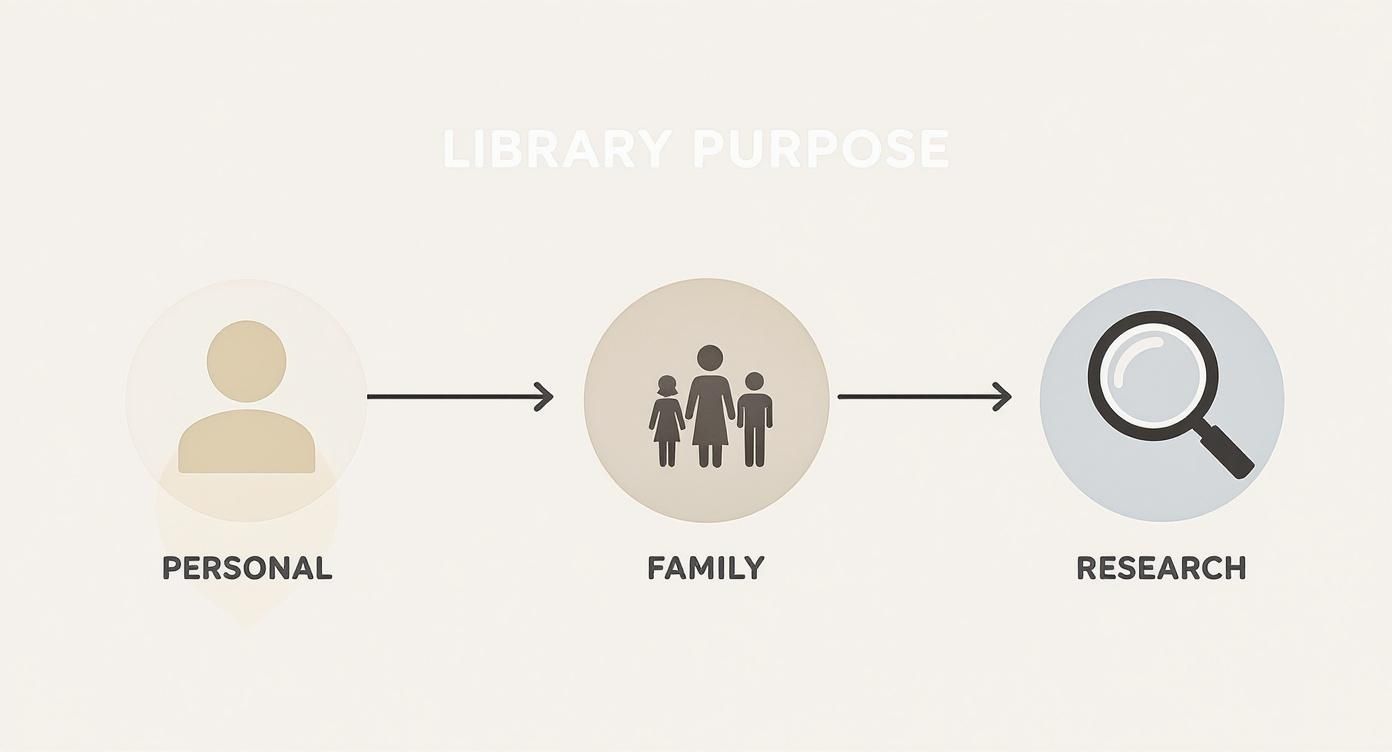
As you can see, a personal library might lean toward aesthetics or author-based sorting. A family library really benefits from clear genre and age-level groups, while a research library needs a precise, subject-based system to be truly useful.
The Classics: Genre and Author
For most people, sorting by genre is the most intuitive place to begin. It’s what bookstores and public libraries do for a reason: it just works. You simply put all your fantasy books in one spot, your mysteries in another, and your biographies somewhere else.
This way, when you’re in the mood for something specific, browsing is a breeze. Want to get lost in another world? Head straight to the science fiction shelf. Need a recipe for dinner? The cookbook section has you covered.
To take it a step further, you can alphabetize by the author's last name within each genre. This one-two punch is a powerhouse of organization. It creates a scalable system that’s logical, predictable, and incredibly easy to maintain.
The Visual Approach: Sorting by Color
If your books are a central part of your home’s decor, organizing by color can be absolutely stunning. Arranging your collection in a rainbow gradient or creating bold, color-blocked shelves can turn your library into a piece of art. It’s a beautiful method that makes a real statement.
But you have to be honest about the practicality. While it looks incredible, this system completely ignores what a book is about. Finding a specific title can turn into a real scavenger hunt if you can’t remember the color of its spine.
A color-coded system works best for smaller, curated collections where you know your books intimately, or when the aesthetic is your absolute top priority.
For the Non-Fiction Enthusiast: Subject and Chronological Systems
When your library is all about information and learning, you need a more granular approach. Sorting by subject is the gold standard for non-fiction. This means creating very specific categories that make sense for your collection.
For instance, instead of one giant "History" section, you could break it down into:
- Ancient Roman History
- World War II
- The American Civil Rights Movement
- Biographies of Political Leaders
This kind of detail transforms your library from a simple collection into a powerful research tool, letting you find exactly what you need in seconds.
Another fascinating method, especially for history buffs, is chronological sorting. Arranging books by their publication date lets you see how an idea, a historical period, or an author’s style evolved over time. It’s a unique way to experience your collection that tells a story all its own.
The Power of Hybrid Systems
Here's the secret: you don't have to pick just one method. The most functional and personalized home libraries often use a hybrid approach, blending different systems to fit different parts of the collection.
A great hybrid system might look something like this:
- Fiction: Grouped by genre, then alphabetized by author.
- Non-Fiction: Organized by detailed subject matter.
- Kids' Books: Sorted by reading level or series.
- To-Be-Read Pile: A dedicated shelf or basket for all your new acquisitions.
This gives each part of your library the organizational structure it needs. Your sprawling fantasy series gets the genre treatment it deserves, while your academic texts are neatly arranged by topic.
Thinking about growing your collection? Explore our curated lists of the best books to find your next favorite read. Mixing and matching methods gives you the freedom to create a system that truly works for you, ensuring every book has a logical and accessible home.
Mastering Your Shelving and Layout
Okay, you've got your books sorted into logical piles. Now for the fun part—turning those stacks into a library that not only looks great but is a dream to use. This is where we get into the art of shelving and layout, transforming a simple storage space into an inviting retreat.
How you place books on the shelves is just as critical as how you sorted them.
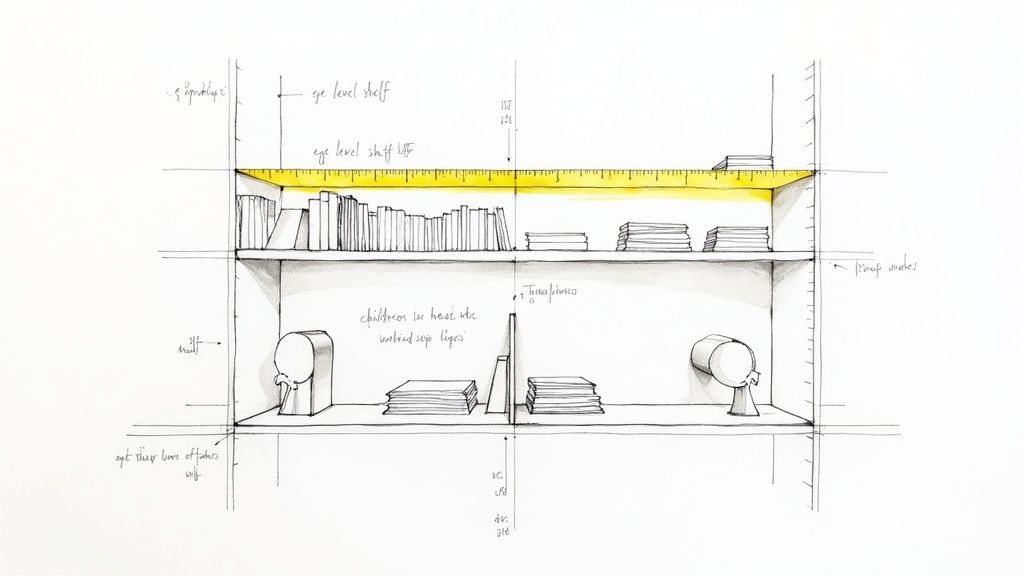
The real goal here is to create a system where finding a book feels completely natural. It's about designing a layout that considers how you and your family actually interact with your collection day-to-day.
Strategic Placement for Real-World Use
I always tell people to think of their bookshelves like prime real estate. The most valuable spot? That’s at eye level, from about your shoulders to your waist. This is exactly where you should put your most-read books, current favorites, or the genre you grab most often.
Placing these high-demand books in the easiest spot to reach means no more bending down or stretching on your tiptoes. It’s a tiny adjustment that makes using your library so much more pleasant.
Save the top shelves for books you don’t need as often, or maybe for some lighter decorative items. The bottom shelves are perfect for those heavy, oversized art books or for the kids' collections. This simple hierarchy just makes your library work for you.
Create Visual Interest and Flow
Let's be honest, a solid wall of books all standing perfectly upright can look a little… boring. To make your library more dynamic and visually interesting, you’ve got to mix things up.
- Vary the Orientation: Try alternating between vertical rows and horizontal stacks. A short stack lying on its side can break up a long line of spines and gives you a nice little platform for a small plant or a cool object.
- Use Bookends Wisely: Good bookends are non-negotiable for preventing books from leaning over and damaging their spines. They’re also a fantastic way to inject some personality into your shelves.
- Leave Breathing Room: Whatever you do, don't cram every single shelf full. Leaving a bit of empty space—what designers call "white space"—makes the whole collection feel less overwhelming and more intentionally curated. It shows your library is a living thing.
As you build out your space, looking into stylish bookcase with drawer options can be a game-changer. They offer a great mix of display space and hidden storage, which is perfect for keeping things looking tidy.
"Your library should be a reflection of you. Arranging it is not just about order; it's about creating a space that tells your story and invites you to explore."
Designing for Accessibility and Independence
A truly great home library is one that everyone in the family can enjoy, no matter how tall they are. This is especially crucial in a home with kids, as it helps build independence and a genuine love for reading.
And it’s not just a nice idea—it has a real impact. A study that looked at 31 countries found a powerful link between the number of books in a home and a child’s educational success. Kids from homes with even just 20 books tended to achieve higher levels of education.
To make your library kid-friendly, put their books on the lowest shelves. This empowers them to pick out their own stories without having to ask for help.
Here are a few more tips for accessibility:
- Low Shelves for Little Hands: Dedicate the bottom shelf or two just for board books and picture books.
- Forward-Facing Displays: For younger kids, displaying some books with the cover facing out is pure magic. They are way more drawn to colorful art than a skinny little spine.
- Sturdy Step Stool: Keep a safe step stool handy so older kids can reach the books on slightly higher shelves all by themselves.
When you thoughtfully plan your shelving and layout, you’re doing so much more than just storing books. You’re building an intuitive, beautiful system that makes reading a natural and joyful part of everyday life.
Creating a Catalog of Your Collection
For the truly dedicated book lover, this is the step that turns a simple collection into a personal library. Creating a catalog might sound like a massive project, but it’s an incredibly satisfying process that solves some common headaches.
A simple catalog means you know exactly what you own, so you can stop accidentally buying duplicate copies. It also lets you find any book you need in seconds. Think of it as an inventory for your intellectual property—it’s a powerful tool for managing and enjoying your books on a whole new level. Best of all, you can pick a system that fits you perfectly, from a simple notebook to a slick app.
Simple and Effective Low-Tech Methods
You definitely don't need fancy software to get this done. For many people, analog methods are more than enough and have a certain old-school charm.
A dedicated notebook is about as straightforward as it gets. Just create a few columns: title, author, genre, and maybe a quick note about where it’s shelved. This hands-on method really connects you with each book as you log it.
If you want something a bit more organized and searchable, a spreadsheet is a fantastic choice. Using Google Sheets or Microsoft Excel, you can create a simple database of your books. It's easy to add columns, sort by author or title, and even add a "loaned out" column to track books you've lent to friends and family.
Embracing Digital Cataloging Tools
For those who'd rather have a more automated approach, library apps can feel like pure magic. These tools often let you just scan a book's barcode with your phone's camera, and poof—it pulls in all the information like the cover art, author, publication date, and synopsis.
This digital approach fits right in with how many families are building hybrid home libraries. It’s common to see a mix of physical books, e-books, and audiobooks, and apps help you organize all these formats in one place. In fact, recent library statistics on zipdo.co show just how much families are blending different reading formats in today's world.
Here are a few popular, user-friendly options to check out:
- Libib: A really powerful app that offers free plans for personal collections up to 5,000 items. You can catalog books, movies, music, and even video games.
- BookBuddy: A top-rated iOS app known for its clean look and great features, including personal ratings and notes.
- LibraryThing: This is a long-standing community platform that not only catalogs your books but also connects you with other readers who have similar tastes.
Many of these digital tools do more than just list your books. They can help you create reading lists, track your progress, and even recommend new reads based on what you already own. If your family is juggling physical books and digital readers, take a look at our guide to the best reading apps for kids to find tools that support a modern library.
A catalog is more than just a list; it’s a living record of your reading journey. Whether analog or digital, it turns your collection into a searchable, manageable, and more valuable resource.
So, which system is right for you? It really comes down to what works for your life. If you love the tactile feel of writing things down, a beautiful journal could be perfect. If you want speed, searchability, and data at your fingertips, a barcode-scanning app is the clear winner. No matter which path you take, the effort you put into cataloging will pay off every single time you find the exact book you were looking for without having to tear the shelves apart.
Keeping Your Home Library Organized for Good
A beautifully organized home library isn't a project you finish once and then just admire from afar. It’s a living, breathing part of your home. It grows and changes right along with your family's reading habits, and keeping it functional requires a simple, consistent maintenance plan—not a major annual overhaul.
Think of it less like a finished painting and more like a well-tended garden. A little regular care keeps the weeds of disorganization from taking over, making sure your collection remains a source of joy instead of a stressful mess. These small, sustainable habits are the real secret to long-term success.
Adopt Smart Curation Habits
The single biggest threat to an organized library is uncontrolled growth. New books are exciting, but without a system, they can quickly lead to overflowing shelves and chaotic piles. This is where a few key habits can make all the difference in keeping things tidy for the long haul.
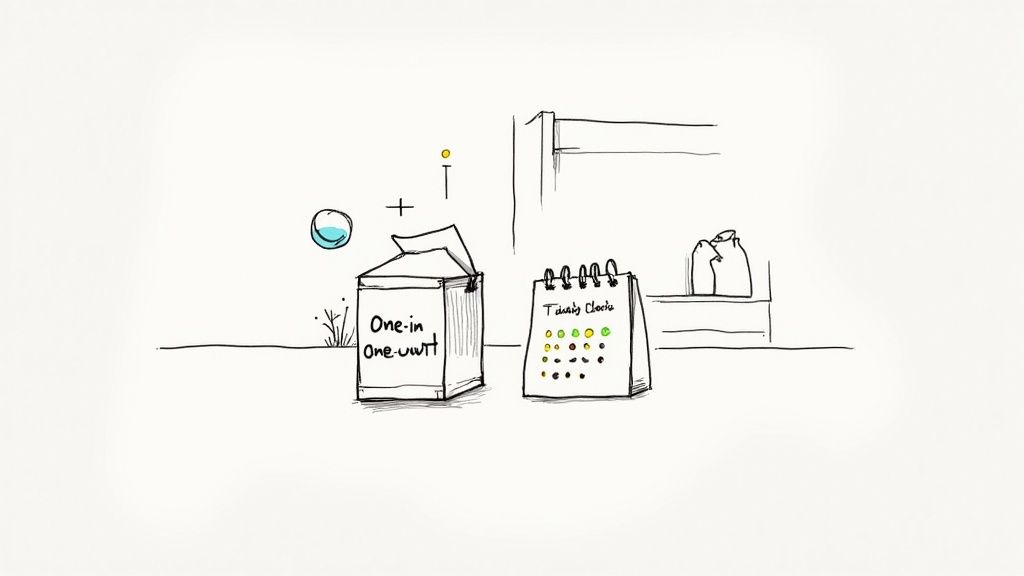
The most powerful strategy I've found is the ‘one-in, one-out’ rule. It’s incredibly simple: every time a new book comes into your home, an old one has to leave. This forces you to constantly evaluate what you own and prevents your collection from expanding beyond the space you have.
To put this into practice, create a designated "outbox" or donation bin. When you bring home a new find, take a moment to browse your shelves and pick one you’re ready to part with. Maybe it's a novel you didn't love or a non-fiction book that’s no longer relevant. This simple exchange maintains a nice equilibrium and keeps your library thoughtfully curated.
Create a Simple Maintenance Routine
Just like any other space in your home, your library needs a little physical upkeep to stay in top shape. Dust and sunlight are the main enemies of books, causing deterioration over time. A simple, repeatable routine is all you need to protect your collection and keep it looking its best.
Set aside a small window of time once a month for library care. It doesn't have to be a huge production. Just focus on a few quick tasks:
- Dusting Duty: Gently wipe the tops of books and the surfaces of your shelves with a soft microfiber cloth. This stops dust from settling into the paper and causing long-term damage.
- Reshelving Run: Do a quick scan for any books that have wandered from their proper homes. A five-minute reshelving session is a parent's best friend for keeping a family library in check.
- Spine Check: Straighten any leaning books and make sure they are properly supported by bookends. Storing them vertically is key to protecting their spines.
A library that is regularly maintained feels more inviting and accessible. This small investment of time encourages you and your family to actually use the space more often, reinforcing that positive cycle of organization.
The Art of the Periodic Weeding
Even with the ‘one-in, one-out’ rule in place, it’s a good idea to do a deeper review of your collection once or twice a year. Tastes change, interests evolve, and kids outgrow their favorite stories. This "weeding" process ensures your library reflects who you are as a reader today, not who you were five years ago.
During this review, pull some books out and ask yourself a few honest questions:
- Will I realistically ever read this book again?
- Does this book still bring me joy or hold real sentimental value?
- Have my kids moved on from this reading level or series?
- Has this book been replaced by a newer, more relevant edition?
This isn’t about getting rid of as many books as you can; it’s about making intentional choices. Be ruthless with books you didn't enjoy or will never reference again, but be sentimental with the ones that hold special meaning. The goal is a collection where every single book has truly earned its place on the shelf.
Common Questions About Organizing a Home Library
Even with the best game plan, a few questions always seem to pop up. Organizing a library is such a personal project, and your unique collection will throw you some curveballs. Let's tackle some of the most common ones I hear, so you can clear those final hurdles and get this project done.
Think of this as your troubleshooting guide. From those awkwardly huge art books to that ever-growing "to-be-read" pile, getting these little details right is what turns a cluttered shelf into a library you genuinely love using.
How Should I Handle Oversized and Undersized Books?
Ah, the classic library dilemma. You’ve got those gorgeous, massive coffee table books and a stack of tiny paperbacks, and they just refuse to cooperate on a standard shelf. The secret? Stop trying to force them to fit into one system.
Give these oddballs their own special homes where they can fit without a fight.
- For oversized books: Try laying them flat in a stack on a deeper bottom shelf. It actually looks quite stylish and, more importantly, protects their spines from warping. The top of a shorter bookcase also works great as a display spot.
- For mass-market paperbacks: These little guys get lost so easily next to hardcovers. I like to give them their own dedicated shelf. Shelf dividers also work wonders to create a neat, contained section just for them.
What Is the Best Way to Organize a Library for Multiple Readers?
When your library has to work for the whole family, one person's system can be another's chaos. A parent’s history collection and a toddler’s picture books just don't belong together. The most practical solution here is to create zones.
Dedicate specific shelves, or even whole bookcases, to each person or category. A common setup I love is using the bottom two shelves exclusively for the kids' books, maybe sorted by color or size so they can help clean up. The shelves at eye level can hold the family's shared fiction, while a higher shelf might be reserved for a specific hobby or interest. It’s like creating a mini-library for everyone within the larger space.
The goal isn't one perfect system for everyone; it's multiple smart systems that work together in one cohesive space. This approach respects everyone's reading habits and makes finding books easier for all.
My To-Be-Read Pile Is Out of Control, What Should I Do?
First off, you're in good company. A towering TBR pile is the sign of a true book lover! Instead of letting it be a source of stress, let's give it a place of honor.
Designate a specific spot just for these unread books—a single shelf, a nice basket, or even a book cart. This contains the chaos and visually separates them from the books you’ve already finished. A great trick is to cap it: once the basket or shelf is full, you can't buy a new book until you read one from the pile. This turns a messy problem into an exciting, curated queue of your next adventures and is crucial for maintaining the beautiful system you've worked so hard to create.
At Number 6 Publishing, we believe that a well-organized library is the first step toward a lifelong love of reading. Our mission is to fill those shelves with stories that spark curiosity and joy in young readers. Explore our curated collections and find the perfect next book for your family's newly organized shelves at https://www.number6publishing.com.