
The teenage years are a whirlwind of change, a journey of self-discovery marked by first loves, tough goodbyes, and the daunting question: "Who am I?" Coming of age books for teens act as both a mirror and a map, reflecting their deepest anxieties and illuminating pathways forward. These stories are not just entertainment; they are essential tools for building empathy, understanding complex emotions, and finding solace in shared experiences. A great coming-of-age novel can make a teen feel seen, understood, and less alone as they navigate everything from social hierarchies to grappling with identity and social justice.
These narratives provide a safe space to explore difficult scenarios and complex feelings, which can significantly impact personal growth. To complement the insights gained from these stories, practical resources are available to help teenagers develop crucial social skills, fostering real-world connections and confidence. The combination of relatable fiction and practical guidance creates a powerful support system for adolescent development.
This curated listicle provides a comprehensive guide to ten transformative novels that every teen should have on their shelf. We have gathered a mix of enduring classics and modern masterpieces, each offering a unique window into the trials and triumphs of growing up. For each title, you will find:
- A concise synopsis focusing on its coming-of-age themes.
- Recommended age ranges and potential content warnings.
- Classroom discussion prompts and reading-pair suggestions.
Our goal is to offer a valuable resource for young readers, parents, and educators, detailing what makes each book a powerful companion on the journey through adolescence and into adulthood. We explore how these timeless tales provide the vocabulary and validation young people need to articulate their own experiences.
1. The Outsiders by S.E. Hinton
A cornerstone of the young adult genre, S.E. Hinton's The Outsiders remains one of the most essential coming of age books for teens more than 50 years after its publication. Written when Hinton was just 16, the novel offers an authentic, raw look into the lives of the Greasers and the Socs, two rival teenage gangs in 1960s Oklahoma divided by socioeconomic status. The story is told through the eyes of Ponyboy Curtis, a sensitive Greaser who finds himself questioning the violent world he inhabits.
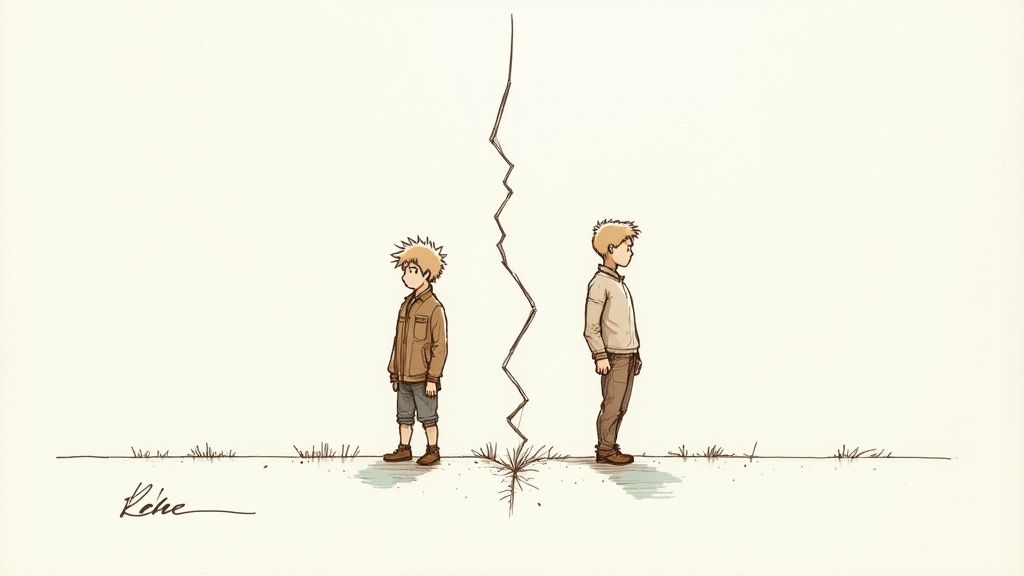
The novel's power lies in its unflinching exploration of complex themes. It tackles social stratification, the search for identity outside of group labels, and the profound bonds of chosen family. Its enduring relevance makes it a staple in middle and high school curricula, often serving as a student's first introduction to literary analysis.
Why It's a Must-Read
- Recommended Age: 12+ (Grades 7-10)
- Trigger Warnings: Violence, character death, underage smoking and drinking.
- Key Themes: Social Class, Loyalty, Identity, Loss of Innocence, Empathy.
Classroom & Discussion Guide
The Outsiders is a powerful tool for discussing social dynamics and empathy. Its straightforward prose makes it accessible, while its deep themes provide rich material for analysis.
- Discussion Questions: How do the labels "Greaser" and "Soc" limit the characters' identities? Does Ponyboy's perspective change after he meets Cherry Valance? Why does Johnny tell Ponyboy to "stay gold"?
- Activity Idea: Compare and contrast key scenes from the novel with Francis Ford Coppola's 1983 film adaptation. Discuss how the director's choices in casting, music, and cinematography affect the story's tone and message.
- Reading Pairings: Pair it with modern novels exploring similar themes, such as The Hate U Give by Angie Thomas, to bridge generational divides and discuss how social conflicts have evolved. For more ideas on how The Outsiders fits into the broader literary landscape, you can explore other classic and contemporary coming-of-age novels.
2. The Perks of Being a Wallflower by Stephen Chbosky
Stephen Chbosky's 1999 novel is a poignant and deeply personal entry among coming of age books for teens. Presented in an epistolary format, the story unfolds through a series of letters from Charlie, a socially anxious and introverted high school freshman, to an anonymous "friend." This unique narrative style creates a powerful sense of intimacy, pulling the reader directly into Charlie's world as he navigates the tumultuous waters of first love, the bonds of friendship, and the shadows of past trauma.
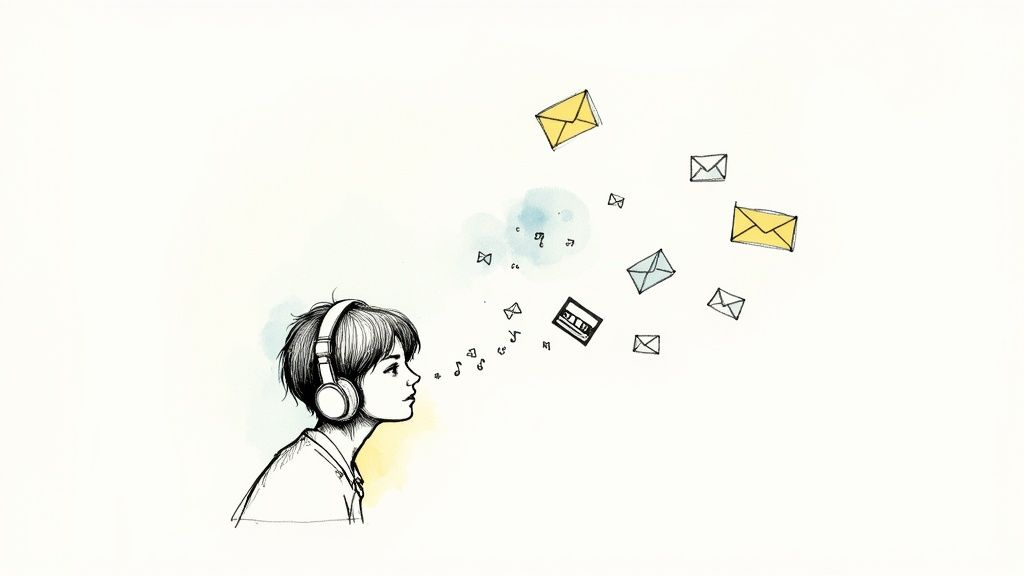
The book's enduring appeal comes from its honest and compassionate handling of difficult subjects. It openly addresses depression, social anxiety, and psychological trauma while simultaneously celebrating the transformative power of genuine friendship, music, and literature. Charlie's journey is a testament to the struggle of feeling infinite while also grappling with deep emotional vulnerability, a theme that resonates strongly with adolescent readers.
Why It's a Must-Read
- Recommended Age: 14+ (Grades 9-12)
- Trigger Warnings: Sexual abuse, suicide, substance abuse, mental health struggles (depression, anxiety).
- Key Themes: Mental Health, Trauma, Friendship, Identity, Sexuality, Self-Acceptance.
Classroom & Discussion Guide
The Perks of Being a Wallflower serves as an excellent catalyst for discussions on mental health awareness and the importance of support systems. Its literary and musical references also offer unique avenues for interdisciplinary study.
- Discussion Questions: Why do you think Charlie chooses to write letters to an anonymous person? How do his friendships with Sam and Patrick help him begin to heal? In what ways does literature act as an escape and a guide for Charlie?
- Activity Idea: Have students create a playlist of songs mentioned in the novel, like those on the mixtapes Charlie makes. Discuss how the music reflects the characters' emotions and the story's overall tone.
- Reading Pairings: Pair with Speak by Laurie Halse Anderson to explore different narrative approaches to processing trauma. For a contemporary take on mental health and friendship, consider pairing it with Turtles All the Way Down by John Green.
3. The Catcher in the Rye by J.D. Salinger
J.D. Salinger’s The Catcher in the Rye is arguably one of the most famous and controversial coming of age books for teens ever written. Published in 1951, it chronicles a few days in the life of Holden Caulfield, a cynical and disillusioned 16-year-old who has just been expelled from his prep school. As he wanders through New York City, Holden grapples with what he perceives as the "phoniness" of the adult world, all while navigating his own grief, loneliness, and the painful transition from childhood to adulthood.
The novel’s enduring impact comes from Holden's distinct and influential narrative voice. His internal monologue is a raw, unfiltered exploration of teenage angst, alienation, and the desperate search for authenticity and connection. For decades, it has served as a touchstone for readers who feel misunderstood and at odds with societal expectations, solidifying its place as a quintessential, though often challenged, piece of American literature.
Why It's a Must-Read
- Recommended Age: 14+ (Grades 9-12)
- Trigger Warnings: Profanity, sexual references, underage drinking and smoking, discussions of depression and suicide.
- Key Themes: Alienation, Identity, Authenticity vs. Phony, Loss of Innocence, Grief.
Classroom & Discussion Guide
The Catcher in the Rye is an excellent text for advanced high school students, prompting deep discussions about narrative reliability, symbolism, and mental health. Its historical context and frequent appearance on banned book lists also offer a gateway to conversations about censorship.
- Discussion Questions: Is Holden Caulfield a reliable narrator? Why is he so obsessed with the "phoniness" of others? What does the title of the book symbolize in relation to Holden's desire to protect childhood innocence?
- Activity Idea: Research the history of challenges and bans against the book. Stage a classroom debate where students argue for and against its inclusion in a school curriculum, using evidence from the text and historical sources to support their positions.
- Reading Pairings: Contrast Holden's journey with a more contemporary character's struggle for identity in a novel like Stephen Chbosky's The Perks of Being a Wallflower. This comparison can highlight how expressions of teenage angst and mental health have evolved in young adult literature.
4. Simon vs. the Homo Sapiens Agenda by Becky Albertalli
A modern classic in the genre, Becky Albertalli’s Simon vs. the Homo Sapiens Agenda is a heartwarming and important entry among coming of age books for teens. Published in 2015, the novel introduces readers to Simon Spier, a closeted gay high school student who begins an anonymous email correspondence with another closeted classmate, known only as "Blue." When a classmate discovers their emails and threatens to out him, Simon must navigate the complexities of friendship, first love, and what it means to control his own narrative.
The book’s strength is its authentic voice and humor, balancing the very real anxiety of coming out with the sweet, funny, and often awkward moments of teenage life. It masterfully explores themes of identity, acceptance, and the courage it takes to be yourself. Its massive popularity, amplified by the successful 2018 film adaptation Love, Simon, has helped pave the way for a new wave of LGBTQ+ representation in young adult literature.
Why It's a Must-Read
- Recommended Age: 14+ (Grades 9-12)
- Trigger Warnings: Blackmail, forced outing, homophobic language.
- Key Themes: Identity, LGBTQ+ Coming Out, Friendship, First Love, Acceptance, Digital Communication.
Classroom & Discussion Guide
Simon vs. the Homo Sapiens Agenda offers a fantastic opportunity to discuss contemporary issues of identity and the role of social media in modern relationships. Its relatable protagonist and engaging plot make it a hit with students.
- Discussion Questions: Why do you think Simon was hesitant to come out to his friends and family? How does the anonymity of email allow Simon and Blue to be more honest with each other? Discuss the ethics of Martin's actions and the impact of forced outing.
- Activity Idea: Have students analyze the email exchanges between Simon and Blue. How does their writing style and voice develop throughout the novel? What do the emails reveal about their personalities that their real-world interactions might not?
- Reading Pairings: Pair this novel with Aristotle and Dante Discover the Secrets of the Universe by Benjamin Alire Sáenz to compare different coming out narratives. For educators seeking to expand their classroom libraries, you can find more inclusive and diverse young adult books that build on these themes.
5. The Hate U Give by Angie Thomas
Angie Thomas's debut novel is a modern classic and one of the most vital coming of age books for teens of the 21st century. Published in 2017, the story introduces sixteen-year-old Starr Carter, whose world is shattered after she witnesses the fatal police shooting of her unarmed childhood best friend, Khalil. The narrative follows Starr as she navigates the complexities of her dual life: one in her poor, predominantly Black neighborhood and the other at her affluent, mostly white private school.
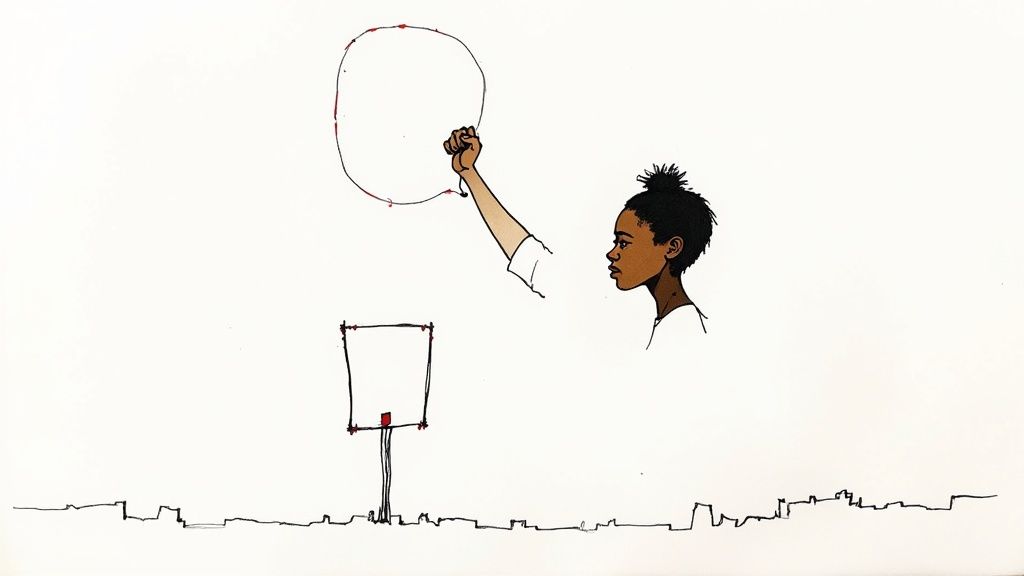
The book's immense impact comes from its honest and accessible handling of racial injustice, police brutality, and activism. Starr’s journey to find her voice and speak her truth is a powerful, poignant exploration of identity, grief, and the courage it takes to stand up for what is right. It is a defining novel for a generation grappling with social justice issues.
Why It's a Must-Read
- Recommended Age: 14+ (Grades 9-12)
- Trigger Warnings: Police brutality, racism, character death, violence, strong language.
- Key Themes: Racial Justice, Activism, Identity, Grief, Code-Switching, Community.
Classroom & Discussion Guide
The Hate U Give provides a compelling entry point for conversations about current events and systemic racism. Its authentic voice and relevant themes resonate deeply with teenage readers.
- Discussion Questions: How does Starr code-switch between her school and her neighborhood? Why is she initially hesitant to speak out? What does the title, inspired by a Tupac Shakur concept, mean in the context of the story?
- Activity Idea: Research the Black Lives Matter movement and real-world cases of police brutality that have sparked activism. Discuss how these events connect to the fictional narrative Thomas creates.
- Reading Pairings: Pair with Dear Martin by Nic Stone to explore different perspectives on activism and racial profiling. For a deeper dive into why such narratives are crucial, you can explore the importance of representation in teen literature.
6. Eleanor & Park by Rainbow Rowell
Set in 1986, Rainbow Rowell's Eleanor & Park captures the exhilarating, terrifying, and achingly sweet experience of first love. It’s one of those rare coming of age books for teens that feels both nostalgic and timeless. The story follows two high school misfits, Eleanor and Park, who find a powerful connection over a shared love for comic books and mix tapes on the school bus.
The novel is celebrated for its dual-narrative structure, giving readers intimate access to both characters' perspectives. This approach allows for a deep exploration of vulnerability, acceptance, and the courage it takes to be yourself. Rowell masterfully handles heavy topics like bullying and domestic abuse with sensitivity, grounding the romance in a realistic, often difficult world.
Why It's a Must-Read
- Recommended Age: 14+ (Grades 9-12)
- Trigger Warnings: Bullying, fat-shaming, child abuse (emotional and physical), racism, strong language.
- Key Themes: First Love, Identity, Self-Acceptance, Bullying, Escapism, Family Dysfunction.
Classroom & Discussion Guide
Eleanor & Park offers a rich opportunity to discuss the role of pop culture in forming identity and relationships, as well as the complexities of love in less-than-ideal circumstances.
- Discussion Questions: How do the alternating perspectives of Eleanor and Park shape your understanding of their relationship? In what ways do music and comics serve as a refuge for the characters? Discuss the novel's open-ended conclusion and what you believe it signifies for the characters' futures.
- Activity Idea: Have students create their own "mix tape" playlist (digital or written) for a character from the book or for a specific moment in the story. They can then explain their song choices and how the lyrics and mood connect to the narrative.
- Reading Pairings: Pair with The Perks of Being a Wallflower by Stephen Chbosky to explore themes of teenage alienation and finding belonging. For a contemporary comparison on first love and identity, consider Aristotle and Dante Discover the Secrets of the Universe by Benjamin Alire Sáenz.
7. The Absolutely True Diary of a Part-Time Indian by Sherman Alexie
Sherman Alexie's semi-autobiographical novel is a poignant, hilarious, and unflinching look at life between two worlds. Published in 2007, this National Book Award winner stands as one of the most important modern coming of age books for teens. The story follows Arnold "Junior" Spirit, a 14-year-old cartoonist growing up on the Spokane Indian Reservation who makes the courageous decision to attend an all-white high school in a nearby farm town, becoming a "part-time Indian."
Told through Junior's journal entries and cartoons, the book tackles enormous issues with raw honesty and a disarming sense of humor. Junior navigates the complexities of leaving his community to pursue a better education, facing ostracism at home and racism at his new school. It’s a powerful narrative about straddling cultural divides, the weight of poverty, and the struggle to define oneself against the expectations of others.
The novel's unique blend of text and illustration makes profound themes accessible, providing a window into the realities of reservation life and the universal teen experience of searching for belonging. Its candid voice and emotional depth have cemented its place in classrooms and personal libraries alike.
Why It's a Must-Read
- Recommended Age: 14+ (Grades 9-12)
- Trigger Warnings: Racism, bullying, poverty, alcoholism, violence, character death, some sexual references.
- Key Themes: Identity, Cultural Dissonance, Poverty, Friendship, Hope, Racism.
Classroom & Discussion Guide
The Absolutely True Diary of a Part-Time Indian offers a rich opportunity to discuss contemporary Native American issues, identity, and the power of art as a means of expression and survival.
- Discussion Questions: How do Junior's cartoons contribute to the story and his character? In what ways is Junior a "part-time Indian"? How does his friendship with Rowdy evolve, and what does it say about loyalty and forgiveness?
- Activity Idea: Have students create their own comic strips or journal entries from the perspective of a character who feels caught between two worlds, whether cultural, social, or personal. This encourages empathy and creative expression.
- Reading Pairings: Pair with The Hate U Give by Angie Thomas to compare how two different protagonists navigate dual identities in racially charged environments. For another perspective on finding one's voice, consider Speak by Laurie Halse Anderson.
8. Speak by Laurie Halse Anderson
Laurie Halse Anderson's Speak is a groundbreaking novel that has become a vital part of the young adult literary landscape. Published in 1999, it courageously tackles the difficult subject of sexual assault and its aftermath through the eyes of high school freshman Melinda Sordino. After a traumatic event at a summer party, Melinda becomes a social outcast and stops speaking, using her silence as a shield. The narrative follows her painful journey through the school year as she navigates friendships, family, and the overwhelming weight of her secret.
This novel is a searingly honest portrayal of trauma and the slow, arduous process of healing. Melinda's voice, though silent for much of the book, is sharp, witty, and deeply resonant. The book's central metaphor of art class, where Melinda learns to express herself without words, is a powerful symbol of finding one's voice. As one of the most frequently challenged and banned books, Speak remains one of the most important and impactful coming of age books for teens for its role in starting conversations about consent and survivor support.
Why It's a Must-Read
- Recommended Age: 14+ (Grades 9-12)
- Trigger Warnings: Sexual assault (described non-graphically), depression, self-harm, bullying.
- Key Themes: Trauma, Voice and Silence, Healing, Identity, Consent, Isolation.
Classroom & Discussion Guide
Due to its sensitive subject matter, Speak should be approached with care and support in a classroom setting. It provides an unparalleled opportunity to discuss mental health, the importance of consent, and how to be an ally.
- Discussion Questions: How does Melinda’s art project evolve throughout the year, and what does it represent? Why is it so difficult for Melinda to speak about what happened to her? How do the adults in her life either help or fail her?
- Activity Idea: Have students analyze the symbolism of the changing seasons or the decaying tree in Melinda's yard. Discuss how these elements reflect her internal state and her journey toward healing.
- Reading Pairings: Pair Speak with The Perks of Being a Wallflower by Stephen Chbosky to explore different facets of trauma and friendship. For a more modern take on similar themes, consider The Nowhere Girls by Amy Reed, which focuses on collective action against sexual assault.
9. The Fault in Our Stars by John Green
John Green's The Fault in Our Stars is a modern classic that redefined the contemporary YA landscape upon its 2012 release. It tells the story of Hazel Grace Lancaster and Augustus Waters, two sharp-witted teenagers who meet at a cancer support group. Their romance blossoms as they confront profound questions about life, love, and mortality, seeking "a little infinity" within their numbered days. This novel stands out as one of the most poignant coming of age books for teens by exploring growth not just in the face of life, but in the face of death.
The book's immense power comes from its honest, unflinching, and surprisingly humorous portrayal of living with a terminal illness. Green avoids clichés, presenting Hazel and Gus as complex, intelligent characters whose struggles are both extraordinary and universally relatable. Their journey to meet a reclusive author in Amsterdam becomes a powerful metaphor for searching for meaning in a world that often feels unfair and random.
Why It's a Must-Read
- Recommended Age: 14+ (Grades 9-12)
- Trigger Warnings: Terminal illness, major character death, grief, discussions of mortality.
- Key Themes: Love, Mortality, The Meaning of Life, Grief, Identity Beyond Illness.
Classroom & Discussion Guide
The Fault in Our Stars offers a rich opportunity to discuss philosophy, ethics, and the human condition in a way that deeply resonates with teenage readers. Its literary references and complex emotional landscape make it ideal for high school English or philosophy discussions.
- Discussion Questions: What does Augustus Waters mean when he says, "The world is not a wish-granting factory"? How do Hazel and Gus find meaning and agency despite their circumstances? Discuss the role of the novel-within-the-novel, An Imperial Affliction.
- Activity Idea: Have students analyze the symbolism in the novel, such as the unlit cigarette or the Literal Heart of Jesus. Discuss how these symbols contribute to the book's central themes about control and meaning.
- Reading Pairings: Pair it with a classic text that grapples with mortality, like Tuesdays with Morrie by Mitch Albom, to compare different perspectives on life and death. For a more contemporary pairing exploring grief and love, consider They Both Die at the End by Adam Silvera.
10. All the Bright Places by Jennifer Niven
Jennifer Niven’s 2015 novel is a poignant and powerful entry among contemporary coming of age books for teens, tackling the difficult subjects of mental illness and grief with profound sensitivity. The story follows Theodore Finch and Violet Markey, two high schoolers who meet on the ledge of the school bell tower, each contemplating their own mortality for different reasons. What begins as a school project to wander Indiana becomes a journey of self-discovery, love, and the desperate search for reasons to live.
Told from the alternating perspectives of Finch and Violet, the novel provides a deeply intimate look into their minds. Finch struggles with undiagnosed bipolar disorder, experiencing cycles of intense energy and deep depression, while Violet grapples with survivor's guilt after her sister's death. Their connection offers a temporary solace, a "bright place" in a world that often feels overwhelmingly dark.
Why It's a Must-Read
- Recommended Age: 14+ (Grades 9-12)
- Trigger Warnings: Suicide, suicidal ideation, mental illness (bipolar disorder, depression), grief, character death, domestic abuse.
- Key Themes: Mental Health, Grief, Love, Identity, Suicide Prevention.
Classroom & Discussion Guide
All the Bright Places serves as a critical catalyst for conversations about mental health awareness and the importance of support systems. It is essential to handle this text with care and provide students with appropriate resources.
- Discussion Questions: How does the dual-narrative perspective shape your understanding of Finch and Violet? In what ways do the characters save each other, and where do they fall short? Discuss the significance of the author's note at the end of the book.
- Activity Idea: Have students research the mental health resources listed in the author's note or find local organizations that support teens. Create an anonymous "bright places" board where students can share positive thoughts, quotes, or places that bring them joy.
- Reading Pairings: For another perspective on teen grief and finding a way forward, pair it with The Sky Is Everywhere by Jandy Nelson. To explore similar themes of mental health with a different narrative approach, consider Turtles All the Way Down by John Green.
Top 10 Coming-of-Age Teen Novels Comparison
| Title | Complexity (🔄) | Accessibility & Effort (⚡) | Expected Impact / Outcomes (📊 ⭐) | Ideal Use Cases (💡) | Key Advantages (⭐) |
|---|---|---|---|---|---|
| The Outsiders — S.E. Hinton | 🔄 Low–Moderate narrative complexity; linear plot | ⚡ Very accessible language; short length | 📊 Encourages conversations on class, belonging; durable cultural impact | 💡 Middle/high school curricula; reluctant readers; intro to YA | ⭐ Relatable teen POV; fast-paced and discussion-friendly |
| The Perks of Being a Wallflower — Stephen Chbosky | 🔄 Moderate — epistolary, gradual reveal | ⚡ Accessible but emotionally demanding | 📊 Deep resonance on mental health and identity; strong emotional impact | 💡 Mental-health discussions; book clubs; intro to epistolary form | ⭐ Honest voice; validates anxious/introverted teens |
| The Catcher in the Rye — J.D. Salinger | 🔄 Moderate — distinctive unreliable narrator | ⚡ Readable but requires historical/contextual framing | 📊 Promotes critical thinking about alienation and authenticity | 💡 Literature classes; studies of mid‑20th-century youth culture | ⭐ Iconic voice; high literary significance |
| Simon vs. the Homo Sapiens Agenda — Becky Albertalli | 🔄 Low — contemporary, light tone with email elements | ⚡ Highly accessible and fast to read | 📊 Increases LGBTQ+ visibility; affirms coming-out themes | 💡 Inclusive curricula; young teens seeking representation | ⭐ Affirming LGBTQ+ protagonist; humorous and heartwarming |
| The Hate U Give — Angie Thomas | 🔄 Moderate — topical and politically engaged | ⚡ Accessible but emotionally intense | 📊 Sparks dialogue on systemic racism and activism | 💡 Social-justice lessons; community/book-club discussions | ⭐ Authentic portrayal of racialized teen experience |
| Eleanor & Park — Rainbow Rowell | 🔄 Low–Moderate — alternating perspectives | ⚡ Accessible, emotionally engaging | 📊 Explores first love, difference, and family dynamics | 💡 Romance-focused YA readers; book clubs | ⭐ Strong emotional connection and dual POVs |
| The Absolutely True Diary of a Part‑Time Indian — Sherman Alexie | 🔄 Moderate — semi‑autobiographical with illustrations | ⚡ Accessible due to humor and cartoons | 📊 Highlights Native American perspective and education inequity | 💡 Courses on identity; discussions of cultural pride | ⭐ Unique voice with illustrations; award recognition |
| Speak — Laurie Halse Anderson | 🔄 Moderate — fragmented style reflecting trauma | ⚡ Readable but requires emotional readiness | 📊 Powerful catalyst for conversations about sexual assault and healing | 💡 Trauma‑informed classroom discussions; support groups | ⭐ Groundbreaking treatment of assault and finding voice |
| The Fault in Our Stars — John Green | 🔄 Low–Moderate — linear dual perspective | ⚡ Very readable but emotionally heavy | 📊 Prompts reflection on mortality, love, meaning | 💡 Book clubs; discussions on grief and ethics | ⭐ Emotionally powerful romance with philosophical dialogue |
| All the Bright Places — Jennifer Niven | 🔄 Moderate — dual narrative tackling suicidal ideation | ⚡ Accessible but potentially triggering | 📊 Raises awareness about depression and suicide prevention | 💡 Mental‑health programs; guided reading with supports | ⭐ Honest depiction of teen depression; resource notes included |
Building Your Teen's Bookshelf and Continuing the Conversation
Navigating the teenage years is a journey marked by profound change, self-discovery, and the occasional stumble. The ten novels explored in this article, from the timeless struggles in The Outsiders to the modern activism of The Hate U Give, serve as more than just stories. They are mirrors reflecting a teen's own experiences and windows into the lives of others, fostering empathy and understanding. These powerful coming of age books for teens provide a safe space to explore complex emotions, difficult questions, and the universal search for one's place in the world.
By offering a curated selection that spans various themes like identity, grief, friendship, and diverse cultural experiences, this list is designed to be a launchpad. The true value of these books is unlocked not just in the silent, solo act of reading, but in the conversations that follow. For parents, caregivers, and educators, these stories are invaluable tools for connection.
From Page to Pavement: Actionable Next Steps
The end of a book shouldn't be the end of the journey. To maximize the impact of these narratives, consider these practical steps to keep the momentum going and build a lasting culture of reading and open communication with the teens in your life.
- Create a "Post-Book" Ritual: After a teen finishes a book like Speak or The Fault in Our Stars, establish a simple, low-pressure ritual. This could be a dedicated chat over ice cream, watching the film adaptation together to compare notes, or even just a 15-minute car ride conversation focused on their takeaways. The goal is to make discussing books a normal, enjoyable part of your routine.
- Use Discussion Questions as a Guide, Not a Test: The discussion prompts provided for each book are meant to be conversation starters, not a quiz. Let the teen lead. If they latch onto a specific character or plot point, follow their lead. Genuine curiosity is more effective than a rigid Q&A session. For example, instead of asking "What was the main theme?", try "Which character did you relate to the most, and why?"
- Build a Collaborative Reading List: Use this list as a foundation. Ask the teen in your life what they want to read next. What themes from Simon vs. the Homo Sapiens Agenda or Eleanor & Park resonated with them? Use their answers to guide your next library trip or bookstore visit. This collaborative approach gives them ownership over their reading life, a key factor in building lifelong habits. For parents looking to cultivate this enthusiasm from an early age, these tips for encouraging a love of books offer a fantastic framework.
The Enduring Power of a Shared Story
The ultimate goal of sharing these coming of age books for teens is to build bridges. When a teen feels seen in the pages of a novel, it validates their feelings and normalizes their struggles. When they read about an experience vastly different from their own, it expands their worldview and cultivates compassion. These stories are a shared language, allowing adults and adolescents to connect on a deeper, more meaningful level.
Reading gives us someplace to go when we have to stay where we are. - Mason Cooley
This collection is just the beginning. The world of young adult literature is vast and ever-growing, filled with authors who tackle the teenage experience with honesty, heart, and hope. By continuing to seek out these stories and making space for the important dialogues they inspire, you are not just building a bookshelf. You are building a foundation of curiosity, empathy, and connection that will serve the teens in your life long after they’ve turned the final page.
At Number 6 Publishing, we are passionate about crafting stories that resonate with young readers and spark meaningful family conversations. If you're looking for the next great read that captures the heart of the adolescent journey, explore our catalog of compelling young adult novels. Discover your next favorite story at Number 6 Publishing today.