
A well-organized classroom library is more than just tidy shelves; it is the heart of a vibrant reading community. This is a space where students can independently find books that spark their curiosity, challenge their skills, and reflect their own experiences. But creating that perfect system can feel overwhelming. From color-coded bins to genre-based worlds, the right organization method can transform your library from a simple book storage area into an engine for literacy and a haven for young readers. Without a clear system, students may struggle to find "just right" books, leading to frustration and disengagement.
This guide breaks down 10 proven and innovative classroom library organization ideas, offering practical, actionable steps to help you build a system that works for your students, your curriculum, and your space. We will move beyond generic advice to give you the specific tools and inspiration you need to create a library your students will love to explore. You'll find detailed strategies for everything from sorting by Guided Reading Level and genre to creating mobile library carts and integrating digital tools. Our goal is to equip you with clear, manageable solutions to build a functional and inviting reading corner.
1. Guided Reading Level (Lexile) Organization
One of the most structured and data-driven classroom library organization ideas is sorting books by reading difficulty. This method uses established systems like Guided Reading Levels (GRL) from Fountas & Pinnell, Lexile measures, or grade-level equivalents to categorize every book. The core purpose is to empower both teachers and students to select "just right" books that are challenging enough to promote growth but not so difficult that they cause frustration.
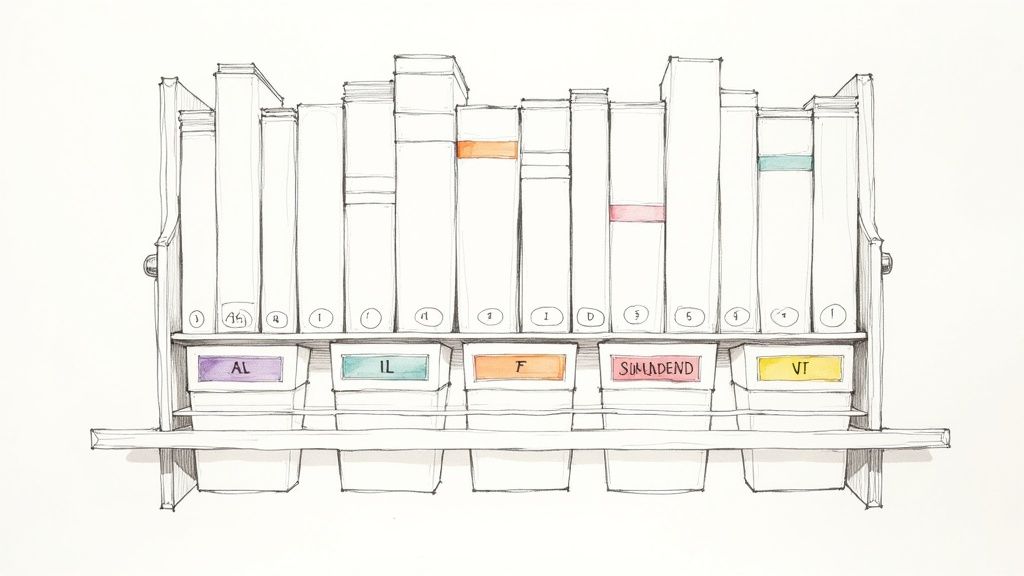
This system directly supports differentiated instruction, especially in classrooms using guided reading rotations. Teachers can quickly pull a set of Level M books for one group and Level P for another, ensuring each student is working with appropriate texts. Properly matching students with texts is a foundational step to improve how students develop reading comprehension skills. It simplifies progress monitoring and makes book selection less overwhelming for young readers.
How to Implement This System
To get started, apply color-coded dot stickers to each book's spine, with each color corresponding to a specific level or range (e.g., green for Levels F-H). Store books in bins clearly labeled with the corresponding level.
- Verify Levels: Use reliable sources like the Fountas & Pinnell Leveled Books Website or Scholastic's Book Wizard to find accurate levels for your books.
- Start Small: Don't feel pressured to level your entire library at once. Begin with your guided reading collection or a popular series and expand from there.
- Involve Students: Turn the labeling process into a learning activity. Have students help apply stickers to books they've read, reinforcing their understanding of text complexity.
2. Genre-Based Organization
Sorting books by genre is one of the most intuitive and engaging classroom library organization ideas, mirroring how readers naturally browse in bookstores and public libraries. This system categorizes books by their literary type, such as fantasy, mystery, historical fiction, informational texts, and graphic novels. The primary goal is to empower students to explore their interests, easily find their favorite types of stories, and develop an understanding of different literary conventions.
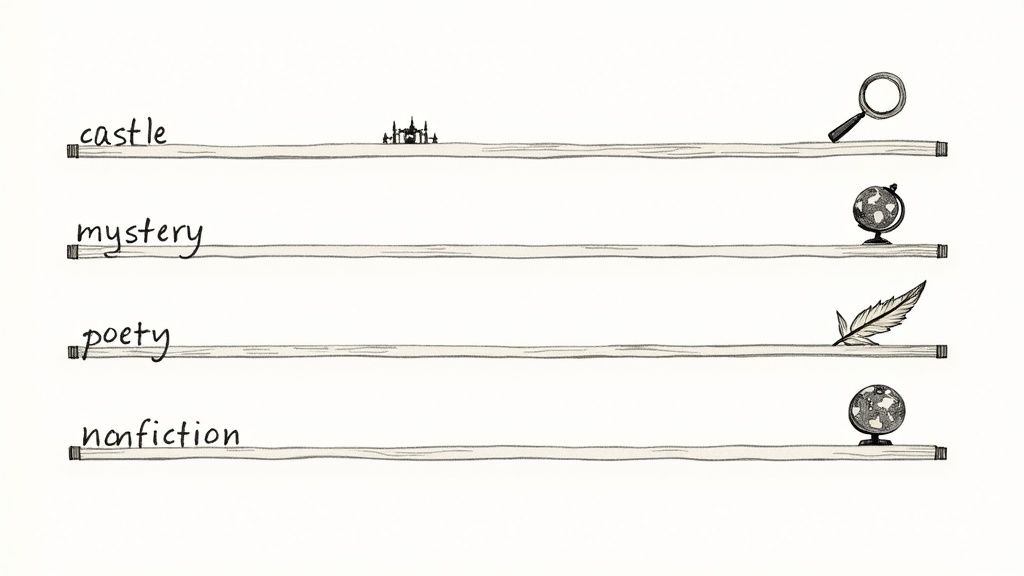
This method fosters reader independence and encourages students to branch out and try new things. When a student finishes a beloved mystery novel, they can go directly to the "Mystery" bin to find their next read. It shifts the focus from "what level am I?" to "what am I interested in?" This approach is fantastic for building a lifelong love of reading by connecting students with books based on genuine curiosity and preference.
How to Implement This System
Begin by creating distinct sections for major genres in your classroom library. Use colorful, clear signage and labels on bins or shelves to make each section easily identifiable.
- Create Visual Guides: Design a "Genre Guide" anchor chart with simple definitions and cover examples for each category. This helps students understand the differences between, for example, science fiction and fantasy.
- Use Genre Stickers: Apply genre-specific stickers or colored dots to the spines of books, making it easy for students to return them to the correct spot.
- Rotate and Feature: Keep the library fresh by creating a "Featured Genre" display that rotates every month. This can highlight less-explored categories like poetry or biographies.
3. Author-Based Organization
A classic and effective method among classroom library organization ideas is sorting books alphabetically by the author's last name. This system mirrors how many traditional public and school libraries are structured, providing students with a transferable skill for navigating larger collections. Its primary strength lies in helping students easily find all the works by an author they love, which is perfect for building author studies or encouraging readers to explore an author's entire body of work.
This approach is particularly powerful for upper elementary and middle school classrooms where students begin to follow specific authors, such as Rick Riordan, Kate DiCamillo, or Jason Reynolds. Grouping books this way allows students to see an author's development and thematic connections across different titles. It also simplifies shelving and management, as there is a clear, objective spot for every book to be returned.
How to Implement This System
To set up an author-based system, you'll need clear labels on both the books and the shelves or bins where they are stored. This consistency is key to making the system intuitive for students to use independently.
- Create Spine Labels: Use a label maker or pre-printed stickers to put the first three letters of the author's last name on the spine of each book (e.g., "ROW" for J.K. Rowling).
- Label Bins or Shelves: Clearly mark each book bin or shelf section with a letter or a range of letters (e.g., A-C, D-F). This helps students quickly narrow down their search.
- Feature Author Spotlights: Designate a special area to highlight a specific author each month. Include a brief biography and display all of their books together to generate interest.
4. Topic/Subject-Based Organization
Another powerful classroom library organization idea is to sort books by topic or subject. This method involves creating distinct sections for categories like animals, space, biographies, history, and science. The core purpose is to connect reading directly to content-area learning, making it intuitive for students to find books that support their research projects, thematic units, and personal interests.
This system is especially effective for organizing a nonfiction collection and promoting cross-curricular connections. A student studying ancient civilizations can easily find relevant texts in the history section, while another exploring ecosystems can browse the science section. This approach turns the library into an active learning resource, encouraging students to see books as tools for inquiry and exploration. It also allows teachers to quickly gather materials for specific curriculum units.
How to Implement This System
Begin by identifying the major themes and subjects in your curriculum and those that reflect student interests. Use clearly labeled bins, baskets, or designated shelf sections for each topic. You can use pictures or icons on labels for younger, pre-reading students to help them navigate the library independently.
- Create Visual Cues: Use color-coded labels or symbolic icons for each topic (e.g., a planet for "Space," a leaf for "Plants"). This visual system helps students quickly identify sections.
- Include a Mix of Levels: Within each topic bin, be sure to include books at various reading levels. This ensures that every student can access information on a subject they are curious about, regardless of their reading ability.
- Make it Interactive: Create a "topic guide" or a simple, student-friendly index that lists where to find different subjects. This empowers students to locate information on their own and reinforces research skills.
5. Reading Level + Genre Hybrid Organization
For teachers who want to balance student choice with instructional needs, a hybrid system is one of the most effective classroom library organization ideas. This method creates a two-tiered structure by first sorting books into broad genre categories like "Fantasy," "Realistic Fiction," or "Nonfiction," and then subdividing each genre by reading level. The result is a library that empowers students to explore their interests while still allowing them to easily find a "just right" book.
This approach perfectly supports a balanced literacy framework. During independent reading, a student passionate about mystery can head to that section and select a book at their appropriate level. Later, for guided reading, the teacher can pull a set of leveled texts from the same genre bin to work on specific skills. It respects student autonomy without sacrificing the data-driven benefits of a leveled system, making it a powerful, well-rounded solution.
How to Implement This System
Implementing this dual system requires clear, consistent labeling. A great method is using two stickers on each book's spine: one for genre (e.g., a lightning bolt for fantasy) and one color-coded dot for the reading level. Bins should be clearly labeled with both the genre and the level range they contain (e.g., "Mystery: Levels L-N").
- Start with Major Genres: Begin by sorting your library into a few broad categories. You can always create more specific subgenres later as your collection grows.
- Create Visual Guides: Post a simple chart or anchor chart that explains your labeling system. This visual aid will help students navigate the library independently and understand how to find books that match their interests and reading abilities.
- Use Consistent Color-Coding: If you use a green dot for Level K in your fantasy section, ensure the same green dot represents Level K in your nonfiction section. Consistency is key to making the system intuitive for young readers.
6. Series Collections Organization
For many young readers, getting hooked on a series is the gateway to a lifelong love of reading. A series collections organization system honors this by grouping all books from a specific series together, often in sequential order. This approach is highly effective for popular collections like Percy Jackson, Wings of Fire, or The Baby-Sitters Club, as it removes the barrier of searching for the next book and encourages binge-reading.
This system capitalizes on reader momentum. When a student finishes one book and is eager for the next, having the entire series in one clearly marked bin or shelf section makes their choice effortless. It also creates a powerful visual cue, drawing other students to popular series they might not have discovered otherwise. This is an excellent way to support developing readers and encourage them to explore some of the best book series for kids. It fosters a sense of community as students read and discuss the same characters and plotlines.
How to Implement This System
To set up this system, use dedicated bins, magazine files, or shelf sections for each series. Clearly label the container with the series title and, if possible, a picture of the book covers.
- Create Visual Aids: Design and display reading order checklists or posters for each series so students know which book comes next. This helps them track their progress.
- Highlight Popular Series: Place the most sought-after series in a high-traffic area of your classroom library. Use creative displays to make them even more appealing.
- Combine with Other Systems: You can still use color-coded dots on the spines for genre or reading level, adding another layer of information without disrupting the series collections.
7. Character/Theme-Based Organization
Another engaging classroom library organization idea is sorting books by central characters or themes. This method moves beyond technical reading levels to connect with students on an emotional and interest-based level. Collections can be built around concepts like 'Adventure Stories,' 'Books About Friendship,' 'Magical Worlds,' or 'Brave Characters,' making the library highly accessible, especially for younger or emerging readers who select books based on topics that excite them.
This approach is powerful for fostering a love of reading and supporting social-emotional learning. A bin labeled 'Friendship Fun' immediately tells a child what kind of story to expect, encouraging them to explore narratives that reflect their own experiences and feelings. Similarly, organizing books around emotional themes can be complemented by tools like a feelings chart in your classroom to help students connect literature to their own emotional development. This thematic organization also highlights the importance of diverse representation in children's literature by showcasing characters from various backgrounds who share universal experiences.
How to Implement This System
Begin by identifying common themes in your existing collection or asking students what kinds of stories they love. Use visual cues like character cutouts, thematic artwork, and colorful posters to make each section inviting and easy to navigate.
- Involve Students: Let students help create and name the themes. They might come up with creative categories like 'Animal Antics' or 'Mysteries to Solve' that resonate with their peers.
- Use Visuals: Decorate bins and shelves with illustrations of popular characters or symbols representing each theme. This helps pre-readers and visual learners find books independently.
- Allow for Overlap: A single book can often fit into multiple categories. Use a simple system, like different colored dot stickers for each theme, to show that a book about a brave animal on an adventure belongs in 'Brave Characters,' 'Animal Antics,' and 'Adventure Stories.'
8. Award-Winners and Recommended Lists Organization
Another excellent classroom library organization idea is to highlight books that have received prestigious awards or appear on curated "best of" lists. This method organizes a portion of your library around literary quality, celebrating titles recognized for their exceptional writing, illustration, and cultural significance. It serves as a powerful signal to students that these books offer a uniquely enriching reading experience.
This system is fantastic for guiding discerning readers or introducing students to critically acclaimed literature they might otherwise overlook. By creating a dedicated shelf or bin for Newbery, Caldecott, or Coretta Scott King Award winners, you implicitly endorse these books as models of excellence. It also helps teachers and parents quickly identify high-quality texts to recommend, building a library collection with proven literary merit and lasting value.
How to Implement This System
Start by identifying the award-winners already in your collection and gathering them in one place. Use special stickers, like shiny gold or silver seals, on the book spines to make them easily identifiable even when mixed with other books.
- Create Highlight Displays: Designate a prominent shelf as the "Award-Winners Circle." Feature books that have won major awards like the Pura Belpré Award or are on lists from sources like the American Library Association.
- Teach the Awards: Spend time teaching students what these awards mean. Explain that the Caldecott Medal is for illustration, while the Newbery Medal is for outstanding contribution to children's literature. This context builds appreciation.
- Update Annually: Make a small celebration out of announcing the new winners each year. This keeps the display fresh and generates excitement around new, high-quality books.
9. Classroom Library Carts and Mobile Organization
For educators who value flexibility and dynamic classroom layouts, organizing a library on wheels is a game-changer. This approach utilizes mobile shelving units, book carts, or rolling bins to create a library that can be easily repositioned. This mobility allows teachers to adapt the learning environment, rotate collections for different units, or even share resources between classrooms, making it one of the most versatile classroom library organization ideas.
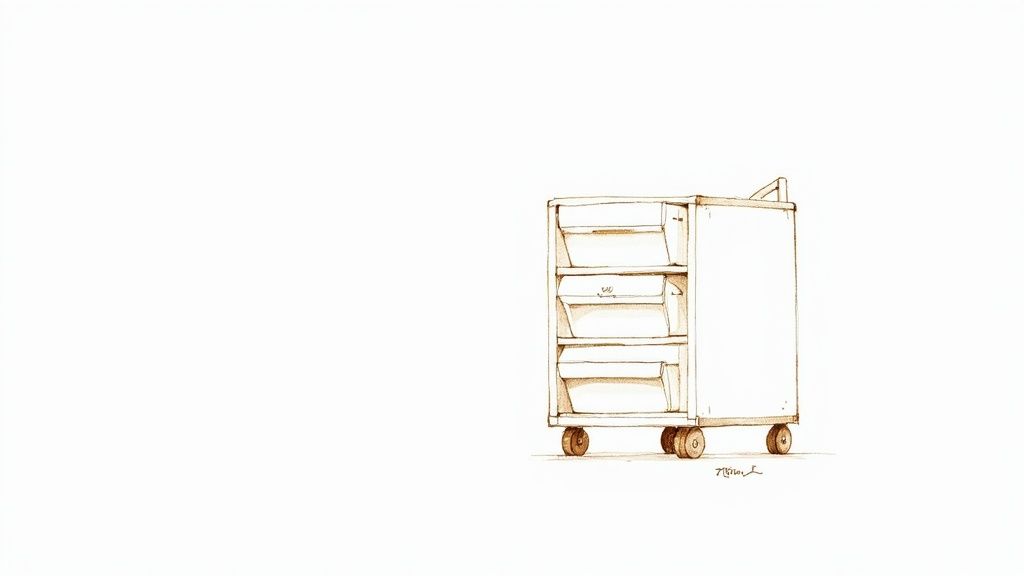
This system is ideal for modern, flexible learning environments where classroom furniture is frequently rearranged for different activities. A mobile cart can serve as a "Featured Books" display one week, a "Nonfiction Research Station" the next, and a "Genre Spotlight" after that. It keeps the library feeling fresh and exciting, drawing students' attention to books they might otherwise overlook on a static shelf.
How to Implement This System
To get started, invest in a sturdy, easy-to-maneuver cart with tiered shelving that can withstand daily use. Treat each cart as a mini-library, organizing its contents just as you would stationary shelves.
- Create Thematic Carts: Dedicate specific carts to high-interest topics, authors, or seasonal collections. For example, have a "Spooky Stories" cart in October or an "Author of the Month" cart.
- Establish Clear Routines: Ensure students understand how to browse the carts and where to return books. If carts rotate between rooms, create a simple checkout system to track the collection.
- Rotate Content Regularly: The key to a mobile library's success is novelty. Swap out the books on each cart every few weeks to maintain student engagement and expose them to a wider range of texts.
10. Digital and QR Code-Enhanced Organization
Merging physical books with digital tools offers a powerful, modern approach to classroom library organization. This tech-forward system uses QR codes and digital catalogs to enhance the user experience for both students and teachers. By placing a QR code on a book or bin, you can link students to a wealth of information, such as author interviews, book trailers, read-aloud videos, or even a simple Google Form for book reviews. It adds an interactive layer to your physical library.
This method streamlines library management by allowing you to track inventory, circulation, and student reading habits digitally. Systems like Booksource or a simple shared spreadsheet can give you powerful data on which books are popular and which genres need expanding. This blend of physical and digital is one of the most dynamic classroom library organization ideas, as it grows with your students' technological skills and your instructional goals.
How to Implement This System
Start by creating QR codes that link to simple, high-value resources. As you and your students become more comfortable, you can introduce more complex digital integrations.
- Choose a Platform: Decide whether to use a dedicated classroom library tool like Booksource Classroom, a school-wide system like Follett Destiny, or a DIY solution using Google Sheets and a QR code generator.
- Create QR Codes: Generate QR codes that link to valuable content. For example, a code on a nonfiction book could link to a relevant National Geographic Kids video.
- Establish Routines: Teach students how to scan codes and use the digital system for checking books in and out. Create a simple tutorial video or poster to guide them.
- Leverage Technology: For more advanced management, explore how modern tools can further simplify cataloging. Beyond QR codes, you can explore AI-powered solutions for book collection management to enhance accessibility and tracking.
10 Classroom Library Organization Methods Compared
| Organization Method | 🔄 Implementation Complexity | ⚡ Resource Requirements | 📊 Expected Outcomes | 💡 Ideal Use Cases | ⭐ Key Advantages |
|---|---|---|---|---|---|
| Guided Reading Level (Lexile) Organization | 🔄 Medium–High: initial book leveling and occasional relabeling | ⚡ Medium: assessment tools, spine labels, staff time | 📊 Strong: targeted matches, measurable reading growth | 💡 Guided reading groups, interventions, progress tracking | ⭐ Supports differentiation; clear level-based choices |
| Genre-Based Organization | 🔄 Low–Medium: simple labeling but genre decisions needed | ⚡ Low: signage and occasional décor | 📊 Good: higher engagement and easier browsing | 💡 Classroom browsing, literature circles, bookstores | ⭐ Reader-driven selection; intuitive navigation |
| Author-Based Organization | 🔄 Low: alphabetizing by author is straightforward | ⚡ Low: spine labels or stickers | 📊 Moderate: aids author studies and locating series | 💡 Research projects, series-heavy collections | ⭐ Traditional system; groups all works by an author |
| Topic/Subject-Based Organization | 🔄 Medium: subject classification choices required | ⚡ Medium: labels, subject guides, curriculum alignment | 📊 Strong: supports research and cross-curricular work | 💡 Nonfiction centers, thematic units, project-based learning | ⭐ Excellent for informational searches and curriculum ties |
| Reading Level + Genre Hybrid Organization | 🔄 High: two-tier sorting and clear signage required | ⚡ High: dual labels, assessment data, maintenance | 📊 Very strong: balances choice with differentiated access | 💡 Mixed-ability classrooms; balanced literacy programs | ⭐ Combines interest-driven browsing and appropriate challenge |
| Series Collections Organization | 🔄 Low–Medium: keep volumes sequential and tracked | ⚡ Medium: shelf space, numbering/track system | 📊 Good: sustained reading engagement and continuity | 💡 Popular series displays, reader-motivated collections | ⭐ Simplifies finding next-in-series; boosts sustained reading |
| Character/Theme-Based Organization | 🔄 Medium: thematic interpretation and placement work | ⚡ Medium: illustrated bins, rotating displays | 📊 Strong for young readers: emotional engagement & choice | 💡 Preschool/kindergarten, SEL-linked libraries | ⭐ Highly engaging for emergent readers; visually inviting |
| Award-Winners and Recommended Lists Organization | 🔄 Low: identify and mark award titles | ⚡ Low–Medium: stickers, curated displays, updates | 📊 Good: highlights literary quality and trusted picks | 💡 Promoting high-quality literature, recommendation shelves | ⭐ Curated credibility; useful for teacher/librarian picks |
| Classroom Library Carts and Mobile Organization | 🔄 Low: simple setup but ongoing logistics | ⚡ Medium: carts, bins, storage space | 📊 Good: flexibility increases variety and access | 💡 Rotating collections, shared resources, seasonal themes | ⭐ Adaptable and mobile; keeps collections fresh |
| Digital and QR Code-Enhanced Organization | 🔄 High: digital integration, cataloging, and training | ⚡ High: devices, software subscriptions, maintenance | 📊 Very strong: real-time data, personalized recommendations | 💡 Tech-enabled schools, inventory tracking, remote access | ⭐ Data-driven insights, searchable catalog, scalable |
Building a Library That Grows With Your Readers
Embarking on the journey to organize a classroom library can feel like a monumental task, but the rewards are immeasurable. We’ve explored a diverse range of classroom library organization ideas, from the structured precision of guided reading levels to the adventurous spirit of genre-based systems. We've seen how hybrid models can offer the best of both worlds, and how innovative approaches like digital QR codes and mobile library carts can adapt to the dynamic needs of a modern classroom.
The central thread connecting all these strategies is the ultimate goal: to eliminate barriers between students and books. A disorganized, overwhelming, or inaccessible library can inadvertently discourage a budding reader. Conversely, a thoughtfully arranged collection empowers students, fosters independence, and transforms the simple act of choosing a book into an exciting and personal adventure. The perfect system for your classroom isn't necessarily the most complex or color-coded; it's the one that your students can navigate with confidence and enthusiasm.
Your Action Plan for a Transformed Library
The key takeaway is that organization is not a one-time event but an ongoing, reflective practice. The best classroom libraries are living ecosystems that evolve alongside the readers they serve. As you move forward, consider these actionable next steps to bring these ideas to life:
- Assess and Survey: Before you change a single label, talk to your students. What do they find confusing? What kinds of books do they wish were easier to find? Use their feedback as your guide.
- Start Small: You don't have to overhaul your entire library in one weekend. Begin with a single section, perhaps the series collections or a popular genre bin. Celebrate this small victory and use the momentum to tackle the next area.
- Embrace Student Ownership: Turn organization into a collaborative project. Task students with creating genre labels, sorting new arrivals, or designing a "Featured Author" display. When they are involved in the process, they become invested in maintaining the system and respecting the shared space.
- Iterate and Adapt: The system you start with in September may need adjustments by January. Be open to refining your categories, updating your checkout process, and rearranging displays based on what works-and what doesn't-for your specific group of learners.
Ultimately, your efforts in curating and organizing your collection do far more than just manage inventory. You are building a foundational resource for literacy, critical thinking, and empathy. Each neatly labeled bin, accessible shelf, and cozy reading nook sends a powerful message to your students: reading is valuable, your interests matter, and this space is for you. By implementing these classroom library organization ideas, you are not just tidying shelves; you are intentionally cultivating a vibrant culture of reading that will stay with your students for years to come.
Ready to fill those newly organized bins and shelves with captivating stories your students won't be able to put down? Number 6 Publishing specializes in creating imaginative, middle-grade fiction that sparks curiosity and a lifelong love for reading. Explore our catalog at Number 6 Publishing to find the perfect additions that will make your classroom library the most exciting corner of the school.