
Third grade represents a crucial transition in a child's reading journey. It's the year when decoding text evolves into comprehending complex narratives, and the shared experience of a read-aloud becomes a powerful tool for growth. This is when a story read together can ignite a lifelong passion for reading, expand vocabulary, and introduce new perspectives on the world. The right book can transform passive listening into active engagement, building a bridge between the words on the page and a child's burgeoning imagination.
Choosing the perfect title is essential. A great read-aloud for this age group needs more than just a good plot; it requires rich language that challenges and delights, characters that feel real, and themes that spark curiosity and conversation. The challenge for parents, caregivers, and educators is finding those specific books that hit every mark without overwhelming young listeners.
This guide is designed to eliminate the guesswork. We've curated a comprehensive list of the best read aloud books for 3rd grade, selected for their proven ability to captivate and inspire. Each entry provides not just a summary, but practical insights into why it works so well when read aloud. You'll find:
- Actionable insights on pacing and vocal expression.
- Discussion prompts to deepen comprehension.
- Extension activities to continue the learning beyond the final page.
From timeless adventures like Charlotte's Web to modern classics such as The Wild Robot, this list provides everything you need to create memorable and meaningful reading experiences.
1. Hatchet by Gary Paulsen
A masterclass in suspense and self-reliance, Gary Paulsen's Hatchet is a perennial favorite for read-alouds, even for an audience on the younger end of its target range. The story follows 13-year-old Brian Robeson, the sole survivor of a plane crash who must fend for himself in the vast Canadian wilderness with only a hatchet. Its straightforward, action-oriented prose makes it one of the best read aloud books for 3rd grade, as the gripping plot captivates listeners and minimizes wandering attention.
The novel’s power as a read-aloud lies in its pacing. Each chapter presents a new, tangible problem, from finding food and building shelter to facing a porcupine or a tornado. This structure creates natural cliffhangers, making it easy to stop at the end of a chapter and leave students begging for more the next day. The relatively simple sentence structure ensures comprehension, while the vocabulary related to nature and survival offers rich learning opportunities.
Why It Works for 3rd Graders
- High-Stakes Plot: The constant tension and clear goals (find food, make fire, survive) keep young listeners fully invested in Brian's journey.
- Themes of Resilience: The story is a powerful vehicle for discussing perseverance, problem-solving, and inner strength. Listeners witness Brian's transformation from a helpless city boy into a capable survivor.
- Curriculum Connections: Hatchet is a natural fit for science units on ecosystems, animal habitats, or basic survival skills. It is frequently used in elementary classrooms to anchor project-based learning activities.
Read-Aloud Tips & Activities
Before you begin, be aware that some scenes involving animal attacks or Brian's injuries can be intense. It’s wise to preview these chapters to ensure they are appropriate for your specific group of listeners.
- Create a Survival Log: Keep a running chart or journal as a class. After each reading session, add the new skills Brian learns, the challenges he faces, and the resources he discovers.
- Problem-Solving Prompts: Pause during the reading and ask students, "What would you do in this situation?" or "What are three possible solutions to Brian's problem?"
- Nature Journaling: Encourage students to start their own nature journals, sketching and describing plants and animals they observe in their own environment, just as Brian learns to do for his survival.
2. Charlotte's Web by E.B. White
A timeless classic, E.B. White's Charlotte's Web is a poignant tale of friendship, life, and loss that has captivated young hearts for generations. The story follows a humble pig named Wilbur, whose life is saved by the clever and compassionate spider, Charlotte. Its lyrical prose and endearing characters make it one of the best read aloud books for 3rd grade, offering a gentle yet profound narrative that is perfect for shared reading. The story's deliberate pacing allows listeners to become deeply attached to the characters and absorb its powerful themes.
The book’s emotional depth is what makes it such a memorable read-aloud experience. It introduces complex concepts like mortality and sacrifice in an accessible, heartfelt way. The distinct voices of the barnyard animals, from the gluttonous rat Templeton to the wise old sheep, provide a wonderful opportunity for expressive reading that keeps children engaged. It’s a story that sparks meaningful conversations and often becomes a core memory for young listeners.
Why It Works for 3rd Graders
- Profound Emotional Themes: The story gently explores themes of friendship, love, death, and legacy, providing a safe space to discuss big feelings and complex ideas.
- Rich Vocabulary: E.B. White's writing is beautiful and filled with wonderful vocabulary words like "radiant," "humble," and "languishing," which enrich students' language skills.
- Memorable Characters: From the earnest Wilbur to the loyal Charlotte, the characters are unforgettable and provide strong models of kindness, ingenuity, and friendship.
Read-Aloud Tips & Activities
Be prepared for an emotional response to the book's ending; it’s a good idea to have tissues on hand and allow time for discussion after the final chapters. You can explore more about this classic's enduring power and find additional resources for Charlotte's Web to deepen the experience.
- "Terrific" Word Web: Create a large spider web on a bulletin board. As you read, have students add "terrific" vocabulary words from the book to the web.
- Character Study: Ask students to choose a character from the barn and write a short paragraph describing their personality traits, using examples from the story.
- Friendship Reflections: Pause to discuss how Charlotte and Wilbur show their friendship to one another. Ask students to share ways they show friendship to others in their own lives.
3. The One and Only Ivan by Katherine Applegate
Katherine Applegate's Newbery Medal-winning novel, The One and Only Ivan, offers a profound and moving story told from the perspective of a silverback gorilla living in a shopping mall. Ivan's voice is simple, direct, and full of understated emotion, making this a powerful and accessible choice for a classroom read-aloud. The story follows Ivan, his elephant friend Stella, and a baby elephant named Ruby as they navigate the challenges of their captivity and dream of a better life.
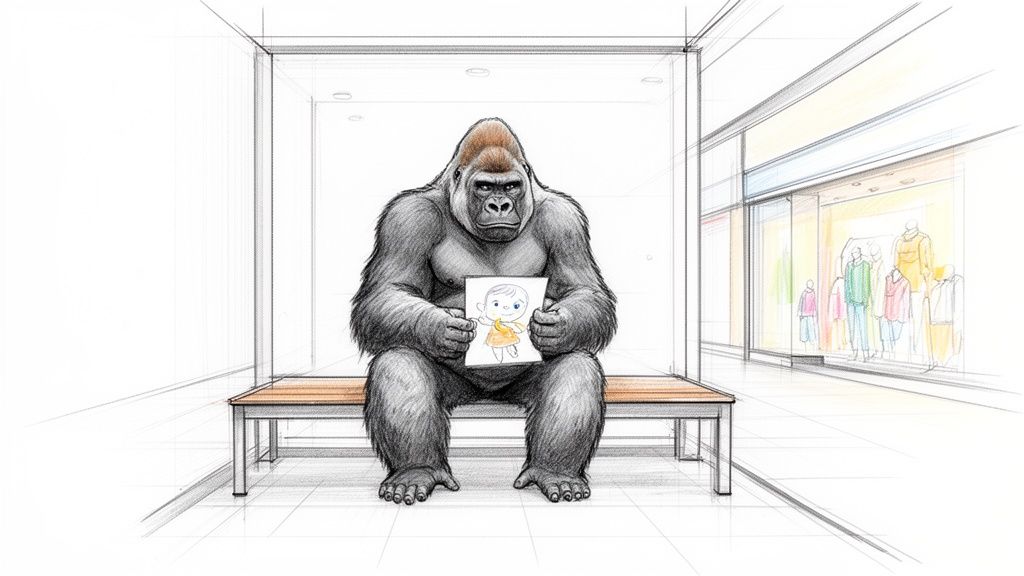
The book's power as one of the best read aloud books for 3rd grade comes from its short, almost poetic chapters that capture Ivan’s thoughts and observations. This structure is perfect for holding the attention of younger listeners, allowing for natural pauses and reflections. The narrative gently introduces complex themes like freedom, friendship, animal welfare, and the power of art to create change, all through a lens that third graders can understand and connect with emotionally.
Why It Works for 3rd Graders
- Unique Perspective: Hearing the story from an animal's point of view is highly engaging and fosters empathy. Students become deeply invested in Ivan’s plight and his relationships.
- Deep Emotional Core: The book provides a safe space to discuss powerful feelings like loneliness, hope, and loss. Ivan’s journey to keep a promise to his friend Stella is a beautiful lesson in courage and compassion.
- Inspires Action: Based on a true story, the novel can spark meaningful conversations about animal rights, zoos, and how one small voice (or a few crayon drawings) can make a big difference.
Read-Aloud Tips & Activities
Prepare to have tissues on hand, as some scenes, particularly those involving Stella, are very emotional. Previewing these sections can help you manage the classroom's emotional response.
- Character Web: Create a large visual web on a whiteboard or chart paper to track the relationships between Ivan, Stella, Ruby, Bob the dog, and the humans in their lives. Add to it as you read.
- Art as a Voice: After reading about Ivan's drawings, provide students with art supplies and ask them to create a picture that expresses a strong feeling or tells a story without words, just like Ivan does.
- Research the Real Ivan: Explore the true story of the gorilla who inspired the book. Watch short documentaries or read articles about his life at Zoo Atlanta to add a fascinating real-world connection for students.
4. Because of Winn-Dixie by Kate DiCamillo
Kate DiCamillo’s Newbery Honor-winning novel is a gentle, heartwarming story perfect for fostering empathy and connection in the classroom. The story follows ten-year-old India Opal Buloni, who moves to a small Florida town and feels desperately lonely until she adopts a big, goofy dog she names Winn-Dixie. Through her charming canine companion, Opal begins to meet the town's quirky residents, collecting their stories and building a community for herself. Its beautiful, lyrical prose and character-driven plot make it an exceptional read-aloud choice.
The book’s strength as a read-aloud comes from its episodic nature. Each chapter introduces a new character or a poignant memory, allowing for rich, focused discussions about friendship, loss, and forgiveness. Opal’s earnest and relatable first-person narration draws listeners in, making them feel like her confidante. The language is accessible yet full of emotional depth, providing a wonderful opportunity to discuss complex feelings in a safe, story-based context.
Why It Works for 3rd Graders
- Relatable Themes: Loneliness, the desire for friendship, and figuring out one's place in the world are central themes that deeply resonate with third-grade students.
- Strong Character Voice: Opal’s honest and thoughtful narration makes her an easy character for young listeners to connect with and understand.
- Focus on Empathy: The story encourages students to look past first impressions and understand the stories and heartaches that shape the people around them.
Read-Aloud Tips & Activities
The book deals with themes of abandonment and parental loss, so be prepared to facilitate gentle conversations around these topics.
- Create a Character Map: As Opal meets new people like Gloria Dump, Otis, and Miss Franny Block, create a visual web or chart on the board to track how each character is connected to one another.
- "Ten Things" List: Based on the list Opal makes about her mother, have students write down ten important things about a special person in their own lives. This can be a private journaling activity or shared if they are comfortable.
- Community-Building Projects: Inspired by the party Opal hosts, brainstorm a simple class or school project to bring people together, such as creating welcome cards for new students or organizing a "good deeds" jar.
5. Ramona the Pest by Beverly Cleary
A timeless classic that captures the chaotic, earnest, and often hilarious world of a five-year-old, Beverly Cleary's Ramona the Pest is a standout choice for a read-aloud. The story follows the irrepressible Ramona Quimby as she starts kindergarten, full of big ideas that rarely turn out as planned. Her literal interpretations of the world and her desperate desire to be loved make her one of literature’s most relatable characters, and her antics are guaranteed to have a third-grade audience roaring with laughter.
The book’s strength as a read-aloud comes from its episodic nature and Cleary’s masterful understanding of a child's perspective. Each chapter presents a new, low-stakes misadventure, from a misunderstanding about "the dawnzer’s early light" to a determination to pull a classmate's boing-boing curls. The humor is found not in making fun of Ramona, but in the authentic and heartwarming depiction of her inner logic. It's a perfect example of how the best read aloud books for 3rd grade can create a shared sense of joy and empathy.
Why It Works for 3rd Graders
- Hilarious and Relatable: Students see their own feelings of confusion, excitement, and frustration reflected in Ramona’s experiences, making her an incredibly endearing character.
- Focus on Perspective: The story is a brilliant tool for discussing empathy and seeing situations from another person’s point of view. Listeners understand Ramona's intentions even when her actions cause trouble.
- Simple, Engaging Chapters: The self-contained chapters make it easy to read one per session, leaving students satisfied but still eager for Ramona’s next adventure.
Read-Aloud Tips & Activities
Ramona’s impulsive nature provides endless opportunities for conversation. Use her choices as springboards for discussion about cause and effect and understanding social rules.
- Create a Character Voice: Give Ramona a distinctive, enthusiastic voice and use different tones for her patient teacher, Miss Binney, and her exasperated older sister, Beezus. This enhances the humor and brings the dialogue to life.
- Consequence Chart: Pause after a major event and ask students to chart the situation. What did Ramona want to happen? What actually happened? What could she have done differently?
- "What Was She Thinking?" Journal: Encourage students to write a short journal entry from Ramona’s perspective after a key scene, explaining her reasoning for her actions. This is a great exercise in creative writing and empathy.
6. The Wild Robot by Peter Brown
A modern classic that beautifully merges science fiction with a timeless nature story, Peter Brown's The Wild Robot is an exceptional choice for a classroom read-aloud. The story follows Robot Unit 7134, or Roz, who crash-lands on a remote island and must learn to survive by observing and befriending the local animal inhabitants. Its short chapters, coupled with stunning illustrations, make it one of the best read aloud books for 3rd grade, effortlessly bridging the gap between picture books and more complex chapter books.
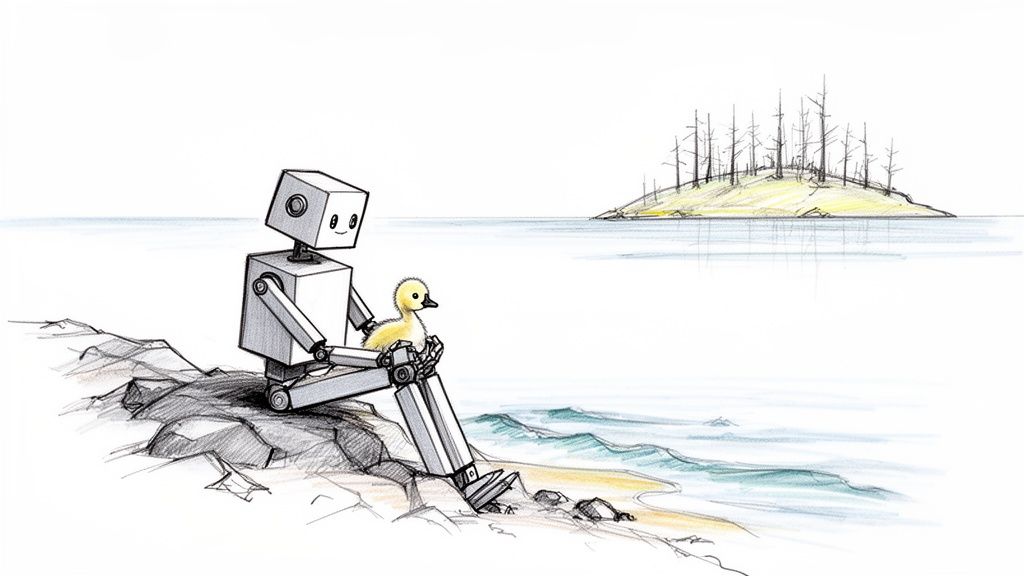
The power of this book in a group setting lies in its emotional depth and thought-provoking themes. Listeners are captivated as Roz, a being of logic and programming, develops a sense of family and community, even adopting a gosling named Brightbill. The narrative balances moments of quiet beauty with exciting action, keeping students engaged while sparking conversations about technology, nature, family, and what it truly means to be alive.
Why It Works for 3rd Graders
- Visually Engaging: Peter Brown’s striking illustrations are integral to the story, providing visual context that enhances comprehension and captivates young listeners.
- Themes of Empathy and Belonging: The story is a powerful exploration of finding your place and forming connections with those who are different from you. Roz's journey encourages students to think about compassion and community.
- Curriculum Connections: The Wild Robot is a perfect anchor for units on ecosystems, animal life cycles, artificial intelligence, and environmental stewardship. It offers a unique literary lens for STEM topics.
Read-Aloud Tips & Activities
The book’s short chapters make it easy to read one or two in a single session. Be sure to give every student a clear view of the illustrations as you read, as they add significant meaning to the text.
- Character Sketching: Inspired by Peter Brown's distinct artistic style, have students draw their own interpretations of Roz, Brightbill, and the other island animals.
- Nature vs. Technology T-Chart: Create a class chart to compare the natural world with Roz’s technological abilities. Discuss how she uses her robotic traits to adapt to the wild and help the animals.
- "What is Family?" Discussion: Use Roz and Brightbill’s relationship as a starting point for a conversation about what makes a family. Explore how families can look different and be built on love and care, not just biology.
7. Pax by Sara Pennypacker
A poignant and unforgettable story, Pax tells the story of Peter, a young boy forced to abandon his pet fox, Pax, on the side of the road as war approaches. The novel follows their parallel journeys as they struggle to reunite, offering a profound exploration of loyalty, the costs of conflict, and the deep connection between humans and animals. Its dual perspectives and emotionally rich narrative make it a compelling choice for one of the best read aloud books for 3rd grade, sparking deep conversations and empathy.
The power of Pax as a read-aloud comes from its unique structure, alternating between Peter’s and Pax’s points of view. This narrative device gives listeners a complete emotional picture, fostering a deep connection to both characters and their plights. The chapters are relatively short, often ending on a note of suspense or emotional weight that keeps students eager to find out what happens next to either the boy or his fox.
Why It Works for 3rd Graders
- Emotional Depth: The story’s central theme of love and loyalty between a boy and his fox is incredibly moving and accessible for this age group, prompting rich discussions about relationships and responsibility.
- Dual Perspectives: Listening to the story from both a human and an animal viewpoint is a powerful tool for teaching empathy, perspective-taking, and making inferences about characters' feelings.
- Themes of Peace and Resilience: Pax provides a gentle yet honest entry point for discussing difficult topics like loss, the impact of war, and the meaning of home in an age-appropriate way.
Read-Aloud Tips & Activities
The book deals with mature themes like war and injury, so it's important to preview the content to determine if it is right for your audience. Be prepared to pause and discuss the characters' difficult emotions.
- Create a Dual-Journey Map: On a large piece of paper, map the physical and emotional journeys of both Peter and Pax. After each reading, add events, challenges, and new characters they meet along their separate paths.
- Perspective Journals: Have students create a two-sided journal. On one side, they can write or draw from Peter’s perspective, and on the other, they can imagine and record Pax’s experiences and feelings.
- Define "Loyalty": Use the story to anchor a class discussion about what loyalty means. Ask students to share examples of loyalty from the book and from their own lives.
8. The Tale of Despereaux by Kate DiCamillo
A modern fairy tale with a classic feel, Kate DiCamillo’s Newbery Medal winner is a truly enchanting experience when read aloud. The story follows Despereaux Tilling, a tiny mouse with oversized ears who dares to love a human princess. The narrative weaves together the fates of a forgiving princess, a rat who longs for light, and a serving girl with a bitter heart. Its lyrical, sophisticated prose makes it one of the best read aloud books for 3rd grade, challenging listeners while wrapping them in a beautiful story.
The book’s power as a read-aloud comes from its unique voice. The narrator speaks directly to the reader, posing questions and offering gentle guidance, creating an intimate, shared storytelling experience. The plot unfolds in four distinct "books," each focusing on a different character's perspective before converging. This structure builds suspense and empathy, allowing students to see how individual choices ripple outward and affect others in unexpected ways.
Why It Works for 3rd Graders
- Lyrical Language: DiCamillo’s writing is poetic and rich with sophisticated vocabulary, offering a wonderful opportunity to expose students to beautiful sentence structures and descriptive language in an accessible context.
- Complex Themes: The novel gently introduces profound ideas like courage, forgiveness, redemption, and the consequences of revenge, sparking meaningful classroom discussions.
- Engaging Characters: Listeners will be captivated by the unlikely hero Despereaux and will connect with the layered motivations of each character, from the hopeful Princess Pea to the sorrowful rat Chiaroscuro.
Read-Aloud Tips & Activities
Be prepared for some dark and potentially frightening moments, particularly those taking place in the dungeon with the rats. Preview these sections to decide how to present them to your specific audience.
- Character Web: With multiple intersecting storylines, a character web on a whiteboard or chart paper is essential. Map out the characters and draw lines to connect them as their stories intertwine.
- "Reader, ..." Prompts: When the narrator addresses the reader directly, pause and pose the question to the class. For example, when asked, "Do you know what it means to be heartbroken?" use it as a prompt for a think-pair-share.
- Light vs. Dark Imagery: Have students track instances of light and darkness throughout the story. Discuss what these concepts represent for different characters (e.g., hope, knowledge, despair, fear).
9. Junie B. Jones Series by Barbara Park
Barbara Park's Junie B. Jones Series is a titan of humor and relatability, making it a fantastic choice for a fun, lighthearted read-aloud. The series follows the unfiltered and hilarious Junie B. Jones, a kindergartner (and later, first-grader) whose dramatic interpretations of everyday life, from riding the bus to dealing with classroom rivals, leave listeners in stitches. Its simple sentence structure and episodic chapters make it one of the best read aloud books for 3rd grade, especially for reluctant readers or those needing a confidence boost.
The magic of Junie B. as a read-aloud comes from her distinct voice and laugh-out-loud antics. Each chapter presents a new, highly relatable school-age dilemma, solved with Junie B.’s signature brand of chaotic logic. Her frequent misunderstandings of words and situations create wonderful, teachable moments about figurative language and social cues, all wrapped in a package of pure entertainment that keeps young minds engaged.
Why It Works for 3rd Graders
- High-Interest Humor: Junie B.’s outrageous behavior and comical grammar mistakes are genuinely funny for this age group, ensuring rapt attention.
- Relatable Scenarios: Listeners easily connect with the universal themes of friendship, school rules, and family dynamics, making the stories feel personal and relevant.
- Confidence Builder: The accessible vocabulary and straightforward plots make these books a great "bridge" from picture books, helping students see chapter books as enjoyable rather than intimidating.
Read-Aloud Tips & Activities
Junie B.'s personality is key, so don't be afraid to use an exaggerated, animated voice when reading her dialogue. Her unique grammar is part of the charm, but you can use it to discuss the "correct" way to phrase things after the story.
- "My Top-Secret Personal Beeswax Journal": Have students create their own journals to write or draw about their school day from their own point of view, just like Junie B. might.
- Problem and (Funny) Solution Chart: After a chapter, chart the problem Junie B. faced and the unique, often misguided, solution she attempted. Then, brainstorm more appropriate solutions as a class.
- Grammar Giggles: Keep a running list of Junie B.'s funny word mix-ups (like "bestest" or "runned"). Use them as a fun way to kick off a grammar lesson on correct verb tenses or superlatives.
10. A Wrinkle in Time by Madeleine L'Engle
A Newbery Medal winner that boldly blends science fiction, fantasy, and philosophy, Madeleine L'Engle's A Wrinkle in Time is an ambitious and rewarding choice for a read-aloud. The story follows the fierce and awkward Meg Murry, her brilliant younger brother Charles Wallace, and their friend Calvin O'Keefe as they travel through space and time to rescue her missing scientist father. For more advanced 3rd graders, this classic is one of the best read aloud books for 3rd grade to challenge their thinking and expand their imaginations.
The book’s strength as a read-aloud comes from its wholly original concepts and rich, descriptive language. L'Engle doesn't shy away from complex ideas like tessering (traveling via the fifth dimension) or the cosmic battle between good and evil. Reading it aloud allows the adult to guide listeners through these abstract concepts, pausing to clarify and discuss, making the challenging material accessible and exciting rather than intimidating. The journey to strange planets like Camazotz provides endless fuel for classroom conversation.
Why It Works for 3rd Graders
- Sparks Big Questions: The novel introduces profound themes about individuality, conformity, courage, and the power of love, prompting deep and meaningful discussions.
- Relatable Heroine: Meg Murry is a wonderfully flawed and authentic protagonist. Students who feel like outsiders will connect with her struggles with self-doubt and her ultimate discovery of her own unique strengths.
- Curriculum Connections: It's a perfect companion for science units on astronomy, physics, or the solar system, providing a creative narrative to explore scientific theories.
Read-Aloud Tips & Activities
This book is best suited for advanced 3rd-grade listeners or groups ready to tackle more complex ideas. Previewing chapters can help you prepare to explain its more abstract elements.
- Create a Tesseract Map: As a class, draw or map out the characters' journey across different planets and dimensions. This visual aid can help students track the plot and understand the cosmic scope of the adventure.
- Discuss Individuality: Pause when the characters reach Camazotz, a planet of unnerving conformity. Ask students, "What makes being different a good thing?" or "Why is it important to be yourself?"
- Explore Scientific Concepts: Use the book as a launchpad to research real scientific concepts mentioned, like tesseracts or constellations. Watch short educational videos about space-time to connect the fiction to real-world science.
Top 10 3rd-Grade Read-Alouds Comparison
| Title | 🔄 Implementation Complexity | ⚡ Resource Requirements | ⭐ Expected Outcomes | 📊 Ideal Use Cases | 💡 Key Advantages / Tips |
|---|---|---|---|---|---|
| Hatchet (Gary Paulsen) | Medium — intense survival scenes; steady pacing needed | Moderate time (~8–10 hrs); minimal props | High engagement; resilience and problem-solving conversations | Upper-elementary read-alouds; outdoor education units | Preview intense chapters; use survival chart to build engagement |
| Charlotte's Web (E.B. White) | Low — gentle pacing and clear voices | Moderate time (~8–10 hrs); optional puppets/illustrations | Strong empathy and vocabulary growth; shared emotional experience | Family/classroom read-aloud; lessons on friendship and loss | Read with expression; prepare tissues for emotional ending |
| The One and Only Ivan (Katherine Applegate) | Medium — emotional content requires pauses | Higher time (~10–12 hrs); context on true story helpful | Deep empathy; ethics and animal-welfare discussions | SEL circles; animal-rights or mixed-age groups | Use character visuals; pause for reflection after scenes |
| Because of Winn‑Dixie (Kate DiCamillo) | Low — warm voice; accessible narrative | Moderate time (~8–10 hrs); may need dialect context | Strong community/belonging outcomes; emotional connection | Units on friendship, community, pets | Create character map; discuss what makes a good friend |
| Ramona the Pest (Beverly Cleary) | Low — episodic chapters, natural stopping points | Moderate time (~9–11 hrs per book); minimal prep | Sustained engagement; humor-driven discussion of choices | Transition/read-aloud for younger 3rd graders; fluency building | Use distinct voices; pause to discuss consequences |
| The Wild Robot (Peter Brown) | Medium — blends text and illustrations; some sci‑fi concepts | Moderate time (~10–12 hrs); display illustrations for groups | Appeals visual learners; prompts tech vs. nature conversations | Environmental units; readers transitioning to chapter books | Show illustrations during read-aloud; explore Roz’s parenting |
| Pax (Sara Pennypacker) | Medium–High — war themes and perspective shifts need prep | Higher time (~10–12 hrs); prepare for emotional processing | Deep empathy; discussions on loyalty, loss, resilience | Upper-elementary literature circles; SEL lessons | Preview war elements; use parallel journals for perspectives |
| The Tale of Despereaux (Kate DiCamillo) | High — lyrical prose and multiple perspectives | High time (~11–13 hrs); dramatic reading benefits comprehension | Vocabulary growth; imagination and themes of courage/forgiveness | Fairy-tale units; advanced listeners | Read dramatically; map characters to track perspectives |
| Junie B. Jones Series (Barbara Park) | Low — simple episodic structure, childlike voice | Low time per book (2–4 hrs); minimal prep | Builds fluency and confidence; consistent humor engagement | Struggling readers; early chapter-book read-alouds | Use varied voices; pair with independent reading for fluency |
| A Wrinkle in Time (Madeleine L'Engle) | High — abstract concepts and philosophical sections | High time (~10–12 hrs); requires prep and discussion time | Stimulates critical thinking and curiosity about science | Advanced/gifted readers; mixed-age groups exploring big ideas | Preview complex concepts; create visual maps of dimensions |
Keep the Story Going: Your Next Reading Adventure Awaits
Choosing from this list of the best read aloud books for 3rd grade is just the first step in a much larger, more rewarding journey. Each story, whether it’s the survival epic of Hatchet or the heartfelt friendship in Charlotte's Web, opens a door to new conversations, deeper empathy, and a stronger community of readers. The true magic happens in the moments after the book is closed: the lively discussions about a character's choice, the shared laughter over a funny scene, and the collective wonder about what comes next.
The power of a read aloud isn’t just in the words on the page; it's in the shared experience. It’s the safe space created for young minds to explore complex emotions, from Ivan's loneliness to Despereaux's courage. These stories become a common language, a reference point for understanding the world and each other.
Key Takeaways for Your Reading Journey
As you move forward, keep these central ideas in mind to make every read aloud session impactful:
- Connection Over Completion: The goal is not just to finish the book, but to connect with the story and with each other. Don't be afraid to pause for a great question or go on a tangent if a scene sparks a personal memory for a child.
- Embrace the Discussion: The post-reading prompts and extension activities provided for each book are your tools for deepening comprehension. They transform passive listening into active, critical thinking and help children relate complex themes to their own lives.
- Variety is the Spice of Reading: By mixing genres, themes, and characters, from the classic humor of Ramona the Pest to the futuristic world of The Wild Robot, you expose third graders to a rich tapestry of narrative possibilities. This variety builds a more resilient, curious, and open-minded reader.
Actionable Next Steps: Bringing Stories to Life
The end of a book doesn't have to be the end of the adventure. The most memorable reading experiences often extend beyond the final page. Here’s how you can keep the enthusiasm alive:
- Create a "Story Response" Journal: Give your child or students a dedicated notebook to draw their favorite scene, write a letter to a character, or even invent an alternate ending. This reinforces comprehension and provides a creative outlet.
- Plan a Themed Activity: Did you finish a book about animals like Pax or The One and Only Ivan? Plan a trip to a local animal shelter or zoo. Reading a story with a strong sense of place can inspire real-world exploration. For instance, after reading about a character who travels to a big city, you could bring that excitement to life. To help young readers 'keep the story going' and bring their favorite characters to life, consider a fun outing like a Family Entrance to The Paddington Bear™ Experience and River Cruise.
- Host a "Book Club" Meeting: Even with just one child, you can formalize the discussion. Prepare a special snack and sit down to discuss the book as if you're in a real book club. Ask them to rate the story and explain their reasoning. This elevates their opinion and makes them feel like a valued literary critic.
Ultimately, the best read aloud books for 3rd grade are the ones that stick with a child long after the cover is closed. They are the stories that build bridges, spark curiosity, and lay the foundation for a lifelong love of reading. By turning reading into a dynamic, interactive, and joyful experience, you are giving a gift that will last far beyond elementary school. Your next great reading adventure is just a chapter away.
At Number 6 Publishing, we craft stories designed to spark that same sense of curiosity and connection you foster during your read-aloud time. If you're looking for fresh, engaging titles that build empathy and inspire discussion, explore our collection of books curated for young, imaginative readers. Discover your next favorite story at Number 6 Publishing.