
Magical realism isn't just about spells and wizards; it's the quiet wonder that blossoms when the impossible feels perfectly normal. In these stories, a ghost might sit down for family dinner, a curse might be as common as catching a cold, or a house might hold the memories of generations within its walls. The magic is subtle, woven directly into the fabric of an otherwise recognizable world, creating a unique and thought-provoking reading experience.
For young readers, this genre is a powerful gateway to exploring complex emotions, cultural histories, and the blurry line between perception and reality. It teaches them that magic isn't always a grand escape but can be a profound way to understand the world we live in. To truly appreciate the artistry of magical realism, it helps to understand the literary techniques that bring these worlds to life, such as mastering figurative language types which seamlessly weave the impossible into the mundane. This foundation enhances the reader's ability to see how authors make the extraordinary feel so authentic.
At Number 6 Publishing, we believe in the power of stories that stretch the imagination while grounding us in human truth. This curated list of the best magical realism books is designed for educators, parents, and young readers eager to find their next unforgettable adventure. We've selected titles that span from foundational classics to contemporary masterpieces, offering insights and discussion points to bring these enchanting worlds to life in your home or classroom. This guide provides not just a list, but a roadmap for using these powerful narratives to spark curiosity and critical thinking.
1. One Hundred Years of Solitude by Gabriel García Márquez
Reading Level: Grades 11-12 & Adult | Themes: Family, Fate, Memory, Time
No list of the best magical realism books would be complete without the novel that defined the genre for a global audience. Gabriel García Márquez’s masterpiece, One Hundred Years of Solitude, is the sweeping saga of the Buendía family, whose story unfolds over generations in the mythical town of Macondo. Here, yellow butterflies precede a death, a priest levitates after drinking hot chocolate, and insomnia becomes a plague that erases memory.
While this is a complex adult classic, it serves as an essential touchstone for mature teen readers ready to tackle foundational literary works. It’s frequently assigned in AP Literature and advanced high school courses because its cyclical narrative and dense family tree challenge students to track intricate character arcs and thematic repetition. The novel brilliantly explores how fate, history, and love are interwoven across time.
Why It's a Top Pick
One Hundred Years of Solitude is more than a story; it's an immersive experience that teaches readers how magical realism uses fantastical elements to reveal deeper truths about human nature and society. Its inclusion in curricula worldwide makes it a vital bridge from young adult literature to the global literary canon.
Teaching & Discussion Tips
To help young readers navigate its complexities:
- Create a Family Tree: Before starting, provide students with a blank Buendía family tree to fill out as they read. This visual aid is crucial for tracking the recurring names and relationships.
- Focus on Motifs: Encourage students to journal or track recurring motifs like the yellow butterflies, the golden chamber pot, or the cyclical names. Discuss what these symbols represent.
- Use a Guide: Pair the novel with a reading guide. The Penguin Classics edition, translated by Gregory Rabassa, is highly recommended for its clarity and often includes helpful introductory notes.
- Provide Context: Supplement the reading with a short biography of García Márquez or a brief overview of Colombian history to ground the magical events in their cultural and political context.
2. The House of the Spirits by Isabel Allende
Reading Level: Grades 10-12 & Adult | Themes: Family, Female Empowerment, Politics, Social Justice
Often seen as the feminist successor to One Hundred Years of Solitude, Isabel Allende’s debut novel is a powerful entry point into the world of magical realism. The House of the Spirits traces three generations of the Trueba family, particularly its extraordinary women, against the turbulent backdrop of 20th-century Chilean history. Here, the clairvoyant Clara converses with spirits, her granddaughter Alba documents their family’s painful and magical history, and political turmoil shapes their destinies.
This novel is more accessible for many teen readers than García Márquez’s work, offering a clearer narrative throughline and deeply relatable characters. It is an excellent choice for advanced high school literature, women's studies, and history classes. The story masterfully connects the personal and the political, showing how sweeping historical events impact individual lives and family bonds.
Why It's a Top Pick
The House of the Spirits stands out as one of the best magical realism books for its seamless integration of the supernatural with stark political reality. It provides a powerful female perspective on history and resilience, making it an essential text for discussions on feminism, memory, and social change. Its enduring popularity in schools and book clubs speaks to its emotional depth and literary significance.
Teaching & Discussion Tips
To enrich the reading experience for students:
- Provide Historical Context: Offer a timeline of key events in Chilean political history from the 1920s to the 1973 coup. This will help students understand the real-world events that frame the narrative.
- Track Female Characters: Encourage students to create character maps or journals focused on the women of the del Valle and Trueba families (Nívea, Clara, Blanca, and Alba), comparing their powers, struggles, and resilience.
- Discuss Narrative Perspective: The novel shifts between Esteban Trueba's first-person account and a third-person narrative. Facilitate a discussion on why Allende made this choice and how it affects the story.
- Use Chapter Summaries: Due to the complex timeline and large cast of characters, providing brief chapter summaries can support reading comprehension and keep students on track.
3. Howl's Moving Castle by Diana Wynne Jones
Reading Level: Grades 5-9 | Themes: Identity, Appearance vs. Reality, Self-Acceptance, War
Diana Wynne Jones’s beloved classic, Howl's Moving Castle, offers a whimsical and accessible entry point into magical realism for younger readers. The story follows Sophie Hatter, a plain and dutiful young woman who is cursed by a witch to become an old crone. Her only hope for breaking the spell lies with the vain and dramatic wizard Howl, whose magical, walking castle roams the hills. Inside, she befriends a fire demon named Calcifer and Howl's young apprentice, Michael.
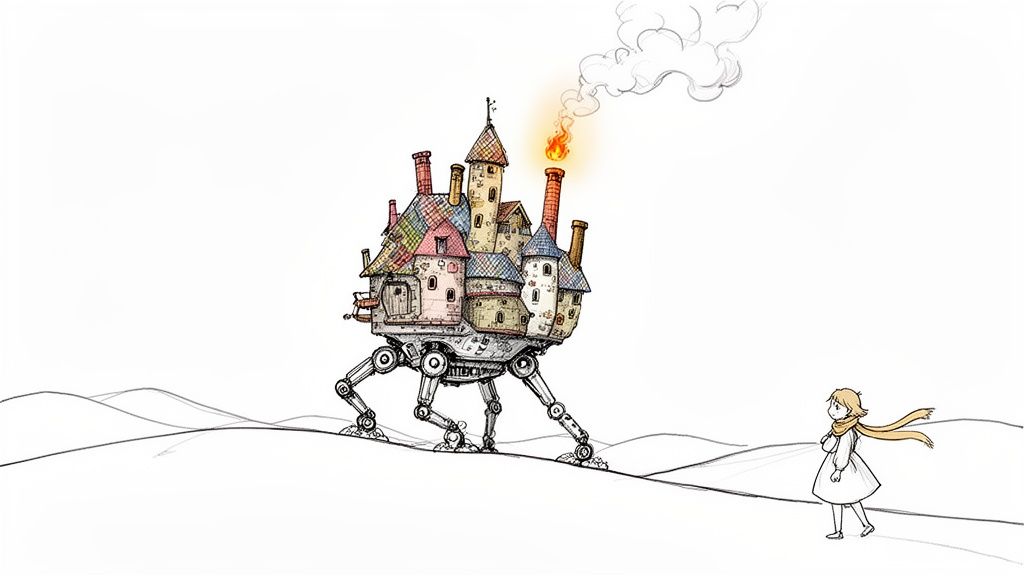
This novel masterfully blends the utterly fantastical, like a door that opens to four different locations, with the mundane realities of cleaning, cooking, and navigating complicated relationships. Its enduring appeal to both middle-grade and YA audiences makes it a fantastic bridge text. The book is an excellent choice for introducing the idea that magic can exist matter-of-factly within an otherwise ordinary world, a key element of the best magical realism books.
Why It's a Top Pick
Howl's Moving Castle excels at using magic to explore deep, human themes like aging, self-worth, and the masks we wear. Sophie's curse, for example, paradoxically frees her to be more assertive and courageous. Jones’s sharp wit and clever subversion of fairy tale tropes make the story both entertaining and intellectually rewarding, securing its place as a cornerstone of modern fantasy.
Teaching & Discussion Tips
To help readers engage with the novel’s layers:
- Create a Character Map: Track the main characters, including their various aliases and disguises (Howl Pendragon/Jenkins, the Witch of the Waste, etc.). Discuss how their appearances conceal their true identities.
- Compare the Book and Film: After reading, watch the acclaimed Studio Ghibli film adaptation. Discuss the major plot differences, character interpretations, and how each version handles the themes of war and love.
- Focus on Jones's Humor: Identify examples of irony, sarcasm, and situational comedy. Discuss how humor reveals character traits, particularly Howl's vanity and Sophie's stubbornness.
- Track the Magic: Ask students to note every magical element, from the moving castle itself to Calcifer’s contract, and discuss how these elements drive the plot forward. It's a key reason this title is included among the top fantasy books for 10-year-olds on Number 6 Publishing.
4. The Invisible Man by Ralph Ellison
Reading Level: Grades 11-12 & Adult | Themes: Identity, Invisibility, Racism, Power
Ralph Ellison’s monumental novel, The Invisible Man, is a cornerstone of American literature and a powerful example of how magical realism can be used for social commentary. Published in 1952, it tells the story of an unnamed Black narrator who is socially and metaphorically invisible in a deeply segregated America. While grounded in stark social realism, the novel’s central premise of invisibility functions as a powerful, surreal element that elevates the narrative beyond simple allegory.
This is a foundational text for mature high school students, often taught in AP Literature and American Studies courses. Its complex exploration of race, identity, and existentialism challenges readers to think critically about how society renders certain people unseen. The narrator's journey from the South to Harlem is a brilliant, often surreal, examination of systemic oppression and the search for selfhood, making it one of the best magical realism books for understanding social justice.
Why It's a Top Pick
The Invisible Man is a masterclass in using a magical realist concept to illuminate a profound social truth. It demonstrates that the genre is not limited to fantastical landscapes but can also be used to dissect the psychological and societal absurdities of racism. Its influence on contemporary fiction addressing identity and representation is immense, making it a crucial read.
Teaching & Discussion Tips
To guide students through its dense themes:
- Provide Historical Context: Begin with a lesson on the Great Migration, the Harlem Renaissance, and Jim Crow laws to ground the narrator's experiences in historical reality.
- Discuss the Metaphor: Focus discussions on the central metaphor of invisibility. Ask students to track when the narrator feels most and least seen, and what events contribute to his "invisibility."
- Use Discussion Guides: Utilize pre-existing guides from institutions like the National Endowment for the Arts to help navigate sensitive topics of race and violence.
- Connect to Today: Pair the novel with contemporary YA titles that explore similar themes of identity and being unseen, or connect its ideas to current conversations about representation in media and society.
5. When You Reach Me by Rebecca Stead
Reading Level: Grades 5-8 | Themes: Friendship, Choice, Time, Empathy
Rebecca Stead’s Newbery Medal-winning novel brings magical realism to a contemporary middle-grade audience with stunning success. Set in 1970s New York City, When You Reach Me follows sixth-grader Miranda as she navigates shifting friendships, family life, and a series of mysterious notes that predict the future. The magic here isn't overt; it's a subtle, intricate thread of time travel woven into the fabric of everyday reality.
The novel is a masterclass in plotting and emotional depth, making it an excellent bridge for young readers moving from straightforward fantasy to more nuanced genres. Its placement on countless middle-grade curricula and best-of lists is a testament to its power. The story treats its readers with intelligence, trusting them to piece together a compelling mystery while exploring genuine adolescent anxieties about friendship, social dynamics, and personal responsibility.
Why It's a Top Pick
When You Reach Me is one of the best magical realism books for young readers because it demonstrates how speculative elements can heighten emotional stakes and reveal profound truths about human connection. The seemingly magical plot device serves a deeply human purpose, exploring themes of sacrifice, empathy, and the consequences of our choices in a way that is both intellectually satisfying and emotionally resonant.
Teaching & Discussion Tips
To help young readers unpack this intricate story:
- Create a Clue Tracker: Encourage students to keep a "detective's notebook" to log the mysterious notes, key events, and character interactions. This helps them piece together the timeline and solve the central mystery alongside Miranda.
- Discuss Foreshadowing: Use the notes as a starting point for a conversation about foreshadowing. Ask students to identify other clues Stead plants throughout the narrative and discuss how they build suspense.
- Encourage a Reread: The novel's conclusion brilliantly re-contextualizes everything that came before. Suggesting students reread the first chapter immediately after finishing can spark a powerful "aha" moment about the book's structure.
- Explore the Setting: Use the 1970s New York City setting to discuss historical context. How does the era, including the popular game show $20,000 Pyramid, shape the story and its characters?
6. The Book of Form and Emptiness by Ruth Ozeki
Reading Level: Grades 10-12 & Adult | Themes: Grief, Mental Health, Storytelling, Disability
Ruth Ozeki’s contemporary masterpiece, The Book of Form and Emptiness, offers a poignant and inventive take on magical realism for today’s teen readers. The story follows Benny Oh, a young boy who, after the tragic death of his father, begins to hear the voices of inanimate objects. From a wilted piece of lettuce to the very book in his hands, the world speaks to him in a cacophony that is both a gift and a burden.
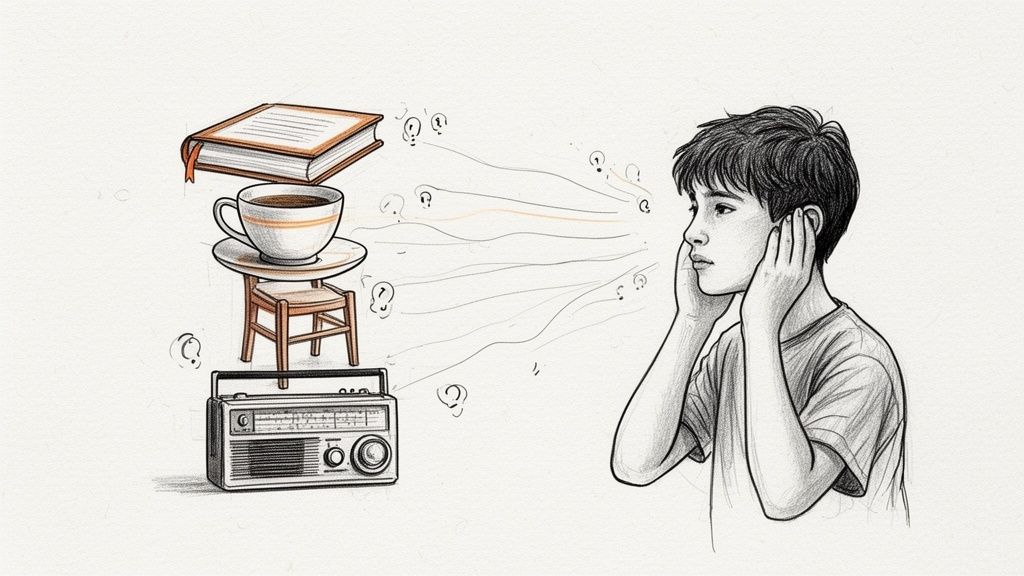
This novel is a powerful example of how the best magical realism books can ground fantastical elements in deep emotional and psychological reality. Benny’s unique ability is intrinsically linked to his grief and his mother’s hoarding, making the magic a powerful metaphor for processing trauma. It’s a sophisticated read, perfect for advanced high school students, that explores disability, mental health, and the profound connections we form with the world around us. Its selection as a Pulitzer Prize finalist highlights its literary merit and relevance.
Why It's a Top Pick
The Book of Form and Emptiness revitalizes the genre by centering a neurodivergent perspective, showing how magical abilities can intersect with identity and disability. The novel itself becomes a character, speaking directly to the reader and creating a meta-narrative that is both intellectually stimulating and deeply moving. It provides a modern entry point into the genre for readers who connect with stories about finding one's voice in a noisy world.
Teaching & Discussion Tips
To guide readers through this layered narrative:
- Discuss Narrative Voice: The book itself is a narrator. Encourage students to track when "the Book" speaks and discuss how this unique narrative choice affects their reading experience and understanding of the story.
- Explore Zen Buddhism: Ozeki weaves concepts from Zen Buddhism throughout the novel. Provide a brief primer on ideas like form, emptiness, and mindfulness to help students grasp the deeper thematic layers.
- Focus on Disability Representation: Facilitate a conversation about how Benny’s experience is portrayed. Is his ability to hear objects a superpower, a disability, or something in between? This can lead to a rich discussion about neurodiversity.
- Pair with Author Interviews: Have students watch or read interviews with Ruth Ozeki where she discusses her research into voice-hearing, libraries, and Zen. This provides valuable context for her creative choices.
7. Aru Shah and the End of Time by Roshani Chokshi (Rick Riordan Presents)
Reading Level: Grades 4-7 | Themes: Identity, Courage, Mythology, Friendship
Perfect for middle-grade readers, this series opener blends Hindu mythology with the contemporary world in a thrilling adventure. Aru Shah and the End of Time introduces Aru, a twelve-year-old girl who tends to stretch the truth. When she lights an ancient lamp to impress her classmates, she accidentally unleashes a demon and discovers she is the reincarnation of a Pandava, a legendary hero from Hindu epic poetry.
Published under the Rick Riordan Presents imprint, which aims to elevate diverse mythologies, this novel is a prime example of how magical realism can make ancient stories accessible and exciting for modern kids. It seamlessly weaves fantastical elements like talking pigeons and a frozen-in-time museum into the familiar setting of Atlanta, Georgia. This approach makes it one of the best magical realism books for introducing younger readers to culturally specific narratives.
Why It's a Top Pick
Aru Shah and the End of Time is a fast-paced, funny, and heartfelt story that validates the experiences of many South Asian American children. It serves as a fantastic gateway to both world mythology and the magical realism genre itself, showing how magic can be found in one's own heritage and backyard. Its success has paved the way for more diverse voices in children's fantasy.
Teaching & Discussion Tips
To enrich the reading experience for young students:
- Introduce Hindu Mythology: Before starting, provide a brief, kid-friendly overview of key figures and concepts from Hindu epics like the Mahabharata, such as the Pandava brothers and the concept of dharma.
- Create a Mythology Guide: Have students create a character guide or a "Gods and Goddesses" fact sheet as they encounter new figures in the book. This reinforces learning and helps with comprehension.
- Discuss Representation: Facilitate a conversation about why it's important to read stories from different cultures. Ask students what they learned about Hindu mythology and how it compares to other myths they know.
- Compare with Percy Jackson: Use this book as a comparative text with other mythology-based series. For more on this, you can explore insights from our analysis of the Percy Jackson series.
8. Piranesi by Susanna Clarke
Reading Level: Grades 11-12 & Adult | Themes: Memory, Identity, Isolation, Perception
Susanna Clarke's haunting and lyrical novel, Piranesi, offers a unique, atmospheric take on magical realism. It introduces a protagonist who lives in a vast, labyrinthine House filled with classical statues and a tidal ocean trapped within its lower halls. He knows the House as his only world, and his reality is built on this strange, beautiful, and isolated existence.
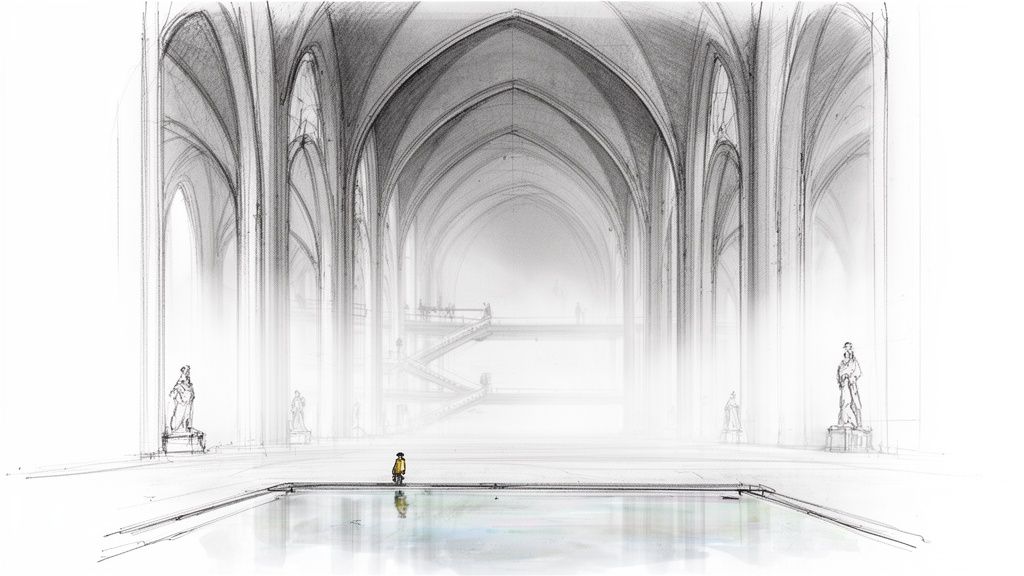
This modern classic is perfect for mature teen readers ready for a more philosophical and mysterious narrative. As Piranesi’s understanding of his world unravels through his journal entries, the reader is drawn into a profound exploration of memory and what it means to be human. Its slow, deliberate reveal of information makes it an excellent choice for advanced literature courses focusing on unreliable narrators and world-building through a limited perspective.
Why It's a Top Pick
Piranesi stands out as one of the best magical realism books for its masterful use of atmosphere and its gentle, yet deeply moving, protagonist. The novel's magic is not overt; it is woven into the very fabric of the House itself. The book encourages rereading and deep reflection, making it a popular choice for book clubs and a rich text for classroom discussion on themes of knowledge, beauty, and truth.
Teaching & Discussion Tips
To guide readers through this intricate world:
- Discuss Narrative Structure: Facilitate conversations about how Clarke reveals information through journal entries. Analyze the impact of an unreliable narrator whose memory is flawed.
- Encourage Journaling: Ask students to keep a reflection journal, noting their own theories about the House and its mysteries as they read. This mimics Piranesi’s own process of discovery.
- Explore Ambiguity: The novel leaves many questions unanswered. Encourage discussions about interpretation, symbolism, and what the House might represent. There are no single right answers.
- Pair with Interviews: Supplement the reading with interviews where Susanna Clarke discusses her long creative process and the inspirations behind the novel. This adds valuable context to its creation.
9. A Deadly Education by Naomi Novik
Reading Level: Grades 10-12 & Adult | Themes: Survival, Power, Privilege, Agency
Naomi Novik’s A Deadly Education takes the familiar magical school trope and injects it with a lethal dose of reality, making it a standout in modern magical realism. The Scholomance isn't a whimsical place of learning; it's a sentient fortress of a school that actively tries to kill its students. Protagonist Galadriel "El" Higgins must navigate a world where magic is a raw, dangerous force, and survival depends on wit, alliances, and sheer power.
This novel is a perfect fit for older teens who have outgrown more traditional fantasy but still crave magical settings. It pushes the boundaries of the genre by grounding fantastical elements in brutal, logical consequences. The narrative is a sharp, unflinching look at inequality, where a student's background and resources directly determine their odds of graduating alive. This dark premise makes it one of the most compelling and thought-provoking magical realism books for mature young adult readers.
Why It's a Top Pick
A Deadly Education masterfully subverts genre expectations, using its magical system to explore complex themes of social stratification and individual morality. El is a powerful, prickly, and deeply relatable heroine whose internal struggles with her immense, dark power provide a rich foundation for discussing agency and ethics. It's a gripping read that challenges readers to think critically about the systems they inhabit.
Teaching & Discussion Tips
To guide readers through El's perilous world:
- Provide Content Warnings: The book features significant violence, peril, and character deaths. Ensure readers are prepared for its darker tone before they begin.
- Compare and Contrast: Use the novel as a counterpoint to more traditional magical school stories like Harry Potter. Discuss how Novik deconstructs the genre's common tropes.
- Analyze Power Structures: Facilitate a discussion about the "enclaves" versus the independent students. Ask how this system reflects real-world issues of privilege and systemic inequality.
- Explore Character Agency: Encourage readers to track El's choices. Discuss whether her actions are driven by selfishness, self-preservation, or an underlying moral code.
For readers who enjoy this blend of high-stakes magic and intricate world-building, you can explore more titles in our guide to the best young adult fantasy books.
10. The Wishing Spell / The Land of Stories by Chris Colfer
Reading Level: Grades 4-7 | Themes: Adventure, Family, Good vs. Evil, Identity
Chris Colfer's The Wishing Spell, the first book in The Land of Stories series, serves as an excellent gateway to magical realism for middle-grade readers. The story follows twins Alex and Conner Bailey, who are transported from their ordinary world into a fairy-tale land where the characters they've only read about are real. This portal fantasy framework seamlessly blends the familiar with the fantastic, a core tenet of magical realism.
While more fantasy than traditional magical realism, the series is a perfect stepping stone. It introduces young readers to the concept of magical elements coexisting with a grounded, contemporary reality. The twins' modern sensibilities and real-world problems clash and combine with the classic logic of fairy tales, making it one of the best magical realism books for younger audiences looking for accessible, fast-paced adventures.
Why It's a Top Pick
The Land of Stories masterfully prepares readers for more complex magical narratives by grounding extraordinary events in relatable sibling dynamics and emotional struggles. Its wide appeal, especially among reluctant readers, makes it a valuable classroom and library staple for introducing literary concepts in an engaging, non-intimidating way.
Teaching & Discussion Tips
To help young readers connect with the story:
- Map the Realms: Encourage students to create their own maps of The Land of Stories. This activity boosts comprehension and visualization skills as they track the twins' journey through different kingdoms.
- Discuss Character Growth: Facilitate discussions on how Alex and Conner change from the beginning to the end of the book. Ask how their experiences in the fairy-tale world impact their lives back in the real world.
- Fractured Fairy Tales: Compare the book’s versions of classic characters (like Goldilocks or Red Riding Hood) to their original tales. Discuss why Colfer might have made these changes and what it says about perspective.
- Build Reading Momentum: As a series, this is an excellent choice for encouraging independent reading. Once hooked on the first book, students are often motivated to continue with the rest of the saga on their own.
Top 10 Magical Realism Books Comparison
| Title | 🔄 Complexity | ⚡ Resource requirements (time/reading level) | 📊 Expected outcomes & quality (⭐) | Ideal use cases | 💡 Key advantages / Tips |
|---|---|---|---|---|---|
| One Hundred Years of Solitude — Gabriel García Márquez | High — cyclical, multigenerational narrative | High — 400+ pages; adult/mature HS readers; translation awareness | Deep genre mastery; strong curricular value ⭐⭐⭐⭐ | AP/advanced HS literature, college seminars, book clubs | Foundational magical realism; use guided questions and translation-consideration |
| The House of the Spirits — Isabel Allende | Medium‑High — multi‑perspective + historical layers | Moderate‑High — ~368 pages; HS readers; needs historical supplements | Strong on gender, politics, empathy ⭐⭐⭐ | HS literature, women's studies, classroom discussions | Accessible prose with political context; provide Chilean timeline |
| Howl's Moving Castle — Diana Wynne Jones | Medium — layered but accessible; multiple narratives | Moderate — ~329 pages; middle‑grade to YA; good for read‑alouds | High engagement; great intro to magical realism ⭐⭐⭐ | Middle‑grade classrooms, family reading, intro to genre | Use character maps; compare to film for multimodal lessons |
| The Invisible Man — Ralph Ellison | High — dense symbolism; metaphorical magical realism | High — ~580+ pages; advanced HS/AP; heavy contextual prep | Provokes deep critical thinking about race & identity ⭐⭐⭐⭐ | Upper HS/AP courses, race & literature seminars | Essential US literature; provide 1950s historical framing and discussion guides |
| When You Reach Me — Rebecca Stead | Low‑Medium — mystery/time‑travel with clear structure | Low — middle‑grade length; highly accessible for grades 5–8 | Strong engagement; supports prediction & close reading ⭐⭐⭐ | Middle‑grade classrooms, independent readers, book clubs | Award‑winning mystery; encourage timeline tracking and rereading |
| The Book of Form and Emptiness — Ruth Ozeki | High — experimental, multi‑perspective structure | Very High — 800+ pages; mature teens; requires sensitivity to themes | Deep discussion on disability, grief, identity ⭐⭐⭐ | Advanced HS, college seminars, disability studies | Authentic disability representation; use section breaks and contextual resources |
| Aru Shah and the End of Time — Riordan Pandya | Low — action‑adventure with mythic scaffolding | Low‑Moderate — middle‑grade; series commitment for full arc | Boosts cultural representation and engagement ⭐⭐⭐ | Elementary/middle libraries, diversity curricula, reluctant readers | Introduces Hindu mythology; provide mythology guides and background |
| Piranesi — Susanna Clarke | Medium‑High — unreliable narrator; atmospheric ambiguity | Low — ~236 pages but dense; reflective reading required | Encourages interpretation & close analysis ⭐⭐⭐ | Advanced HS literature, book clubs, contemplative readers | Lyrical, rewards rereading; use journals and group discussion on ambiguity |
| A Deadly Education — Naomi Novik | Medium — dark worldbuilding; moral complexity | Moderate — YA length; series for full resolution; content warnings | Engages with agency, feminism, and power dynamics ⭐⭐⭐ | HS book clubs, mature YA readers transitioning to adult fantasy | Subverts school tropes; provide content warnings and compare to traditional magical schools |
| The Wishing Spell (The Land of Stories) — Chris Colfer | Low — straightforward portal fantasy | Low — very accessible; series format; elementary/middle readers | Builds reading confidence; sustained series engagement ⭐⭐⭐ | Elementary/middle classrooms, reluctant readers, family reading | Clear structure for young readers; use maps and visualization aids |
Bringing the Magic Home: Your Next Steps in Reading
The journey through the strange and wonderful landscapes of magical realism doesn't end when you close the book. As we've explored, from the multigenerational sagas of Gabriel García Márquez to the contemporary puzzles in Rebecca Stead's work, these stories do more than entertain. They challenge our perception of reality, inviting us to find the extraordinary hidden within the ordinary and to question the boundaries we draw between the two.
The list you've just read is a starting point, a curated map to some of the best magical realism books available for young readers and adults alike. Each title, whether it's the mythic adventure in Aru Shah and the End of Time or the profound introspection of The Book of Form and Emptiness, offers a unique entry point into this rich and varied genre. They are tools for building empathy, sparking critical thought, and fostering a lifelong love of reading that embraces complexity and wonder.
Key Takeaways from Our Literary Journey
Recapping our exploration, several core themes emerge that define the power of magical realism:
- Mirrors and Windows: These books act as mirrors, reflecting the real-world social, political, and emotional issues that young people face. Simultaneously, they are windows, offering a glimpse into different cultures, historical contexts, and fantastical possibilities.
- The Power of Perspective: By grounding magical events in a realistic setting, authors like Isabel Allende and Susanna Clarke encourage readers to accept the unbelievable. This literary technique teaches a valuable life skill: being open to perspectives and truths that differ from our own.
- Conversation Starters: The "Teaching and Discussion Tips" provided for each book are not just for the classroom. They are springboards for meaningful family conversations about identity, community, loss, and hope.
A Core Insight: Magical realism thrives in the space between belief and disbelief. It teaches readers to hold two seemingly contradictory ideas at once, a crucial skill for navigating an increasingly complex world.
Actionable Next Steps for Readers and Educators
So, where do you go from here? The magic truly begins when you bring these stories into your home, library, or classroom.
- Start with a "Shared Read": Choose a book from the list that appeals to both you and your young reader. Reading it together, whether aloud or separately, creates a shared experience. Use our discussion prompts to talk about the magical elements. Ask questions like, "Why do you think the author made this part magical instead of realistic?"
- Create a Genre Bookshelf: Designate a special section in your home or classroom library for magical realism. Mix and match titles from our list to show the genre's incredible range, placing Howl's Moving Castle next to The Invisible Man to highlight diverse styles and themes. This visual curation helps readers identify and select their next adventure.
- Explore the "Why" Behind the Magic: For older readers, encourage a deeper analysis. Prompt them to think about what the magical elements symbolize. For instance, what does the ever-shifting, labyrinthine house in Piranesi say about memory and identity? For those truly captivated by the construction of these worlds, it can be fascinating to explore the craft of writing to understand how authors build such intricate realities.
By integrating these books into your reading life with intention, you move beyond simple consumption. You transform reading into an active, engaging, and transformative practice. The value isn't just in finishing a story; it's in the lasting curiosity and expanded worldview these narratives cultivate.
These stories are more than just tales of the impossible. They are invitations to see our own world with new eyes, to find the enchantment in a quiet moment, the history in a family story, and the potential for wonder in every corner of our lives. We hope this guide helps you and your young readers embark on many magical literary adventures to come.
Ready to discover more unforgettable stories that blend the real with the fantastic? At Number 6 Publishing, we specialize in curating and publishing books that spark imagination and encourage deep thinking, just like the titles on this list. Explore our catalog to find your next great read and continue your family's journey into the heart of magical storytelling.