
Graphic novels are more than just comics; they're a powerful medium for storytelling that captivates middle school readers with rich narratives and stunning art. For students navigating the complexities of ages 10 to 14, these books offer accessible yet profound explorations of friendship, identity, and adventure. However, finding the best graphic novels for middle schoolers—the ones that truly resonate—can feel like a quest in itself. Parents, educators, and librarians often wonder where to turn for trusted recommendations beyond the bestseller lists.
This guide is designed to solve that problem. Instead of just listing individual books, we're sharing the seven best platforms and publishers where you can consistently discover high-quality, age-appropriate graphic novels. We'll show you where to look, what each source offers, and how to use them effectively to build a stellar reading list for your student or child.
This curated list is your map to finding the perfect visual story. We've focused on a mix of massive online marketplaces, specialized publisher imprints, and free digital library apps. Each entry provides a clear overview of the platform, highlighting its unique strengths for discovering middle-grade titles. Our goal is to equip you with the knowledge to confidently select books that will inspire, entertain, and challenge young readers. Let's dive into the best places to find graphic novels that will leave a lasting impact.
1. Amazon
Website: https://www.amazon.com/
As the world's largest online retailer, Amazon’s primary strength is its unparalleled selection and immediate availability. For educators, parents, and librarians hunting for the best graphic novels for middle schoolers, its massive catalog is often the first and most reliable stop, especially for securing popular series like Amulet or pre-ordering the next installment of Wings of Fire.
The platform excels in providing multiple formats for a single title. You can often find a graphic novel in hardcover, paperback, and a digital Kindle version, making it easy to accommodate different budget levels and reading preferences. This variety, combined with its powerful search and filtering tools, allows users to quickly narrow down options by author, series, or even specific keywords related to themes or characters.
How to Use Amazon Effectively
To get the most out of the platform, it’s best to use its features strategically. The "Look Inside" preview is invaluable for gauging a book's art style and text density before purchasing. Customer reviews, while subjective, can provide insights into content suitability and reader engagement, helping you determine if a particular graphic novel will resonate with a middle school audience.
Here are a few practical tips:
- Utilize Bestseller Lists: Check the "Best Sellers in Children's Comics & Graphic Novels" chart for a real-time pulse on what’s currently popular with young readers.
- Create Wish Lists: Use the list feature to track desired titles, monitor price drops, and share collections with others (perfect for classroom donation drives or holiday gift planning).
- Explore "Frequently Bought Together": This section is excellent for discovering related titles or finding the next book in a series you might have missed.
Key Insight: While Amazon's algorithm often highlights mainstream hits, you can uncover indie gems by searching for specific publishers known for quality middle-grade content, such as First Second, Graphix, or RH Graphic.
Pros and Cons
| Pros | Cons |
|---|---|
| Massive Selection: Unmatched inventory of both new releases and backlist titles. | Overwhelming Interface: The sheer volume of listings and third-party sellers can be noisy. |
| Fast Delivery: Prime membership offers quick, free shipping on most popular books. | Algorithmic Bias: Recommendations often favor blockbusters, making indie discovery harder. |
| Valuable Previews: The "Look Inside" feature and extensive customer reviews aid evaluation. | Variable Seller Quality: Fulfillment and product condition can vary with third-party sellers. |
Amazon operates as a vast digital storefront, bringing together countless sellers and products. To gain a deeper understanding of the platform where you can discover many graphic novels, consider exploring a detailed guide to the Amazon marketplace for more context on how it functions. Its reliability and sheer scale make it an essential resource for anyone building a middle school graphic novel library.
2. Barnes & Noble
Website: https://www.barnesandnoble.com/
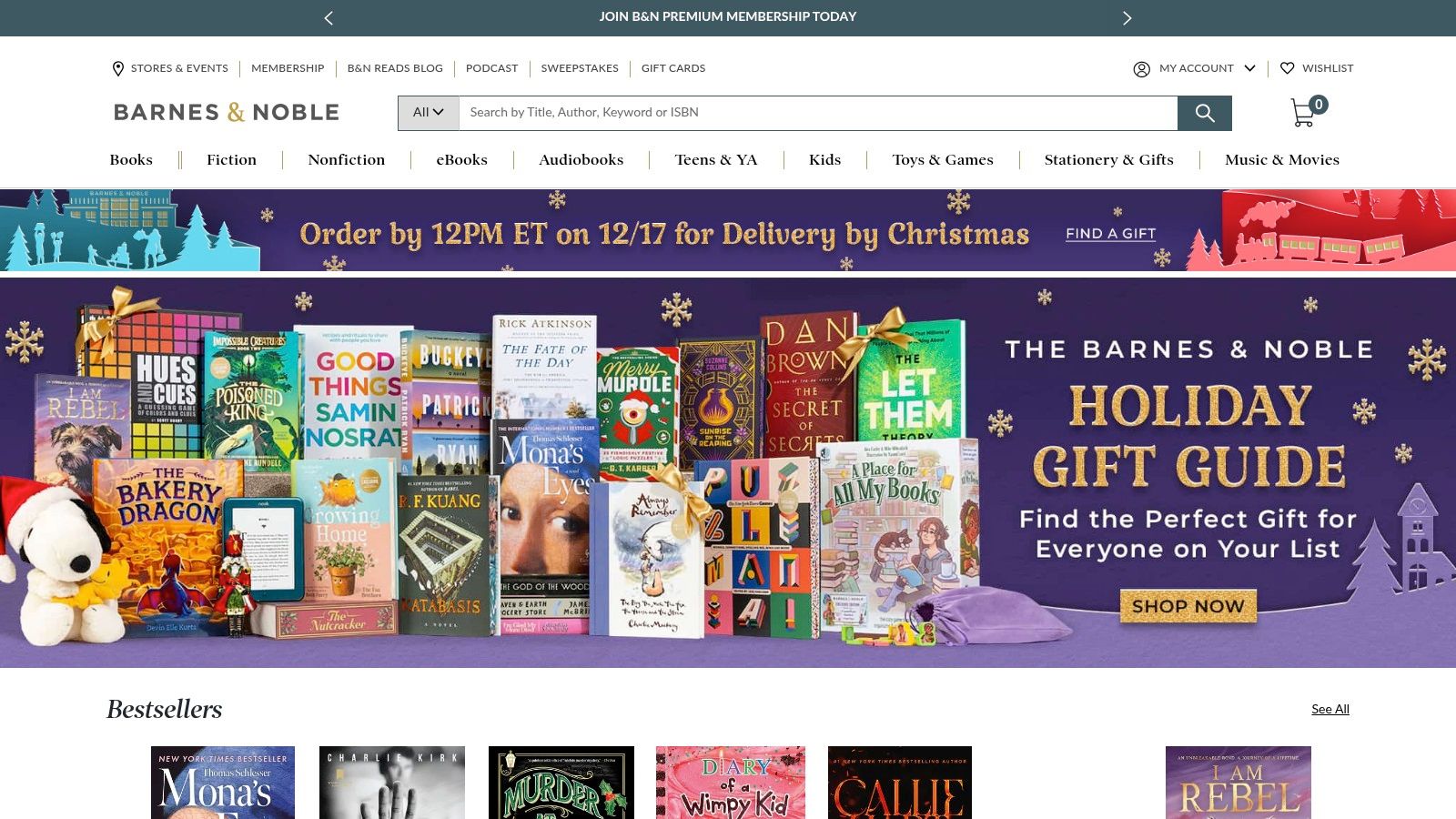
As a long-standing bookseller, Barnes & Noble provides a more curated and accessible browsing experience than vast online marketplaces. For those seeking the best graphic novels for middle schoolers, its strength lies in its thoughtful organization, clear age guidance, and the seamless integration of its online and physical stores. This makes it an ideal choice for educators and parents who appreciate expert recommendations and the ability to see a book in person before buying.
The platform's dedicated "Kids' Graphic Novels" section is exceptionally user-friendly. It features prominent modules for bestsellers, new releases, and staff picks, immediately guiding users toward high-quality, popular titles like The First Cat in Space Ate Pizza or Raina Telgemeier's entire catalog. This curated approach removes much of the guesswork involved in finding age-appropriate and engaging content.
How to Use Barnes & Noble Effectively
To maximize your experience, lean into the platform’s curated features. The age-range filters (e.g., 9-12 years) are more prominent and reliable than on many other sites, ensuring you are looking at content specifically suited for middle-grade readers. The "Series" pages are also a huge asset, grouping all available books in a series like Heartstopper or Babysitter's Club onto one convenient landing page.
Here are a few practical tips:
- Check for Educator Discounts: Barnes & Noble offers an Educator Program that provides a 20% discount on most classroom purchases, making it a budget-friendly option for teachers building their libraries.
- Use the "Pick Me Up" Option: Find a book online and use the store pickup feature to check its availability at your local B&N. This is perfect for last-minute gifts or when you want to avoid shipping costs.
- Explore B&N Exclusives: Keep an eye out for special editions that may feature unique covers, bonus content, or author signatures, which can make a book feel extra special for a young reader.
Key Insight: Don't overlook the "B&N Reads" blog. It often features curated lists like "The Best Comics & Graphic Novels of the Year" or author interviews, providing excellent recommendations and deeper insights beyond simple product listings.
Pros and Cons
| Pros | Cons |
|---|---|
| Clear Curation: Tailored discovery experience with helpful age filters and staff picks. | Smaller Selection: Inventory is less exhaustive than Amazon's, especially for indie or backlist titles. |
| Educator & Member Perks: Discounts and exclusive editions offer added value. | Slower Shipping: Standard shipping may be slower than Prime without a premium membership. |
| Online/Retail Integration: In-store pickup and events create a connected shopping experience. | Niche Titles May Be Special Order: Some small-press graphic novels may require special ordering. |
Barnes & Noble excels as a trusted guide in the world of children's literature, offering a well-organized and reliable platform. Its focus on curation makes it less overwhelming and more direct for parents and educators on a mission to find the perfect graphic novel. The blend of online convenience with the tangible benefits of a physical bookstore gives it a unique and valuable position in the market.
3. Scholastic Store (Graphix)
Website: https://shop.scholastic.com/parent-ecommerce/parent-store-21.html
For educators and parents looking for a trusted, curriculum-aligned source, the Scholastic Store is a gold standard, particularly its Graphix imprint. This is the powerhouse publisher behind many of the best graphic novels for middle schoolers found in classrooms and school libraries, including iconic series like Bone, The Baby-Sitters Club, and Smile. Its strength lies in its expert curation and guaranteed age-appropriateness.
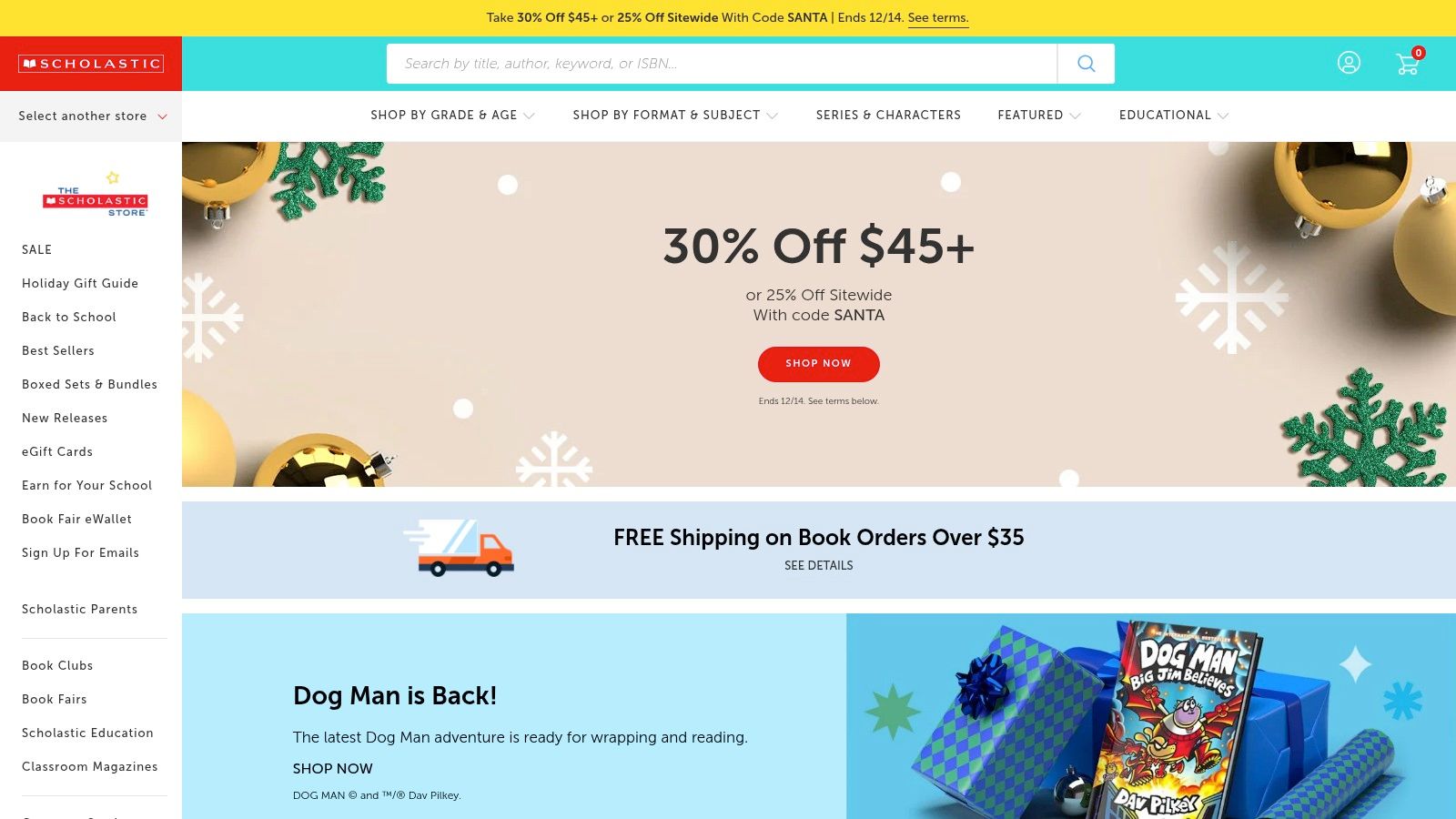
Unlike massive retailers, Scholastic offers a focused experience centered on titles proven to engage young readers. The platform is designed with educators in mind, providing not just books but a suite of resources to support them. This makes it an invaluable tool for teachers integrating graphic novels into their lesson plans or for parents seeking books that are both entertaining and educationally sound.
How to Use Scholastic Store Effectively
Navigating the Scholastic Store is about more than just purchasing; it's about accessing a well-rounded educational ecosystem. The site clearly categorizes books by grade level (e.g., Grades 3-5, Grades 6-8), making it simple to find suitable content. Many product pages link directly to teacher guides, discussion questions, and activity sheets that deepen a child's connection to the story.
Here are a few practical tips:
- Explore Educator Resources: Look for the "Teacher's Desk" or similar sections. You can often find free downloadable guides for popular graphic novels that include lesson plans and classroom activities.
- Filter by Imprint: To specifically find top-tier graphic novels, filter your search for the "Graphix" imprint, which is Scholastic’s dedicated graphic novel line for young readers.
- Check Grade Level & Reading Level: Scholastic provides detailed information, including Guided Reading Levels (GRL), which is extremely helpful for matching a book to a student’s specific reading ability. This data is critical for supporting reluctant readers, a topic you can explore further by discovering more about books for reluctant readers.
Key Insight: The true value of the Scholastic Store isn't just selling books-it's in bridging the gap between home and school. By offering titles that are frequently used in educational settings, it allows parents and librarians to build a library that directly supports a student's academic journey.
Pros and Cons
| Pros | Cons |
|---|---|
| Expert Curation: Guaranteed age-appropriate titles from a trusted educational publisher. | Limited Selection: Primarily features Scholastic and Graphix titles, lacking variety from other publishers. |
| Rich Educator Resources: Access to free teacher guides, lesson plans, and classroom materials. | Retail Focus Varies: The site functions as both a store and a resource hub, which can sometimes be confusing for direct purchasing. |
| Reliable Reading Levels: Detailed grade and reading level information helps match books to readers. | Slower Shipping: May not offer the same rapid delivery speeds as major online retailers. |
The Scholastic Store and its Graphix imprint serve as a highly reliable and curated gateway to the world of middle-grade graphic novels. It prioritizes quality and educational value over sheer quantity, making it an essential resource for anyone dedicated to fostering a love of reading in middle schoolers.
4. Bookshop.org
Website: https://bookshop.org/
Bookshop.org offers a mission-driven alternative for acquiring the best graphic novels for middle schoolers by financially supporting local, independent bookstores with every purchase. For those who value community-focused retail but need the convenience of online shopping, this platform provides a powerful way to discover new and classic titles while investing in the brick-and-mortar stores that anchor our neighborhoods.
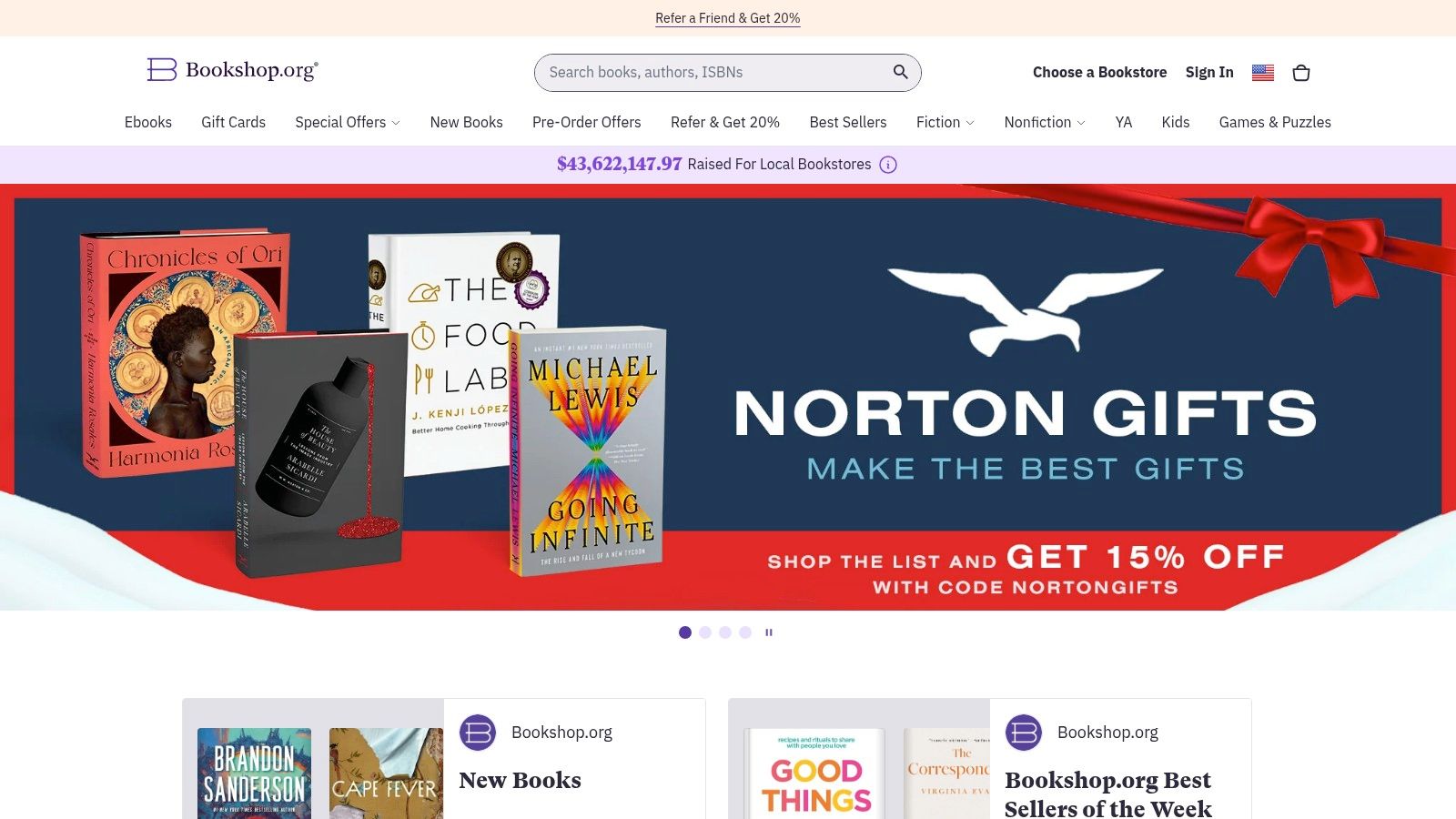
The platform’s standout feature is its human-curated recommendation lists. Unlike algorithm-driven sites, Bookshop.org showcases collections hand-picked by experienced booksellers, librarians, and educators across the country. This results in thoughtfully organized "shelves" dedicated to middle-grade graphic novels, diverse voices, and specific themes, making it easier to find unique and impactful stories beyond the mainstream bestsellers.
How to Use Bookshop.org Effectively
To maximize your impact and discovery potential, start by choosing a specific local bookstore to support. A map tool on the site makes it simple to find an indie shop near you or one whose mission you admire. Once selected, a portion of all your future purchases will go directly to that store.
Here are a few practical tips:
- Browse Curated Lists: Explore the "Browse" section and filter by "Comics & Graphic Novels" to find lists like "Award-Winning Graphic Novels" or "New & Noteworthy" compiled by experts.
- Follow Your Favorite Store: Many bookstores maintain their own storefront on the platform, complete with staff picks and recommendations. Following them is like getting a personal shopper for your graphic novel needs.
- Use the Wishlist Feature: Create and share wishlists for classroom libraries, birthday gifts, or personal collections. This helps others support your reading goals while also contributing to independent bookstores.
Key Insight: Bookshop.org is an exceptional resource for discovery. Its reliance on human curation means you are more likely to stumble upon critically acclaimed but less-commercialized gems from independent publishers, offering a richer and more diverse reading list.
Pros and Cons
| Pros | Cons |
|---|---|
| Supports Local Bookstores: A significant portion of profits goes directly to independent shops. | Higher Prices: Costs are often closer to the list price, with fewer deep discounts. |
| Expert Curation: Lists from booksellers and librarians aid in meaningful discovery. | Slower Shipping: Standard Media Mail shipping is more economical but takes longer. |
| Mission-Driven: Transparent model focused on sustaining a diverse bookselling ecosystem. | No Used Books or In-Store Pickup: The platform focuses on new book fulfillment only. |
By centralizing the inventory of major distributors while redirecting profits, Bookshop.org creates a sustainable model for online book buying. You can learn more about its impact on children's literature by exploring how it helps promote kids' books from independent voices. It’s the ideal choice for conscious consumers who want their search for great graphic novels to have a positive community impact.
5. Libby (by OverDrive)
Website: https://www.overdrive.com/apps/libby/
Libby, powered by OverDrive, is a game-changer for budget-conscious families and educators looking for the best graphic novels for middle schoolers. As a digital library app, its primary strength is providing free access to your local library’s collection of eBooks and audiobooks, including a robust catalog of graphic novels. This makes it an ideal platform for voracious readers to discover new series like Roller Girl or classic hits like Bone without any cost.
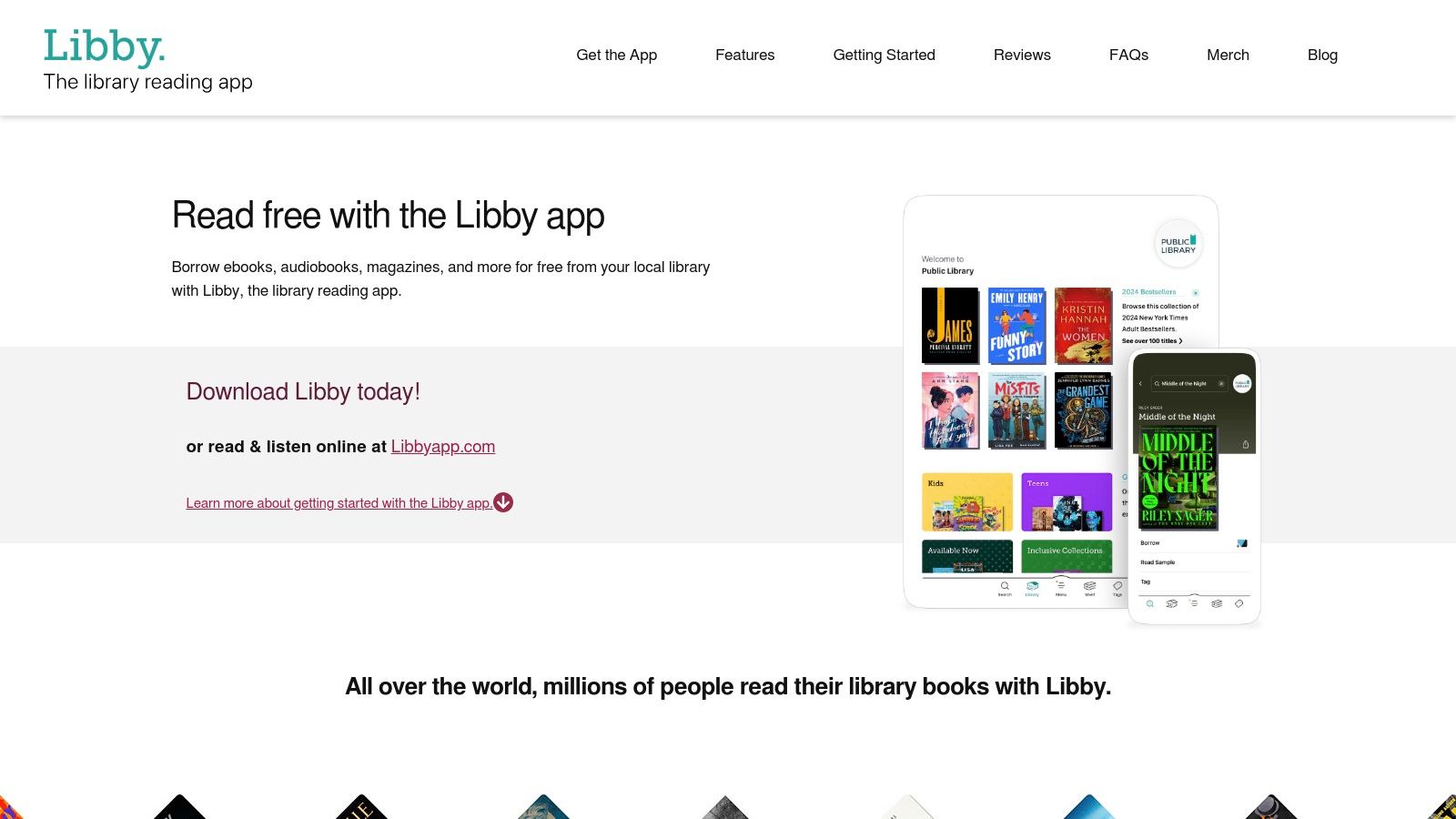
The platform excels in its user-friendly interface and seamless cross-device synchronization. A reader can start a graphic novel on a tablet at home and pick up right where they left off on a smartphone. Libby’s core function is borrowing, which allows users to check out multiple titles at once, place holds on popular books, and manage loans effortlessly. Many library systems also offer a "Send to Kindle" option, providing flexibility for those who prefer Amazon's e-reader.
How to Use Libby Effectively
To get the most out of Libby, it’s important to explore its organizational features and be strategic with holds. The app’s curated guides and search filters can help you find age-appropriate graphic novels quickly, while its tagging system is perfect for creating custom reading lists for different interests or school projects.
Here are a few practical tips:
- Use Advanced Search: Filter searches by format ("comics & graphic books"), audience ("juvenile" or "young adult"), and availability ("available now") to find a great read immediately.
- Manage Holds: If a popular title has a long waitlist, place a hold. You can suspend your hold if you have too many books checked out, allowing you to keep your place in line without missing your chance.
- Add Multiple Library Cards: If you have access to more than one library system (e.g., city and county), add all your cards to Libby to dramatically expand your available selection.
Key Insight: Libby is the perfect "try before you buy" tool. If a middle schooler devours a graphic novel from the library, you know it's a worthwhile purchase for your permanent collection. Use it to sample new authors and art styles risk-free.
Pros and Cons
| Pros | Cons |
|---|---|
| Free Access: Borrow countless graphic novels at no cost with a valid library card. | Limited Availability: Selection is entirely dependent on what your local library licenses and owns. |
| Excellent Mobile Experience: The app is intuitive and works seamlessly on iOS, Android, and web. | Waitlists for Popular Titles: High-demand books like New Kid often have long digital hold lines. |
| Great for Sampling: Allows readers to explore titles before committing to a purchase. | No Option to Purchase: The platform is for borrowing only, not for buying. |
Libby transforms a simple library card into a powerful digital key for unlocking a world of graphic novels. For a closer look at how it stacks up against other reading platforms, check out this guide to some of the best reading apps for kids for more details. Its combination of free access and a clean, modern interface makes it an indispensable resource for any family or educator.
6. hoopla Digital
Website: https://www.hoopladigital.com/
For instant, no-wait access to an incredible collection of graphic novels, hoopla Digital is a game-changer, provided your local library is a partner. This digital media service allows library cardholders to borrow comics, ebooks, audiobooks, and more on demand. Its key strength for finding the best graphic novels for middle schoolers is its "instant borrow" model, which often eliminates the long hold lists common for popular titles like New Kid or Roller Girl on other library platforms.
The platform is designed for immediate gratification. Once you borrow a title, it's available for streaming on a computer or for offline reading via its mobile app, making it perfect for road trips or areas with spotty Wi-Fi. The experience is seamless, allowing readers to dive into a new story within seconds of discovering it.
How to Use hoopla Digital Effectively
The most critical first step is checking if your public library offers hoopla access; you'll need a valid library card to sign up. Once in, activating "Kids Mode" is essential. This feature instantly filters the entire catalog to show only kid- and middle-grade-appropriate content, creating a safe browsing environment.
Here are a few practical tips:
- Explore Publisher Collections: Use the search bar to look up specific graphic novel imprints like "RH Graphic," "Graphix," or "First Second" to see all their available titles in one place.
- Utilize the Series Feature: When you view a graphic novel that's part of a series, hoopla clearly displays all other available books in that series, making it easy to read them in order.
- Look for BingePasses: Some libraries offer a "BingePass" for certain collections, like "Comics," which gives you unlimited access to thousands of titles for a set period (e.g., 7 days) using only a single monthly borrow credit.
Key Insight: Because hoopla operates on a cost-per-circulation model for libraries, its catalog can sometimes differ from your library's main digital collection (e.g., OverDrive/Libby). It’s a fantastic resource for discovering titles you might not find elsewhere.
Pros and Cons
| Pros | Cons |
|---|---|
| No Waitlists on Most Titles: Instant borrowing means no long holds for popular books. | Library Dependent: Access is entirely based on your local library's subscription. |
| Excellent Mobile Experience: The app's offline reading feature is simple and reliable. | Monthly Borrow Limits: Users are typically limited to a set number of borrows per month. |
| Safe Browsing with Kids Mode: Easily filters out mature content for younger readers. | Variable Availability: Some libraries have reduced or dropped hoopla due to its cost structure. |
hoopla Digital democratizes access to digital graphic novels, turning a library card into an all-access pass for immediate reading. While its availability depends on your local library system, its convenience and no-wait model make it an invaluable tool for keeping middle schoolers supplied with a steady stream of high-quality graphic novels.
7. First Second Books
Website: https://firstsecondbooks.com/
First Second Books, an imprint of Macmillan, is not a retailer but a publisher’s home base, and it’s a goldmine for anyone searching for the best graphic novels for middle schoolers. Its primary strength lies in its highly curated and critically acclaimed catalog. Visiting their site is like walking into a specialized, award-winning bookstore where every title has been carefully vetted for quality, storytelling, and artistic merit.
This platform is an essential resource for discovering classroom-trusted titles from celebrated creators like Gene Luen Yang (American Born Chinese), Tillie Walden (Are You Listening?), and Faith Erin Hicks (The Nameless City). Instead of a vast, overwhelming marketplace, First Second offers a focused look at some of the most impactful and beloved graphic novels in middle-grade publishing. Each book listing provides detailed summaries, creator bios, and clear age recommendations, removing the guesswork often involved in selecting appropriate content.
How to Use First Second Books Effectively
To get the most value from this publisher-direct site, you should treat it as a discovery and educational tool. The site is designed to support educators and parents, providing resources that go far beyond a simple product description. Its clean interface makes it easy to explore their catalog by genre or creator, ensuring you find exactly the type of story you’re looking for.
Here are a few practical tips:
- Explore Educator Resources: Navigate to the "Resources" section to find free, downloadable teacher’s guides. These guides often include discussion questions, classroom activities, and curriculum tie-ins that can transform a graphic novel into a powerful teaching tool.
- Check for Awards and Honors: Each book page proudly displays its awards, such as the Printz Award or Eisner Award. This is a quick and reliable indicator of a title's literary and artistic quality.
- Use the Retailer Links: While you cannot buy directly from the site, each book page provides links to purchase from various retailers like Amazon, Barnes & Noble, and independent bookstores, allowing you to choose your preferred vendor.
Key Insight: First Second’s catalog is a fantastic starting point for building a diverse and high-quality classroom or home library. Use the site to identify core titles, then use the provided links to purchase them from your favorite bookseller.
Pros and Cons
| Pros | Cons |
|---|---|
| Publisher-Vetted Quality: Every title is a curated, high-quality selection appropriate for middle graders. | Limited Catalog: Selection is restricted to books published by First Second. |
| Excellent Educator Resources: Free teacher’s guides and classroom materials are readily available. | No Direct Purchasing: You are redirected to external retailers to complete a purchase. |
| Award-Winning Titles: The imprint has a strong track record of publishing critically acclaimed works. | No User Reviews: Lacks the community feedback found on large retail sites. |
First Second Books functions as a trusted curator rather than a transactional marketplace. Its commitment to powerful storytelling and support for educators makes it an indispensable first stop for anyone serious about finding exceptional graphic novels that resonate deeply with middle school readers. The platform’s focus on quality over quantity ensures that any title you discover will be a worthy addition to a young reader’s bookshelf.
Top 7 Sources for Middle School Graphic Novels
| Service | 🔄 Complexity (process) | 💡 Resources required | ⭐ Effectiveness / Quality | ⚡ Speed & availability | 📊 Ideal use cases |
|---|---|---|---|---|---|
| Amazon | 🔄 Low — standard marketplace flow | Account; optional Prime for best benefits | ⭐⭐⭐ Very high for availability & discovery | ⚡⚡⚡ Fast delivery & instant digital access | Quick purchases, price checks, bestsellers, preorders |
| Barnes & Noble | 🔄 Low — curated retailer + stores | Account; membership perks; in‑store integration | ⭐⭐⭐ Strong curation for parents/educators | ⚡⚡ Moderate — shipping or in‑store pickup | Parents/educators seeking age guidance, events, curated picks |
| Scholastic Store (Graphix) | 🔄 Low — publisher storefront | Teacher guides and publisher catalog links | ⭐⭐⭐ Publisher‑vetted, classroom‑trusted titles | ⚡⚡ Variable — often links to retailers for purchase | Educators needing age‑appropriate GNs and classroom resources |
| Bookshop.org | 🔄 Low — indie‑supporting marketplace | Account; choose a bookstore; shipping options | ⭐⭐⭐ Good for curated discovery and indie support | ⚡⚡ Moderate — online shipping only | Supporting local bookstores; curated lists from booksellers/librarians |
| Libby (by OverDrive) | 🔄 Moderate — library account + holds | Library card; participating library holdings | ⭐⭐⭐ Excellent for free access & sampling | ⚡⚡ Variable — instant when available, holds for popular titles | Borrowing eBooks/comics, sampling before purchase, voracious readers |
| hoopla Digital | 🔄 Low–Moderate — library app with instant borrows | Library card; library subscription to hoopla | ⭐⭐⭐ High when your library offers it (instant borrows) | ⚡⚡⚡ Instant access and offline reading | On‑demand reading of middle‑grade GNs with no waits (where available) |
| First Second Books | 🔄 Low — publisher site with links | Publisher catalog; teacher resources; retailer links | ⭐⭐⭐ High‑quality, award‑winning middle‑grade GNs | ⚡⚡ Depends — purchases routed to retailers | Finding high‑quality, classroom‑trusted titles and educator resources |
Building a Lifelong Love of Reading, One Panel at a Time
Navigating the vibrant world of middle-grade literature can feel overwhelming, but finding the best graphic novels for middle schoolers is an exciting and rewarding journey. The resources we've explored, from the expansive marketplaces of Amazon and Barnes & Noble to the community-centric platforms like Bookshop.org, each offer a unique pathway to discovering stories that resonate with young readers. This is not about finding one single "best" book, but about building a toolkit to curate a dynamic and engaging library.
By leveraging a combination of these platforms, you create a powerful strategy. You can use the vast selection of Amazon for initial research and price comparison, then pivot to Bookshop.org to support local bookstores with your purchase. For budget-conscious families and educators, the free, instant access provided by library apps like Libby and hoopla Digital is a game-changer, ensuring that financial barriers don't limit a child's access to incredible stories.
Key Takeaways for Your Graphic Novel Quest
As you begin your search, keep these core principles in mind to make the process effective and enjoyable:
- Diversify Your Sources: Don't rely on a single retailer. A blend of commercial sites (Amazon, Barnes & Noble), community-focused platforms (Bookshop.org), and free library services (Libby, hoopla) will yield the most diverse and cost-effective collection.
- Trust the Curators: Publisher-specific sites like Scholastic's Graphix imprint and First Second Books are invaluable. They have already done the heavy lifting of vetting content for quality, age-appropriateness, and artistic merit, making them a trusted starting point for parents and educators.
- Empower the Reader: The most crucial step is to involve the middle schooler in the selection process. Browse these sites together, read reviews, and discuss what themes or art styles they find compelling. Giving them agency in their reading choices is the single most effective way to foster a genuine love for books.
Actionable Next Steps: From Discovery to Reading
Ready to start building a collection? Here's a practical plan to put these tools into action:
- Start with Your Library: Before spending any money, download Libby and hoopla Digital. Connect your local library card and explore their digital graphic novel catalogs. This is a risk-free way to discover new authors and series.
- Consult the Experts: Visit the First Second and Scholastic Graphix websites. Look at their award-winners and new releases sections for high-quality, educator-approved titles. Use these lists as a foundation for your "to-read" pile.
- Support and Purchase: Once you have a list, use Bookshop.org to see if your local independent bookstore has the titles in stock. For anything else, turn to the larger retailers for competitive pricing and availability.
As your middle schooler's collection grows, managing it becomes part of the fun. To nurture this growing interest, they might find it beneficial to explore resources like top tools for personal library software to organize their book collections, making their literary journey even more rewarding.
Ultimately, the goal is to connect a young reader with a story that feels like it was written just for them. Whether it’s an epic fantasy adventure, a quiet story about friendship, or a hilarious memoir, the right graphic novel can unlock a door to a lifetime of reading. By using these tools thoughtfully, you are not just buying a book; you are investing in a child's imagination, empathy, and intellectual curiosity. You are helping them build a world of their own, one beautifully illustrated panel at a time.
At Number 6 Publishing, we are dedicated to creating the kind of immersive, thought-provoking graphic novels and illustrated stories that middle schoolers can't put down. We believe in the power of visual storytelling to engage reluctant readers and challenge avid ones. Explore our catalog of award-winning titles and discover your next favorite book at Number 6 Publishing.