
Finding the perfect book for an elementary schooler can feel like searching for a hidden treasure. The right story doesn't just teach them to read; it opens up new worlds, builds empathy, and sparks a lifelong love of learning. In a sea of endless options, how do you choose the titles that will truly resonate and become cherished favorites? This guide is designed to cut through the noise, offering a curated list of the best books for elementary students.
We have selected a mix of timeless classics and modern masterpieces that belong on every child's shelf. From tales of unlikely friendships and immense courage to epic adventures in fantastical worlds, these selections are more than just stories, they are foundational experiences in a young reader's journey. Many educational philosophies, like the Charlotte Mason homeschool method, emphasize using high-quality, engaging "living books" to foster a deep connection with learning, and the titles on this list perfectly embody that principle.
This comprehensive roundup provides everything parents, caregivers, and educators need to make informed choices. For each book, you'll find a concise synopsis, clear grade and age recommendations, key themes, and practical suggestions for classroom use or family read-alouds. We also highlight the developmental benefits each story offers, helping you understand how these books support social and emotional growth. Our goal is to equip you with actionable insights to find the perfect book that will captivate your child's imagination and help them grow, one page at a time.
1. Charlotte's Web (Grades 3-6, Ages 8-12)
E.B. White's Charlotte's Web is a cornerstone of children's literature, making it an essential entry on any list of the best books for elementary students. The story follows the unlikely friendship between a pig named Wilbur and a clever spider named Charlotte, who devises a plan to save him from his fate. This timeless classic explores profound themes of loyalty, sacrifice, friendship, and the natural cycle of life with gentle prose and deep emotional resonance.
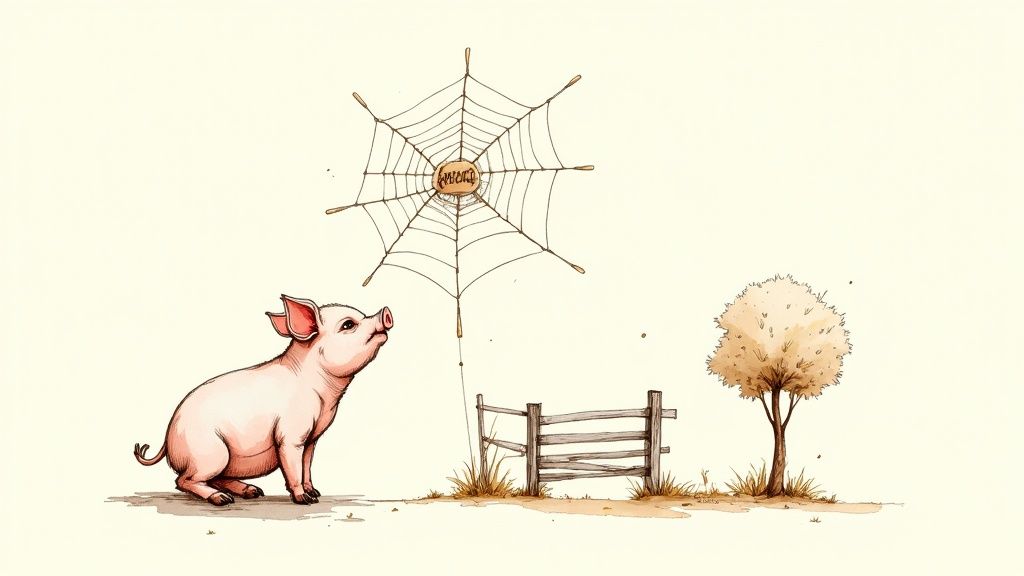
Its enduring appeal is evident in its widespread use in school curricula across the United States and its numerous adaptations for film and stage. The novel provides a perfect opportunity for young readers to engage with complex emotional ideas in a safe and accessible narrative.
Why It's a Top Pick
Charlotte's Web is more than just a heartwarming story; it’s a powerful tool for developing empathy and emotional intelligence. The narrative masterfully introduces young readers to concepts of loss and mortality without being overwhelming. The vocabulary is rich yet accessible, making it an excellent choice for building literacy skills, while Garth Williams' iconic illustrations provide crucial visual context that aids comprehension. The book’s focus on the power of words and friendship makes it an unforgettable reading experience.
Classroom and At-Home Implementation
To maximize the book's impact, educators and parents can use several strategies to guide young readers through its themes.
- Guided Read-Alouds: For younger students (grades 3-4), reading the book aloud enhances engagement and allows for real-time discussion of challenging vocabulary and emotional moments.
- Thematic Discussions: Before reading the final chapters, initiate conversations about friendship, loss, and life cycles. This prepares students for the poignant ending and helps them process their feelings.
- Cross-Curricular Connections: Pair the novel with science lessons on farm animals, arachnids, or agricultural life. This enriches the reading experience by connecting the fictional world to real-world knowledge.
By carefully guiding students through Wilbur and Charlotte's journey, you can help them appreciate this beautiful story on a deeper level. For more titles perfect for this age group, explore this curated list of top books for third graders.
2. The One and Only Ivan (Grades 4-7, Ages 9-13)
Katherine Applegate's Newbery Medal-winning novel, The One and Only Ivan, offers a profound and moving narrative from the perspective of a captive silverback gorilla. Ivan has spent decades in a cage at a shopping mall, but when a baby elephant named Ruby arrives, he is moved to take action to secure a better life for her. This contemporary classic thoughtfully explores themes of empathy, animal welfare, artistic expression, and the meaning of home, making it one of the best books for elementary students ready for more complex emotional stories.
Based on the true story of a gorilla who lived in a similar situation for 27 years, the book has become a staple in upper elementary classrooms. Its success is further highlighted by its popular 2020 Disney+ film adaptation. The story provides a powerful lens through which young readers can examine concepts of justice and social responsibility.
Why It's a Top Pick
The One and Only Ivan excels at fostering deep empathy by telling its story through a non-human narrator. Ivan’s voice is simple yet poetic, allowing students to connect with his feelings of loneliness, friendship, and hope. The novel tackles the difficult subject of animal captivity in a way that is accessible and inspires action without being overly didactic. Applegate's short, chapter-like entries make the book manageable for developing readers, while the story's emotional depth provides a rich reading experience that sparks critical thinking.
Classroom and At-Home Implementation
To enhance a child's engagement with the novel, educators and parents can use a variety of supportive strategies.
- Discuss Point of View: Before reading, talk about what it means to see the world from another's perspective. Throughout the book, ask questions like, "How does Ivan see the humans in his life?" to reinforce this concept.
- Creative and Activist Responses: Encourage students to express their reactions through art, just as Ivan does. Prompt them to research animal conservation or write letters to local representatives about issues they care about.
- Cross-Curricular Connections: Connect the story to science lessons on primate behavior and habitats. Watching documentaries about gorillas or conservation efforts can provide valuable real-world context to Ivan's fictionalized journey.
3. Ramona Quimby series by Beverly Cleary (Grades 2-5, Ages 7-11)
Beverly Cleary's Ramona Quimby series is a quintessential part of childhood reading, making it a vital inclusion in any list of the best books for elementary students. The series follows the spirited and wonderfully imperfect Ramona as she navigates the everyday challenges of school, family dynamics, and friendship. Cleary's genius lies in her honest and humorous portrayal of a child's perspective, allowing young readers to see their own feelings and frustrations mirrored in Ramona's adventures.
The series' timeless relevance is proven by its continued popularity, with over 30 million copies sold and numerous adaptations for television. These books masterfully capture the emotional landscape of growing up, validating the highs and lows of being a kid with humor and empathy.
Why It's a Top Pick
The Ramona Quimby series excels at building emotional literacy and self-awareness. Ramona is not a perfect character; she is stubborn, creative, and often misunderstood, which makes her incredibly relatable for children who are learning to manage their own complex emotions. The books provide a fantastic starting point for conversations about empathy, problem-solving, and resilience. Cleary’s straightforward language and authentic dialogue make the stories accessible for newly independent readers, boosting their confidence while delivering powerful life lessons.
Classroom and At-Home Implementation
To get the most out of Ramona's escapades, parents and educators can engage young readers with targeted activities.
- Sequential Reading: Start with Ramona the Pest and read the series in chronological order. This allows students to grow alongside Ramona, understanding how her character develops over time.
- Springboard for Discussion: Use Ramona’s various predicaments, from misunderstandings at school to family arguments, as a springboard for discussing similar situations in students' own lives. Ask questions like, "How did Ramona feel? How would you have handled that?"
- Character Journals: Encourage students to keep a journal from Ramona's point of view or write diary entries reflecting on her choices and feelings after each chapter. This deepens their connection to the character and enhances their perspective-taking skills.
By exploring Ramona's world, children can learn to navigate their own with greater understanding and humor. For more great books that resonate with this age group, check out this guide to the top books for second graders.
4. Wings of Fire series by Tui T. Sutherland (Grades 3-6, Ages 8-12)
Tui T. Sutherland's Wings of Fire series is a modern fantasy epic that has captivated a generation of young readers, making it a standout choice for the best books for elementary students. The series follows different groups of young dragons from various warring tribes who are destined to fulfill world-changing prophecies. With its intricate world-building, complex characters, and thrilling adventures, this series is perfect for readers seeking a deeply engaging and expansive story.
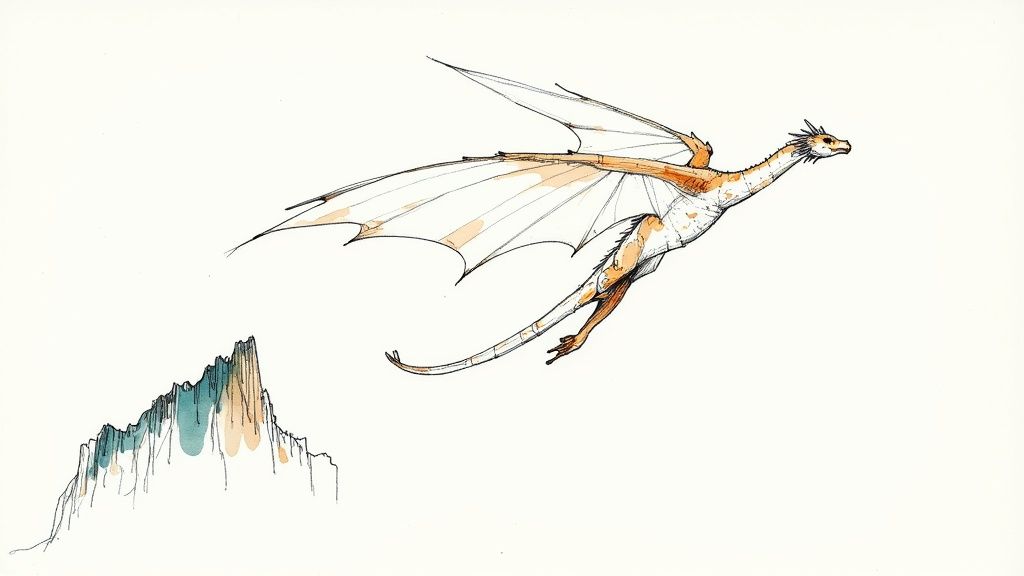
The series' immense popularity is fueled by grassroots fan communities and its successful graphic novel adaptations, which make the complex mythology accessible to a wider audience, including visual learners. This ongoing series consistently hits bestseller lists, proving its powerful appeal to modern readers who crave adventure and high-stakes fantasy.
Why It's a Top Pick
The Wings of Fire series excels at fostering a love for reading through its fast-paced, plot-driven narratives. Each book is told from the perspective of a different dragon, allowing readers to explore diverse personalities and viewpoints on conflict, prejudice, and destiny. The rich mythology and intricate social structures of the dragon tribes provide a fantastic platform for discussing themes of war, peace, leadership, and the idea of found family. It’s an ideal series for students ready to tackle a longer, multi-arc narrative.
Classroom and At-Home Implementation
To get the most out of this sprawling series, parents and educators can guide readers through its complex world.
- Start with Book One: Introduce readers to the series with The Dragonet Prophecy to establish the core conflict and characters.
- Character and Tribe Charts: Encourage students to create charts or mind maps to track the different dragon tribes, their unique abilities, and the complex relationships between characters. This aids comprehension and retention.
- Creative Responses: Use the series as a springboard for creative projects. Students can design their own dragon characters and tribes, write fan fiction, or illustrate key scenes from the books.
- Thematic Discussions: Facilitate conversations about themes like prophecy, free will, and prejudice. Ask questions like, "Do the characters control their own destiny, or is it predetermined?"
5. Percy Jackson and the Olympians series by Rick Riordan (Grades 4-7, Ages 9-14)
Rick Riordan's Percy Jackson and the Olympians series is a modern phenomenon and a fantastic choice for upper elementary students. The story introduces Percy Jackson, a witty and relatable middle schooler who discovers he is the son of the Greek god Poseidon. This thrilling adventure series blends ancient Greek mythology with contemporary life, creating a high-stakes world that has captivated millions of young readers.
Its massive success, with over 180 million copies sold worldwide and a popular Disney+ series adaptation, highlights its incredible appeal. The series is celebrated for making classical mythology accessible and exciting, making it one of the best books for elementary students transitioning to middle-grade novels.
Why It's a Top Pick
This series excels at engaging reluctant readers through fast-paced action, humor, and a compelling first-person narrative. Percy’s struggles with ADHD and dyslexia are framed as strengths in the demigod world, providing powerful and positive representation for students with learning differences. The books serve as an entertaining gateway to classical literature, sparking curiosity in ancient history and storytelling. Riordan’s masterful world-building and character development keep readers hooked from the very first book, The Lightning Thief.
Classroom and At-Home Implementation
To get the most out of this rich series, educators and parents can use a few key strategies.
- Start with The Lightning Thief: Begin with the first book to establish a strong foundation of the characters, world, and core mythological concepts before moving through the series.
- Mythology Connections: Pair the reading with educational resources about Greek mythology. Students can compare the book's portrayal of gods and monsters to their traditional myths.
- Character Journals: Encourage students to keep a reader response journal. They can explore themes like identity, heroism, and friendship, or connect the mythological elements to modern-day scenarios.
By exploring Percy’s journey, you can help older elementary students build reading stamina and a lasting interest in literature. For more great books suited for this age, you can find a comprehensive guide to top books for fifth graders.
6. The Tale of Despereaux by Kate DiCamillo (Grades 3-6, Ages 8-12)
Kate DiCamillo’s Newbery Medal-winning novel, The Tale of Despereaux, is a modern classic that reads like a timeless fairy tale, securing its spot among the best books for elementary students. The story follows Despereaux Tilling, a small mouse with unusually large ears who is in love with music, stories, and a human princess named Pea. This beautifully crafted narrative weaves together the fates of a mouse, a princess, a rat, and a servant girl in a tale of courage, love, and forgiveness.
DiCamillo's lyrical prose and direct address to the reader create an intimate storytelling experience, while Timothy Basil Ering's atmospheric illustrations enhance the story's emotional depth. The novel’s sophisticated themes and complex characters make it a captivating read for upper elementary students ready for a more challenging narrative.
Why It's a Top Pick
The Tale of Despereaux stands out for its masterful storytelling and exploration of profound themes. The book encourages readers to look beyond appearances and find light in the darkest of places. It introduces complex concepts like redemption and the consequences of revenge in a way that is accessible to its young audience. The intricate plot, with its multiple interconnected storylines, helps develop critical thinking and reading comprehension skills, making it a favorite in literature-based curricula nationwide.
Classroom and At-Home Implementation
To fully explore the richness of this novel, parents and educators can engage students with targeted activities.
- Lyrical Read-Alouds: Read the book aloud to emphasize the poetic quality of DiCamillo’s language. Pause to discuss the author’s direct addresses to the reader and how this narrative choice affects the story.
- Thematic Discussions: Facilitate conversations about the core themes of forgiveness, hope, and courage. Ask students to compare the motivations of different characters, such as the hopeful Despereaux and the vengeful Chiaroscuro.
- Fairy Tale Analysis: Encourage students to identify and analyze the classic fairy tale elements in the story, such as the castle setting, the princess, and the quest. Compare these elements to traditional tales like Cinderella to deepen their understanding of literary conventions.
7. The Wild Robot by Peter Brown (Grades 2-5, Ages 7-11)
Peter Brown's The Wild Robot is a captivating and innovative adventure that stands out as one of the best books for elementary students. The story begins when a robot named Roz washes ashore on a remote island and must learn to survive by observing and adapting to the wilderness around her. This thoughtful novel blends themes of nature, technology, community, and what it truly means to be alive, offering a modern classic for a new generation of readers.
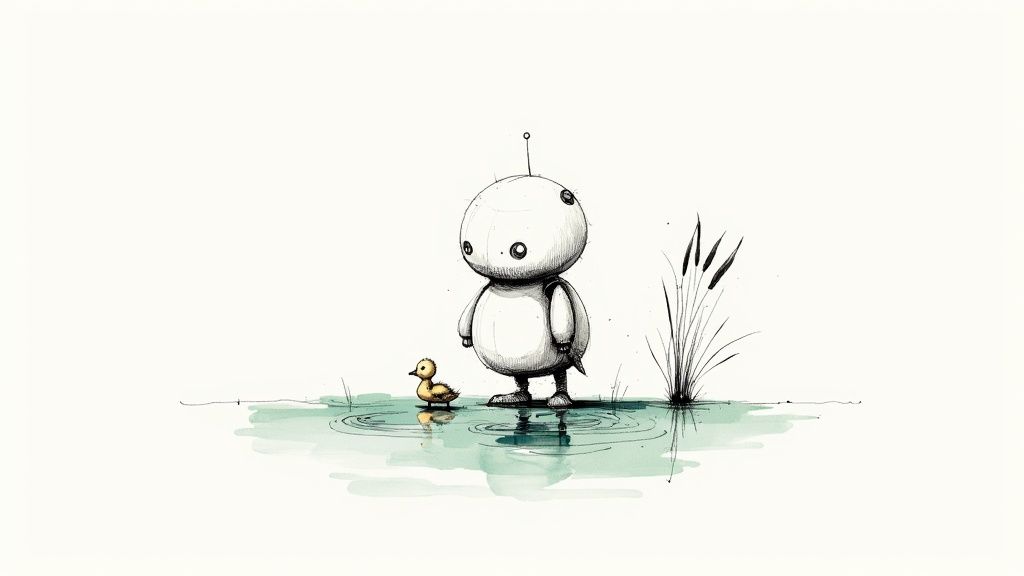
Its status as a Newbery Medal Honor book and its forthcoming film adaptation from DreamWorks Animation highlight its significant cultural impact. The novel’s short chapters and integrated illustrations make it highly accessible, engaging even reluctant readers with its unique blend of science fiction and nature survival.
Why It's a Top Pick
The Wild Robot masterfully bridges the gap between the natural world and the technological one, prompting essential conversations about artificial intelligence, environmental stewardship, and acceptance. The narrative follows Roz as she unexpectedly becomes the adoptive mother to a gosling, forcing her to learn about empathy and care in ways her programming never intended. Peter Brown's simple yet profound illustrations are integral to the storytelling, helping students visualize Roz's journey and her connection to the island's inhabitants.
Classroom and At-Home Implementation
To deepen a child's engagement with the book's rich themes, educators and parents can use several targeted strategies.
- STEAM-Focused Discussions: Use the book as a springboard to discuss artificial intelligence, robotics, and ethics. Ask questions like, "Can a robot have feelings?" or "What responsibilities do we have when we create new technology?"
- Environmental Science Connections: Pair the story with curriculum units on animal habitats, adaptation, and ecosystems. Students can research the different animals Roz encounters and explore the challenges they face in the wild.
- Creative Art Responses: Encourage students to use the book’s distinct artistic style as inspiration. They can draw or build their own "wild robot" designed to survive in a different environment, fostering creativity and critical thinking.
8. Hatchet by Gary Paulsen (Grades 4-7, Ages 9-13)
Gary Paulsen’s Hatchet is a masterclass in survival fiction and a riveting addition to any list of the best books for elementary students, particularly those in the upper grades. The story follows thirteen-year-old Brian Robeson, who is stranded in the vast Canadian wilderness after a plane crash. With only a hatchet given to him by his mother, Brian must learn to survive against the odds, confronting hunger, wildlife, and his own despair.
This Newbery Honor-winning novel has captivated readers for decades with its visceral, realistic depiction of self-reliance. Its enduring presence in school curricula is a testament to its power to engage readers with themes of resilience, the human-nature connection, and the psychological fortitude required to overcome immense challenges.
Why It's a Top Pick
Hatchet offers more than just a thrilling adventure; it is a profound exploration of personal growth and problem-solving. Paulsen’s sparse, direct prose immerses readers in Brian’s experience, making his triumphs and failures feel immediate and personal. The narrative skillfully demonstrates the practical application of scientific principles, from making fire to finding food, fostering an appreciation for resourcefulness and critical thinking. It is an ideal book for mature young readers ready to tackle a story with high stakes and deep emotional introspection.
Classroom and At-Home Implementation
To deepen a child's engagement with Brian's survival journey, educators and parents can use a variety of supportive strategies.
- Pre-Reading Activities: Introduce basic survival concepts before starting the book. Discuss topics like building a shelter, finding clean water, and identifying edible plants to provide context for Brian's challenges.
- Psychological Discussions: Pause during reading to talk about Brian’s feelings of loneliness, fear, and hope. This helps readers develop empathy and understand the psychological aspects of survival and isolation.
- Hands-On Connections: If possible, pair the book with outdoor education activities like a nature walk, a camping trip, or even a backyard lesson on fire safety. Connecting the story's events to real-world skills makes the narrative even more impactful.
9. Wonder by R.J. Palacio (Grades 4-7, Ages 9-13)
R.J. Palacio's Wonder has become a modern classic and a staple in classrooms, making it one of the best books for elementary students moving into middle school. The novel introduces us to Auggie Pullman, a boy with a rare facial difference, as he attends a mainstream school for the first time. Told from multiple perspectives, this powerful story delves into themes of kindness, acceptance, bullying, and the courage to be oneself.
Its incredible impact is reflected in the "Choose Kind" movement it inspired in schools worldwide and its successful film adaptation. The book provides a rich, character-driven narrative that encourages young readers to look beyond appearances and understand the complex inner lives of others. It’s an essential tool for fostering a compassionate and inclusive classroom environment.
Why It's a Top Pick
Wonder excels at building empathy by allowing readers to step into the shoes of not just Auggie, but also his sister, his friends, and even those who are unkind to him. This multi-perspective approach is a brilliant device for teaching that every person has their own story and struggles. The narrative directly confronts the painful realities of bullying while ultimately championing the profound impact of empathy and friendship, making it an unforgettable read for upper elementary students.
Classroom and At-Home Implementation
To get the most out of Wonder, educators and parents can focus on its unique narrative structure and powerful social-emotional lessons.
- Perspective-Taking Activities: After reading chapters from different characters' points of view, hold discussions comparing their feelings and motivations. Ask students to write a short scene from the perspective of a minor character.
- Discuss Bullying and Inclusion: Use the book as a safe starting point to talk openly about bullying, being an ally, and what it means to create an inclusive community. Connect Auggie's experiences to real-world scenarios.
- "Choose Kind" Projects: Encourage students to start their own kindness initiatives, such as a "compliment jar" or a school-wide campaign, inspired by Mr. Browne's precepts in the book. This turns the novel's central theme into actionable practice.
10. The Baby-Sitters Club series by Ann M. Martin (Grades 2-5, Ages 7-11)
Ann M. Martin's The Baby-Sitters Club series has been a rite of passage for generations, solidifying its place among the best books for elementary students. The books follow a group of friends who start their own baby-sitting business in Stoneybrook, Connecticut. Each novel explores themes of entrepreneurship, responsibility, and the complex dynamics of friendship, making the series a foundational read for those new to chapter books.
The series' enduring relevance is proven by its continued popularity, with over 200 million copies sold since 1986. Recent graphic novel adaptations by Raina Telgemeier and a popular Netflix series have introduced Kristy, Mary Anne, Claudia, and Stacey to a new audience, proving that their stories of friendship and growing up are truly timeless.
Why It's a Top Pick
The Baby-Sitters Club excels at presenting realistic, character-driven narratives that resonate with young readers. The series provides an excellent model for problem-solving, teamwork, and navigating social challenges in a supportive group. Each book is told from a different character's perspective, offering varied viewpoints and helping children develop empathy. The accessible language and engaging, episodic plots make it a perfect "bridge" series for readers transitioning into longer novels.
Classroom and At-Home Implementation
The series offers rich opportunities for learning and discussion that go beyond the page.
- Entrepreneurship Lessons: Use the club's formation in Kristy's Great Idea to introduce basic business concepts like marketing, scheduling, and responsibility. Have students brainstorm their own simple business plan.
- Character and Friendship Analysis: Discuss how the friends handle disagreements and support one another. This can lead to valuable conversations about conflict resolution and the qualities of a good friend.
- Cross-Media Comparison: After reading one of the original novels or graphic novels, watch the corresponding episode of the Netflix series. Discuss the similarities and differences, fostering critical media literacy skills.
Top 10 Elementary Books Comparison
| Title | Implementation complexity 🔄 | Resource requirements ⚡ | Expected outcomes 📊 | Key advantages & ideal use cases ⭐💡 |
|---|---|---|---|---|
| Charlotte's Web (Grades 3-6) | Low — suitable for read-alouds or independent reading; brief prep for sensitive ending | Low — ~184 pages; illustrated editions available; minimal tech | High empathy & vocabulary gains; strong discussion potential about life/death | ⭐ Timeless SEL text; ideal for read-alouds, literature circles, elementary curricula 💡 prep students for discussions on mortality |
| The One and Only Ivan (Grades 4-7) | Moderate — requires framing for animal-welfare themes and emotional scenes | Moderate — ~305 pages; pair with multimedia (documentaries/film) for impact | Strong perspective-taking and ethical reasoning; motivates activism topics | ⭐ Powerful voice-driven narrative; use in units on animals, ethics, and writing in voice 💡 combine with real-world conservation resources |
| Ramona Quimby series (Grades 2-5) | Low — episodic, flexible reading; easy to scaffold across levels | Low — short books; series format supports gradual progression | Improves fluency, relatable social-emotional learning, reading confidence | ⭐ Highly relatable early-reader series; ideal for independent readers, character journals, author studies 💡 start with 'Ramona the Pest' |
| Wings of Fire series (Grades 3-6) | High — long series with complex plots; benefits from tracking supports | High — 300+ pages per book; teacher tools (charts, character maps) recommended | High engagement and narrative-comprehension gains; builds complex-plot skills | ⭐ Excellent for reluctant and advanced readers seeking adventure; ideal for long-term reading clubs and fan projects 💡 create character charts and fan activities |
| Percy Jackson series (Grades 4-7) | Moderate — fast-paced but mythological background may need scaffolding | Moderate — ~375 pages per book; rich supplemental mythology resources | Increases interest in classical myths and cultural literacy; strong engagement | ⭐ Makes mythology accessible and motivating; ideal for mythology units and diversity discussions (ADHD/dyslexia representation) 💡 start with 'The Lightning Thief' |
| The Tale of Despereaux (Grades 3-6) | Moderate — lyrical language and interwoven narratives need guided reading | Moderate — ~267 pages; illustrations aid comprehension, good for read-aloud | Fosters literary appreciation, themes of forgiveness and redemption | ⭐ Literary, discussion-rich choice; ideal for deeper reading groups and fairy-tale comparisons 💡 read aloud to highlight tone and language |
| The Wild Robot (Grades 2-5) | Low–Moderate — accessible prose but thematic depth benefits discussion | Moderate — ~272 pages; pairs well with STEAM/environment units | Encourages environmental ethics, empathy toward technology-nature balance | ⭐ Bridges tech and nature interests; ideal for STEAM integration and ethics conversations 💡 pair with AI/nature lessons and art responses |
| Hatchet (Grades 4-7) | Moderate — intense survival content needs content warnings and prep | Low — ~187 pages; minimal materials but may pair with outdoor activities | Strengthens problem-solving, resilience, and survival-topic engagement | ⭐ High-engagement, realistic survival narrative; ideal for resilience lessons and outdoor education 💡 pre-teach survival concepts and provide triggers warning |
| Wonder (Grades 4-7) | Moderate — multiple perspectives require discussion structure | Moderate — ~310 pages; useful with inclusion curricula and film tie-ins | Significant gains in empathy, inclusion, and perspective-taking | ⭐ Central SEL text for kindness/inclusion units; ideal for anti-bullying and diversity lessons 💡 use guided discussion on multiple viewpoints and representation |
| The Baby-Sitters Club series (Grades 2-5) | Low — short, episodic chapters easy to implement; adaptable formats | Low — ~125–150 pages per book; graphic-novel and TV tie-ins available | Builds reading stamina, social problem-solving, basic entrepreneurship concepts | ⭐ Accessible, friendship-focused series; ideal for early independent readers, entrepreneurship units, and cross-media projects 💡 begin with book #1 and connect to business lessons |
Turning Pages into Possibilities
The journey through the elementary school years is a period of monumental growth, and the stories children encounter can profoundly shape their understanding of the world and their place within it. The list of best books for elementary students we have explored is more than just a collection of titles; it is a curated pathway through complex emotions, diverse perspectives, and unforgettable adventures. Each book serves as a stepping stone, building upon foundational literacy skills while simultaneously nurturing the seeds of empathy, resilience, and critical thinking.
From the quiet, steadfast friendship in E.B. White's Charlotte's Web to the epic, mythological quests in Rick Riordan's Percy Jackson series, these narratives provide essential "windows and mirrors." They allow young readers to see their own lives reflected in characters like the boisterous Ramona Quimby, while also offering windows into experiences vastly different from their own, such as Brian Robeson’s solitary struggle for survival in Hatchet. This dual power of literature is what transforms reading from a simple school assignment into a deeply personal and formative experience.
Key Takeaways from Our Curated List
To make the most of this guide, remember these core principles that informed our selections:
- Emotional Intelligence is Key: Books like Wonder and The One and Only Ivan are not just compelling stories; they are powerful tools for initiating conversations about kindness, acceptance, and compassion. They give children the language to discuss complex social and emotional concepts.
- Series Build Stamina and Confidence: Engaging series such as Wings of Fire and The Baby-Sitters Club are invaluable for developing reading stamina. When a child is hooked on a series, they transition from "learning to read" to "reading to learn," devouring books with an enthusiasm that cements a lifelong love of reading.
- Classic Themes Remain Relevant: The timeless lessons found in classics like The Tale of Despereaux about courage, forgiveness, and light in the darkness continue to resonate. These stories connect generations and provide a shared literary heritage that enriches family and classroom discussions.
Actionable Next Steps for Parents and Educators
Translating this list into a vibrant reading culture at home or in the classroom is the ultimate goal. Here are a few practical ways to begin:
- Start a Parent-Child or Classroom Book Club: Select a title from this list, such as The Wild Robot, and read it together. Set aside time each week to discuss a few chapters. Use open-ended questions like, "How did you feel when Roz first woke up on the island?" or "What would you have done in that situation?" This transforms solitary reading into a shared, collaborative event.
- Create a "Reading Response" Journal: Encourage your child or students to respond to what they read in a way that feels natural to them. This doesn't have to be a formal book report. It could be a drawing of a favorite scene, a letter to a character, or a list of questions they have for the author.
- Connect Books to the Real World: After reading Hatchet, you could plan a nature walk or learn basic outdoor skills. After finishing Wonder, you might research and support organizations that promote inclusivity. These connections demonstrate that the themes and lessons from books have real-world applications, making the reading experience more meaningful and memorable.
By actively engaging with these stories, you are doing more than just encouraging a hobby. You are equipping the next generation with the tools they need to navigate their own lives with greater understanding, courage, and empathy. The best books for elementary students are those that open doors in their minds, and this list is your key. The adventures, lessons, and friendships waiting within these pages are ready to begin.
At Number 6 Publishing, we are passionate about creating and celebrating stories that ignite curiosity and inspire young readers. Just as we’ve highlighted timeless classics and modern favorites, our own catalog is dedicated to producing high-quality, engaging books for the next generation. Discover our titles and resources for families and educators at Number 6 Publishing.