
Third grade marks a pivotal academic year where students transition from learning to read to reading to learn. Their intellectual curiosity blossoms, and their capacity for complex thinking in math, science, and writing expands significantly. To nurture this growth, it's essential to provide 8- and 9-year-olds with learning experiences that are engaging, hands-on, and meaningful. Generic worksheets often fall short; this age group thrives on dynamic, interactive challenges that connect concepts to the real world. This is a critical stage in a child’s educational journey, where fostering a genuine love for learning can set the foundation for future success.
This guide provides a comprehensive collection of practical and fun activities for 3rd graders, designed for parents, teachers, and homeschool families. Each idea is crafted to be more than just a time-filler; they are structured to build specific skills across key subject areas. From launching student-led book clubs to designing imaginative STEM projects, you will find actionable steps to spark curiosity and deepen understanding. To effectively design engaging activities that foster a love for learning in young children, it's beneficial to consider foundational educational psychology theories such as Piaget's Theory of Cognitive Development, which provides insight into the cognitive stages children move through as they learn.
Here, you will discover a curated roundup of activities covering everything from reading and writing to social-emotional learning and physical education. We focus on providing clear, step-by-step instructions, learning objectives, and tips for differentiation, ensuring every child can participate and thrive. The goal is to move beyond rote memorization and cultivate critical thinking, creativity, and collaboration. Let's dive into the activities that will make third grade an unforgettable adventure in learning.
1. Book Club Circles and Discussion Groups
Book club circles are structured reading groups where small cohorts of 3rd graders read the same book and meet regularly to discuss it. This collaborative approach transforms reading from a solitary activity into a vibrant, social experience, making it one of the most enriching activities for 3rd graders. Students explore characters, plot, and themes together, building a sense of community while sharing their unique perspectives.
This method is ideal for deepening reading comprehension beyond basic recall. It encourages students to think critically, make predictions, and connect the story to their own lives. By listening to their peers, children learn that a single story can be interpreted in multiple ways, fostering empathy and analytical skills.
How to Implement Book Clubs
Successful book clubs for this age group rely on structure and engagement. Start by selecting high-interest books at a 3rd-grade reading level, such as classics like Charlotte's Web or modern favorites that spark meaningful conversations.
- Assign Roles: Rotate student responsibilities to keep everyone involved. Roles can include a Discussion Director who asks questions, a Word Wizard who identifies interesting vocabulary, and an Illustrator who draws a key scene.
- Create a Special Atmosphere: Designate a cozy corner with comfortable seating or allow snacks during meetings. This simple touch makes the club feel like a special event rather than just another assignment.
- Use Visual Aids: Provide discussion guides with open-ended questions and illustrations. This supports reluctant readers and visual learners, ensuring everyone can contribute to the conversation.
Key Insight: The goal isn't just to talk about the book, but to build a shared understanding. Encourage students to ask each other "why" they think a character acted a certain way or what they would have done differently.
For a comprehensive guide on getting started, including tips on choosing books and structuring meetings, you can learn more about how to start a book club for young readers. This activity not only strengthens literacy but also hones crucial social-emotional skills like active listening and respectful debate.
2. Author Study Projects and Creative Response Activities
An author study is an in-depth exploration of a single author's body of work, where students read multiple books by that person to identify their unique style, recurring themes, and voice. This moves beyond reading one-off stories and encourages children to see writers as real people with distinct perspectives. It’s one of the most effective activities for 3rd graders for building a deep appreciation for literature and the craft of writing.
This approach helps students make connections between different books, recognizing how a character might evolve or how a common theme like friendship is explored across various plots. By studying an author like Beverly Cleary or E.B. White, 3rd graders learn that stories don’t exist in a vacuum; they are crafted by individuals with specific techniques and ideas, which inspires them to think more like writers themselves.
How to Implement Author Studies
A successful author study blends reading, research, and creative expression. The key is to choose an author with several accessible books that resonate with 8- and 9-year-olds, such as Patricia Polacco or Roald Dahl.
- Create Author Bio Posters: Have students research the author's life and create biographical posters. They can include fun facts, a portrait, and a list of their published works, turning research into a hands-on art project.
- Track Themes and Techniques: Use a large chart to track common elements across the author's books. Note recurring character types, settings, or writing techniques like vivid descriptions or humorous dialogue.
- Encourage Creative Responses: Instead of just writing a report, ask students to respond creatively. They could write a letter to the author, create a new book cover, or perform a short scene from their favorite book.
Key Insight: The focus should be on discovery and connection. Ask students, "What makes a book feel like a 'Kevin Henkes' book?" This prompts them to analyze style and voice, not just plot details.
For more inspiration on structuring these projects, you can explore detailed guides on conducting an author study in the elementary classroom. This activity not only boosts reading comprehension but also provides a powerful bridge to developing writing skills by showing students how their favorite authors do it.
3. Read-Aloud Theater and Dramatic Story Reenactments
Read-aloud theater transforms stories into live performances where students embody characters and act out scenes. This dynamic approach turns passive reading into an active, kinesthetic experience, making it one of the most engaging activities for 3rd graders. By reenacting stories through reader's theater, puppet shows, or informal skits, children explore plot, dialogue, and character emotions from the inside out.
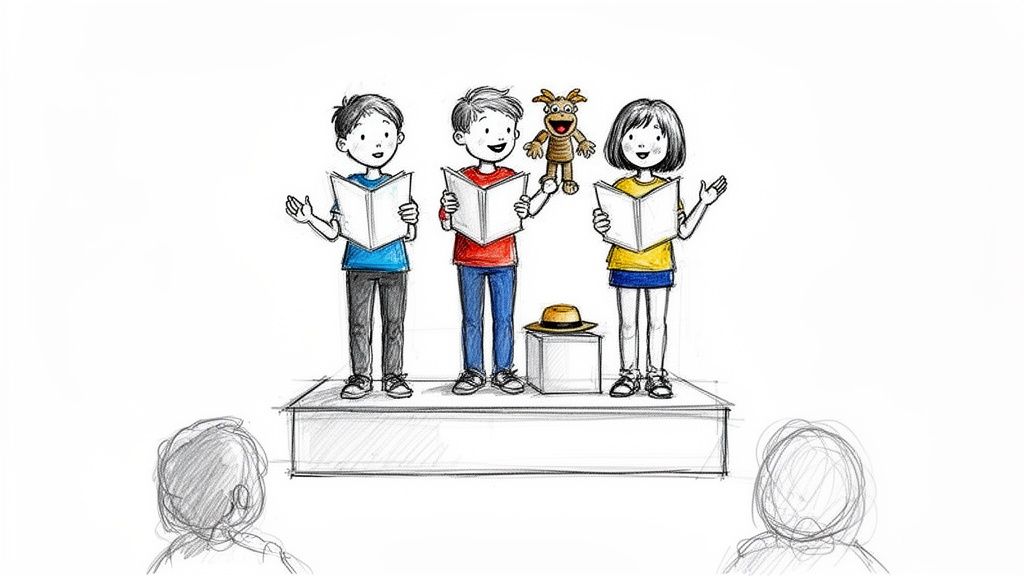
This method is exceptional for building reading fluency, confidence, and public speaking skills. Students learn to use expression, tone, and gestures to convey meaning, deepening their comprehension far beyond a written summary. It also promotes teamwork and creative problem-solving as they work together to bring a narrative to life.
How to Implement Dramatic Reenactments
Bringing stories to the stage requires minimal setup but delivers maximum impact. Begin with simple scripts or familiar picture books before moving to more complex narratives from chapter books like Charlotte's Web or Winnie-the-Pooh.
- Assign Flexible Roles: Beyond the main characters, create roles like Narrator, Sound Effects Artist, or Prop Master to ensure every student has a meaningful part. Rotate roles for different performances.
- Encourage Creative Interpretation: Let students create their own simple costumes and props from classroom materials. This ownership boosts their enthusiasm and investment in the performance.
- Focus on Process, Not Perfection: The goal is exploration, not a flawless show. Emphasize teamwork and having fun with the story. Record performances to share with families, celebrating the students' collaborative effort.
Key Insight: Dramatic reenactment helps children internalize a character's perspective. Encourage them to think about how their character feels and what motivates their actions, connecting literacy directly to social-emotional learning.
For ideas on which books work best for performance, explore a curated list of the best read-aloud books for 3rd grade. This activity makes literature unforgettable and helps students build a lasting, personal connection to the stories they read.
4. Create-Your-Own Book Projects (Writing and Illustrating)
Empowering 3rd graders to become authors and illustrators, create-your-own book projects turn writing into a tangible and rewarding accomplishment. Students draft, illustrate, and bind their own stories, transforming their ideas into physical books they can share and treasure. This hands-on process is one of the most powerful activities for 3rd graders because it validates their unique voices and celebrates their creative growth from start to finish.
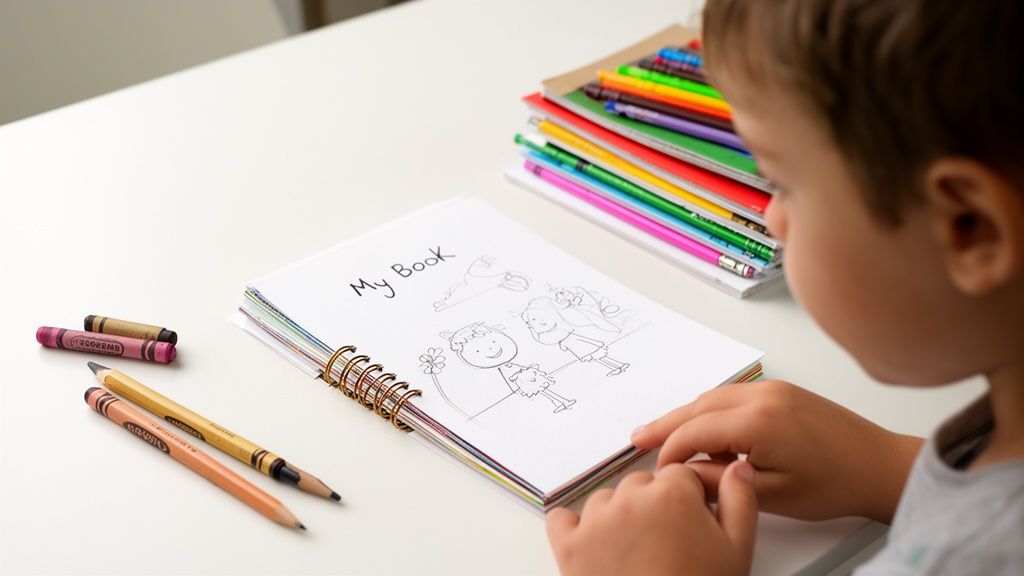
This activity demystifies the writing process by showing students how stories are constructed, from initial brainstorming to the final product. It builds confidence, reinforces grammar and narrative structure, and integrates art skills seamlessly. Whether creating original fiction, a new take on a classic fairy tale, or a non-fiction guide, students develop a profound sense of ownership and pride in their work.
How to Implement Book Projects
A successful book project balances creative freedom with clear structure. Start by showing students a variety of book formats, from simple folded booklets to more elaborate, bound creations, to inspire them.
- Provide Scaffolding: Offer story starters, plot diagrams, or prompts for students who feel stuck. Using mentor texts can also provide a great model for structure, character development, and narrative voice.
- Host an "Author's Celebration": Turn the project's completion into a special event. Invite students to read excerpts of their books aloud to classmates or other classes. This builds public speaking skills and gives their work a real audience.
- Create a Classroom Library: Display the finished books in a designated section of the classroom library. Placing student-authored books alongside published titles sends a powerful message that their stories are valuable and important.
Key Insight: The focus should be on the creative process and the joy of storytelling, not on perfection. Celebrate every student's effort and unique vision to foster a lifelong love for writing and self-expression.
For a helpful primer on guiding young writers through the initial stages, explore this detailed guide on how to start writing a story. This project not only enhances literacy and artistic skills but also teaches resilience, planning, and the immense satisfaction of completing a long-term goal.
5. Interactive Reading Corners and Themed Library Spaces
An interactive reading corner is a dedicated classroom area designed to inspire a love of reading through comfortable seating, organized book collections, and immersive decor. Creating these inviting spaces transforms reading from a required task into a desirable escape, making it one of the most effective activities for 3rd graders. By establishing themed nooks-like a "Fantasy Forest" or "Mystery Mansion"-students are encouraged to explore genres and discover new authors in a cozy, welcoming sanctuary.
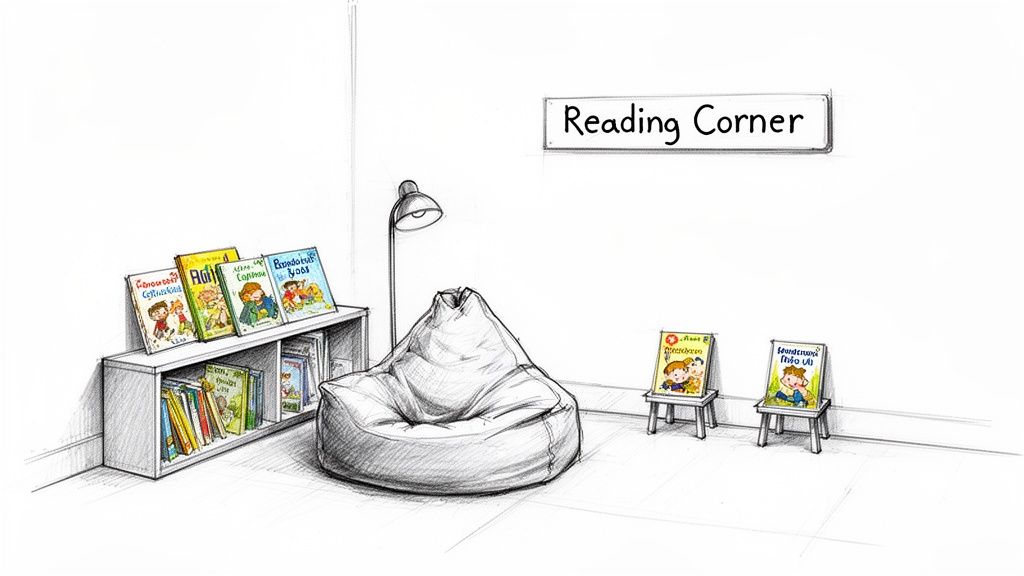
This strategy is perfect for fostering independent reading habits and student agency. A well-designed corner communicates that reading is a valued and enjoyable activity, not just a skill to be mastered. It gives students a comfortable place to decompress and get lost in a story, which can significantly boost reading stamina and positive associations with books.
How to Implement Reading Corners
Building an effective reading corner is about creating a space that feels both special and accessible. Involve students in the design process to give them a sense of ownership and excitement.
- Theme and Decor: Choose a theme based on a class unit, a favorite genre, or seasonal changes. Use simple decor like fabric, fairy lights, or student-made art to bring the theme to life. Ensure good lighting and comfortable seating with pillows or bean bag chairs.
- Curate the Collection: Regularly rotate the book selection to keep it fresh and engaging. Display books with their covers facing out at a 3rd grader's eye level to spark curiosity. Include a diverse range of genres, authors, and formats, including graphic novels and audiobooks.
- Add Interactive Elements: Post a reading challenge chart, provide a logbook for students to write mini-reviews, or include a "recommend a book" jar. These small additions turn the corner into a dynamic and collaborative space.
Key Insight: A reading corner is more than just furniture; it's a message to students that their comfort and reading journey are important. Let them help choose the books and decorate the space to truly make it their own.
By creating an intentional space for reading, you cultivate an environment where literacy can flourish naturally. This approach supports independent learning while building a strong, positive classroom culture centered around the joy of stories.
6. Book Tasting and Literary Appreciation Events
A book tasting is a celebratory event where students "sample" a variety of books, much like a food or wine tasting. This low-pressure format transforms book selection from a daunting task into an exciting exploration. By organizing books into different genres or themes at "tasting tables," it becomes one of the most engaging activities for 3rd graders to discover new authors and styles, moving beyond their usual reading comfort zones.
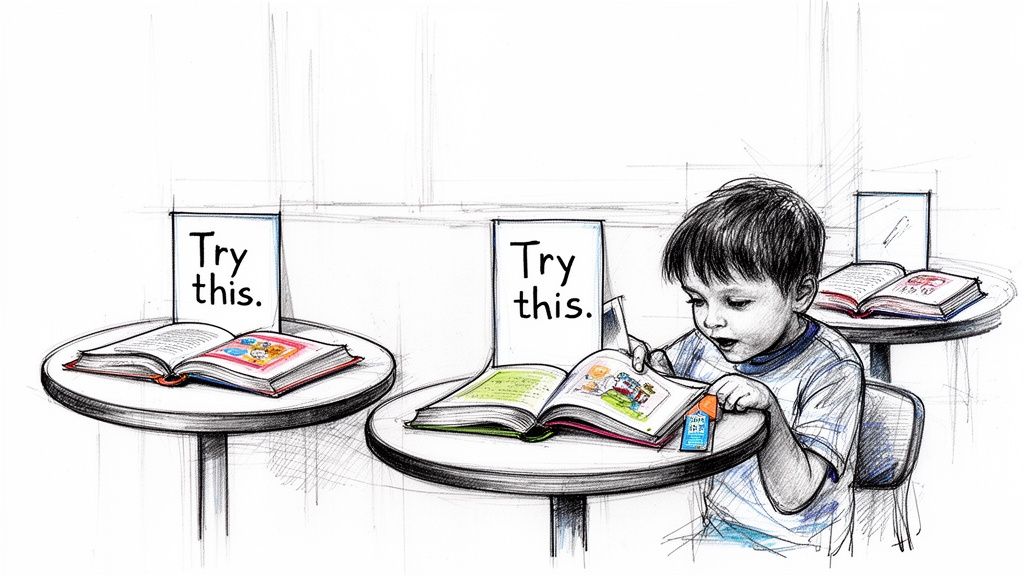
This social approach to literacy normalizes the process of browsing and helps students find titles that genuinely match their interests and reading levels. It empowers them to make their own choices, fostering a sense of ownership over their reading journey and building lifelong appreciation for diverse literature.
How to Implement a Book Tasting
A successful book tasting hinges on creating a fun, cafe-like atmosphere and providing a curated selection of titles. Collaborate with the school librarian to gather a wide range of books, from graphic novels to historical fiction.
- Set the Scene: Arrange tables by genre, complete with tablecloths, simple centerpieces, and genre labels. Provide a "menu" or "tasting notes" sheet for students to jot down their impressions of each book they sample.
- Curate "Hook" Cards: For each book, create a small card with a compelling one-sentence summary or an intriguing question. This helps grab students' attention and gives them a reason to open the cover.
- Mix It Up: Include a mix of popular bestsellers, award-winners, and lesser-known titles. This exposes students to books they might not otherwise pick up on their own.
Key Insight: The main objective is discovery, not completion. Encourage students to spend just a few minutes with each book, reading the back cover, the first page, and looking at illustrations before moving on.
The event can be expanded by having students share their "favorite taste" with the class, creating a buzz around new titles. This activity is perfect for launching a new reading unit, celebrating literacy week, or simply refreshing classroom library selections.
7. Character Study Activities and Emotion Mapping
Character studies are deep-dive explorations into a fictional character's motivations, feelings, and growth throughout a story. For third graders, this involves moving beyond "who" a character is to "why" they act the way they do. This analytical process turns reading into a detective game, making it one of the most engaging literary activities for 3rd graders as they map out a character's emotional journey.
This approach is perfect for developing empathy and critical thinking. By tracking how a character like Ramona Quimby or Winnie-the-Pooh responds to challenges, students learn to recognize emotional complexity and understand that feelings can change over time. It provides a solid foundation for comprehending character-driven narratives and interpreting subtext in stories.
How to Implement Character Studies
Effective character mapping relies on visual tools and relatable discussions. Begin by modeling the process with a familiar read-aloud story, thinking aloud about a character's feelings at key moments.
- Use Graphic Organizers: Provide templates like character webs or "emotion thermometers." Students can list character traits or slide an indicator up and down to show how a character's anger or happiness changes from one chapter to the next.
- Create Emotion Journals: Have students write short diary entries from a character's perspective. This encourages them to step into the character's shoes and articulate their feelings and motivations in their own words.
- Connect to Personal Experience: Prompt discussions with questions like, "Have you ever felt misunderstood like this character?" or "What would you have done in this situation?" This bridges the gap between fiction and real-life emotional intelligence.
Key Insight: The focus is on understanding the cause of a character's actions. Encourage students to find evidence in the text that explains why a character's emotions shifted, linking their feelings directly to plot events.
For students ready to explore complex character growth, stories like Each Kindness by Jacqueline Woodson offer rich opportunities for analysis. These activities not only improve literary comprehension but also build crucial social-emotional skills by teaching children to recognize and name a wide spectrum of human emotions.
8. Reading Challenges and Progressive Milestone Celebrations
Reading challenges are motivational programs where students track their reading progress toward specific goals, such as books finished, pages read, or genres explored. This gamified approach transforms reading into an exciting quest, making it one of the most engaging activities for 3rd graders. By using visual displays to show advancement and celebrating milestones, these challenges build sustained enthusiasm and recognize every student's effort.
This method is perfect for fostering a consistent reading habit and encouraging literary exploration. It helps students develop a sense of ownership over their reading journey, celebrating personal growth rather than just speed or volume. As they see their progress visually, their confidence and motivation soar, reinforcing reading as a rewarding and enjoyable pastime.
How to Implement Reading Challenges
An effective reading challenge for 3rd graders balances clear goals with meaningful rewards. The key is to emphasize participation and personal bests, making the experience inclusive for all reading levels.
- Design Diverse Challenges: Move beyond quantity. Create challenges focused on diversity, such as "Read a Book from Every Continent" or "Explore Five New Genres." This encourages students to broaden their horizons and discover new interests.
- Create a Visual Tracker: Use a large wall chart, a "reading thermometer," or individual progress logs. A visual representation of their collective or individual progress makes the goal tangible and exciting.
- Celebrate Milestones Meaningfully: When a student or the class reaches a milestone, celebrate it. Rewards don't have to be material; they can be experiences like choosing the next class read-aloud, earning extra free-reading time, or receiving a special certificate.
Key Insight: The focus should always be on celebrating effort and the joy of discovery, not on competition. Acknowledge students who try a challenging book or re-read a favorite, as these actions also demonstrate a love for reading.
For excellent examples and resources, look to programs like the Scholastic Reading Counts or local library summer reading programs. These challenges help build lifelong reading habits by associating books with a sense of accomplishment and community celebration.
9. Literature Circles with Student-Led Inquiry and Roles
Literature circles are student-led discussion groups where each member assumes a specific role to guide the conversation. This dynamic approach transforms a standard book club into one of the most empowering activities for 3rd graders, as it puts them in charge of the inquiry process. Students take ownership of the discussion, building leadership skills, accountability, and a deeper connection to the text.
This method ensures every student has a clear purpose and a voice. By rotating roles, children learn to analyze a story from multiple angles, from focusing on vocabulary to making real-world connections. This structured independence is perfect for 3rd graders who are ready to move beyond teacher-led comprehension questions and explore literature with their peers.
How to Implement Literature Circles
Success with literature circles depends on clear role definitions and gradual release of responsibility. Begin by modeling each role with the entire class using a shared picture book before students try it in small groups with chapter books like Because of Winn-Dixie or The One and Only Ivan.
- Assign Specific Roles: Give each student a role with a clear task. Common roles include the Discussion Director (develops questions), Vocabulary Enricher (finds key words), Passage Master (selects important excerpts), and Connector (links the book to self, text, or world).
- Provide Role Sheets: Create simple graphic organizers or sheets for each role. These sheets should include prompts and sentence starters to guide students' preparation and help them contribute confidently during discussions.
- Observe, Don't Direct: Your role as the teacher is to be a facilitator, not the leader. Circulate among groups to listen, provide support when needed, and assess their progress, but allow the students to lead the conversation.
Key Insight: The power of literature circles comes from student-led discovery. When a child takes on the role of the Connector and shares how a character's struggle reminds them of their own life, they are building empathy and critical analytical skills simultaneously.
For more detailed information on this approach, Harvey Daniels' work on literature circles provides a foundational framework for implementation. This activity champions student agency, turning reading into a collaborative, analytical, and deeply personal experience.
10. Connecting Books to Real Life: Text-to-Self and Text-to-World Activities
Connecting books to real-life experiences transforms reading from a passive exercise into a meaningful exploration of identity and the world. This approach encourages 3rd graders to make personal links to characters and events (text-to-self) and to see how story themes relate to broader societal issues (text-to-world). These intentional discussions make reading one of the most powerful activities for 3rd graders to build empathy and critical awareness.
This method moves comprehension beyond simple plot recall to a deeper level of analysis. When students see their own lives, families, and communities reflected in stories, they feel validated and understood. Furthermore, connecting narratives to global topics like fairness, community, and resilience helps them recognize that stories can inspire real-world action and understanding.
How to Implement Text-to-Life Connections
Success with this activity depends on creating a safe, reflective classroom environment and selecting books with relatable, authentic themes. Choose stories that offer mirrors to students' own experiences and windows into the lives of others.
- Ask Open-Ended Questions: Instead of "Did you like the character?" ask, "Has a character ever felt a way that you have felt before? Tell us about it." This invites deeper reflection without requiring yes or no answers.
- Use Visual Response Tools: Have students use a simple T-chart to log connections. One column can be for "In the Book" and the other for "In My Life" or "In the World." This helps organize their thoughts before sharing.
- Create a Safe Sharing Space: Establish a clear rule that sharing personal stories is always optional. Let students know that their thoughts are valued, whether they share them with a partner, in a small group, or just in their personal journal.
Key Insight: The goal is to show students that their personal experiences are valuable and that stories are a powerful tool for understanding themselves and others. Encourage diverse interpretations and celebrate every unique connection a child makes.
For example, a book about a character overcoming a challenge, like A Complicated Journey, can spark conversations about resilience in their own lives. These discussions help build a bridge between literature and lived experience, strengthening both literacy and social-emotional skills.
Top 10 3rd-Grade Reading Activities Comparison
| Activity | 🔄 Implementation Complexity | ⚡ Resource Requirements | 📊 Expected Outcomes | 💡 Ideal Use Cases | ⭐ Key Advantages |
|---|---|---|---|---|---|
| Book Club Circles and Discussion Groups | 🔄 Moderate — weekly/bi‑weekly facilitation and group matching | ⚡ Books, discussion guides, teacher time | 📊 Improved comprehension, speaking, listening, accountability | 💡 Small groups to build discussion skills and community | ⭐ Encourages student voice and peer learning |
| Author Study Projects and Creative Response Activities | 🔄 High — multi‑week planning and coordinated readings | ⚡ Multiple books by one author, research materials, art supplies | 📊 Deeper understanding of author craft and literary patterns | 💡 Units on writing craft or extended literature study | ⭐ Fosters literary analysis and creative expression |
| Read-Aloud Theater and Dramatic Story Reenactments | 🔄 High — rehearsals, role assignment, staging logistics | ⚡ Space, simple props/costumes, adapted scripts, rehearsal time | 📊 Stronger fluency, expression, confidence, empathy | 💡 Fluency practice, performance events, kinesthetic learners | ⭐ Highly engaging; builds oral language and empathy |
| Create-Your-Own Book Projects (Writing & Illustrating) | 🔄 Moderate — drafting, revision cycles, publishing steps | ⚡ Paper, binding supplies, art materials, class time | 📊 Growth in writing process, self‑expression, book structure knowledge | 💡 Writing units, celebrations, cross‑curricular projects | ⭐ Empowers authorship; produces tangible student work |
| Interactive Reading Corners and Themed Library Spaces | 🔄 Low–Moderate — setup and ongoing maintenance | ⚡ Furniture, decor, curated books, shelving | 📊 Increased independent reading, book discovery, classroom calm | 💡 Daily independent reading; encourage choice and exploration | ⭐ Inviting space boosts motivation and engagement |
| Book Tasting and Literary Appreciation Events | 🔄 Moderate — event setup and station rotation | ⚡ Diverse book selection, tables/signage, short prep time | 📊 Broadened genre exposure; renewed interest in reading | 💡 Whole‑class celebrations, library outreach, family nights | ⭐ Low‑pressure discovery; sparks new reading interests |
| Character Study Activities and Emotion Mapping | 🔄 Moderate — requires scaffolding and graphic organizers | ⚡ Texts with rich characters, organizers, guided questions | 📊 Improved inference, empathy, emotional literacy | 💡 SEL integration and deep comprehension lessons | ⭐ Deepens character understanding and empathy |
| Reading Challenges and Progressive Milestone Celebrations | 🔄 Low–Moderate — tracking setup and consistent monitoring | ⚡ Charts/apps, rewards, teacher/family coordination | 📊 Increased reading volume, goal‑setting, persistence | 💡 Motivation drives, summer programs, schoolwide goals | ⭐ Encourages consistent practice and measurable progress |
| Literature Circles with Student-Led Inquiry and Roles | 🔄 High — explicit role instruction and ongoing monitoring | ⚡ Role sheets, texts, teacher modeling time | 📊 Leadership, accountability, richer discussion skills | 💡 Student‑centered small‑group literature study | ⭐ Promotes independence and balanced participation |
| Connecting Books to Real Life: Text‑to‑Self & Text‑to‑World | 🔄 Moderate — careful facilitation and sensitivity required | ⚡ Texts, prompts, possible community resources or projects | 📊 Increased relevance, empathy, social awareness, action | 💡 SEL lessons, community projects, diverse perspectives study | ⭐ Makes reading meaningful and connects learning to life |
Building a Lifelong Love of Learning, One Activity at a Time
The journey through third grade represents a pivotal moment in a child's academic and personal development. This is the year when abstract thinking begins to solidify, independence blossoms, and a genuine, lifelong passion for learning can truly take root. The comprehensive list of activities for 3rd graders shared throughout this article is more than just a collection of ideas; it is a blueprint for fostering a dynamic, engaging, and deeply meaningful educational environment, whether at home or in the classroom. By moving beyond rote memorization and embracing hands-on, inquiry-based experiences, we empower children to see themselves as capable authors, budding scientists, and creative problem-solvers.
Reflecting on the activities covered, from the collaborative energy of Literature Circles to the personal expression found in creating their own books, a clear theme emerges: student agency is paramount. When third graders are given choices, their investment in the learning process skyrockets. Allowing them to select their own roles in a discussion group, choose a character to analyze, or design a reading corner that reflects their interests validates their perspectives and builds intrinsic motivation. This sense of ownership is the secret ingredient that transforms a required task into a cherished pursuit.
Key Takeaways for Cultivating Curiosity
The true power of these activities lies not in their individual execution but in the mindset they collectively foster. Here are the most critical takeaways to remember as you implement these ideas:
- Integration is Everything: The most impactful learning happens when subjects are not siloed. A STEM challenge can incorporate storytelling, a reading activity can inspire an art project, and a math game can build social-emotional skills. Look for natural opportunities to connect different disciplines, mirroring how the real world works.
- Process Over Product: While a finished project is rewarding, the real learning occurs during the process. Celebrate the messy drafts, the failed experiments, and the revised hypotheses. Emphasize effort, resilience, and the courage to try something new, as these are the skills that build confident, adaptable learners.
- Connection to the Real World: Third graders are developing a more sophisticated understanding of the world around them. Activities that connect classroom concepts to real-life scenarios, such as the Text-to-World reading responses or science experiments that explain everyday phenomena, make learning relevant and unforgettable.
Your Actionable Next Steps
Feeling inspired? The best way to begin is by starting small and building momentum. Don't feel pressured to implement everything at once. Instead, choose one or two activities that genuinely excite you and align with your child's or students' current interests.
- Conduct a "Learning Inventory": Sit down with your third grader and ask them what they enjoy most. Do they love building things? Telling stories? Solving puzzles? Use their answers to guide your selection of initial activities for 3rd graders.
- Schedule Dedicated "Activity Time": Block out specific, protected time in your weekly schedule for these hands-on experiences. This signals that this type of learning is a priority and gives everyone something to look forward to.
- Gather Materials Collaboratively: Turn the preparation into part of the fun. Create a "maker space" or an activity bin together, gathering supplies like cardboard, craft sticks, markers, and notebooks. This builds anticipation and gives your child a sense of co-ownership over their learning tools.
Ultimately, the goal is to cultivate an environment where curiosity is the compass. The diverse array of activities presented here serves as a toolkit to nurture the intellectual, emotional, and creative growth of every third grader. By providing them with varied opportunities to explore, create, and connect, we are not just helping them master third-grade standards; we are equipping them with the confidence, critical thinking skills, and unwavering curiosity that will fuel their educational journey for years to come.
Ready to bring these literary activities to life with stories that captivate and inspire? The curated collection at Number 6 Publishing features imaginative and heartfelt books perfect for sparking discussions and fueling the projects mentioned in this guide. Explore our titles at Number 6 Publishing and find the perfect book to anchor your next great third-grade adventure.