
Picture books are often seen as relics of early childhood, but for fourth graders, they are powerful tools for learning. At ages 9 and 10, students are capable of deep analytical thinking, and complex picture books offer a unique medium to explore sophisticated themes, intricate art, and nuanced storytelling in a single, accessible sitting.
Unlike chapter books, which build worlds over time, picture books deliver a complete narrative arc rich with visual data. This makes them perfect for teaching literary elements like theme, character development, and point of view. They are also invaluable for introducing diverse perspectives, sparking critical conversations, and engaging visual learners who might otherwise be intimidated by dense text. Finding the right 4th grade picture books is essential for unlocking this potential.
This guide solves the problem of where to find these impactful resources. We have compiled the best websites and platforms for discovering, purchasing, or borrowing high-quality picture books specifically suited for the intellectual and emotional maturity of fourth graders. Each option in this list is detailed with its unique benefits for parents, teachers, and librarians, complete with screenshots and direct links to get you started immediately. Our focus is on providing a clear, actionable roundup that helps you build a rich, diverse, and engaging library for your 9 and 10-year-olds, bypassing the endless search and getting straight to the best books available.
1. Collections - Our Books
For educators, librarians, and parents seeking 4th grade picture books with depth and emotional resonance, the "Collections - Our Books" page from Number 6 Publishing is a premier destination. This isn't a sprawling, algorithm-driven marketplace. Instead, it’s a thoughtfully curated showcase from a family-run press that champions curiosity, empathy, and stories that spark meaningful conversations, making it an exceptional resource for finding titles that truly connect with older elementary students.
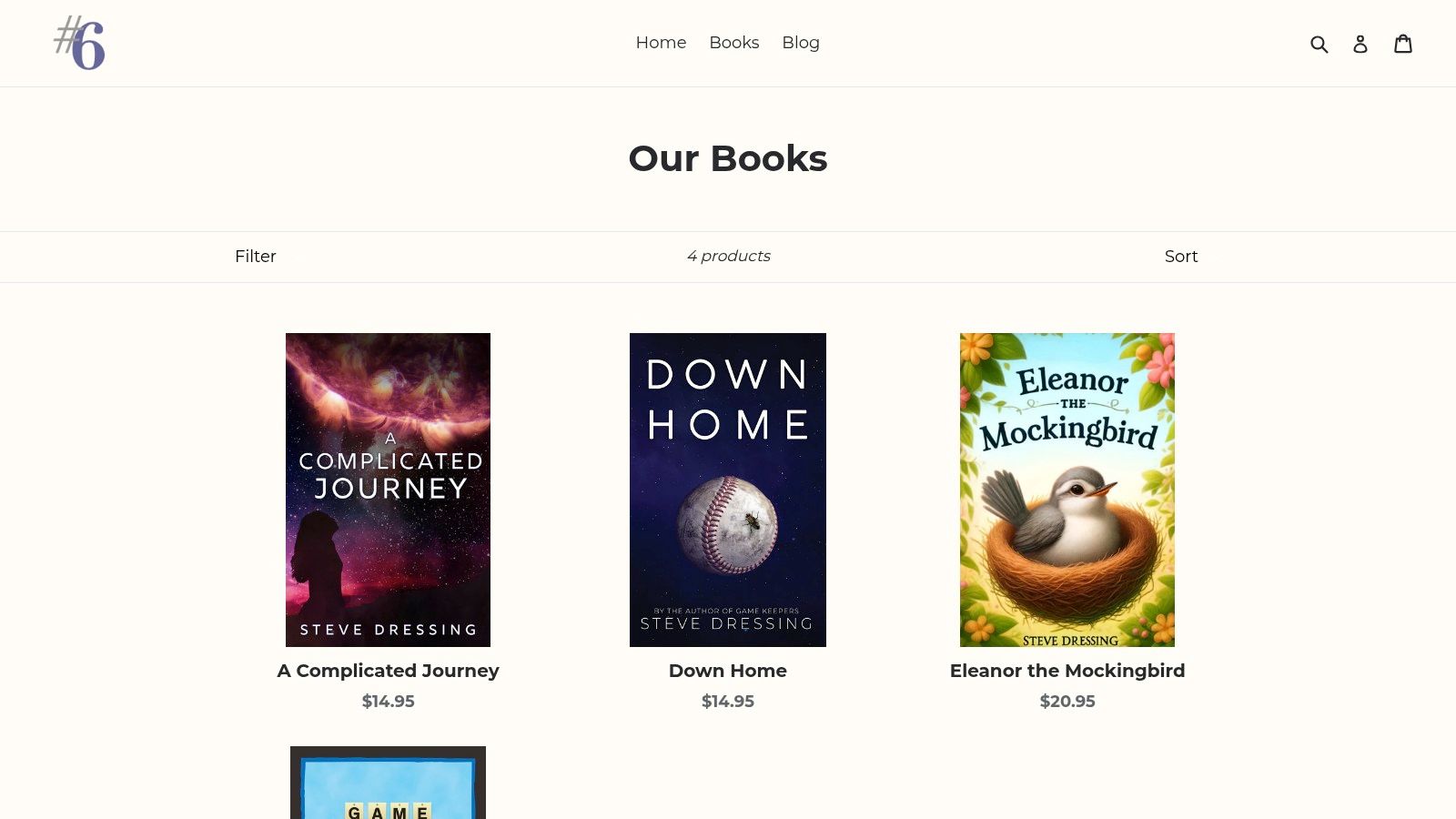
The platform stands out by organizing its catalog into thematic groupings and guided reading lists. Rather than just presenting individual titles, it offers collections designed for specific needs, such as classroom-ready picks, giftable bundles, and lists that highlight overlooked voices. This curatorial approach simplifies the discovery process, helping adults find books that align with specific learning objectives or personal values.
Why It's a Standout Choice for 4th Graders
Number 6 Publishing's mission-driven selection process is its greatest strength. Every book feels handpicked to foster emotional honesty and build empathy. This focus is particularly valuable for 9 and 10-year-olds, who are ready to engage with more complex narratives and nuanced themes. Titles like Eleanor the Mockingbird and A Complicated Journey provide perfect entry points into discussions about resilience, identity, and social justice.
The small-press authenticity means you’ll discover unique, artfully crafted books that are often absent from mainstream lists. These stories possess a certain heart and intentionality that can make them memorable additions to any home or classroom library. For further guidance, Number 6 Publishing also offers a helpful parents' guide that details their top 10 book recommendations for 4th graders, providing an excellent starting point.
Navigating the Collections: A Practical Guide
To make the most of the website, start by exploring the themed lists. Are you building a classroom unit on historical figures? Or perhaps you need a book to help a child navigate a difficult emotional experience? The collections are designed to point you in the right direction.
While the site excels at curation, one minor drawback is that detailed descriptions and content previews sometimes require clicking through to individual product pages. A best practice is to open titles that catch your eye in new tabs to easily compare them. Beyond traditional picture books, engaging content for this age group often includes popular franchises, where you can find exciting Pikachu coloring pages and books that complement more literary reading experiences.
| Feature Analysis | Strength | Best For |
|---|---|---|
| Curation Quality | Excellent: Mission-driven, focusing on empathy and emotional honesty. | Educators and parents seeking books with substance and pedagogical value. |
| Selection Diversity | Good: Spans picture books to YA, highlighting diverse voices. | Building a well-rounded library that reflects multiple perspectives. |
| Ease of Discovery | Very Good: Themed lists and guided recommendations simplify browsing. | Adults who need targeted suggestions for specific themes or age groups. |
| Site Interface | Good: Clean and easy to navigate, though lacks detailed on-page previews. | Users who prefer a focused, uncluttered browsing experience. |
Access and Availability
As a publisher, Number 6 Publishing sells its books directly through its website. Pricing is comparable to other independent presses, and they frequently offer bundles or special collections that provide good value.
- Pros: Curated, mission-driven selection; useful recommendations for adults; small-press authenticity.
- Cons: Smaller catalog than major publishers; may need to click through for full book details.
Website: https://www.number6publishing.com/collections/our-books
2. Amazon (Books)
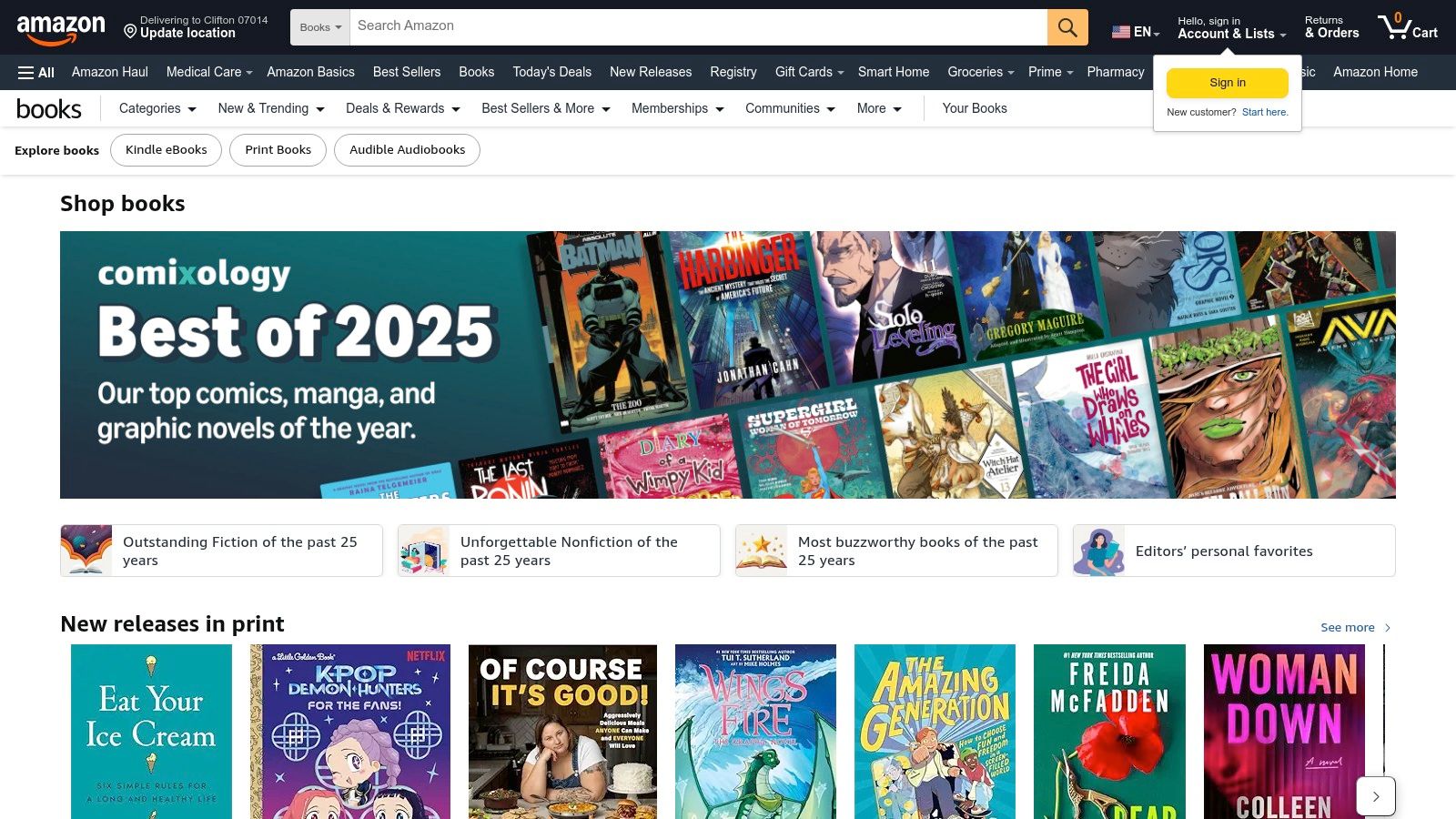
When it comes to sheer volume and accessibility, Amazon's book marketplace is an unparalleled resource for finding 4th grade picture books. Its massive inventory ensures that both newly released titles and beloved classics are almost always in stock. This makes it a one-stop shop for parents and educators building a diverse library.
The platform excels at providing multiple formats for a single title. You can often choose between a hardcover, paperback, Kindle e-book, or an Audible audiobook, catering to different reading preferences and classroom needs. For teachers and librarians, this flexibility is a significant advantage when sourcing materials for various learning styles.
Why It Stands Out
Amazon's true strength lies in its powerful vetting and discovery tools. The "Look Inside" feature is invaluable for evaluating a picture book's suitability without having it in your hands. You can assess the illustration style, text complexity, and overall tone to ensure it aligns with the maturity and interests of 9- and 10-year-olds. This preview function helps avoid the disappointment of ordering a book that looks great on the cover but isn't a good fit for the intended audience.
Furthermore, the extensive customer reviews section offers crowdsourced insights from other parents, teachers, and librarians. These reviews often contain practical details about how a book was received by children, potential discussion topics, and whether the themes resonated with the target age group.
Pro Tip: Use the filter sidebar to your advantage. You can narrow search results by age range (e.g., 9-12 years), customer rating (4 stars & up), and even language to quickly find high-quality, relevant 4th grade picture books.
Pros & Cons
| Pros | Cons |
|---|---|
| Unmatched selection of new and backlist titles | Discovery is heavily algorithm-driven, not curated |
| Multiple formats available (print, Kindle, Audible) | Shipping benefits are tied to Prime membership |
| "Look Inside" feature for pre-purchase vetting | Non-Prime members may face shipping minimums |
| Extensive user reviews provide real-world feedback | Overwhelming number of choices can be daunting |
Getting the Most Out of Amazon Books
To maximize your search, use specific keywords like "picture books for older readers" or "biographical picture books." Also, pay attention to the "Customers who bought this item also bought" section, as it can be a surprisingly effective tool for discovering similar titles that you might have otherwise missed. While the platform offers a vast selection, it's important to cross-reference recommendations and explore different authors to build a well-rounded collection. You can learn more about how to find the perfect books for this age by exploring other 4th grade level books and resources.
Website: https://www.amazon.com/books
3. Barnes & Noble (BN.com)
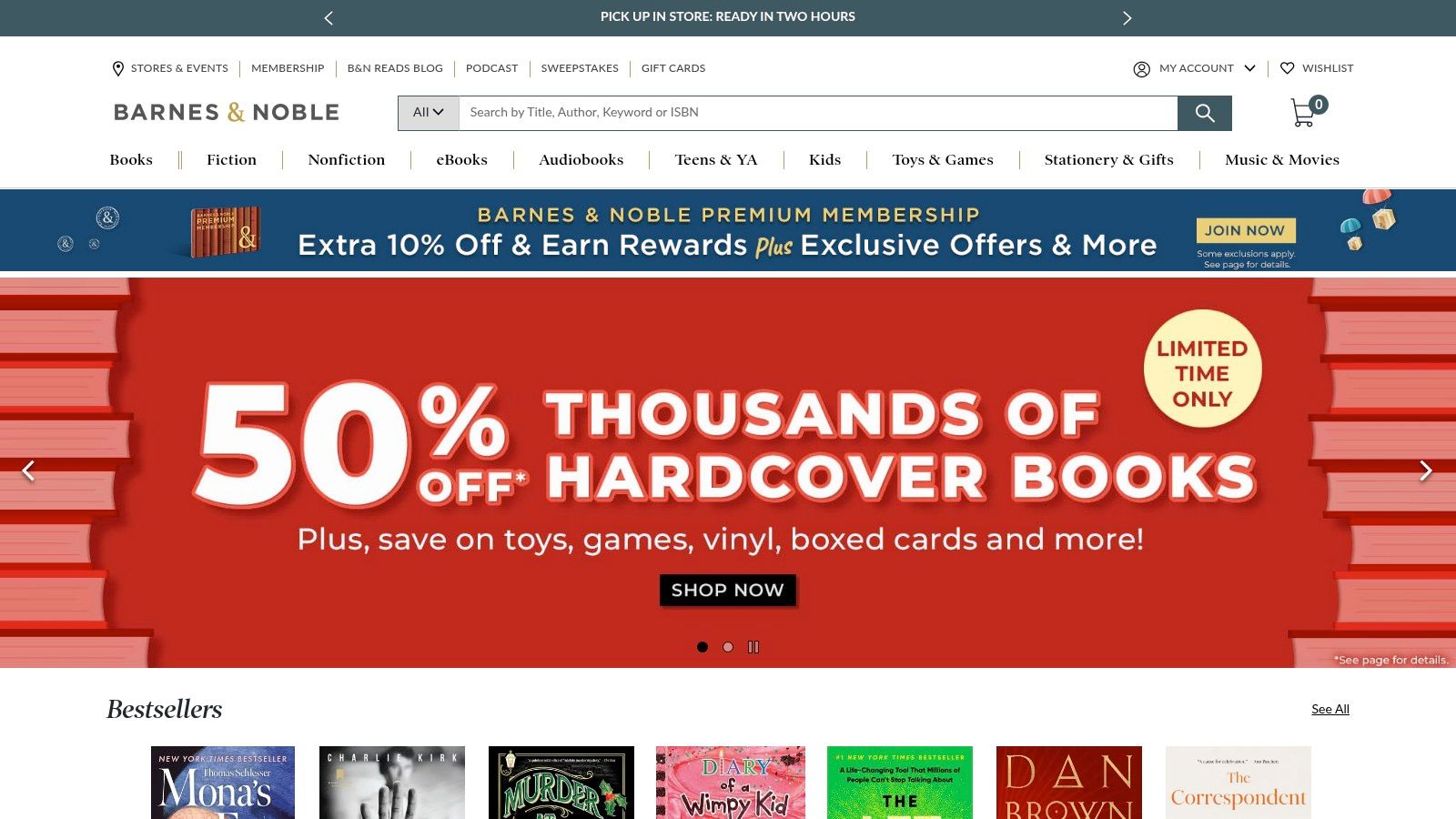
For those who value a trusted bookseller with both a strong online presence and physical storefronts, Barnes & Noble is an excellent resource for finding 4th grade picture books. It strikes a balance between a vast, accessible inventory and a more curated shopping experience, making it a preferred alternative for families and educators who prefer to support a dedicated book retailer.
The platform's integration of online and in-store services is a key benefit. You can easily browse titles online, check local store availability for immediate pickup, or opt for convenient ship-to-home delivery. This flexibility caters to different planning needs, whether you're sourcing a book for a lesson tomorrow or building a library over time.
Why It Stands Out
Barnes & Noble excels in its curated collections and seasonal promotions. Unlike purely algorithm-driven sites, BN.com often features editor-curated lists like "Children’s Monthly Picks" or themed collections for holidays and awareness months. These lists are invaluable for discovering high-quality, relevant, and timely 4th grade picture books that might not surface in a standard keyword search.
The ability to handle a book in-store before purchasing is another significant advantage. For picture books, where the art, trim size, and paper quality are integral to the experience, being able to see and feel the product is crucial. This hybrid online-to-offline model allows you to research online and then make a final, confident purchasing decision in person, ensuring the book's physical presentation meets your expectations.
Pro Tip: Check the "B&N Exclusives" section for unique editions of popular picture books. These versions often feature special covers, bonus content, or author signatures, making them great gifts or special additions to a classroom library.
Pros & Cons
| Pros | Cons |
|---|---|
| In-person browsing complements online buying | Free shipping threshold for non-members can be high |
| Curated lists provide expert recommendations | Educator program was retired, reducing teacher-specific discounts |
| Straightforward returns at any physical store | Some perks and better shipping rates require a paid membership |
| Reliable fulfillment and transparent delivery dates | Selection may not be as exhaustive as Amazon's for obscure titles |
Getting the Most Out of Barnes & Noble
To find the best books, explore the "Kids' Book Awards" and "Best Books of the Year" lists on the website, as they are often rich with critically acclaimed picture books suitable for older readers. When browsing, use the filters to narrow results by age range (8-12 years) and customer ratings. If you're interested in the visual storytelling aspect of these books, you can discover more by exploring some of the best books about illustration. Also, consider signing up for the BN Premium Membership if you plan to order frequently, as the free shipping benefit quickly pays for itself.
Website: https://www.bn.com
4. Bookshop.org
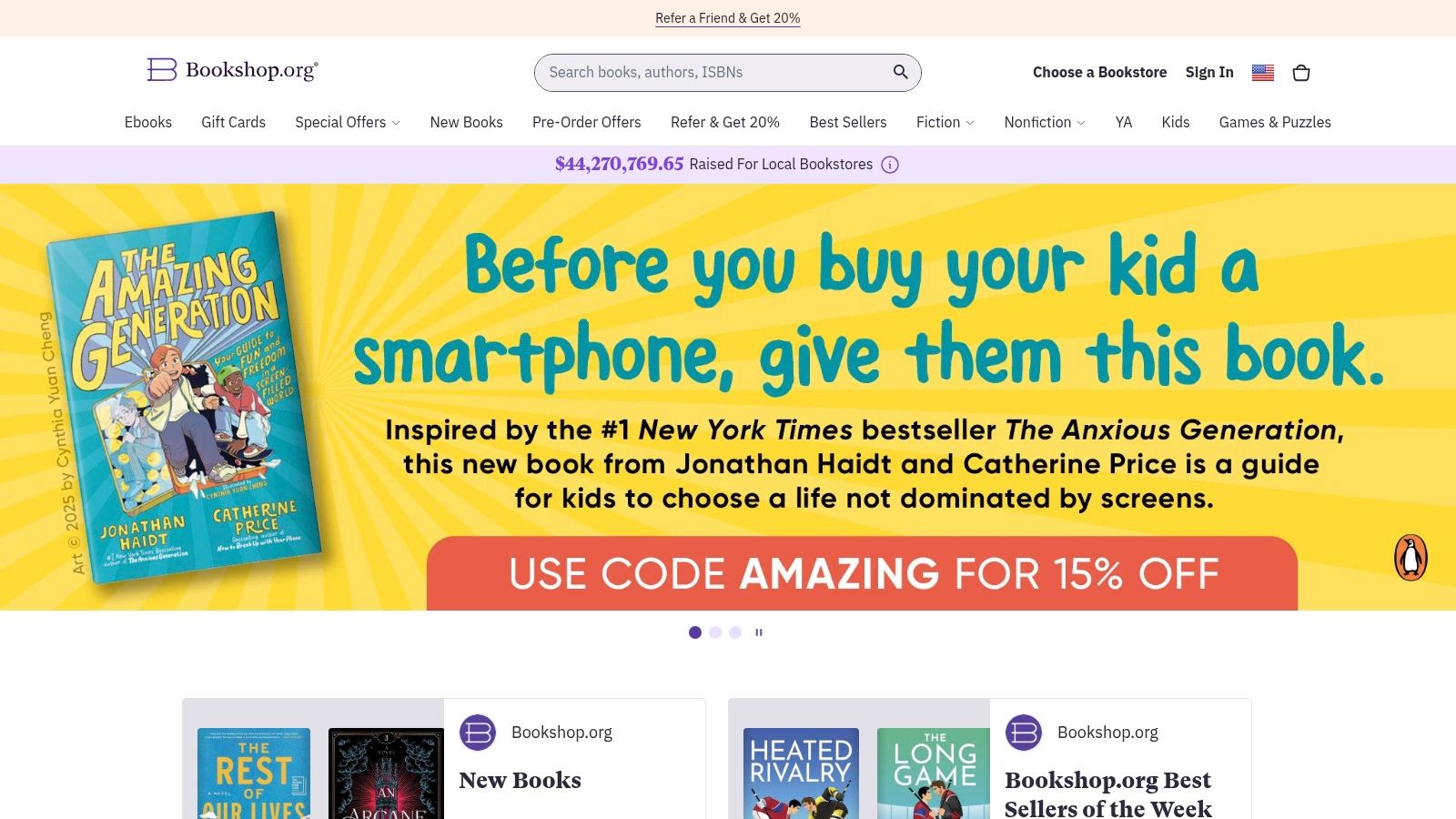
For those who want to find exceptional 4th grade picture books while supporting local businesses, Bookshop.org offers a mission-driven alternative to major online retailers. The platform is an online marketplace that financially supports a network of independent bookstores across the country. This means every purchase helps sustain the brick-and-mortar shops that are vital to local communities.
Its model allows you to either select a specific local bookstore to receive the full profit from your order or contribute to a shared earnings pool that is distributed evenly among participating indies. This unique approach combines the convenience of online shopping with the positive impact of shopping local, making it a powerful tool for conscious consumers, parents, and educators.
Why It Stands Out
Bookshop.org’s greatest strength is its emphasis on human curation over algorithms. The platform is filled with curated reading lists created by real booksellers, librarians, authors, and educators who have a deep passion for literature. These lists often highlight diverse voices, unique themes, and hidden gems that might not surface on algorithm-heavy sites, making it an excellent resource for discovering meaningful and thought-provoking picture books for older readers.
This focus on expert recommendations is invaluable for finding titles that address the complex social and emotional topics relevant to 9- and 10-year-olds. Instead of sifting through thousands of algorithm-driven results, you can browse lists specifically designed for certain age groups, themes like "empathy" or "biographies," or grade-level curriculum needs. The platform also provides tools for schools and PTAs to create and share their own curated lists, simplifying book fairs and classroom library-building efforts.
Pro Tip: Search for lists created by educators or librarians specializing in middle grades. Use search terms like "4th grade reads," "picture books for older kids," or "social emotional learning" to find expertly curated collections that go beyond the bestsellers.
Pros & Cons
| Pros | Cons |
|---|---|
| Directly supports local, independent bookstores | E-books are not compatible with Kindle devices |
| Curation by real booksellers and experts | Customer service can be slower than major retailers |
| Excellent tool for schools/PTAs to create book lists | Holiday shipping may be less predictable |
| Fosters discovery of diverse and unique titles | Selection may not be as exhaustive as giant marketplaces |
Getting the Most Out of Bookshop.org
To find the best 4th grade picture books, start by exploring the "Browse" section and looking for categories like "Kids" or "Middle Grade." Within these sections, you'll find curated lists that are often more insightful than a simple keyword search. Follow your favorite independent bookstores on the platform to see their staff picks and recommendations. This not only helps you discover great books but also builds a connection with the bookselling community.
Website: https://bookshop.org
5. Scholastic Book Clubs / Teacher Store
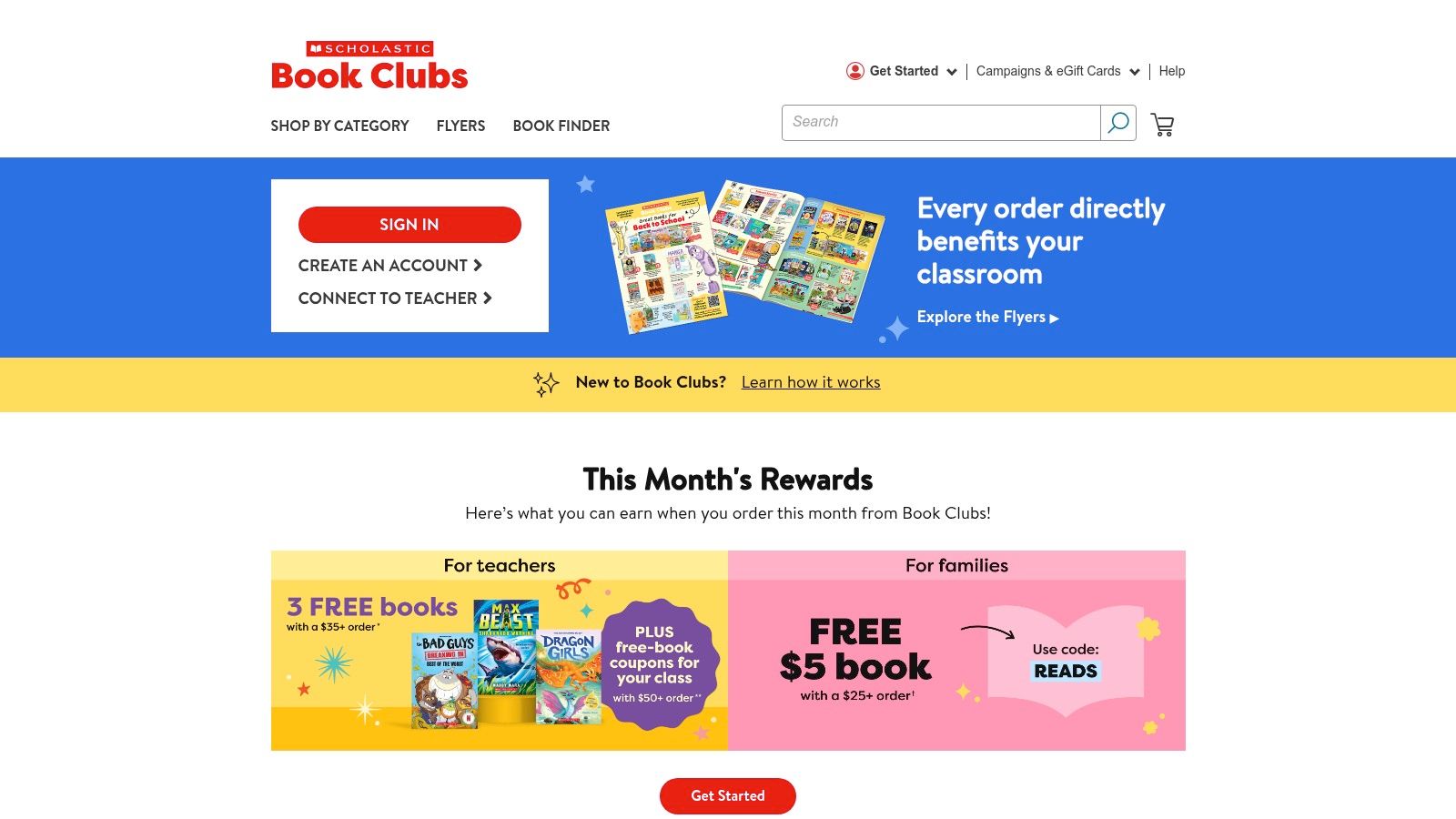
For educators and homeschooling families, Scholastic offers a direct-from-publisher pipeline specifically designed for building classroom libraries. Its Book Clubs and Teacher Store provide expertly curated collections of 4th grade picture books alongside other relevant formats, streamlining the sourcing process for those buying in bulk. This educator-centric approach makes it an invaluable resource for stocking a classroom with high-interest, grade-appropriate materials.
The platform is built around grade-banded packs and pre-selected libraries, taking the guesswork out of finding a diverse mix of titles. Instead of searching book by book, you can purchase bundles ranging from 20 to 100 books that mix picture books, illustrated nonfiction, and early chapter books perfect for the 9- and 10-year-old reader.
Why It Stands Out
Scholastic's unique strength is its focus on classroom logistics and curriculum alignment. Many of its bundles are aligned with programs like Accelerated Reader, providing immediate utility for teachers. The ability to purchase a complete "Grade 4 Classroom Library" in one click saves immense time and effort, ensuring a balanced selection that includes different genres and reading levels suitable for a typical 4th grade class.
Furthermore, the ordering and delivery process is tailored for school environments. When an order is placed through a teacher's account, the books are shipped directly to the school, simplifying distribution. This workflow, combined with educator-focused customer support, removes many of the administrative hurdles associated with acquiring new classroom resources.
Pro Tip: Look for the "Teacher Store" section for value packs and library builders. While Book Club flyers are great for student choice, the Teacher Store is where you’ll find larger, more economical bundles designed to quickly establish a robust collection of 4th grade picture books.
Pros & Cons
| Pros | Cons |
|---|---|
| Purpose-built bundles save time for educators | Many offers require a teacher or school account |
| Classroom-friendly delivery and ordering logistics | Shipping fees can add a significant percentage to the cost |
| Curated mixes of fiction and nonfiction for Grade 4 | Large library packs can be a high upfront expense |
| Books often aligned with school reading programs | Consumer access for individual parents is more limited |
Getting the Most Out of Scholastic
To maximize the platform's value, connect with your child's teacher to see if they have a class account. Participating in a class order is often the easiest way for parents to access Scholastic's offerings. For educators, explore the "Collections" and "Guided Reading" sections to find sets that meet specific instructional goals. These curated lists often highlight picture books that can be used to teach complex themes and literary devices to older elementary students.
Website: https://clubs.scholastic.com
6. Epic! (getepic.com)
Epic! is a digital reading platform that acts like a massive, curated online library for kids, offering a powerful way to explore thousands of 4th grade picture books without the commitment of purchasing physical copies. For educators and families on a budget, it provides an invaluable service to test-drive titles and discover new authors.
The platform is designed specifically for children, with an engaging, user-friendly interface that encourages exploration. It offers a rich mix of content beyond just picture books, including audiobooks, "Read-To-Me" versions with highlighted text, and educational videos, making it a comprehensive literacy tool that supports different learning preferences.
Why It Stands Out
Epic!'s key advantage is its "try before you buy" model, especially for educators who get free access during school hours. A teacher can assign a digital picture book to the entire class, gauge student reactions, and use it in a lesson before deciding to invest in a class set of physical copies. The platform's built-in progress tracking, quizzes, and reading logs also add an element of accountability and insight that is difficult to replicate with physical books alone.
The inclusion of reading badges and rewards adds a fun, motivational layer to the experience. This approach helps engage reluctant readers by turning reading into a rewarding challenge. To understand how platforms like Epic! effectively engage young readers, it's useful to explore other powerful examples of gamification in educational platforms.
Pro Tip: Use the "Collections" feature to group 4th grade picture books by theme, author, or curriculum topic (e.g., "Biographies," "Social-Emotional Learning"). This makes it easy to assign relevant reading lists to students or for parents to find the right book for the right moment.
Pros & Cons
| Pros | Cons |
|---|---|
| Free access for educators during school hours | Full home access requires a paid subscription |
| Massive digital library to sample books affordably | Free school access window is time-limited |
| Teacher dashboard with assignment and tracking tools | Not all titles are permanently available; content can rotate |
| Convenient multi-device access for school and home | Children read on screens, which may not be ideal for all |
Getting the Most Out of Epic!
For parents, use the platform to supplement your home library and discover what your child truly enjoys before heading to the bookstore. For educators, integrate Epic! into your reading centers by having students explore specific collections on tablets. You can also project a "Read-To-Me" book for a whole-class read-aloud, using the audio narration and word highlighting to support emergent readers and English language learners.
Website: https://www.getepic.com
7. Libby (by OverDrive)
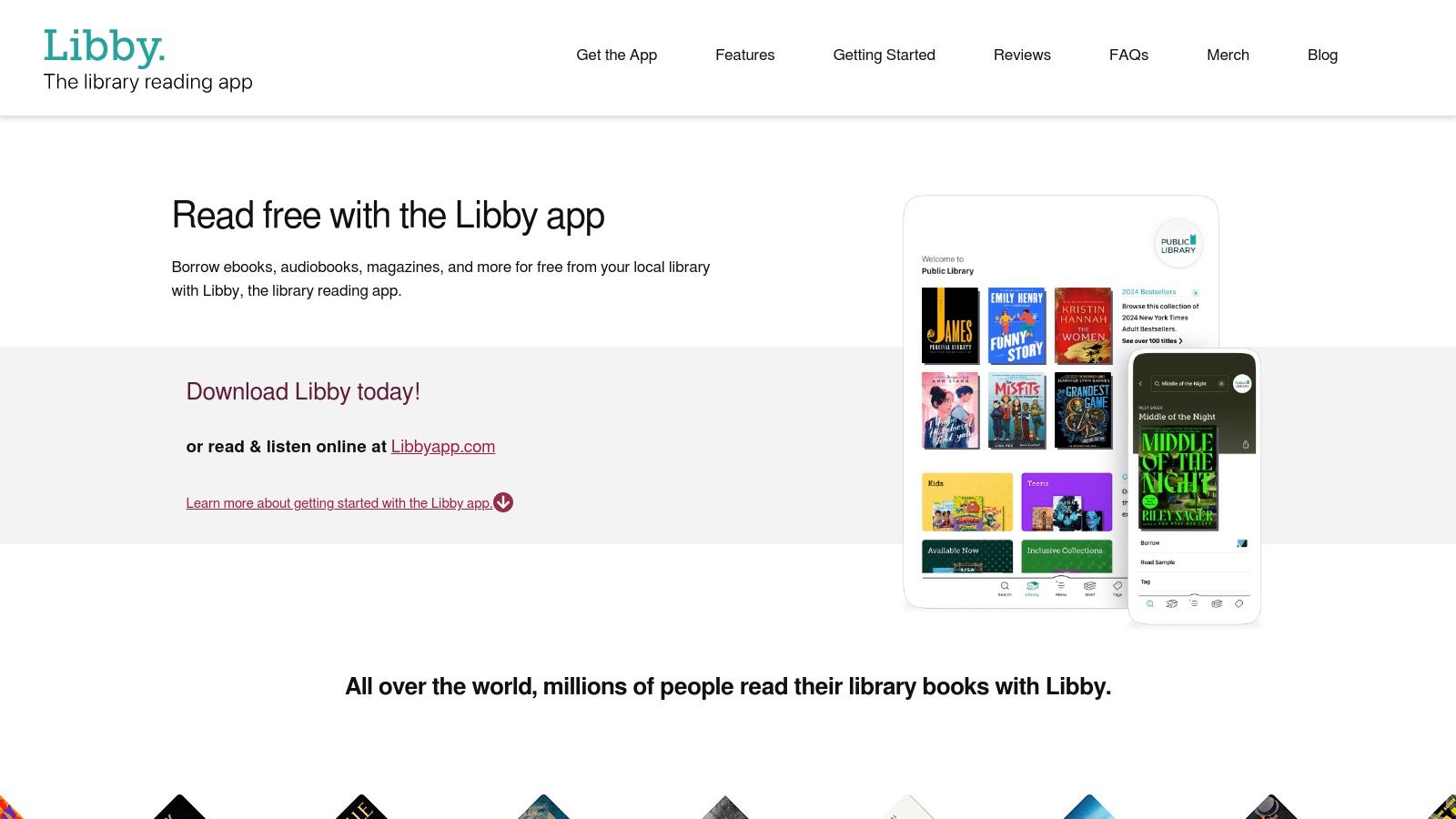
For parents and educators who want to explore a vast library of 4th grade picture books without the cost, Libby is an essential digital tool. Powered by OverDrive, this free app connects directly to your local public library's digital collection, providing instant access to thousands of e-books and audiobooks. It’s an incredibly cost-effective way to trial new titles, explore different authors, or supplement a classroom library.
The platform allows you to borrow books with just a library card, making high-quality literature accessible to everyone. You can browse, place holds on popular titles, and read directly within the app or, in many cases, send the book to a Kindle device. This flexibility makes it a powerful resource for both individual reading and shared classroom experiences.
Why It Stands Out
Libby's primary strength is its free, legal access to a professionally curated catalog. Unlike algorithm-driven marketplaces, the collections on Libby are selected by librarians, often resulting in high-quality, award-winning, and diverse 4th grade picture books. This makes it an excellent resource for discovering titles that you might not find through a typical online search. The ability to add multiple library cards to a single account further expands your access, allowing you to borrow from different library systems if you have eligibility.
Moreover, the app's clean, user-friendly interface simplifies the borrowing process. Features like synced reading progress across devices, adjustable text settings, and integrated audiobooks provide a seamless experience. For educators, it’s a perfect tool for assigning digital reading or vetting a book's content before deciding to purchase a physical copy for the classroom.
Pro Tip: Use the "deep search" or advanced search filters to find specific picture books for older readers. Filter by "Audience" and select "Juvenile" or "Young Adult," then add keywords like "biography" or "historical fiction" to uncover hidden gems.
Pros & Cons
| Pros | Cons |
|---|---|
| Free access with a public library card | Availability depends on your library's digital holdings |
| High-quality, librarian-curated collections | Popular titles often have long waitlists or hold queues |
| Supports multiple library cards for expanded access | Digital-only access; no physical books are provided |
| Send-to-Kindle feature available in many U.S. libraries | Instant digital card eligibility varies by location |
Getting the Most Out of Libby
To maximize your access, check if your local library and any nearby systems you are eligible for offer Libby. Once your cards are connected, create custom "tags" to organize your finds. You could create tags like "4th Grade Read Alouds," "Science Picture Books," or "Diverse Voices" to build curated lists of books you want to borrow. Also, explore the "Explore" tab, where librarians often feature themed collections and new arrivals perfect for discovering your next favorite book.
Website: https://www.overdrive.com/apps/libby
4th Grade Picture Books — 7-Source Comparison
| Title | 🔄 Implementation complexity | Resource requirements | 📊 Expected outcomes | 💡 Ideal use cases | ⭐ Key advantages |
|---|---|---|---|---|---|
| Collections - Our Books | Low — curator‑led browsing; click for details | Minimal — web access; no account required | Curated, mission‑aligned selections; high relevance for empathy/YA topics ⭐ | Parents, teachers, librarians seeking handpicked classroom or gift lists 💡 | Focused curation; small‑press authenticity; themed reading lists |
| Amazon (Books) | Low — simple search but algorithmic discovery 🔄 | Account; Prime for fastest shipping; supports multiple formats | Very broad availability and formats; variable curation 📊 ⚡ | Fast purchases, hard‑to‑find titles, mixed‑use (home/classroom) | Massive inventory; fast shipping (Prime); robust previews & reviews |
| Barnes & Noble (BN.com) | Low — straightforward site + in‑store options 🔄 | Account; BN Premium optional for free shipping; store access | Reliable fulfillment and easy returns; physical browsing benefits 📊 | Shoppers who want in‑person preview or non‑Amazon retailer 💡 | In‑store pickup/returns; transparent shipping; seasonal curated lists |
| Bookshop.org | Low — marketplace with curated lists 🔄 | Account; profits can be directed to indie bookstores | Supports indie ecosystem; decent curated discovery; slower CS sometimes 📊 | Schools/PTAs and buyers preferring indie support or curated lists 💡 | Mission‑driven; supports local bookstores; grade‑level list tools |
| Scholastic Book Clubs / Teacher Store | Moderate — educator workflows and account setup 🔄 | Teacher/educator account often required; bulk budget | Classroom‑ready bundles and aligned packs; bulk efficiency 📊 | Building classroom libraries and grade‑banded collections 💡 | Grade‑banded packs; classroom delivery; educator‑focused support |
| Epic! (getepic.com) | Moderate — subscription + platform learning 🔄 | Paid Family plan for home; free Epic School during school hours | Wide digital sampling and assignment tracking; content rotates 📊 | Teacher assignables, home practice, preview before buying print 💡 | Large digital library; teacher dashboards; read‑aloud features |
| Libby (by OverDrive) | Low — app/web with library card; simple borrowing 🔄 | Public library card (may be instant in app); compatible devices | Free legal access to eBooks/audiobooks; holds/waitlists common 📊 | Cost‑conscious families/classrooms trialing titles before purchase 💡 | Free access via libraries; send‑to‑Kindle support; synced progress |
Building a Thoughtful Library for Your Fourth Grader
Fourth grade is a pivotal year. Students are solidifying their identities as independent readers, thinkers, and citizens of the world. As we've explored, the journey through this crucial stage doesn't have to be limited to chapter books. The carefully selected collection of 4th grade picture books we've detailed can be a powerful vehicle for sparking curiosity, fostering empathy, and deepening comprehension in ways that text-only narratives sometimes cannot.
The visual storytelling inherent in picture books provides a unique scaffold for complex ideas. For a nine- or ten-year-old, a single, powerful illustration can make abstract concepts like social justice, historical context, or scientific theory feel immediate and understandable. It’s not about "reading down" to their level; it's about "reading wide" and embracing the full spectrum of literary art forms. The goal is to build a rich, varied reading diet that nourishes every part of their developing mind.
Key Takeaways: From Discovery to Discussion
Reflecting on the tools and resources covered, several core principles emerge for building an effective and engaging library for your fourth grader.
- Diversity is Non-Negotiable: A thoughtful collection must reflect the diverse world we live in. This means actively seeking out books with characters from various backgrounds, cultures, and experiences. Tools like Bookshop.org and curated lists from publishers are invaluable for finding these essential voices.
- Access is Everything: A great book is only useful if a child can get their hands on it. Leveraging a mix of purchasing platforms like Amazon for convenience, subscription services like Epic! for volume, and free library resources like Libby ensures a steady, accessible stream of high-quality reading material.
- Purposeful Selection Matters: Choosing a book isn't just about finding a good story. It’s about matching the right book to the right moment. Consider your goal. Are you introducing a difficult topic, supplementing a social studies unit, or just looking for a moment of shared joy? Your purpose will guide you toward the best resource, whether it's the educator-vetted selections at Scholastic or a specific title from a trusted author.
Actionable Next Steps: Curating Your Collection
Moving from inspiration to implementation is the most important step. Here is a practical roadmap to help you build out your library of 4th grade picture books with intention.
- Conduct a Library Audit: Start by looking at the books you already have. What themes are present? What voices are missing? Use a simple spreadsheet or notebook to categorize your current collection by genre, author background, and topic. This will reveal gaps and guide your future selections.
- Create a "Book-Finding" Ecosystem: Don't rely on a single source. Create a multi-pronged approach. Use Libby for everyday borrowing, set a small monthly budget for purchasing from an indie-supporting site like Bookshop.org or a curated publisher, and keep an eye on Scholastic flyers for classroom-aligned deals. This hybrid model balances cost, convenience, and curation.
- Plan for Deeper Engagement: The experience doesn't end when you close the book. For every two or three picture books you read, plan a simple extension activity. This could be researching a historical figure mentioned, trying an art style inspired by the illustrator, or having a structured conversation using the discussion prompts often found in educator guides.
Ultimately, building a library for your fourth grader is an act of connection. It’s a way to open windows to new worlds and provide mirrors that reflect their own experiences. The right picture book, chosen with care and shared with intention, is more than just a story. It is a conversation starter, a catalyst for critical thinking, and a beautiful bridge to understanding the complex, wonderful world around us.
Ready to discover books that combine stunning art with meaningful, grade-appropriate stories? The curated collections from Number 6 Publishing are specifically designed to spark conversations and inspire young readers. Explore their thoughtful selection of picture books perfect for the fourth-grade classroom and home library at Number 6 Publishing.