
Second grade marks a pivotal moment in a young reader's journey. This is the year many children transition from painstakingly sounding out words to fluently diving into narratives, finally able to lose themselves in a story. They are building reading stamina, decoding more complex sentences, and beginning to understand character motivations and plot development. A thoughtfully curated 2nd grade book list serves as a vital tool during this stage, acting as a bridge from early readers to more substantial chapter books. The right books can transform reading from a chore into a cherished activity, laying the foundation for a lifelong passion.
This comprehensive guide is designed to help parents, caregivers, and educators find the perfect books to inspire and challenge their developing readers. We will explore beloved series and standalone titles that capture the unique humor, curiosity, and emotional growth of second graders. Beyond just a list of names, this resource provides practical insights into why each book works, including its reading level, key themes, and opportunities for diverse representation. You'll find actionable ideas for home and classroom activities to extend the learning and make each story a memorable experience. Many of these selections are the first step into longer narratives, so if you're looking for more options, you might also explore a selection of cracking chapter books for 7-year-olds, offering more engaging stories tailored for this age group. Let's delve into the books that will help your second grader unlock new worlds and become a confident, enthusiastic reader.
1. Junie B. Jones Series by Barbara Park
The Junie B. Jones series, penned by the brilliant Barbara Park, stands as a cornerstone in many a 2nd grade book list for good reason. It follows the hilarious and often chaotic life of Junie B., a spirited and outspoken child navigating the complexities of school, friendships, and family. The books are celebrated for their authentic child-like voice, capturing the unfiltered thoughts and vocabulary mishaps, or malapropisms, that make Junie B. so relatable to young readers.
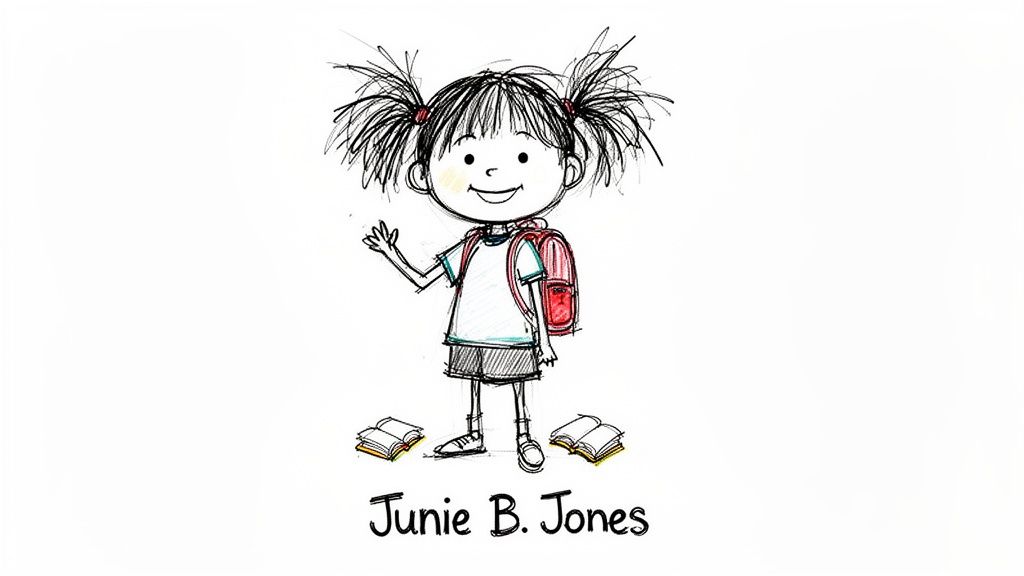
These early chapter books serve as a perfect bridge for second graders transitioning from picture-heavy books to more text-dense narratives. The accessible language, short chapters, and high-interest plots build reading stamina and confidence, making them a go-to choice for guided reading groups and a child's first foray into independent reading.
Why It's a Top Pick for Second Graders
The series excels at turning everyday childhood dilemmas into humorous, engaging stories. Whether Junie B. is dealing with a "bad hair day" or misunderstanding an assignment, her problems are real and recognizable to 7- and 8-year-olds. This relatability fosters a strong connection between the reader and the character, motivating even reluctant readers to keep turning the pages.
Actionable Tips for Home and Classroom
- Character Journals: Encourage children to write a journal entry from Junie B.'s perspective about a school event. This helps them practice writing with a distinct voice and tone.
- "Malapropism" Dictionary: Create a running list of Junie B.'s funny word mix-ups (like "blabbermouth" becoming "blabber-box"). Discuss what she meant to say, which builds vocabulary and comprehension skills.
- Problem-Solving Scenarios: Use Junie B.'s predicaments as a springboard for discussion. Ask, "What could Junie B. have done differently?" to develop critical thinking and social-emotional learning.
The humor and heart of these books have made them a staple in elementary classrooms and home libraries for decades. They offer an entertaining way to explore themes of friendship, honesty, and empathy. For more titles that capture this same spark of childhood wonder, explore our comprehensive 2nd-grade reading list selections at Number 6 Publishing.
2. Ivy + Bean Series by Sophie Blackall (Illustrated by) and Annie Barrows (Author)
The Ivy + Bean series by Annie Barrows, with charming illustrations by Sophie Blackall, is a standout addition to any 2nd grade book list. The stories revolve around two unlikely best friends: Ivy, who is quiet, thoughtful, and full of magical ideas, and Bean, who is loud, energetic, and always ready for an adventure. Their dynamic friendship showcases how people with very different personalities can form powerful and meaningful bonds.
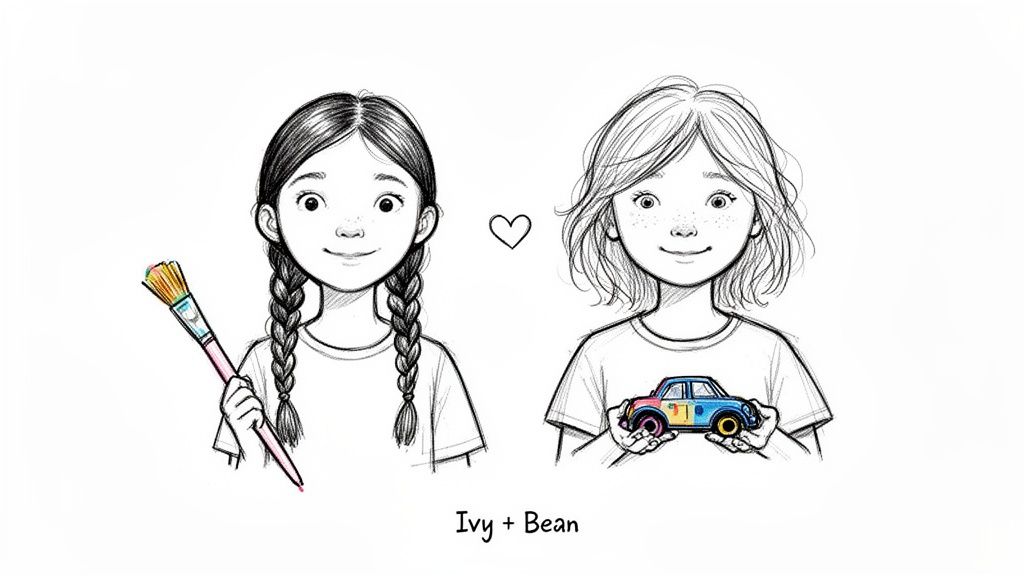
These chapter books strike a perfect balance between accessible text and engaging illustrations that enhance comprehension and bring the characters' antics to life. The plots are driven by childhood creativity and gentle mischief, making them highly appealing to second graders who are beginning to read more independently. The series is celebrated for its authentic portrayal of friendship and imagination.
Why It's a Top Pick for Second Graders
The series masterfully explores themes of social-emotional learning, such as accepting differences, problem-solving, and empathy, all wrapped in a humorous and engaging narrative. Ivy and Bean's adventures, from trying to break a world record to digging for dinosaur bones, are born from their own imaginations, inspiring readers to see the potential for adventure in their own backyards. The books validate the complex world of childhood friendships in a way that feels both genuine and entertaining.
Actionable Tips for Home and Classroom
- Friendship Venn Diagram: Have students create a Venn diagram comparing and contrasting the character traits of Ivy and Bean. This visual tool helps them analyze character development and identify what makes their friendship work.
- "What Happens Next?" Prompts: Pause at a key moment in a chapter and ask children to predict what Ivy and Bean will do next. This builds predictive reading skills and encourages creative thinking.
- Notice the Illustrations: Encourage young readers to pay close attention to Sophie Blackall's illustrations. Discuss how the pictures add humor or provide clues about the characters' feelings, reinforcing the connection between text and images.
With its focus on imaginative play and the power of friendship, Ivy + Bean has earned its place as a modern classic. It’s an ideal choice for readers who are ready for chapter books that offer both laughter and heartwarming lessons. Discover more character-driven stories like this in our complete 2nd-grade book list and reading resources.
3. Cam Jansen Series by David A. Adler
The Cam Jansen series by David A. Adler is a fantastic entry point into the mystery genre, making it an essential addition to any 2nd grade book list. The stories follow Jennifer "Cam" Jansen, a clever girl with a photographic memory who solves mysteries with her best friend, Eric. Her unique ability to say "Click!" and perfectly recall a visual scene makes her an unforgettable and inspiring young detective.
These early chapter books are masterfully structured to engage developing readers. The clear, straightforward plots, manageable chapter lengths, and built-in suspense encourage kids to piece together clues right alongside Cam. This format not only builds reading confidence but also sharpens crucial skills like observation, memory, and logical reasoning.
Why It's a Top Pick for Second Graders
The series shines by making critical thinking an exciting adventure. Each mystery is perfectly scaled for a 7- or 8-year-old's world, involving missing pets, lost objects, or school-based puzzles. This accessibility allows readers to feel like capable detectives themselves, empowering them to analyze information and draw conclusions, which are foundational skills for reading comprehension.
Actionable Tips for Home and Classroom
- Prediction Chart: Before reading the final chapters, have children create a chart with columns for "Clue," "What It Means," and "My Prediction." This organizes their thinking and encourages them to use textual evidence.
- "Click!" Memory Game: Show students a detailed picture for 30 seconds, then have them close their eyes and try to recall as many details as possible, just like Cam. This is a fun way to practice observation skills.
- Create a Case File: Encourage readers to create their own simple mystery story. They can outline the characters, the problem, the clues, and the solution, mimicking the structure of a Cam Jansen book.
The engaging whodunits in the Cam Jansen series offer a satisfying and intellectually stimulating reading experience. They provide a perfect foundation for appreciating the mystery genre while making reading feel like a fun and solvable puzzle.
4. Click, Clack, Moo: Christmas on the Farm by Doreen Cronin
Doreen Cronin’s Click, Clack, Moo: Christmas on the Farm is a holiday highlight on any 2nd grade book list, bringing witty humor and festive cheer to the beloved barnyard. This installment continues the adventures of Farmer Brown's literate animals, who use their trusty typewriter to express their needs, this time with a special Christmas request. The book is lauded for its clever wordplay, sophisticated comedic timing, and heartwarming message about giving.
This picture book, with its rich text and expressive illustrations by Betsy Lewin, is perfect for read-alouds and for second graders developing their inferential skills. The simple yet engaging plot, driven by the typed notes from the animals, provides an accessible entry point for discussions about communication, perspective, and problem-solving, all wrapped in a delightful holiday theme.
Why It's a Top Pick for Second Graders
The series masterfully uses situational humor that resonates with young readers. The absurdity of typing cows and a perpetually exasperated farmer creates a dynamic that children find hilarious. The story's focus on the animals working together to prepare a surprise for Farmer Brown introduces themes of empathy and generosity in a way that is both entertaining and meaningful for 7- and 8-year-olds. It’s a fantastic tool for exploring how characters' actions drive a story forward.
Actionable Tips for Home and Classroom
- Typewriter Messages: Have students write their own "Click, Clack, Moo" style messages from the perspective of a classroom pet or another animal. This encourages creative writing and considering different points of view.
- Humor Analysis: Read the book aloud and pause to ask, "What makes this part funny?" Discuss how Doreen Cronin uses unexpected situations and character reactions to create humor.
- Character Trait Exploration: Create a chart listing the different animals (cows, ducks, chickens) and brainstorm their personality traits based on their actions and "typed" words throughout the story.
The cleverness and warmth of this book make it an excellent choice for holiday reading and a valuable addition to classroom libraries year-round. It shows second graders that even simple stories can be filled with smart humor and heart.
5. Henry and Mudge Series by Cynthia Rylant
The Henry and Mudge series, written by Newbery Award-winning author Cynthia Rylant, is a cherished part of any 2nd grade book list. The stories follow the quiet, heartwarming adventures of a young boy named Henry and his enormous, slobbery, but utterly lovable dog, Mudge. The series is celebrated for its gentle tone, focusing on the simple joys of companionship, nature, and the unbreakable bond between a child and his pet.
These books are perfectly crafted for the developing reader. With repetitive sentence structures, a controlled vocabulary, and illustrations by Suçie Stevenson that radiate warmth, they offer a secure and encouraging reading experience. The short, distinct chapters help second graders build their reading stamina without feeling overwhelmed, making the series an excellent choice for those just beginning to read chapter books independently.
Why It's a Top Pick for Second Graders
The series shines in its ability to explore deep emotional themes with simplicity and grace. Henry's love for Mudge is the constant, grounding force in every story, providing a comforting and relatable narrative for 7- and 8-year-olds. The focus on kindness, loyalty, and responsibility resonates deeply with children, making the books not just enjoyable stories but also valuable tools for social-emotional learning.
Actionable Tips for Home and Classroom
- Friendship Web: Create a character web for Henry and another for Mudge. Draw lines connecting them and write words on the lines that describe their friendship (e.g., loyal, loving, playful).
- Pet Responsibilities Chart: Use the books to start a discussion about what pets need. Ask students to list the ways Henry takes care of Mudge, then create a chart of responsibilities for a real or imaginary pet.
- Sensory Writing: Rylant's descriptions are simple yet vivid. Choose a scene and have students write about it using their five senses. What would Mudge's fur feel like? What would the woods smell like?
- Model for Kindness: Read a story aloud, paying close attention to the gentle tone. Discuss how Henry shows kindness to Mudge and how Mudge shows his love back, connecting it to how we can be good friends to others.
6. Ramona Series (Ramona the Pest/Ramona and Her Mother) by Beverly Cleary
Beverly Cleary's iconic Ramona Quimby series is an essential part of any comprehensive 2nd grade book list, capturing the authentic voice of childhood with unmatched warmth and humor. The stories follow the spirited and imaginative Ramona as she navigates the ups and downs of school, family life, and growing up. Cleary's writing brilliantly portrays Ramona's perspective, making her well-intentioned chaos and emotional logic perfectly understandable to young readers.
These Newbery Award-winning classics serve as fantastic chapter books for second graders. While the series begins with Ramona in kindergarten, books like Ramona the Pest and Ramona and Her Mother tackle themes and emotional complexities that resonate deeply with 7- and 8-year-olds. The sophisticated yet accessible narrative helps build empathy and reading endurance, making it a timeless favorite for both independent reading and classroom read-alouds.
Why It's a Top Pick for Second Graders
The series is celebrated for its realistic portrayal of family dynamics and childhood emotions. Ramona isn't just a funny character; she's a complex one who feels misunderstood, gets frustrated with her older sister Beezus, and worries about her family. This emotional depth provides a rich opportunity for second graders to connect with a character on a deeper level, seeing their own feelings reflected in Ramona's experiences.
Actionable Tips for Home and Classroom
- Character Motivation Discussions: After reading a chapter, ask, "Why do you think Ramona did that?" or "How was Ramona feeling when she made that choice?" This encourages students to look beyond the surface actions and analyze motivations.
- Compare and Contrast: Have students compare Ramona's family and school experiences to their own using a simple Venn diagram. This helps them make personal connections to the text.
- Creative Thinking Prompts: Ramona is known for her incredible imagination. Use her creative games as a starting point for writing or drawing activities, asking students to invent their own imaginative scenarios.
The Ramona books are more than just stories; they are a gateway to understanding classic literature and exploring nuanced characters. Diving into Ramona's world is an excellent way to build advanced reading comprehension skills by analyzing character perspective and emotional intelligence.
7. Nate the Great Series by Marjorie Weinman Sharmat
For over five decades, the Nate the Great series by Marjorie Weinman Sharmat has introduced young readers to the mystery genre, making it an essential addition to any 2nd grade book list. The series follows the deadpan and pancake-loving young detective, Nate, as he methodically solves simple, everyday mysteries for his friends and neighbors. The books brilliantly mimic the tone of classic noir detective fiction in a way that is both humorous and accessible for children.
These early chapter books are masterfully designed to build crucial cognitive skills. Nate’s logical, step-by-step approach to gathering facts, interviewing witnesses, and drawing conclusions provides a clear model for critical thinking and deductive reasoning. The straightforward sentence structure and focused plots support developing readers, helping them build confidence and reading stamina as they follow the clues alongside Nate.
Why It's a Top Pick for Second Graders
The series shines in its ability to make complex problem-solving skills feel like a fun game. Each case, from a missing painting to a lost cat, is perfectly scaled for a second grader's world, making the mysteries relatable and solvable. This empowers young readers to think like detectives themselves, encouraging them to pay attention to details and evaluate information, skills that are valuable well beyond reading.
Actionable Tips for Home and Classroom
- Create a Detective's Notebook: Have students create their own notebook to track clues as they read. They can list suspects, evidence, and important facts, just like Nate.
- Host a "Classroom Mystery": Set up a simple mystery in the classroom (e.g., "The Case of the Missing Stapler"). Encourage students to use Nate’s methods: ask questions, gather clues, and eliminate suspects to solve it.
- Vocabulary Hunt: Introduce genre-specific vocabulary like "clue," "suspect," "evidence," and "motive." Have children find examples of these words as they read the series.
The enduring appeal of Nate the Great lies in its clever, engaging formula that entertains while teaching foundational analytical skills. It's a fantastic series for nurturing a love of mysteries and building a methodical approach to problem-solving.
8. The Magic Tree House Series by Mary Pope Osborne
The Magic Tree House series by Mary Pope Osborne is a monumental fixture on nearly every 2nd grade book list, and for excellent reason. The series follows the adventures of siblings Jack and Annie, who discover a magical tree house that can transport them to different time periods and locations. Each story masterfully blends thrilling adventure with historical facts, turning reading into an exciting quest for knowledge.
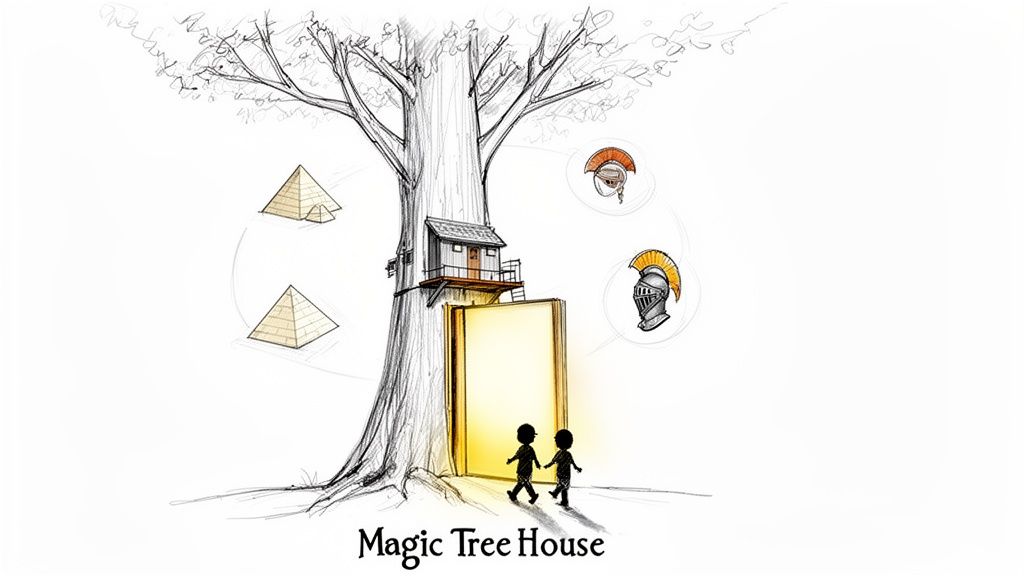
These chapter books are perfectly paced for second graders who are gaining confidence in independent reading. The consistent format, predictable structure, and fast-moving plots make the books accessible and engaging. As Jack and Annie travel to meet dinosaurs, explore ancient Egypt, or survive the American Revolution, young readers build reading stamina while absorbing information about history, culture, and science.
Why It's a Top Pick for Second Graders
The series shines in its ability to make learning an adventure. By weaving educational content into a high-stakes, imaginative narrative, Mary Pope Osborne makes history feel alive and relevant to 7- and 8-year-olds. The dynamic between the cautious, fact-loving Jack and the brave, impulsive Annie provides a relatable entry point for different types of readers, encouraging them to see themselves in the story.
Actionable Tips for Home and Classroom
- Create a "Mission Map": Use a world map to track Jack and Annie's travels. Place a pin on each location they visit and write down one key fact learned from that book.
- Pair with Non-Fiction: For each book, find a corresponding non-fiction resource, like the Magic Tree House Fact Trackers. This helps children distinguish between story and fact and deepens their understanding.
- Historical Problem-Solving: Pause during the story and ask, "If you were Jack or Annie, what would you do to solve this problem with the tools they had back then?" This fosters creative thinking and historical empathy.
The incredible popularity of the Magic Tree House has made it a classroom staple and a beloved choice for family read-alouds. It's a powerful tool for sparking curiosity about the world and demonstrating that reading is a gateway to endless exploration.
9. Flat Stanley Series by Jeff Brown
The Flat Stanley Series by Jeff Brown is a whimsical classic that has earned its place on nearly every 2nd grade book list. The story begins with a fantastical premise: a young boy named Stanley Lambchop is accidentally flattened to half an inch thick when a bulletin board falls on him. This peculiar situation opens up a world of imaginative adventures, from being mailed in an envelope to visit friends to serving as a human kite.
The series is celebrated for its gentle humor and creative problem-solving. Stanley's unique condition is not a tragedy but an opportunity for extraordinary experiences, teaching young readers to embrace what makes them different. Illustrated by the legendary Tomi Ungerer in its original form, the book's charm is timeless.
These books are perfect for second graders developing their reading skills. The straightforward language, engaging plots, and short chapters make them highly accessible, encouraging independent reading while sparking a love for creative storytelling and absurd humor.
Why It's a Top Pick for Second Graders
The core appeal of Flat Stanley lies in its ability to take a simple, surreal concept and explore its endless possibilities. For 7- and 8-year-olds, whose imaginations are firing on all cylinders, this premise is captivating. The stories encourage "what if" thinking and demonstrate how a unique perspective can turn challenges into adventures, making it a powerful tool for fostering creativity.
Actionable Tips for Home and Classroom
- Flat Stanley Project: Participate in the classic classroom project where students create their own "Flat Stanley" and mail him to friends or family, who then document his adventures. This is a fantastic way to learn about geography and practice letter-writing.
- Creative Problem Brainstorm: Pose a challenge, like "How would Flat Stanley get a cat out of a tree?" Encourage students to brainstorm unique solutions based on his flatness, promoting innovative thinking.
- Imagination Journal: Ask children to write a short story about what they would do if they were flat for a day. This activity builds narrative writing skills and encourages out-of-the-box thinking.
The series serves as a wonderful introduction to the idea that a single creative premise can sustain many stories. For readers who enjoy Stanley's travels and unique predicaments, explore our guide to other adventure-filled books like the Magic Tree House.
10. A Series of Unfortunate Events: The Bad Beginning by Lemony Snicket
A Series of Unfortunate Events by Lemony Snicket (the pen name for Daniel Handler) offers a uniquely sophisticated and darkly humorous reading experience. While often aimed at slightly older readers, The Bad Beginning is a fantastic choice for advanced or gifted second graders ready for a literary challenge. The series follows the sorrowful tale of the three Baudelaire orphans, who face constant peril at the hands of the villainous Count Olaf.
The book’s appeal lies in its distinctive narrative voice, witty wordplay, and meta-textual humor. Snicket frequently interrupts the story to define difficult words or offer dreary philosophical asides, treating the young reader with intellectual respect. This gothic-lite mystery is an excellent fit for precocious readers who appreciate cleverness and are ready to move beyond more conventional chapter book narratives.
Why It's a Top Pick for Second Graders
This series is exceptional for stretching young minds. It introduces complex literary concepts like an unreliable narrator, irony, and dark humor in a way that is still accessible. The resourceful Baudelaire children, who use their unique talents to survive, serve as inspiring protagonists. For a 2nd grade book list, it represents a bold step into more thematically complex and vocabulary-rich territory, making it a favorite for advanced reading circles.
Actionable Tips for Home and Classroom
- Vocabulary Sleuths: Have students keep a "Snicket Dictionary" to record the words the author defines within the text. Discuss why the author chose to explain these specific words to the reader.
- Narrative Perspective: Discuss Lemony Snicket as a character. Ask questions like, "Why does the narrator keep telling us to stop reading? Do you trust him?" This builds critical thinking about storytelling.
- Tone Talk: Explore how the author creates a feeling of gloom and humor at the same time. Compare the "unfortunate" events with the clever and often funny way they are described, introducing the concept of dark humor.
- Paired Reading: Due to the challenging vocabulary and themes, this book works well as a read-aloud or a buddy-read, allowing for immediate discussion of tricky passages or upsetting plot points.
The intricate plotting and distinctive style of The Bad Beginning provide a memorable and rewarding challenge that can ignite a passion for more complex literature in a young, capable reader.
2nd Grade: 10-Book Comparison
| Title | Complexity 🔄 | Resource Requirements ⚡ | Expected Outcomes 📊 | Ideal Use Cases 💡 | Key Advantages ⭐ |
|---|---|---|---|---|---|
| Junie B. Jones (Barbara Park) | Low — short chapters, conversational voice | Low — works independently or in guided groups | Improved fluency, engagement, reading confidence | Bridge picture books → chapter books; reluctant readers | Highly engaging humor; sustained series familiarity |
| Ivy + Bean (Annie Barrows & Sophie Blackall) | Moderate — character-driven, slightly higher vocabulary | Moderate — benefits from discussion prompts | Strong social-emotional skills, creativity, comprehension | SEL lessons, character studies, introductory chapter-book readers | Models healthy friendship and creative problem-solving |
| Cam Jansen (David A. Adler) | Low–Moderate — simple vocabulary with mystery structure | Low — suitable for independent mystery practice | Enhanced observation, deductive reasoning, prediction | Mystery genre intro; guided reading groups; quick independent reads | Builds problem-solving skills; fast-paced engagement |
| Click, Clack, Moo: Christmas on the Farm (Doreen Cronin) | Low — familiar characters, accessible humor | Low — best paired with original picture book context | Humor comprehension, narrative understanding; seasonal appeal | Holiday reading, humor-writing lessons, guided read-alouds | Extends picture-book charm into chapter format; witty wordplay |
| Henry and Mudge (Cynthia Rylant) | Low — simple plots with emotional depth | Low — read-aloud friendly; minimal materials | Increased empathy, comfort with reading, independent stamina | SEL, pet-themed units, transitional readers | Warm tone; nurtures emotional intelligence |
| Ramona Series (Beverly Cleary) | Moderate — strong child voice; some dated references | Moderate — contextual discussion may be needed | Character analysis, understanding consequences, moral reasoning | Classic literature intro; discussions on behavior and family dynamics | Authentic child perspective; enduring, multi-generational appeal |
| Nate the Great (Marjorie Weinman Sharmat) | Low–Moderate — accessible detective framework | Low — easy to incorporate into classroom activities | Strengthened logic, inference, evidence-based thinking | Mystery units, prediction exercises, gifted reader groups | Teaches mystery conventions; approachable nostalgic charm |
| Magic Tree House (Mary Pope Osborne) | Low–Moderate — formulaic, fast-paced adventures | Moderate — benefits from cross-curricular tie-ins | Broadened historical knowledge, sustained motivation to read | History-linked projects, research starters, reluctant readers | Combines historical learning with adventure; extensive series |
| Flat Stanley (Jeff Brown) | Low — simple language, imaginative premise | Low — ideal for creative classroom projects | Boosts creative problem-solving and imaginative thinking | Creative-writing prompts, art projects, read-alouds | Unique premise encourages invention; highly accessible |
| A Series of Unfortunate Events (Lemony Snicket) | High — sophisticated vocabulary, dark tone | High — requires pre-reading and adult support | Advanced vocabulary, literary-device awareness, critical discussion | Advanced/gifted readers, book clubs, supported read-alouds | Literary sophistication; introduces unreliable narrator and meta-humor |
Building a Lifelong Reader, One Chapter at a Time
Navigating the world of children's literature can feel like an overwhelming adventure, but this curated 2nd grade book list is designed to serve as your trusted map. The journey from decoding words to understanding worlds is one of the most significant milestones in a child's development, and the books shared here are more than just stories; they are stepping stones. They build critical thinking, foster empathy, and ignite a curiosity that can last a lifetime.
The selections, from the hilarious antics in the Junie B. Jones series to the clever problem-solving in the Nate the Great mysteries, were chosen to meet second graders exactly where they are. At this age, readers are solidifying their foundational skills and are ready for more complex plots, richer character development, and the satisfying accomplishment of finishing their first chapter books. The transition to series like Magic Tree House or Ivy + Bean provides a comfortable and consistent framework, allowing young readers to build confidence with familiar characters and settings while exploring new adventures.
Key Takeaways for Cultivating Your Reader
The true magic of a great book list isn't just in the titles themselves, but in how you use them to connect with your young reader. Remember these core principles as you move forward:
- Choice is Paramount: While this list offers a fantastic starting point, the most powerful tool you have is observation. Pay attention to what makes your child laugh, what piques their curiosity, and what topics they gravitate toward. Empowering them to choose their own books from a curated selection fosters a sense of ownership and makes reading a "get to" activity, not a "have to" chore.
- Reading is a Shared Experience: Don't let independent reading replace the joy of a shared story. Continue reading aloud, even books they can read themselves. Discuss the characters' choices, predict what might happen next, and connect the story's themes to their own lives. This strengthens comprehension and builds a positive, lasting association with books.
- Celebrate the Process, Not Just the Level: It’s easy to get caught up in reading levels and benchmarks. However, the ultimate goal is to foster a love of reading. Celebrate the act of finishing a chapter, the excitement of starting a new series, or the simple joy of sharing a funny scene. This positive reinforcement is what truly builds a lifelong reader.
Actionable Next Steps: From List to Library
Transforming this 2nd grade book list from a resource into a reality is your next great adventure. Here’s a simple, actionable plan to get started today:
- Take a "Book Tasting" Trip: Visit your local library or bookstore with this list in hand. Don't go with the goal of checking out every title. Instead, treat it like a "tasting menu." Have your child look at the covers, read the first page of a few different books, and pick one or two that genuinely excite them.
- Create a Cozy Reading Nook: Designate a special, comfortable spot in your home just for reading. It doesn’t need to be elaborate-a comfy chair, a beanbag, good lighting, and a small basket for their current books are all it takes. This signals that reading is a valued and enjoyable activity.
- Integrate Reading into Routines: Make reading a non-negotiable, but delightful, part of your daily schedule. Whether it's 20 minutes before bed, a quiet chapter after school, or listening to an audiobook in the car, consistency is key to building a strong reading habit.
By embracing the stories on this list, you are giving your second grader the tools they need to become confident, capable, and compassionate individuals. Each page turned is a victory, opening doors to new ideas, diverse perspectives, and boundless imagination. You are not just teaching a child to read; you are raising a reader.
Looking for more expertly crafted stories that grow with your child? At Number 6 Publishing, we specialize in creating engaging, high-quality books that capture young imaginations and support their reading journey. Explore our catalog to find the next perfect book for your budding reader. Number 6 Publishing